Opinion - (2025) Volume 17, Issue 6
Received: 03-Nov-2025, Manuscript No. jcst-25-176312;
Editor assigned: 05-Nov-2025, Pre QC No. P-176312;
Reviewed: 19-Nov-2025, QC No. Q-176312;
Revised: 24-Nov-2025, Manuscript No. R-176312;
Published:
01-Dec-2025
, DOI: 10.37421/1948-5956.2025.17.736
Citation: Mirzaei, Fatemeh. ”Improving Cancer Patient QoL:
Holistic Approach.” J Cancer Sci Ther 17 (2025):736.
Copyright: © 2025 Mirzaei F. This is an open-access article distributed under the terms of the Creative Commons Attribution License, which permits unrestricted use,
distribution and reproduction in any medium, provided the original author and source are credited.
The experience of patient-reported quality of life (QoL) following intensive treatments like CAR T-cell therapy is a critical area of study. Research indicates an initial decline in QoL, often linked to the immediate side effects of the therapy and the necessity of hospitalization. However, this period is generally followed by a gradual and encouraging improvement. This trajectory emphasizes the vital role of comprehensive QoL assessments, which are essential for offering better support and tailored interventions to patients navigating this challenging treatment pathway[1].
Understanding and managing the QoL and symptom burden in advanced cancer patients, especially those under palliative care, is another key focus. Studies reveal a substantial prevalence of distressing symptoms, including chronic pain, debilitating fatigue, and difficulty breathing. These findings consistently highlight the immense benefit of integrating palliative care services at an earlier stage in the treatment process. Early integration significantly contributes to improving patients' overall well-being and their perceived QoL, ensuring comfort and dignity throughout their journey[2].
The intricate interplay between psychological factors and QoL in cancer patients is also explored. Cross-sectional studies have illuminated the profound positive correlation between robust social support networks, a strong sense of self-efficacy, and superior QoL outcomes. What this really means is that when patients feel supported by their community and possess a belief in their own capacity to cope, their overall well-being is substantially enhanced. These elements are not just beneficial; they are crucial components in promoting patient resilience and quality of life during their illness[3].
Beyond psychological support, the impact of physical interventions on QoL is thoroughly examined. A systematic review and meta-analysis on breast cancer patients, for instance, convincingly demonstrates that engaging in consistent physical activity profoundly improves various dimensions of QoL. This includes not only physical functioning and a reduction in debilitating fatigue but also a significant boost to emotional well-being. This evidence makes a strong case for advocating exercise as a fundamental and highly effective supportive intervention in cancer care, fostering both physical and mental recovery[4].
Specific clinical contexts, such as post-surgical recovery, also present unique challenges to QoL. In patients undergoing gastrectomy for gastric cancer, identifiable factors significantly influence their recovery and subsequent quality of life. Postoperative complications, maintaining adequate nutritional status, and managing psychological distress are paramount. These findings emphasize the undeniable need for a holistic and comprehensive post-surgical care model that addresses not only the physical but also the nutritional and psychological aspects of patient recovery, ensuring a more complete and comfortable healing process[5].
The nuanced relationship between targeted therapies and health-related quality of life (HRQoL) is another vital area of investigation. For patients with hepatocellular carcinoma receiving lenvatinib, while the treatment is effective in extending survival, it presents its own set of considerations. Research suggests that while survival benefits are clear, diligent monitoring and proactive management of treatment-related side effects are absolutely crucial. This careful approach helps to maintain and potentially improve patientsâ?? HRQoL throughout the entire course of their treatment, ensuring that extending life also means maintaining its quality[6].
The effectiveness of broader psychosocial interventions in ameliorating QoL deficits among cancer patients has been extensively reviewed. A systematic review and meta-analysis confirmed that these interventions are indeed highly effective. They lead to significant enhancements in psychological well-being and overall QoL. What this really means is that integrating these supportive therapies alongside conventional medical treatments is not merely supplementary but essential, profoundly impacting how patients experience and cope with their illness, and underscoring their importance as complementary treatments[7].
Delving deeper into specific psychosocial approaches, mindfulness-based interventions (MBIs) have garnered considerable attention. A meta-analysis of randomized controlled trials unequivocally demonstrates that MBIs can substantially improve QoL in cancer patients. Their efficacy is particularly notable in reducing psychological distress and fostering improved emotional functioning. This positions MBIs as highly valuable options within supportive care, offering patients practical tools to navigate the emotional complexities of cancer and enhance their daily living experience[8].
Moreover, the fundamental role of nutritional status in overall patient well-being is undeniable. A systematic review evaluating the impact of nutrition on QoL in cancer patients establishes a critical link: maintaining adequate nutritional status is directly and profoundly connected to achieving better QoL outcomes. This finding serves as a powerful reminder that comprehensive nutritional support should not be an afterthought but an integral and essential component of cancer care, impacting everything from physical recovery to mental resilience[9].
Finally, the psychological framework through which patients understand their illness profoundly shapes their QoL and distress levels. A study investigating the mediating role of illness perception in advanced cancer patients revealed that how individuals perceive their condition significantly influences their psychological state. This insight suggests that carefully designed interventions targeting these illness perceptions could lead to notable improvements in patient outcomes, helping them to better cope with and adapt to their diagnosis and treatment journey. Addressing these cognitive aspects is as important as addressing the physical symptoms, ensuring a holistic approach to care[10].
The extensive body of research on cancer patient well-being consistently places quality of life (QoL) at its core, evaluating how various treatments, interventions, and individual circumstances impact patients. For individuals undergoing CAR T-cell therapy, a highly intensive treatment, initial QoL assessments often reveal a temporary decline, largely attributable to the acute side effects and the necessary period of hospitalization. Yet, it's reassuring to note that this initial downturn typically gives way to a gradual and steady improvement. This trend emphasizes the imperative for robust and comprehensive QoL assessment strategies throughout the treatment journey, ensuring patients receive targeted support to navigate the complexities of their care[1]. Similarly, for advanced cancer patients, particularly those engaging with palliative care, the burden of symptoms like chronic pain, pervasive fatigue, and dyspnea is significant. The findings here strongly advocate for the early integration of palliative care services, which are critical not just for symptom management, but for profoundly improving patients' holistic well-being and overall QoL[2]. This approach moves beyond merely treating the disease to truly caring for the person.
Multiple factors have been identified as exerting a considerable influence on patient QoL, ranging from physiological effects to psychological states. Take, for instance, patients recovering from gastrectomy for gastric cancer, where postoperative complications, maintaining optimal nutritional status, and managing psychological distress are all highlighted as pivotal determinants of their QoL. This means a comprehensive post-surgical care model must proactively address these multifaceted aspects to ensure a smoother, more comfortable recovery[5]. Directly related, the critical importance of nutritional status is further underscored by a systematic review which unequivocally links adequate nutrition to superior QoL outcomes in cancer patients. This establishes nutritional support not as an ancillary service, but as an indispensable component of integrated cancer care, impacting everything from energy levels to immune function[9].
Beyond these foundational physical and metabolic considerations, the psychological and behavioral dimensions are equally crucial. A cross-sectional study revealed that both strong social support networks and a high sense of self-efficacy are powerful predictors of better QoL for cancer patients. This speaks to the profound impact of feeling connected and empowered in one's own healing journey[3]. Furthermore, the positive influence of physical activity is well-documented; a systematic review and meta-analysis on breast cancer patients demonstrated that consistent exercise significantly enhances physical functioning, reduces fatigue, and boosts emotional well-being, effectively making physical activity a cornerstone supportive intervention[4]. On a broader scale, psychosocial interventions in general, encompassing a range of therapeutic approaches, have been shown to significantly improve psychological well-being and overall QoL in cancer patients, marking them as vital complementary treatments[7]. More specifically, mindfulness-based interventions (MBIs) have emerged as particularly effective, with a meta-analysis showing they can substantially reduce psychological distress and improve emotional functioning, thereby becoming valuable additions to supportive care strategies[8].
The specific challenges posed by targeted therapies also warrant close attention. For patients with hepatocellular carcinoma receiving lenvatinib, while the therapy undeniably extends survival, the maintenance and improvement of Health-Related Quality of Life (HRQoL) hinges on the meticulous monitoring and management of treatment-related side effects. This balance is key; extending life must also mean striving to preserve its quality[6]. Finally, a patient's subjective understanding or 'illness perception' has been shown to play a mediating role between QoL and psychological distress in advanced cancer patients. This critical insight suggests that how an individual perceives their illness profoundly impacts their psychological state. Therefore, interventions designed to shape or reframe these illness perceptions could lead to significant improvements in patient outcomes, offering a potent pathway for enhancing both QoL and mental resilience by addressing the cognitive lens through which patients experience their condition[10]. This collection of research collectively emphasizes a holistic view of cancer care, integrating medical treatment with robust psychosocial, physical, and nutritional support, all informed by patient-reported outcomes to ensure optimal well-being.
This body of research explores the multifaceted nature of quality of life (QoL) in cancer patients, highlighting its dynamic changes, influencing factors, and effective interventions. It reveals that QoL can initially decline post-intensive treatments like CAR T-cell therapy due to side effects and hospitalization, but typically improves over time, underscoring the need for continuous assessment and support. For advanced cancer patients, significant symptom burdens such as pain and fatigue necessitate early integration of palliative care to enhance overall well-being. Beyond clinical symptoms, psychological and social factors play a crucial role. Strong social support and self-efficacy are positively correlated with better QoL outcomes, while illness perception significantly mediates psychological distress and QoL. Behavioral interventions like physical activity have shown substantial benefits in improving physical functioning, reducing fatigue, and boosting emotional well-being in patient populations like those with breast cancer. Nutritional status is identified as a critical determinant, with adequate nutrition directly linked to better QoL, advocating for its central role in cancer care. Psychosocial interventions, including mindfulness-based approaches, are consistently found to improve psychological well-being and overall QoL, making them valuable complementary treatments. Finally, treatment-specific considerations, such as managing side effects of therapies like lenvatinib for hepatocellular carcinoma, are vital for maintaining health-related QoL. Collectively, these studies emphasize a holistic approach to cancer care, integrating medical, psychological, nutritional, and physical support to optimize patient experience and outcomes.
Indexed at, Google Scholar, Crossref
Indexed at, Google Scholar, Crossref
Indexed at, Google Scholar, Crossref
Indexed at, Google Scholar, Crossref
Indexed at, Google Scholar, Crossref
Indexed at, Google Scholar, Crossref
Indexed at, Google Scholar, Crossref
Indexed at, Google Scholar, Crossref
Indexed at, Google Scholar, Crossref
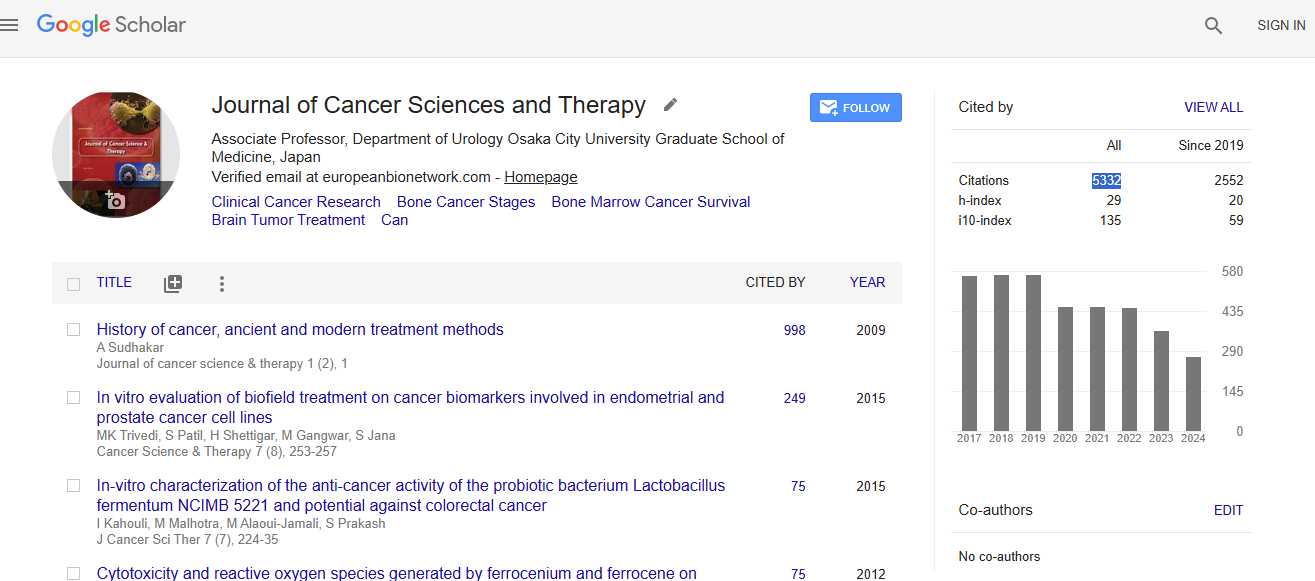
Cancer Science & Therapy received 5332 citations as per Google Scholar report