Commentary - (2025) Volume 14, Issue 2
Received: 01-Apr-2025, Manuscript No. jhoa-26;
Editor assigned: 03-Apr-2025, Pre QC No. P-187768;
Reviewed: 17-Apr-2025, QC No. Q-187768;
Revised: 22-Apr-2025, Manuscript No. R-187768;
Published:
29-Apr-2025
, DOI: 10.37421/2167-1095.2025.14.507
Citation: Santos, Fernando. ”Hypertension Management: Challenges and Future Directions.” J Hypertens 14 (2025):507.
Copyright: © 2025 Santos F. This is an open-access article distributed under the terms of the Creative Commons Attribution License, which permits unrestricted use, distribution and reproduction in any medium, provided the original author and source are credited.
The global burden of hypertension continues to present a significant public health challenge, despite advancements in medical understanding and treatment strategies. In adult primary care populations, the prevalence of hypertension remains high, necessitating ongoing efforts to improve screening, diagnosis, and management. Significant progress has been made in understanding the complex factors contributing to hypertension, yet substantial obstacles persist in achieving optimal blood pressure control for a majority of patients [1].
The landscape of hypertension is further complicated by socioeconomic determinants that profoundly influence its prevalence and control. Disparities in access to healthcare and consistent engagement with medical services are frequently observed among individuals from lower socioeconomic backgrounds. These barriers contribute to higher rates of uncontrolled hypertension, underscoring the need for targeted interventions and community-based programs to address these inequities [2].
In parallel with traditional approaches, the integration of digital health interventions is emerging as a promising strategy to enhance hypertension management within primary care settings. Telehealth platforms and mobile health applications have demonstrated their capacity to improve patient engagement, facilitate remote monitoring, and positively impact medication adherence, offering a novel avenue for tackling the widespread issue of hypertension [3].
The effectiveness of hypertension management is also contingent upon culturally sensitive approaches, particularly in diverse primary care populations. Varying cultural beliefs and practices can significantly influence health-seeking behaviors and adherence to prescribed treatment regimens. Healthcare providers are thus encouraged to adapt their communication strategies and treatment plans to resonate with the specific cultural contexts of their patients [4].
Examining hypertension through an age-specific lens reveals critical insights into its prevalence and associated risk factors across different adult age groups within primary care. While prevalence generally increases with age, there is a notable and concerning rise in hypertension among younger adults, often linked to lifestyle choices and the escalating rates of obesity. This highlights the imperative for early detection and preventive strategies to commence in younger adulthood [5].
The pivotal role of primary care physicians in the effective management of hypertension cannot be overstated. Their perspectives reveal common barriers such as time constraints, insufficient specialist support, and challenges with patient adherence. Addressing these requires continuous professional development and the implementation of improved team-based care models to enhance the quality of hypertension management [6].
Furthermore, the identification and management of resistant hypertension within primary care settings are crucial. This condition, characterized by persistently high blood pressure despite multiple medications, affects a significant number of patients and carries a higher risk of cardiovascular complications. Early identification and more aggressive therapeutic strategies, including specialist referral, are vital for preventing adverse outcomes [7].
Lifestyle interventions remain a cornerstone of both the prevention and management of hypertension. A comprehensive systematic review and meta-analysis confirm that regular physical activity, adherence to a healthy diet, and effective weight management are critical components. These findings strongly support the integration of extensive lifestyle counseling into routine primary care practices [8].
The comorbidity of hypertension with other chronic conditions, such as diabetes and dyslipidemia, presents complex management challenges within primary care. These coexisting conditions necessitate integrated care approaches and multifactorial risk reduction strategies to effectively mitigate overall cardiovascular risk among patients [9].
Finally, the adherence to hypertension screening guidelines within primary care settings is a critical determinant of early detection. Factors influencing adherence include the effective use of electronic health records and robust provider education. Standardized protocols and ongoing quality improvement initiatives are essential for maximizing the detection rates of hypertension [10].
The global prevalence of hypertension presents a continuous and substantial challenge within primary care settings, despite ongoing efforts and advancements. While significant strides have been made in understanding this condition, the review highlights persistent difficulties in achieving optimal blood pressure control. Key areas for improvement include enhancing screening protocols, intensifying patient education on lifestyle modifications, and fostering better integration of care pathways. The persistent issues of undertreatment and suboptimal adherence to prescribed regimens remain significant hurdles in the widespread management of hypertension [1].
Socioeconomic factors play a critical role in shaping hypertension prevalence and control within primary care. This study reveals significant disparities in access to essential healthcare services and consistent adherence to treatment plans, particularly affecting individuals from lower socioeconomic strata. These barriers contribute to higher incidences of uncontrolled hypertension, emphasizing the necessity of developing and implementing targeted interventions and community-based programs to address these systemic inequities [2].
The evolution of healthcare delivery models has introduced digital health interventions as a potent tool for enhancing hypertension management in primary care. The research indicates that the utilization of telehealth platforms and mobile health applications can markedly improve patient engagement, facilitate effective remote monitoring of blood pressure, and subsequently lead to better medication adherence. The incorporation of these technologies into standard primary care practices represents a significant advancement in addressing the high prevalence of hypertension [3].
Managing hypertension effectively requires an approach that is sensitive to the diverse cultural backgrounds of patients within primary care. Cultural beliefs and practices can substantially influence an individual's health-seeking behaviors and their willingness to adhere to medical advice and treatment plans. Consequently, healthcare providers are advised to tailor their communication strategies and treatment regimens to align with the specific cultural contexts of the populations they serve [4].
An age-specific analysis of hypertension in primary care reveals a nuanced picture of its prevalence and risk factors. While hypertension is more common in older adults, there is a concerning trend of increasing prevalence among younger adults, frequently associated with lifestyle factors such as poor diet and obesity. This finding underscores the critical need for implementing early detection and prevention strategies that begin in younger adulthood [5].
Primary care physicians are at the forefront of hypertension management, and their insights are invaluable for understanding the practical challenges encountered. Common barriers reported include time constraints, limited access to specialist support, and difficulties in ensuring patient adherence to treatment. These challenges highlight the importance of ongoing professional development and the implementation of more effective team-based care models to optimize hypertension management [6].
Resistant hypertension, a complex form of the condition, is another significant concern in primary care. This article identifies specific demographic and clinical characteristics of patients experiencing resistant hypertension, stressing the urgency of early detection to mitigate the risk of severe cardiovascular complications. For these patients, more intensive therapeutic approaches and timely referrals to specialist care are often necessary [7].
Lifestyle interventions continue to be a fundamental strategy for managing hypertension, as evidenced by a systematic review and meta-analysis. The research conclusively demonstrates that consistent engagement in physical activity, the adoption of a healthy diet, and effective weight management are pivotal for both preventing the onset of hypertension and improving its control. The findings strongly advocate for the integration of comprehensive lifestyle counseling into routine primary care services [8].
Hypertension frequently coexists with other chronic conditions, such as diabetes and dyslipidemia, creating complex management scenarios in primary care. These comorbidities necessitate integrated care models that address multiple risk factors simultaneously. The authors emphasize the importance of multifactorial risk reduction strategies to effectively manage patients with these complex health profiles [9].
The effective implementation of hypertension screening guidelines in primary care is crucial for early diagnosis. This study explores factors that both facilitate and impede adherence to these guidelines, highlighting the pivotal roles of electronic health records and provider education. The research suggests that standardized protocols coupled with continuous quality improvement initiatives are indispensable for maximizing the detection rates of hypertension in primary care settings [10].
This collection of research explores various facets of hypertension management within primary care. It highlights the persistent challenges in controlling blood pressure, influenced by socioeconomic disparities, the growing role of digital health interventions, and the need for culturally sensitive care. Age-specific trends reveal increasing prevalence in younger adults, while resistant hypertension requires specialized attention. Lifestyle interventions and managing comorbidities like diabetes and dyslipidemia are crucial. Primary care physicians face barriers such as time constraints and patient adherence issues, emphasizing the need for continuous professional development and team-based care. Effective implementation of screening guidelines, supported by electronic health records and provider education, is vital for early detection and improved outcomes. Digital health, culturally adapted approaches, and integrated care models offer promising avenues for future improvements in hypertension management.
None
None
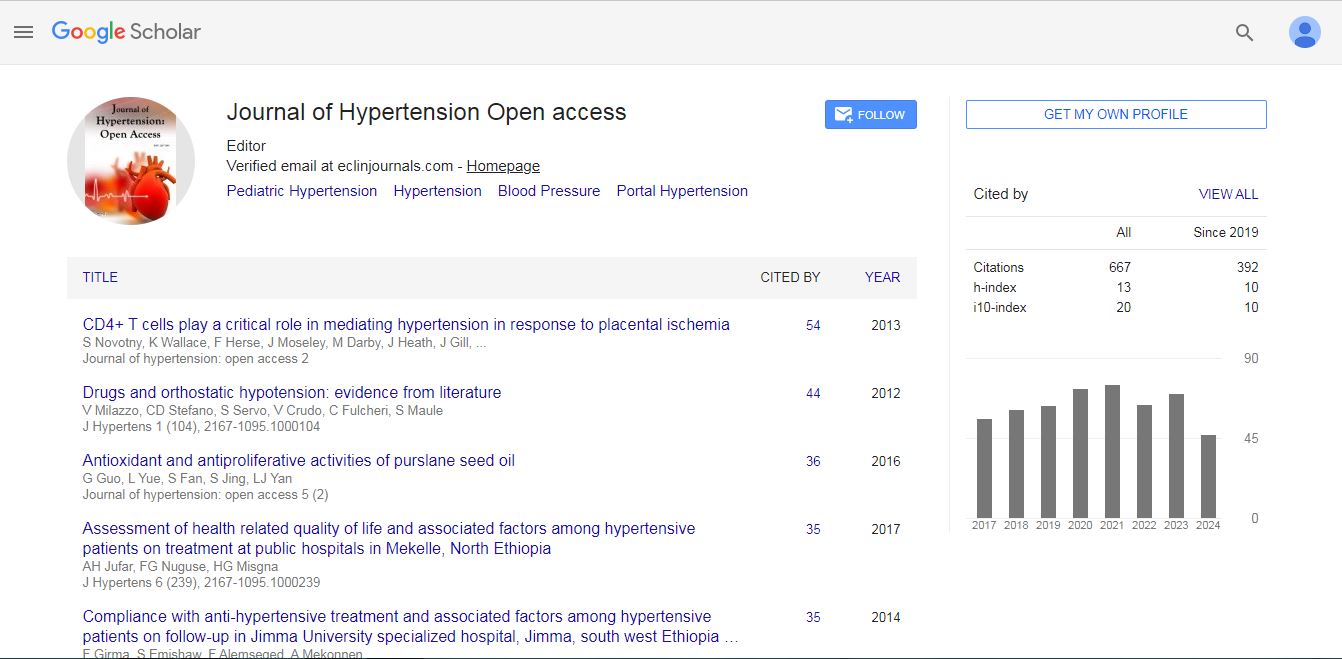
Journal of Hypertension: Open Access received 614 citations as per Google Scholar report