Perspective - (2025) Volume 14, Issue 6
Received: 01-Dec-2025, Manuscript No. jhoa-26-187882;
Editor assigned: 03-Dec-2025, Pre QC No. P-187882;
Reviewed: 17-Dec-2025, QC No. Q-187882;
Revised: 22-Dec-2025, Manuscript No. R-187882;
Published:
29-Dec-2025
, DOI: 10.37421/2167-1095.2025.14.555
Citation: Dupont, Paul. ”Hypertension: A Multifaceted Global Health Concern.” J Hypertens 14 (2025):555.
Copyright: © 2025 Dupont P. This is an open-access article distributed under the terms of the Creative Commons Attribution License, which permits unrestricted use, distribution and reproduction in any medium, provided the original author and source are credited.
The global prevalence of hypertension in adults represents a significant public health challenge, with considerable disparities observed across various geographic locations and demographic segments of the population. Key risk factors contributing to this widespread health burden encompass increasing age, a family history of the condition, obesity, an unhealthy dietary pattern characterized by high sodium and low potassium intake, a lack of physical activity, excessive alcohol consumption, and the habit of smoking. Furthermore, emerging scientific research is increasingly highlighting the influential roles of socioeconomic determinants, chronic stress, and various environmental exposures in the development and progression of hypertension [1].
This study delves into the intricate relationship between an individual's genetic predisposition and their lifestyle choices in the genesis of hypertension. It strongly emphasizes that while genetic makeup may confer a susceptibility to developing the condition, implementing significant lifestyle modifications can effectively mitigate this inherent risk. The findings derived from this research underscore the profound importance of personalized risk evaluations and the subsequent implementation of targeted therapeutic and preventative interventions tailored to individual needs [2].
The association between obesity and the development of hypertension is a well-established and extensively documented phenomenon in medical literature. This particular line of research undertakes a detailed investigation into the specific biological and physiological mechanisms through which excess adiposity contributes to elevated blood pressure, including hormonal imbalances, inflammatory processes, and overactivity of the sympathetic nervous system. Consequently, it critically highlights the paramount importance of effective weight management strategies in both the prevention and comprehensive control of hypertension [3].
Dietary patterns are recognized as playing a pivotal and fundamental role in modulating an individual's risk of developing hypertension. This systematic review meticulously analyzes the impact of diverse dietary components, with a particular focus on the intake of sodium and potassium, and further explores the well-documented benefits associated with adherence to dietary approaches such as the DASH (Dietary Approaches to Stop Hypertension) and Mediterranean diets in effectively lowering blood pressure. The findings strongly advocate for the implementation of robust public health initiatives aimed at promoting healthier eating habits across populations [4].
Physical activity is considered a cornerstone of overall cardiovascular health and functions as a potent modulator of blood pressure regulation. This specific longitudinal study meticulously examines how varying types and intensities of physical exercise can influence the incidence and subsequent management of hypertension among adult populations. It strongly emphasizes the critical necessity for consistent and regular engagement in both aerobic and resistance training exercises as integral components of a healthy lifestyle [5].
The impact of alcohol consumption on an individual's blood pressure is demonstrably dose-dependent, meaning the effect varies with the amount consumed. This meta-analysis aims to clarify this complex relationship, providing evidence that excessive alcohol intake significantly elevates the risk of developing hypertension, while moderate consumption might have a neutral or even a slightly beneficial effect, although a degree of caution is consistently advised. The conclusions drawn from these findings strongly support public health recommendations for limiting overall alcohol intake [6].
Smoking is a widely recognized and potent independent risk factor for a multitude of cardiovascular diseases, including hypertension. This particular review synthesizes the most current and relevant scientific evidence regarding both the acute and chronic physiological effects of smoking on the complex processes of blood pressure regulation and the elasticity of arterial walls. The findings strongly reinforce the urgent imperative for the development and widespread implementation of effective smoking cessation programs [7].
Socioeconomic status (SES) and various environmental factors are increasingly acknowledged as significant determinants that can profoundly influence the prevalence and control of hypertension. This study meticulously explores the ways in which lower SES, restricted access to essential healthcare services, urban living environments, and exposure to ambient air pollution can collectively contribute to higher rates of hypertension and poorer management outcomes, particularly within vulnerable population groups [8].
Psychological stress is a well-established contributor to both the initial development and the subsequent exacerbation of hypertension. This particular research undertakes a thorough examination of the complex physiological pathways through which chronic stress exerts its effects on the cardiovascular system. This includes the activation of the sympathetic nervous system and the hypothalamic-pituitary-adrenal axis, ultimately leading to sustained and potentially harmful elevations in blood pressure [9].
Increasing age stands out as a primary non-modifiable risk factor for the development of hypertension. This comprehensive article provides a detailed and in-depth overview of the physiological changes that naturally occur with aging, many of which contribute to an increased blood pressure. These changes include a decrease in arterial elasticity and alterations in the function of baroreceptors, which are critical for blood pressure regulation. The article also addresses the specific considerations for managing hypertension in older adult populations [10].
The global burden of hypertension in adults is a critical public health concern, exhibiting significant variations across different geographical regions and demographic groups. Essential risk factors contributing to this widespread issue include advancing age, a positive family history, obesity, suboptimal dietary habits (characterized by high sodium and low potassium intake), physical inactivity, excessive alcohol consumption, and smoking. Moreover, current research increasingly points to the influence of socioeconomic status, stress, and environmental exposures [1].
This investigation examines the complex interplay between genetic susceptibility and lifestyle factors in the pathogenesis of hypertension. It highlights that while genetic predispositions exist, lifestyle modifications possess a substantial capacity to mitigate this risk. The study emphasizes the critical need for personalized risk assessments and the development of tailored interventions [2].
The well-established link between obesity and hypertension is further explored in this research, which delves into the specific mechanisms, such as hormonal dysregulation, inflammation, and sympathetic nervous system overactivity, that connect excess body fat to elevated blood pressure. This research underscores the vital role of weight management in the prevention and control of hypertension [3].
Dietary patterns significantly influence hypertension risk. This systematic review analyzes the effects of various dietary components, particularly sodium and potassium levels, and examines the benefits of diets like DASH and Mediterranean in reducing blood pressure, advocating for public health strategies that promote healthier eating [4].
Physical activity is a fundamental element of cardiovascular health and a powerful modulator of blood pressure. This longitudinal study investigates how different types and intensities of exercise impact hypertension incidence and management in adults, stressing the importance of regular aerobic and resistance training [5].
The relationship between alcohol consumption and hypertension is dose-dependent. This meta-analysis clarifies that excessive alcohol intake elevates hypertension risk, while moderate consumption may have neutral or slight benefits, though caution is advised. The findings support recommendations to limit alcohol intake [6].
Smoking is a recognized independent risk factor for cardiovascular diseases, including hypertension. This review synthesizes evidence on the acute and chronic effects of smoking on blood pressure regulation and arterial stiffness, reinforcing the need for smoking cessation programs [7].
Socioeconomic status and environmental factors are increasingly identified as significant determinants of hypertension. This study investigates how low SES, limited healthcare access, urban living, and air pollution exposure can contribute to higher hypertension prevalence and poorer control, especially in vulnerable populations [8].
Stress is a known factor in the development and worsening of hypertension. This research explores the physiological pathways by which chronic stress affects the cardiovascular system, including the activation of the sympathetic nervous system and the HPA axis, leading to sustained increases in blood pressure [9].
Age is a primary non-modifiable risk factor for hypertension. This article reviews the physiological changes associated with aging that contribute to elevated blood pressure, such as arterial stiffening and altered baroreceptor function, and discusses hypertension management in older adults [10].
Hypertension remains a critical global health concern influenced by a complex interplay of factors. Age, genetics, obesity, diet (specifically high sodium and low potassium), physical inactivity, alcohol consumption, and smoking are established risk factors. Emerging evidence also implicates socioeconomic status, stress, and environmental exposures. While genetics plays a role, lifestyle modifications like weight management, healthy eating patterns (e.g., DASH, Mediterranean diets), regular physical activity, limiting alcohol, and smoking cessation are crucial for prevention and control. Understanding the mechanisms linking these factors to elevated blood pressure is vital for developing effective public health strategies and personalized interventions. Physiological changes associated with aging also contribute to hypertension risk.
None
None
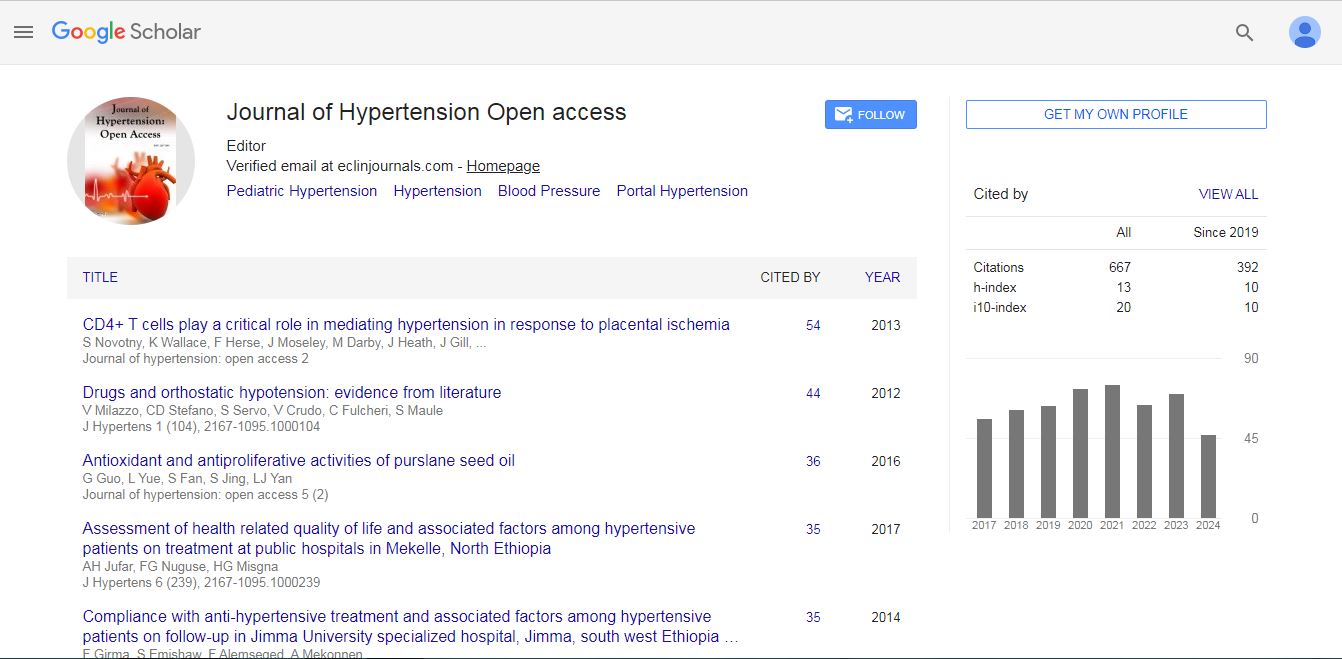
Journal of Hypertension: Open Access received 614 citations as per Google Scholar report