Brief Report - (2025) Volume 13, Issue 4
Received: 04-Aug-2025, Manuscript No. jcdd-25-176803;
Editor assigned: 06-Aug-2025, Pre QC No. P-176803;
Reviewed: 20-Aug-2025, QC No. Q-176803;
Revised: 25-Aug-2025, Manuscript No. R-176803;
Published:
01-Sep-2025
, DOI: 10.37421/2329-9517.2025.13.679
Citation: Kim, David. ”Holter Monitoring: Essential, Evolving
Arrhythmia Detection.” J Cardiovasc Dis Diagn 13 (2025):679.
Copyright: © 2025 Kim D. This is an open-access article distributed under the terms of the Creative Commons Attribution License, which permits unrestricted use, distribution
and reproduction in any medium, provided the original author and source are credited.
Holter monitors play a critical role in detecting transient cardiac arrhythmias, especially for patients who experience palpitations, syncope, or unexplained stroke [1].
What this really means is, these devices are designed to catch those fleeting heart rhythm issues that a standard Electrocardiogram (ECG) might miss, providing a more complete picture of a patient's cardiac activity over an extended period. Significant advancements in these devices, such as longer recording durations and event-triggered capabilities, have substantially improved their diagnostic yield, particularly in identifying conditions like atrial fibrillation [1].
Ambulatory ECG monitoring, typically performed with Holter devices, has become an essential tool in diagnosing paroxysmal atrial fibrillation (AF) following cryptogenic stroke [2].
Here's the thing, prolonged monitoring, sometimes extending beyond 72 hours, dramatically increases the detection rate of AF. This proactive approach to monitoring is vital because it allows for the early initiation of anticoagulant therapy, a crucial step in preventing recurrent strokes [2].
When we compare Holter monitoring to implantable loop recorders (ILRs) for AF detection, particularly after cryptogenic stroke, ILRs show a clear advantage in terms of longer-term diagnostic yield [3].
What this really means is, while a standard Holter is effective for shorter periods, if AF is strongly suspected but not initially captured, an ILR can monitor for months or even years, thereby catching very infrequent episodes. Despite the ILR's extended capability, Holter monitors remain a less invasive and crucial first-line diagnostic tool in clinical practice [3].
The landscape of arrhythmia detection is evolving rapidly with the increasing use of smartwatches and other wearable devices for continuous ECG monitoring [4].
These consumer-grade devices can serve as an effective initial screening tool, prompting individuals to seek medical attention if abnormalities are detected. However, a traditional Holter monitor continues to offer superior diagnostic quality and is indispensable for clinical confirmation, as it captures a more detailed and medically validated ECG trace, essential for accurate diagnosis and treatment planning [4].
Guidelines for the application of Holter monitoring are constantly being refined, especially for specific patient populations, such as individuals with non-sustained ventricular tachycardia (NSVT) after a myocardial infarction [5].
The data consistently indicates that longer Holter monitoring periods can identify more significant arrhythmias. This information is key for risk stratification, guiding clinicians in making decisions about further interventions, like the necessity for implantable cardioverter-defibrillators (ICDs) [5].
Remote Holter monitoring, which leverages modern digital technologies, offers enhanced flexibility and convenience for patients, a benefit that became particularly evident during the COVID-19 pandemic [6].
This shift significantly reduces the need for hospital visits and enables continuous monitoring within a patient's natural environment, often leading to more representative rhythm data. The workflows for data collection and analysis are being increasingly optimized for remote operation, presenting a promising direction for the future of cardiac diagnostics and patient care [6].
Holter monitoring in pediatric applications presents unique challenges and considerations, requiring careful attention to electrode placement, patient compliance, and the specific types of arrhythmias commonly seen in children [7].
Detecting subtle rhythm disturbances in pediatric populations, which might be associated with congenital heart disease or channelopathies, is crucial for timely intervention and improved outcomes. Recent advancements include the development of smaller, more comfortable devices, which significantly enhance the experience for young patients and improve monitoring effectiveness [7].
Artificial Intelligence (AI) and machine learning are fundamentally transforming the analysis of Holter data [8].
These advanced technologies can process vast quantities of ECG data much faster and with greater accuracy than manual review, identifying subtle patterns indicative of arrhythmias that might otherwise go unnoticed. What this really means is a substantial improvement in both efficiency and diagnostic precision, potentially making Holter interpretation more objective, less labor-intensive, and more reliable [8].
The diagnostic yield of Holter monitoring for detecting Atrial Fibrillation (AF) is strongly influenced by the duration of monitoring [9].
Studies consistently demonstrate that extending monitoring from 24 hours to 7 days, or even 14 days, significantly increases the probability of detecting AF, particularly in high-risk groups such as those who have experienced a stroke. This finding has direct implications for clinical practice, advocating for longer monitoring periods when AF is strongly suspected but has not yet been captured by shorter monitoring sessions [9].
Integrating Holter data with other physiological parameters, such as sleep patterns and activity levels, provides a more holistic perspective on cardiac health [10].
This multiparameter approach allows for a deeper understanding of how daily activities and various physiological states influence cardiac rhythms. For example, certain arrhythmias are highly correlated with sleep-disordered breathing, and a comprehensive Holter analysis incorporating these additional data points can effectively highlight such crucial connections, leading to more targeted diagnostics and treatment strategies [10].
Holter monitors serve a vital function in detecting transient cardiac arrhythmias, especially for individuals experiencing palpitations, syncope, or unexplained stroke. These devices excel at capturing fleeting heart rhythm issues that a standard Electrocardiogram (ECG) might miss, providing a comprehensive view of a patient's cardiac activity over an extended period. Recent advancements, including prolonged recording times and event-triggered capabilities, have substantially boosted their diagnostic yield, particularly for identifying conditions like atrial fibrillation [1].
Ambulatory ECG monitoring, primarily using Holter devices, is a cornerstone in diagnosing paroxysmal atrial fibrillation (AF) after cryptogenic stroke. Research shows that extended monitoring periods, often surpassing 72 hours, significantly enhance the detection rate of AF. This proactive surveillance is critical for the timely initiation of anticoagulant therapy, a key measure in preventing recurrent strokes [2]. While Holters are highly effective, a comparison with implantable loop recorders (ILRs) for AF detection, especially post-cryptogenic stroke, reveals a clear benefit for ILRs in terms of long-term yield. Holters are excellent for short-term events, but ILRs can monitor for months or even years, invaluable for catching infrequent episodes. Nevertheless, Holters remain a less invasive and crucial initial diagnostic tool [3].
The diagnostic landscape is undergoing a transformation with the widespread adoption of smartwatches and wearable devices for continuous ECG monitoring. These consumer-grade tools can act as an initial screening mechanism, prompting medical consultations upon detecting abnormalities. However, Holter monitors still provide superior diagnostic quality and are indispensable for clinical confirmation, as they capture a more detailed and medically validated ECG trace vital for accurate clinical decisions [4]. Furthermore, clinical guidelines for Holter monitoring are continuously refined, especially for specific patient groups, such as those with non-sustained ventricular tachycardia (NSVT) after a myocardial infarction. Data suggests that longer monitoring periods can uncover more significant arrhythmias, aiding in risk stratification and guiding decisions on interventions like implantable cardioverter-defibrillators (ICDs) [5].
Remote Holter monitoring, enabled by digital technologies, offers unprecedented flexibility and convenience for patients, a particularly beneficial aspect during public health crises like the COVID-19 pandemic. This innovation reduces hospital visits and facilitates continuous monitoring within a patientâ??s natural daily environment, often yielding more representative rhythm data. The optimization of data collection and analysis workflows for remote operations signals a promising future for cardiac diagnostics [6]. Pediatric applications of Holter monitoring require unique considerations, including careful electrode placement, ensuring patient compliance, and understanding arrhythmias prevalent in children. Detecting subtle rhythm disturbances in young patients, potentially linked to congenital heart disease or channelopathies, is crucial for early intervention. Developments in smaller, more comfortable devices are improving the experience for pediatric patients [7].
Artificial Intelligence (AI) and machine learning are revolutionizing Holter data analysis. These technologies can process vast volumes of ECG data with greater speed and accuracy than manual review, identifying subtle arrhythmic patterns that might otherwise be overlooked. This means a significant leap in efficiency and diagnostic precision, potentially making Holter interpretation more objective and less labor-intensive [8]. The duration of Holter monitoring has a substantial impact on the diagnostic yield for AF detection. Studies consistently show that extending monitoring from 24 hours to 7 or even 14 days dramatically increases the likelihood of detecting AF, particularly in high-risk populations like post-stroke patients. This has clear implications for clinical practice, advocating for longer monitoring durations when AF is strongly suspected [9]. Lastly, integrating Holter data with other physiological parameters, such as sleep patterns and activity levels, offers a more holistic understanding of cardiac health. This multiparameter approach sheds light on how daily activities and physiological states influence cardiac rhythms. For instance, certain arrhythmias are strongly linked to sleep-disordered breathing, and a comprehensive Holter analysis can effectively highlight these connections [10].
Holter monitors are essential for detecting transient cardiac arrhythmias, especially those missed by standard ECGs, providing extended monitoring for conditions like atrial fibrillation [1]. For patients post-cryptogenic stroke, prolonged ambulatory ECG monitoring significantly increases the detection of paroxysmal AF, aiding in stroke prevention through timely anticoagulant therapy [2]. While implantable loop recorders offer longer-term AF detection, Holters remain a crucial and less invasive first-line diagnostic tool [3]. Wearable devices like smartwatches can serve as initial screening tools, though Holter monitors provide higher diagnostic quality for clinical confirmation [4]. Guidelines for Holter use are constantly updated, with longer monitoring periods proving beneficial for risk stratification in populations like post-myocardial infarction patients with non-sustained ventricular tachycardia [5]. Remote Holter monitoring enhances patient convenience and data representation by allowing continuous surveillance in natural environments [6]. Pediatric applications require specific considerations for electrode placement and patient comfort, with advancements leading to smaller devices for young patients [7]. The integration of Artificial Intelligence and machine learning is transforming Holter data analysis, boosting speed, accuracy, and diagnostic precision by identifying subtle patterns [8]. The duration of monitoring directly impacts AF detection, with longer periods significantly increasing diagnostic yield in high-risk individuals [9]. A holistic view of cardiac health is achieved by integrating Holter data with other physiological parameters like sleep and activity, revealing deeper insights into rhythm influences [10].
Indexed at, Google Scholar, Crossref
Indexed at, Google Scholar, Crossref
Indexed at, Google Scholar, Crossref
Indexed at, Google Scholar, Crossref
Indexed at, Google Scholar, Crossref
Indexed at, Google Scholar, Crossref
Indexed at, Google Scholar, Crossref
Indexed at, Google Scholar, Crossref
Indexed at, Google Scholar, Crossref
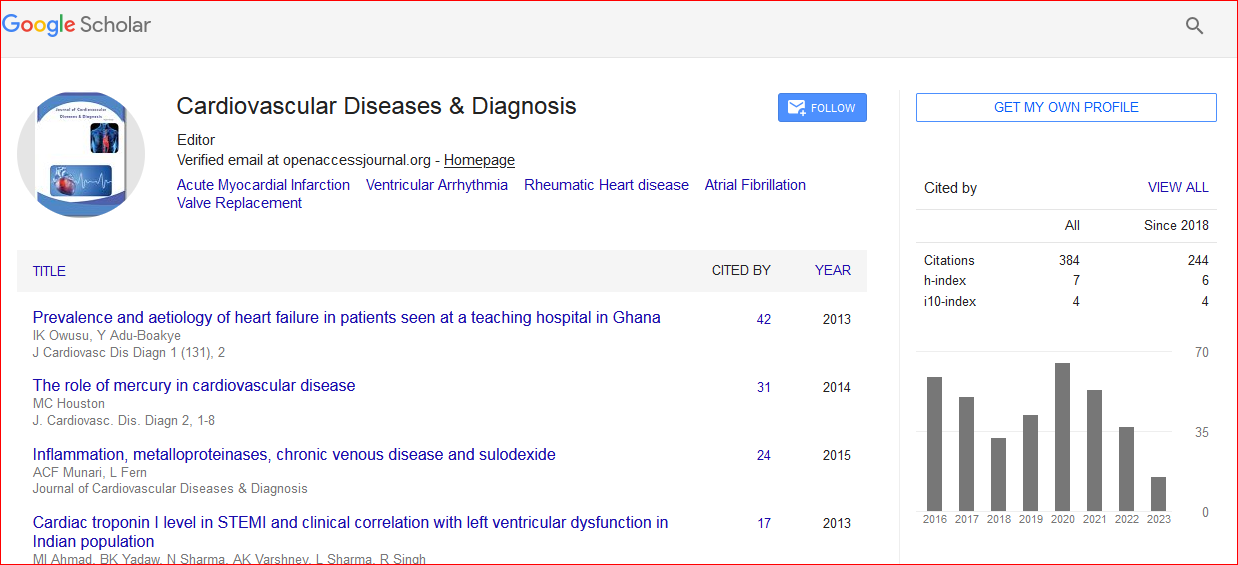
Cardiovascular Diseases & Diagnosis received 427 citations as per Google Scholar report