Commentary - (2025) Volume 14, Issue 3
Received: 01-May-2025, Manuscript No. jtm-26-185728;
Editor assigned: 05-May-2025, Pre QC No. P-185728;
Reviewed: 19-May-2025, QC No. Q-185728;
Revised: 22-May-2025, Manuscript No. R-185728;
Published:
29-May-2025
, DOI: 10.37421/2167-1222.2025.14.680
Citation: Okafor, Chisom. ”Holistic Trauma Treatment: Integration, Innovation, and Resilience.” J Trauma Treat 14 (2025):680.
Copyright: © 2025 Okafor C. This is an open-access article distributed under the terms of the Creative Commons Attribution License, which permits unrestricted use, distribution and reproduction in any medium, provided the original author and source are credited.
The comprehensive treatment of trauma necessitates a multifaceted approach, integrating various therapeutic modalities to address the complex needs of survivors. This includes a combination of psychotherapy, pharmacotherapy, and complementary therapies, tailored to individual patient requirements and cultural contexts. The involvement of multidisciplinary teams is crucial for optimizing patient outcomes through a holistic framework that encompasses biological, psychological, and social aspects of recovery [1].
Technological advancements are increasingly augmenting traditional trauma treatment paradigms. Innovations such as virtual reality (VR) and teletherapy offer new avenues for delivering effective interventions. These tools are particularly beneficial for exposure therapy and extending mental health support to individuals in remote areas or those with mobility limitations, enhancing engagement and providing controlled therapeutic environments [2].
Community-based interventions play a vital role in trauma recovery by fostering robust social support networks and peer-led programs. The emphasis here is on cultivating a sense of belonging and collective resilience, which are paramount for long-term healing. Community engagement actively mitigates feelings of isolation and empowers individuals to navigate their recovery journeys more effectively [3].
The implementation of trauma-informed care within healthcare systems is essential for recognizing and addressing the pervasive impact of trauma on health. This involves advocating for policies and practices that prevent re-traumatization, build patient trust, and enhance adherence to treatment through comprehensive training for healthcare professionals and the creation of safe environments [4].
Understanding the neurobiological underpinnings of trauma is critical for developing effective treatments. Research into how various therapeutic modalities impact brain function, particularly therapies like EMDR and somatic experiencing, offers profound insights into the mechanisms of healing and addressing trauma-related changes in the brain [5].
Mindfulness-based interventions are being integrated into trauma treatment programs to promote emotion regulation and overall well-being. Practices such as meditation and yoga assist survivors in managing hypervigilance and fostering a more integrated healing process by enhancing self-awareness and emotional control [6].
Addressing complex trauma, often stemming from multiple adverse experiences, presents unique challenges and ethical considerations. Long-term, phased treatment approaches are necessary, with a strong emphasis on building a secure therapeutic alliance and ensuring a safe environment for healing throughout the process [7].
Family-based interventions are increasingly recognized for their importance in trauma treatment, as trauma often impacts the entire family system. Involving family members enhances support for the survivor and helps address relational dynamics that may have been disrupted by the traumatic experience, promoting a more cohesive recovery [8].
Cultural competence in trauma treatment is paramount, requiring a deep understanding of how cultural backgrounds, beliefs, and values shape trauma experiences and healing processes. Culturally sensitive therapeutic approaches are vital to respecting individual and community contexts and ensuring treatment efficacy [9].
The utilization of creative arts therapies, including art, music, and drama, serves as valuable adjuncts to traditional trauma treatment. These modalities facilitate emotional expression, provide non-verbal pathways for processing trauma, and enhance self-awareness and coping skills, contributing to a more holistic healing experience [10].
The integration of diverse therapeutic modalities forms the cornerstone of comprehensive trauma treatment. This includes the synergistic application of psychotherapy, pharmacotherapy, and complementary therapies, with interventions meticulously tailored to individual needs and cultural contexts. The establishment of multidisciplinary teams is instrumental in enhancing patient outcomes by adopting a holistic perspective that addresses the biological, psychological, and social dimensions of trauma recovery [1].
Technological innovations are revolutionizing trauma recovery by augmenting conventional treatment methods. The efficacy of virtual reality (VR) and teletherapy in enhancing exposure therapy and providing accessible mental health support, particularly for geographically isolated individuals or those with mobility challenges, is a key focus. These technologies foster greater engagement and create controlled, supportive therapeutic environments [2].
Community-based interventions are integral to supporting trauma survivors, primarily through the development of strong social support networks and peer-led initiatives. The core principle is the cultivation of a sense of belonging and collective resilience, which are fundamental for sustained healing. Active community engagement serves to counteract feelings of isolation and empowers individuals in their healing processes [3].
The systemic adoption of trauma-informed care within healthcare settings is crucial for acknowledging and mitigating the widespread impact of trauma on health. This entails implementing policies and practices that prevent re-traumatization, foster patient trust, and improve treatment adherence through targeted training for healthcare professionals and the creation of secure environments [4].
Investigating the neurobiological underpinnings of trauma is essential for advancing treatment efficacy. Research elucidates how therapies such as Eye Movement Desensitization and Reprocessing (EMDR) and somatic experiencing influence brain function, providing critical insights into the mechanisms that facilitate healing and address trauma-induced neurological changes [5].
Mindfulness-based interventions are increasingly incorporated into trauma treatment frameworks to bolster emotion regulation and enhance overall well-being. Practices like meditation and yoga equip survivors with tools to manage hypervigilance and promote a more integrated recovery by improving self-awareness and emotional coping capacities [6].
Treating complex trauma, often characterized by a history of multiple adverse experiences, involves significant challenges and ethical considerations. The necessity for long-term, phased treatment approaches, coupled with the paramount importance of establishing a strong therapeutic alliance and ensuring patient safety, guides effective intervention strategies [7].
The integration of family-based interventions into trauma treatment acknowledges the profound impact of trauma on the entire family system. Engaging family members amplifies support for the survivor and addresses complex relational dynamics affected by traumatic experiences, thereby fostering a more supportive healing environment [8].
Cultural competence is a critical element in trauma treatment, demanding a thorough understanding of how cultural backgrounds, belief systems, and values shape both the experience of trauma and the pathways to healing. The development and application of culturally sensitive therapeutic approaches are imperative to honor individual and community contexts and ensure treatment relevance [9].
Creative arts therapies, encompassing art, music, and drama, are being explored as valuable adjuncts to conventional trauma treatment. These expressive modalities facilitate the processing of emotions, offer non-verbal channels for trauma work, and enhance self-awareness and the development of robust coping mechanisms [10].
This collection of research explores various facets of trauma treatment, emphasizing a holistic and integrated approach. Key themes include the synergy of psychotherapy, pharmacotherapy, and complementary therapies, alongside the role of technology like VR and teletherapy in enhancing accessibility and engagement. Community-based interventions and family involvement are highlighted for their importance in building support networks and fostering resilience. The necessity of trauma-informed care within healthcare systems, understanding neurobiological mechanisms, and the application of mindfulness and creative arts therapies are also discussed. Addressing complex trauma and ensuring cultural competence are presented as critical considerations for effective and ethical treatment, underscoring the need for tailored, long-term strategies.
None
None
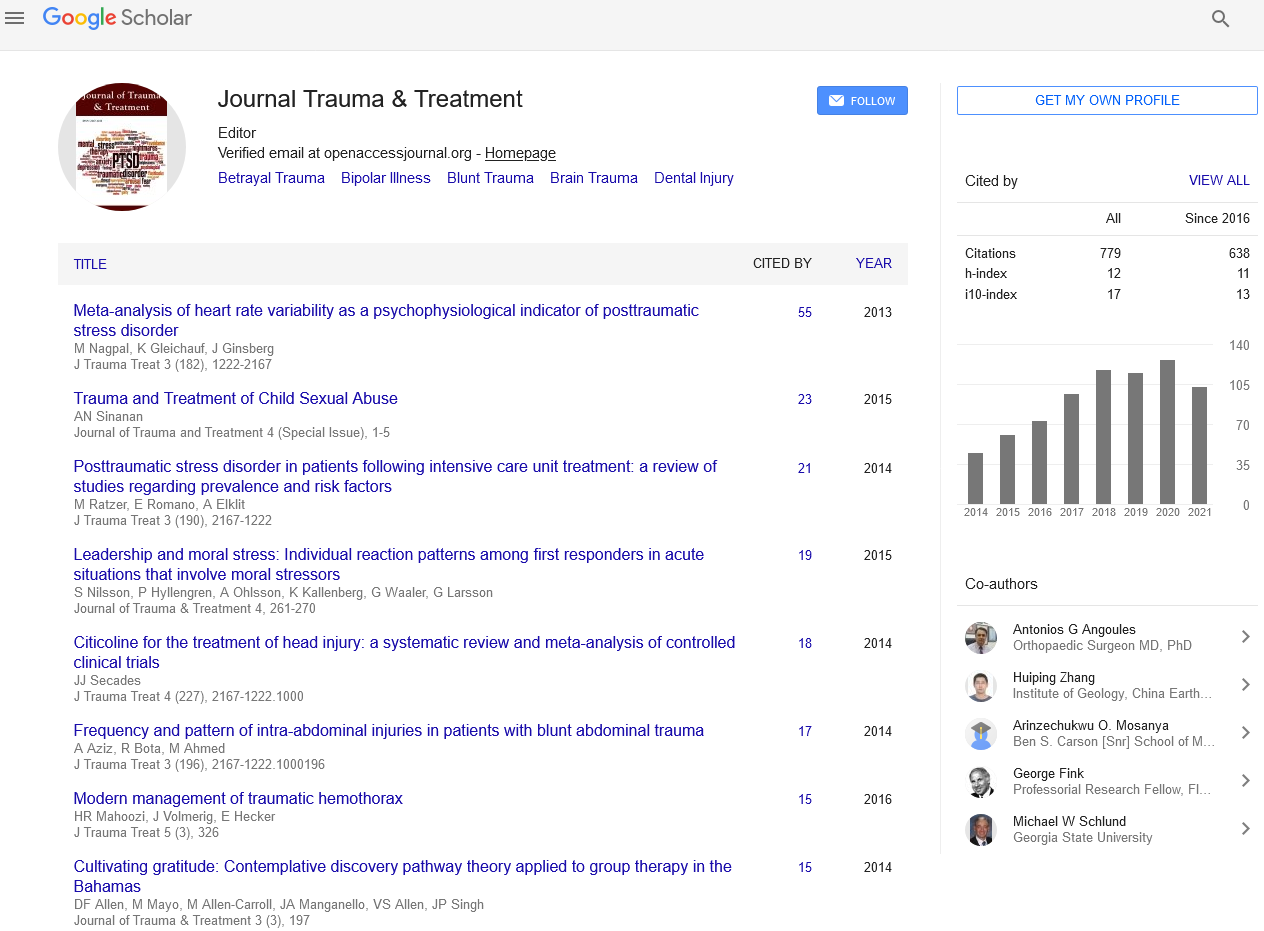
Journal of Trauma & Treatment received 1048 citations as per Google Scholar report