Opinion - (2025) Volume 14, Issue 3
Received: 01-May-2025, Manuscript No. jio-26-184805;
Editor assigned: 05-May-2025, Pre QC No. P-184805;
Reviewed: 19-May-2025, QC No. Q-184805;
Revised: 22-May-2025, Manuscript No. R-184805;
Published:
29-May-2025
, DOI: 10.37421/2329-6771.2025.14.556
Citation: Alvarez, Sofia. ”Holistic Integrative Oncology: Shared Decisions, Patient Well-being.” J Integr Onco 14 (2025):556.
Copyright: © 2025 Alvarez S. This is an open-access article distributed under the terms of the Creative Commons Attribution License, which permits unrestricted use, distribution and reproduction in any medium, provided the original author and source are credited.
Patient-centered care models are fundamentally reshaping the landscape of integrative oncology, prioritizing the individual's journey through shared decision-making and personalized treatment plans. These models emphasize a holistic approach, integrating conventional medical treatments with complementary therapies to address the multifaceted needs of cancer patients. The core objective is to enhance the patient's quality of life and improve adherence to prescribed therapies by fostering a collaborative relationship between patients and their healthcare providers [1].
Central to these patient-centered frameworks is the rigorous incorporation of patient-reported outcomes (PROs). By systematically collecting data on symptoms and quality of life directly from patients, clinicians can gain real-time insights. This allows for dynamic adjustments to care plans, ensuring they remain aligned with the patient's evolving needs and experiences, thereby empowering active participation in their treatment [2].
Shared decision-making (SDM) stands as a critical pillar within patient-centered oncology. This process ensures that treatment choices are not made in isolation but are a result of open dialogue that considers the patient's unique values, preferences, and goals. In the context of integrative oncology, SDM extends to discussions encompassing both conventional and complementary treatment modalities, fostering trust and enhancing patient satisfaction [3].
Recognizing the profound emotional and mental health impact of cancer, the integration of robust psychosocial support is a vital component of patient-centered integrative oncology. This includes proactive management of anxiety, depression, and existential distress through various therapeutic interventions, thereby improving the patient's overall well-being and coping mechanisms [4].
Holistic approaches are intrinsic to integrative oncology, advocating for a comprehensive view of the patient that extends beyond their physical condition. Patient-centered models leverage this by tailoring interventions, such as nutritional guidance, exercise recommendations, and stress management techniques, to the individual's lifestyle, environment, and social context, aiming to optimize health throughout their cancer journey [5].
Effective communication forms the bedrock of successful patient-centered integrative oncology. Cultivating clear, open, and empathetic dialogue among patients and their multidisciplinary care teamsâ??including oncologists, nurses, and integrative practitionersâ??is essential for seamless care coordination and mutual understanding, ultimately bolstering trust and treatment adherence [6].
The implementation of patient-centered care models in integrative oncology signifies a necessary evolution towards more collaborative and personalized healthcare. This paradigm shift empowers patients as active stakeholders in their treatment and promotes coordinated efforts from a multidisciplinary team, emphasizing individual needs and preferences to achieve optimal outcomes and well-being [7].
Integrative oncology fundamentally aims to elevate the patient experience by judiciously blending conventional medical treatments with evidence-based complementary therapies. Patient-centered models ensure that these integrated approaches are meticulously tailored to meet individual patient requirements, with a dedicated focus on symptom management, quality of life enhancement, and comprehensive emotional support, striving for optimal healing and well-being across the cancer continuum [8].
The profound impact of patient-centered care models in oncology is increasingly evident, particularly in their capacity to address the complex and diverse needs of individuals facing cancer. By steadfastly prioritizing the patient's values, preferences, and overarching goals, these models cultivate strengthened therapeutic alliances and markedly improve adherence to complex treatment regimens, encompassing physical, emotional, and social dimensions of health [9].
Navigating the intricacies of the cancer journey demands a supportive and highly individualized approach, a role perfectly fulfilled by patient-centered care models in integrative oncology. These models ensure patients are central to their treatment decisions and receive comprehensive support encompassing physical, emotional, and spiritual dimensions, integrating personalized care with complementary therapies to enhance resilience and overall life quality [10].
Patient-centered care models in integrative oncology are characterized by their emphasis on shared decision-making, where patients actively participate in treatment choices alongside their healthcare providers. This collaborative approach ensures that treatment plans are not only clinically sound but also aligned with the patient's personal values, goals, and preferences, thereby fostering a sense of agency and engagement in their own care [1].
At the heart of these patient-centered initiatives lies the critical use of patient-reported outcomes (PROs). PROs provide a direct channel for patients to communicate their experiences with symptoms, functional status, and quality of life. This continuous feedback loop enables clinicians to monitor treatment effectiveness and side effects in real-time, facilitating timely and personalized modifications to the care plan, thereby optimizing the patient's therapeutic journey [2].
Shared decision-making (SDM) is a foundational element that underpins patient-centered care in integrative oncology. It involves a nuanced dialogue between clinicians and patients, exploring the potential benefits, risks, and uncertainties associated with various treatment options, including both conventional and complementary modalities. This collaborative process is crucial for building trust and ensuring that treatment decisions are mutually agreed upon and respected [3].
Integral to the patient-centered philosophy is the provision of comprehensive psychosocial support. Cancer diagnosis and treatment often impose a significant emotional and mental burden. Patient-centered models address this by integrating evidence-based interventions, such as counseling, mindfulness, and support groups, to help patients manage anxiety, depression, and other psychological distress, thereby enhancing their overall resilience and well-being [4].
The holistic ethos of integrative oncology is particularly evident in its patient-centered application, where the entirety of the patient's life context is considered. This includes their lifestyle, environment, and social determinants of health. Interventions are then tailored to address these individual circumstances, incorporating elements like personalized nutrition, tailored exercise regimens, and specific stress management techniques to promote health and resilience [5].
Effective communication is indispensable within patient-centered integrative oncology. Establishing and maintaining open, clear, and empathetic communication channels between patients and their multidisciplinary care teams is paramount. This ensures that all members of the care team are informed and coordinated, leading to a more cohesive and patient-aligned treatment experience, which in turn can improve trust and adherence [6].
The operationalization of patient-centered care models in integrative oncology necessitates a deliberate shift towards a more collaborative and individualized approach. This involves not only empowering patients to be active participants but also fostering a coordinated effort among a multidisciplinary team of healthcare professionals. The focus remains steadfastly on recognizing and addressing the unique needs and preferences of each patient to maximize positive outcomes and enhance overall well-being [7].
Integrative oncology's fundamental aim is to enhance the patient experience by synergistically combining conventional medical treatments with complementary therapies that have demonstrated efficacy. Patient-centered models ensure that these integrated strategies are personalized, focusing intently on managing symptoms, improving quality of life, and providing robust emotional support, with the ultimate goal of optimizing healing and well-being throughout the entire cancer continuum [8].
The demonstrated effectiveness of patient-centered care models within the oncology setting is increasingly recognized, particularly for their adeptness in addressing the multifaceted needs inherent in cancer care. By placing a premium on understanding and integrating patient values, preferences, and life goals, these models cultivate significantly stronger therapeutic alliances and lead to improved adherence to complex treatment regimens, addressing physical, emotional, and social dimensions of health [9].
The complex journey of cancer survivorship and treatment is significantly eased through patient-centered care models in integrative oncology. These frameworks ensure that patients are not merely recipients of care but active co-creators of their treatment plans, receiving comprehensive support for their physical, emotional, and spiritual well-being. This integration of personalized care with evidence-based complementary therapies is designed to bolster resilience and elevate the quality of life for individuals affected by cancer [10].
Patient-centered care models in integrative oncology prioritize shared decision-making, individualized treatment plans, and holistic support to improve patient quality of life and adherence. These models integrate conventional treatments with complementary therapies, addressing physical, emotional, and spiritual well-being through strong communication and psychosocial support systems. The use of patient-reported outcomes (PROs) is crucial for real-time symptom tracking and personalized care adjustments, empowering patients in their treatment journey. Shared decision-making ensures treatment choices align with patient values, while holistic approaches consider the entire patient context. Effective communication among multidisciplinary teams and robust psychosocial interventions are vital for managing the emotional burden of cancer. Ultimately, these models aim to optimize healing, enhance resilience, and improve the overall experience of cancer patients by focusing on their unique needs and preferences.
None
None
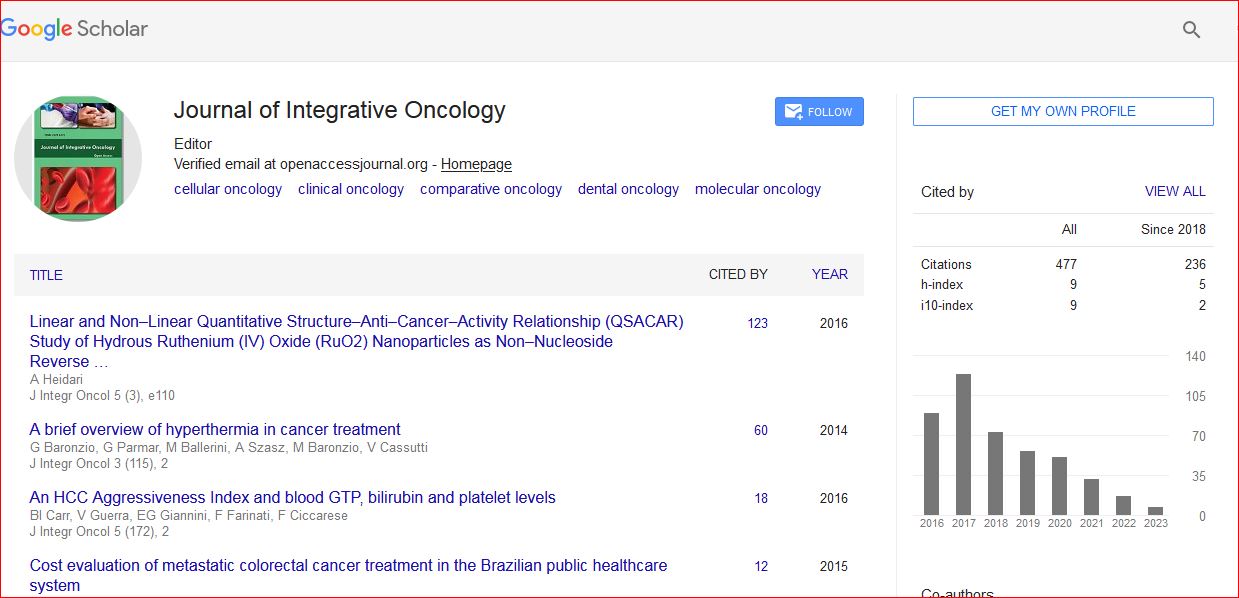
Journal of Integrative Oncology received 495 citations as per Google Scholar report