Short Communication - (2025) Volume 16, Issue 3
Received: 02-May-2025, Manuscript No. jhmi-26-178846;
Editor assigned: 05-May-2025, Pre QC No. P-178846;
Reviewed: 19-May-2025, QC No. Q-178846;
Revised: 23-May-2025, Manuscript No. R-178846;
Published:
30-May-2025
, DOI: 10.37421/2157-7420.2025.16.596
Citation: Mwangi, Daniel K.. ”Healthcare Informatics Cybersecurity: Threats, Mitigation and Resilience.” J Health Med Informat 16 (2025):596.
Copyright: © 2025 Mwangi K. Daniel This is an open-access article distributed under the terms of the Creative Commons Attribution License, which permits unrestricted use, distribution and reproduction in any medium, provided the original author and source are credited.
The landscape of healthcare informatics is increasingly defined by a complex interplay of technological advancement and evolving security imperatives. As digital solutions become integral to patient care and operational efficiency, understanding and mitigating the associated cybersecurity threats is paramount. This article embarks on an exploration of these challenges, beginning with an examination of the escalating cybersecurity threats within healthcare informatics, specifically focusing on the critical aspects of patient data protection and the maintenance of operational integrity. Common vulnerabilities, including ransomware, phishing, and insider threats, are detailed, underscoring the urgent necessity for robust risk mitigation strategies to safeguard sensitive health information and ensure the seamless continuity of care [1].
The accelerating adoption of electronic health records (EHRs) and the proliferation of interconnected medical devices within healthcare settings have introduced a significant new layer of cybersecurity risks that demand careful consideration. This paper outlines the specific and often sophisticated threats faced by modern healthcare organizations, encompassing data breaches, disruptive denial-of-service attacks, and the exploitation of compromised medical devices. A strong advocacy for a layered security approach is presented, incorporating essential elements such as stringent access controls, effective network segmentation, diligent regular vulnerability assessments, and unwavering adherence to crucial regulatory compliance frameworks like HIPAA, all aimed at protecting patient privacy and sustaining system availability [2].
Of particular concern is the profound impact of ransomware attacks on healthcare delivery and the fundamental operational continuity of medical facilities. This study meticulously investigates how such malicious attacks can severely disrupt essential patient care services, lead to substantial financial losses, and critically compromise the integrity and confidentiality of sensitive patient data. The research unequivocally emphasizes the paramount importance of implementing proactive security measures, including the consistent practice of regular data backups, the deployment of robust endpoint protection solutions, and the development of comprehensive disaster recovery plans. Furthermore, it critically discusses the indispensable necessity for healthcare organizations to meticulously develop and regularly test their incident response capabilities to effectively manage and recover from these disruptive events [3].
The growing reliance on cloud computing infrastructure for the storage and processing of vast quantities of healthcare data introduces a distinct set of cybersecurity challenges that require thorough examination. This paper systematically examines the inherent risks associated with cloud-based health informatics, including the potential for unauthorized access, inadvertent data leakage, and complex compliance issues. It proposes a set of best practices designed to secure cloud environments effectively, emphasizing the implementation of strong encryption protocols, secure API integrations, strictly enforced access controls, and continuous security audits. The authors strongly stress the vital importance of selecting reputable cloud service providers that demonstrate strong security certifications and a proven track record [4].
Insider threats represent a significant and frequently underestimated risk within the complex domain of healthcare informatics. This article meticulously discusses the diverse forms that insider threats can manifest, ranging from unintentional accidental data exposure by well-meaning employees to deliberate malicious intent from disgruntled or compromised individuals. It profoundly emphasizes the critical need for a comprehensive insider threat program, which must encompass robust access management policies, continuous monitoring of user activity, the strategic deployment of data loss prevention (DLP) solutions, and the active fostering of a strong security-aware culture among all staff members. Effective training and clearly articulated policies are identified as crucial elements for successfully mitigating these pervasive risks [5].
The security of interconnected medical devices, increasingly referred to as the Internet of Medical Things (IoMT), has emerged as a subject of growing concern within the healthcare sector. This paper meticulously identifies a range of common vulnerabilities inherent in IoMT devices, such as the pervasive use of default credentials, the frequent lack of adequate encryption, and infrequent or non-existent patching processes, all of which can be readily exploited by malicious actors. Essential mitigation strategies highlighted include the strategic implementation of network segmentation specifically for medical devices, the diligent utilization of strong authentication mechanisms, the consistent performance of regular vulnerability assessments, and close collaboration with device manufacturers to ensure secure device design and comprehensive lifecycle management [6].
This research provides an in-depth focus on the absolutely critical role that data encryption plays in the robust protection of sensitive patient information within complex healthcare informatics systems. It thoroughly discusses various advanced encryption techniques, including both at-rest and in-transit encryption methodologies, and meticulously details their essential applications to electronic health records, sensitive medical images, and confidential patient communications. The article emphatically emphasizes that the implementation of strong encryption, when complemented by rigorous and well-managed key management practices, constitutes a fundamental and indispensable component of any comprehensive data security strategy. Such measures are absolutely essential for achieving regulatory compliance and for diligently maintaining the invaluable trust of patients [7].
This article critically examines the demonstrable effectiveness of well-designed and consistently implemented security awareness training programs in the crucial task of mitigating cybersecurity risks within the healthcare sector that are specifically related to the human factor. It vividly highlights how common attack vectors, such as sophisticated phishing attacks, pervasive social engineering tactics, and unintentional accidental data mishandling, frequently exploit inherent human vulnerabilities. The study strongly advocates for the provision of regular, engaging, and role-specific training for all healthcare personnel, thereby fostering a pervasive security-conscious culture and reinforcing essential best practices for the secure handling of sensitive patient data and the prompt recognition of potential emerging threats [8].
This paper delves deeply into the critically important aspects of both the development and the subsequent effective implementation of robust incident response plans specifically tailored for healthcare organizations. It meticulously outlines the essential key components that must be included in such comprehensive plans, encompassing accurate incident identification, effective containment strategies, thorough eradication processes, efficient recovery procedures, and detailed post-incident analysis. The authors unequivocally emphasize the profound importance of conducting regular drills and conducting tabletop exercises to rigorously ensure the overall efficacy of the plan and the preparedness of the staff to swiftly and effectively respond to cybersecurity incidents, thereby minimizing any potential disruption and mitigating the risk of damage to patient care and vital data [9].
The complex and ever-evolving regulatory landscape governing cybersecurity within the specialized field of healthcare informatics requires careful navigation and a thorough understanding of applicable standards. This article meticulously analyzes this critical landscape, with a particular focus on ensuring compliance with stringent international and national standards such as HIPAA and GDPR. It thoroughly discusses the significant legal and ethical obligations incumbent upon healthcare providers to meticulously protect sensitive patient data and the severe penalties associated with any form of non-compliance. The authors compellingly highlight how steadfast adherence to these regulations not only ensures a sound legal standing but also plays a crucial role in building and maintaining patient trust and significantly strengthening the overall security posture of healthcare organizations through the diligent application of mandated best practices and rigorous reporting requirements [10].
The field of healthcare informatics is currently confronting a multifaceted array of escalating cybersecurity threats, which necessitate immediate and comprehensive attention. A primary concern revolves around the protection of sensitive patient data and the imperative to maintain the operational integrity of healthcare systems. Common vulnerabilities such as ransomware attacks, sophisticated phishing schemes, and insider threats are frequently exploited by malicious actors, highlighting the critical need for the implementation of robust risk mitigation strategies. These strategies are essential for safeguarding protected health information and ensuring the uninterrupted continuity of patient care [1].
The widespread integration of electronic health records (EHRs) and the increasing interconnectivity of medical devices within healthcare environments have introduced substantial cybersecurity risks. Healthcare organizations are specifically vulnerable to threats including data breaches, denial-of-service attacks that disrupt services, and the compromise of critical medical devices. To counter these threats, a layered security approach is advocated, incorporating essential measures like stringent access controls, effective network segmentation, regular vulnerability assessments, and strict adherence to regulatory compliance frameworks such as HIPAA, which are vital for protecting patient privacy and ensuring system availability [2].
Ransomware attacks pose a particularly devastating threat to healthcare delivery and the continuity of operations. These attacks can severely disrupt patient care, result in significant financial losses, and compromise the integrity of patient data. To combat this threat, it is crucial for healthcare organizations to adopt proactive measures, including regular data backups, the deployment of robust endpoint protection, and the establishment of comprehensive disaster recovery plans. Furthermore, developing and regularly testing incident response capabilities is essential for effectively managing and recovering from such cyber events [3].
The increasing adoption of cloud computing for storing and processing healthcare data presents a new frontier of cybersecurity challenges. Risks associated with cloud-based health informatics include unauthorized access, data leakage, and compliance issues. Best practices for securing cloud environments involve implementing strong encryption, secure API integrations, strict access controls, and regular security audits. Selecting reputable cloud service providers with robust security certifications is also a critical step in mitigating these risks [4].
Insider threats, whether accidental or malicious, represent a significant and often underestimated risk to healthcare information systems. Addressing these threats requires a comprehensive program that includes robust access management, continuous monitoring of user activity, data loss prevention (DLP) solutions, and fostering a strong security-aware culture among staff. Effective training and clear policies are paramount for mitigating these internal vulnerabilities [5].
The security of the Internet of Medical Things (IoMT) is a growing concern, with vulnerabilities such as default credentials, lack of encryption, and infrequent patching being common entry points for attackers. Mitigation strategies include network segmentation for medical devices, strong authentication, regular vulnerability assessments, and ensuring secure device design and lifecycle management through collaboration with manufacturers [6].
Data encryption is a cornerstone of protecting sensitive patient information in healthcare informatics. Both at-rest and in-transit encryption techniques are vital for securing electronic health records, medical images, and patient communications. Robust encryption, coupled with effective key management, is indispensable for regulatory compliance and maintaining patient trust [7].
Security awareness training programs play a crucial role in mitigating human-factor related cybersecurity risks in healthcare. By addressing vulnerabilities exploited through phishing, social engineering, and accidental data mishandling, regular and interactive training fosters a security-conscious culture. This reinforces best practices for handling sensitive patient data and recognizing potential threats among all healthcare personnel [8].
Developing and implementing effective incident response plans is critical for healthcare organizations. These plans should include clear protocols for incident identification, containment, eradication, recovery, and post-incident analysis. Regular drills and tabletop exercises are vital to ensure the plan's efficacy and the staff's readiness to respond to cyber incidents, thereby minimizing disruption and protecting patient care and data [9].
Navigating the regulatory landscape of healthcare cybersecurity, including compliance with standards like HIPAA and GDPR, is essential. Healthcare providers have legal and ethical obligations to protect patient data, and non-compliance carries significant penalties. Adherence to these regulations not only ensures legal standing but also builds patient trust and strengthens overall security through mandated best practices and reporting requirements [10].
Healthcare informatics faces significant cybersecurity threats impacting patient data and operational integrity. Key vulnerabilities include ransomware, phishing, and insider threats, necessitating robust mitigation strategies like multi-factor authentication, training, encryption, and incident response plans. The rise of electronic health records and interconnected medical devices exacerbates these risks, requiring layered security approaches, access controls, and regulatory compliance. Cloud computing and the Internet of Medical Things (IoMT) introduce further challenges, emphasizing the need for secure cloud practices and IoMT device security. Data encryption is fundamental for confidentiality and integrity, while security awareness training addresses human-factor risks. Effective incident response plans and adherence to regulations like HIPAA and GDPR are crucial for safeguarding patient information, maintaining trust, and ensuring operational continuity.
None
None
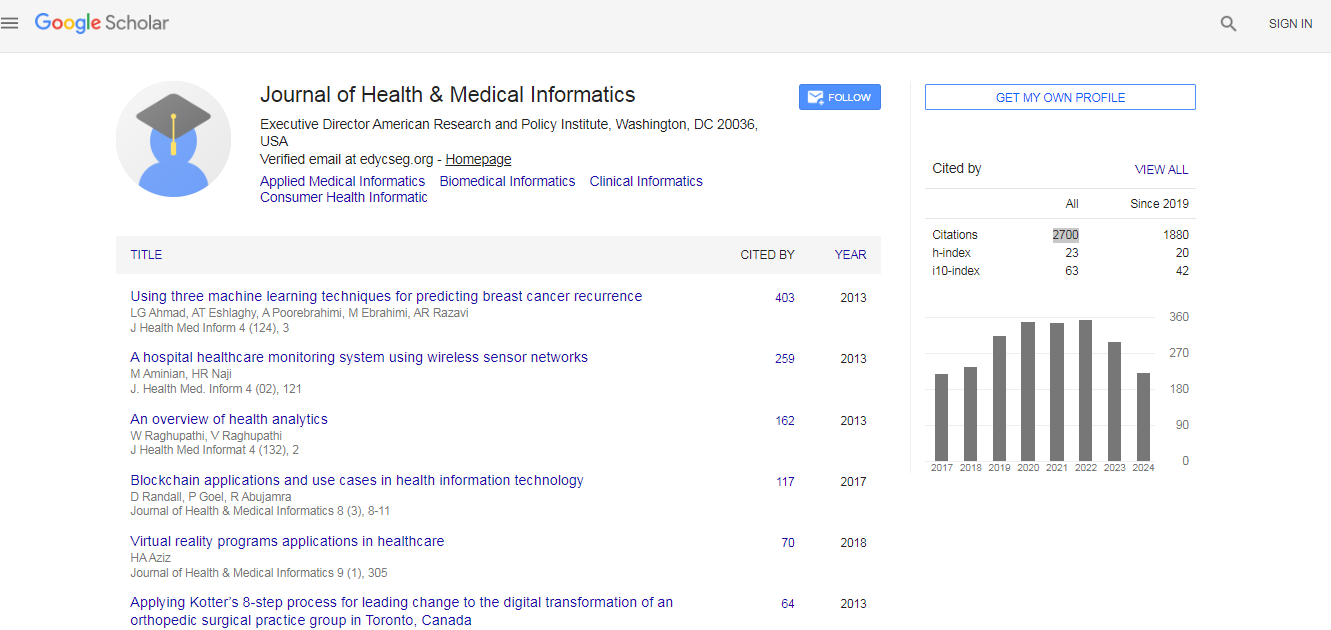
Journal of Health & Medical Informatics received 2700 citations as per Google Scholar report