Opinion - (2025) Volume 12, Issue 6
Received: 01-Dec-2025, Manuscript No. jreac-26-185807;
Editor assigned: 03-Dec-2025, Pre QC No. P-185807;
Reviewed: 17-Dec-2025, QC No. Q-185807;
Revised: 22-Dec-2025, Manuscript No. R-185807;
Published:
29-Dec-2025
, DOI: 10.37421/2380-2391.2025.12.463
Citation: Dubois, Alexandre. ”Harmonizing Environmental Monitoring: Global QA/QC Imperative.” J Environ Anal Chem 12 (2025):463.
Copyright: © 2025 Dubois A. This is an open-access article distributed under the terms of the Creative Commons Attribution License, which permits unrestricted use,
distribution and reproduction in any medium, provided the original author and source are credited
The imperative for robust and standardized quality assurance and quality control (QA/QC) protocols in global environmental monitoring has never been more pronounced. Inconsistent methodologies across diverse geographical regions and analytical laboratories significantly compromise the comparability of collected data, thereby hindering effective environmental management strategies and impeding the progress of global scientific collaboration. This challenge necessitates the development of universally accepted QA/QC standards, emphasizing critical elements such as interlaboratory comparisons and proficiency testing to build confidence in environmental data and support evidence-based policy decisions [1].
The domain of air quality monitoring, in particular, faces substantial hurdles due to fragmented QA/QC practices. Variations in sampling techniques, analytical methodologies, and data reporting formats directly impact the accuracy and comparability of air quality measurements. Advocating for the widespread implementation of standardized operating procedures (SOPs) and the adoption of certified reference materials is vital for ensuring data reliability and understanding regional pollution trends [2].
Water quality monitoring presents its own set of standardization challenges, often exacerbated by a patchwork of diverse regulatory frameworks. Common pitfalls identified in sampling, sample preservation, and analytical procedures can lead to the generation of unreliable data. A tiered approach to QA/QC, adaptable to varying monitoring objectives and resource constraints while ensuring a baseline of comparability, is essential for effective water resource assessment and global pollution management [3].
Furthermore, the increasing emergence of novel contaminants in the environment poses unique QA/QC standardization difficulties. The inherent novelty of these substances and their diverse chemical properties mean that existing protocols may be inadequate. Developing new analytical methods, coupled with rigorous validation and interlaboratory studies, is crucial for establishing reliable monitoring techniques for these emerging pollutants and understanding their associated risks [4].
The role of accreditation and certification in standardizing QA/QC for environmental laboratories on a global scale is also critically important. Adherence to international standards, such as ISO/IEC 17025, offers significant benefits by enhancing data quality and bolstering stakeholder confidence. The widespread adoption of accreditation frameworks is a key facilitator of harmonized environmental monitoring practices worldwide [5].
A practical perspective on implementing standardized QA/QC is highlighted by a multinational project focused on soil monitoring. This case study details the challenges encountered, including variations in soil types, climatic conditions, and local expertise, and outlines strategies for adaptive protocol development and rigorous training. These experiences underscore the necessity of flexibility within a standardized framework to ensure its applicability across diverse environmental settings [6].
Beyond measurement protocols, the standardization of data management and validation plays a pivotal role in ensuring the integrity of environmental monitoring QA/QC. Standardized metadata, robust data quality indicators, and secure data archiving are essential for maintaining data integrity and facilitating their use in global assessments, complementing standardized measurement approaches [7].
The integration of novel technologies, such as remote sensing and citizen science, into standardized environmental monitoring also requires careful consideration of QA/QC. While these tools offer expanded spatial and temporal coverage, establishing robust QA/QC frameworks is paramount to ensuring the reliability of the data they generate, particularly when integrated with conventional monitoring methods [8].
The regulatory landscape significantly influences the standardization of QA/QC protocols in environmental monitoring. Divergent national and international regulations can create substantial barriers to harmonization. Developing more aligned regulatory approaches is essential for improving data quality and fostering international cooperation on environmental issues [9].
Finally, proficiency testing schemes serve as a critical tool for establishing and maintaining standardized QA/QC for environmental monitoring laboratories globally. Analyzing the effectiveness of various proficiency testing programs helps identify laboratory performance issues and promotes continuous improvement, acting as a cornerstone for ensuring the reliability and comparability of environmental data on an international scale [10].
The critical need for standardized quality assurance and quality control (QA/QC) protocols in global environmental monitoring is highlighted, addressing how inconsistent methodologies across regions and laboratories compromise data comparability, hinder effective environmental management, and impede global scientific collaboration. A framework for developing universally accepted QA/QC standards is proposed, emphasizing interlaboratory comparisons, proficiency testing, and robust documentation to build trust in environmental data and support evidence-based policy decisions [1].
In the realm of air quality monitoring, challenges stemming from fragmented QA/QC practices are examined, focusing on how variations in sampling, analytical techniques, and data reporting affect measurement accuracy and comparability. The authors advocate for the implementation of standardized operating procedures (SOPs) and the adoption of certified reference materials to guarantee data reliability, which is crucial for understanding regional pollution trends and informing international environmental agreements [2].
This study concentrates on the standardization of QA/QC for water quality monitoring, a sector often characterized by diverse regulatory frameworks. It identifies common pitfalls in sampling, preservation, and analysis that lead to unreliable data, proposing a tiered approach to QA/QC that is adaptable to various monitoring objectives and resource levels while still ensuring a baseline of comparability, essential for assessing water resources and managing pollution globally [3].
The paper investigates the specific challenges in standardizing QA/QC for emerging contaminants in environmental monitoring. Due to their novel nature and diverse chemical properties, existing protocols may prove inadequate. The authors discuss the development of new analytical methods and the importance of validation and interlaboratory studies to establish reliable monitoring techniques for these substances, which is critical for understanding and managing risks associated with new pollutants [4].
This article explores the pivotal role of accreditation and certification in standardizing QA/QC for environmental laboratories worldwide. It outlines the benefits of adhering to international standards like ISO/IEC 17025 and their impact on data quality and stakeholder confidence. The authors argue that widespread adoption of accreditation frameworks represents a key step towards harmonized environmental monitoring practices [5].
The authors present a case study detailing the implementation of standardized QA/QC for soil monitoring within a multinational project. They discuss the challenges encountered, such as varying soil types, climatic conditions, and local expertise, and explain how these were addressed through adaptive protocol development and rigorous training. The findings emphasize the importance of flexibility within a standardized framework to ensure its applicability across diverse environments [6].
This paper focuses on the significance of data management and validation in standardizing environmental monitoring QA/QC. It underscores the necessity for standardized metadata, robust data quality indicators, and secure data archiving to ensure data integrity and facilitate its utilization in global assessments. The authors propose a harmonized approach to data handling that complements standardized measurement protocols [7].
The study examines the application of novel technologies, including remote sensing and citizen science, within the context of standardizing QA/QC for environmental monitoring. It discusses how these tools can contribute to broader spatial and temporal coverage but stresses the critical need for robust QA/QC frameworks to ensure the reliability of the data they generate, especially when integrated with traditional monitoring methods [8].
This article critically analyzes the regulatory landscape and its influence on the standardization of QA/QC protocols in environmental monitoring. It highlights how differing national and international regulations create barriers to harmonization and proposes strategies for developing more aligned regulatory approaches to enhance data quality and facilitate international cooperation on environmental issues [9].
The authors discuss the importance of proficiency testing schemes in establishing and maintaining standardized QA/QC for environmental monitoring laboratories worldwide. They analyze the effectiveness of various proficiency testing programs in identifying laboratory performance issues and promoting continuous improvement, presenting this as a fundamental aspect of ensuring the reliability and comparability of environmental data on a global scale [10].
This collection of research highlights the critical global need for standardized quality assurance and quality control (QA/QC) protocols in environmental monitoring. Inconsistent methodologies across regions and labs compromise data comparability, hindering effective management and scientific collaboration. Papers address challenges in air, water, and soil quality monitoring, the standardization of emerging contaminant detection, and the role of accreditation and proficiency testing. The integration of new technologies and the impact of regulatory frameworks are also discussed, emphasizing the importance of robust data management and validation for ensuring data integrity and interoperability. Ultimately, the research advocates for harmonized approaches to enhance data reliability and facilitate evidence-based environmental policy.
None
None
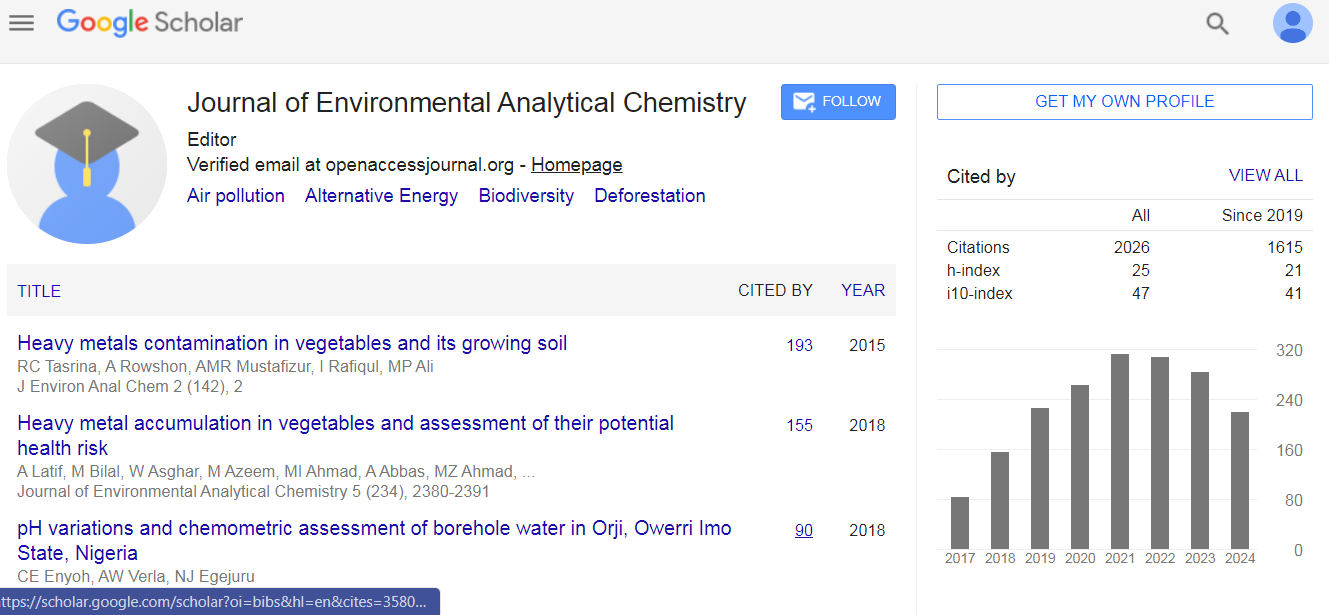
Journal of Environmental Analytical Chemistry received 1781 citations as per Google Scholar report