Brief Report - (2025) Volume 13, Issue 3
Received: 01-May-2025, Manuscript No. economics-26-186045;
Editor assigned: 05-May-2025, Pre QC No. P-186045;
Reviewed: 19-May-2025, QC No. Q-186045;
Revised: 22-May-2025, Manuscript No. R-186045;
Published:
29-May-2025
, DOI: 10.37421/2375-4389.2025.13.521
Citation: Hayakawa, Yuta. ”Global Monetary Shifts: Emerging
Markets’ Vulnerability and Management.” J Glob Econ 13 (2025):521.
Copyright: © 2025 Hayakawa Y. This is an open-access article distributed under the terms of the Creative Commons Attribution License, which permits unrestricted use,
distribution and reproduction in any medium, provided the original author and source are credited.
The transmission of global monetary policy, particularly from major central banks, significantly impacts emerging economies, influencing crucial economic variables such as capital flows, exchange rates, inflation, and overall financial stability. Emerging market central banks face considerable challenges in managing these external spillovers and require robust policy frameworks to mitigate adverse consequences [1].
The normalization of monetary policy in advanced economies has demonstrably heterogeneous effects across a panel of emerging markets. Countries exhibiting weaker external financial positions and a higher burden of foreign currency debt are found to be disproportionately vulnerable to capital outflows and subsequent currency depreciation, highlighting the imperative for prudent macroeconomic management and structural reforms to bolster resilience [2].
U.S. monetary policy shocks are transmitted to Latin American economies through various channels, with global risk aversion and fluctuations in commodity prices playing pivotal roles. These external factors, amplified by domestic financial conditions, critically shape the impact on inflation and economic growth within the region [3].
The implementation and subsequent unwinding of quantitative easing (QE) by major central banks have profound effects on emerging market liquidity and asset prices. A swift withdrawal of QE can precipitate substantial capital outflows and heightened currency volatility, necessitating preemptive policy adjustments by emerging economies to counter these risks [4].
Exchange rate regimes serve as a crucial determinant in how emerging economies absorb or amplify the effects of global monetary policy shocks on inflation. While flexible exchange rates can offer a degree of shock absorption, their efficacy is contingent upon the credibility of domestic monetary policy and the prevalent degree of financial dollarization [5].
Interest rate differentials between advanced and emerging economies play a significant role in capital allocation and sovereign risk. Widening differentials, often a consequence of monetary policy tightening in advanced economies, can trigger capital flight and elevate borrowing costs for emerging markets, thereby increasing their sovereign risk [6].
External financial conditions, heavily influenced by global monetary policy stances, have a direct bearing on the effectiveness of fiscal policy in emerging economies. Tighter global financial conditions can significantly constrain fiscal space, potentially amplifying the impact of both fiscal stimulus and consolidation measures [7].
Global financial market sentiment, frequently shaped by expectations surrounding monetary policy decisions, exerts a notable influence on emerging market equity and bond returns. Heightened risk aversion within advanced economies, for instance, can lead to considerable sell-offs in emerging market assets [8].
The degree of international monetary policy coordination, or its absence, critically impacts the stability of emerging financial systems. Uncoordinated policy actions by global central banks can introduce greater volatility and uncertainty, posing challenges for emerging market economies seeking to maintain financial stability [9].
Global monetary policy directly influences inflation dynamics in emerging economies by affecting exchange rate pass-through, imported inflation, and the necessity for domestic monetary policy responses. Controlling inflation becomes particularly challenging when confronted with significant external price pressures and volatile capital flows [10].
The transmission of global monetary policy from advanced economies to emerging markets is a complex phenomenon with far-reaching consequences. Major central banks' policy shifts affect capital flows, exchange rates, inflation, and financial stability in developing nations. Consequently, emerging market central banks must adopt robust policy frameworks to effectively manage these spillovers and mitigate potential adverse impacts [1].
Research indicates that the normalization of monetary policy in advanced economies has a heterogeneous impact on emerging markets. Countries with weaker external financial positions and higher levels of foreign currency debt are more susceptible to capital outflows and currency depreciation. This underscores the critical need for these nations to implement prudent macroeconomic management and pursue structural reforms to enhance their resilience [2].
U.S. monetary policy shocks, for example, transmit to Latin American economies through specific channels. These include shifts in global risk aversion and fluctuations in commodity prices, which, when combined with domestic financial conditions, significantly influence inflation and economic growth across the region [3].
The quantitative easing (QE) programs implemented by major central banks, and their subsequent unwinding, have direct implications for emerging market liquidity and asset prices. A rapid withdrawal of QE can trigger substantial capital outflows and increased currency volatility, thereby necessitating preemptive policy adjustments in these economies [4].
Examining the role of exchange rate regimes, studies show they can either buffer or amplify the effects of global monetary policy shocks on inflation in emerging economies. Flexible exchange rates may help absorb some of these shocks, but their effectiveness is influenced by the credibility of the country's monetary policy and the extent of financial dollarization [5].
Widening interest rate differentials between advanced and emerging economies, often driven by monetary policy tightening in developed countries, have significant implications for capital allocation and sovereign risk. Such differentials can lead to capital flight and increased borrowing costs for emerging markets, impacting their sovereign debt sustainability [6].
External financial conditions, which are heavily shaped by global monetary policy, influence the effectiveness of fiscal policy in emerging economies. During periods of tighter global financial conditions, emerging economies may find their fiscal space constrained, potentially amplifying the effects of fiscal stimulus or austerity measures [7].
Global financial market sentiment, a factor often driven by expectations about monetary policy, plays a crucial role in determining emerging market equity and bond returns. An increase in risk aversion in advanced economies, for instance, can lead to significant sell-offs in emerging market assets [8].
The coordination, or lack thereof, among international monetary policies can directly impact the stability of emerging financial systems. Uncoordinated policy actions can exacerbate volatility and uncertainty for emerging market economies, complicating their efforts to maintain financial stability [9].
Global monetary policy has a considerable effect on inflation dynamics within emerging economies. This impact is mediated through channels such as exchange rate pass-through and imported inflation, alongside domestic monetary policy responses. Managing inflation becomes particularly challenging amidst external price pressures and volatile capital flows [10].
Global monetary policy shifts from major central banks significantly influence emerging economies by affecting capital flows, exchange rates, inflation, and financial stability. Advanced economies' monetary policy normalization disproportionately impacts vulnerable emerging markets, necessitating prudent macroeconomic management and structural reforms. Transmission channels include U.S. monetary policy shocks, quantitative easing unwinding, and interest rate differentials, all of which can lead to capital outflows and currency volatility. Exchange rate regimes and global financial sentiment also play critical roles in how emerging economies absorb or amplify these shocks. Effective management requires robust policy frameworks, international coordination, and careful consideration of external price pressures and capital flow volatility to maintain financial stability and control inflation.
None
None
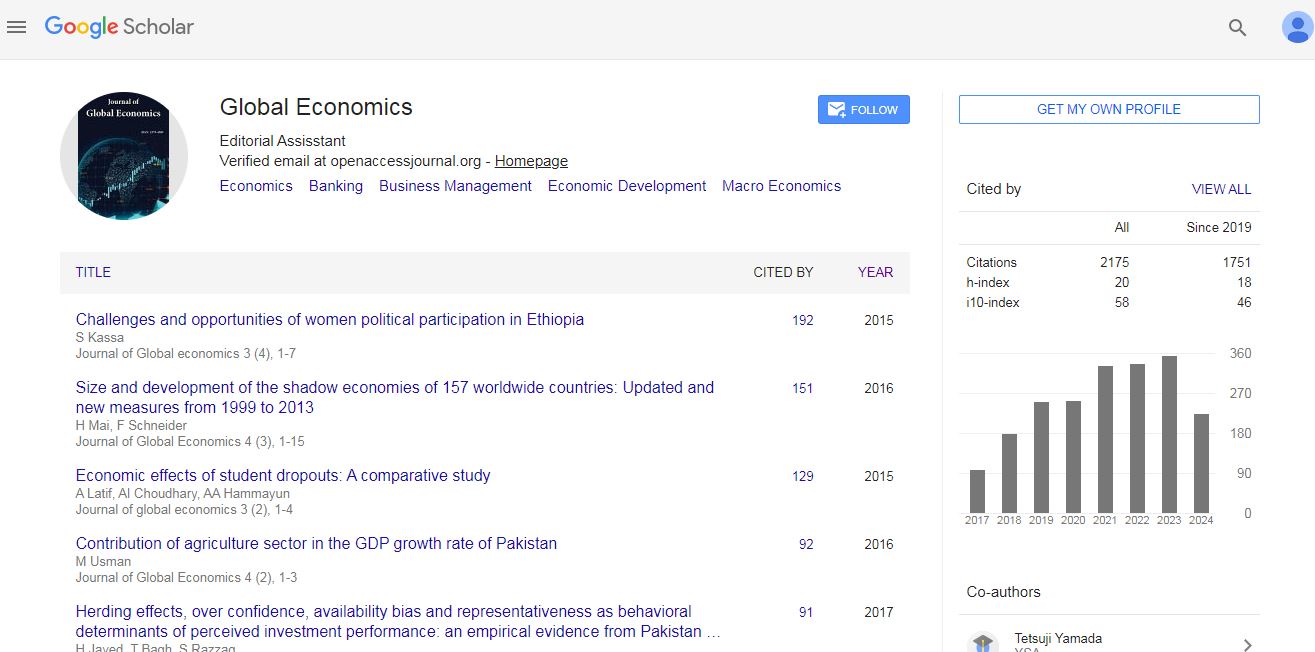
Journal of Global Economics received 2175 citations as per Google Scholar report