Short Communication - (2025) Volume 8, Issue 3
Received: 01-Sep-2025, Manuscript No. pollution-25-176609;
Editor assigned: 03-Sep-2025, Pre QC No. P-176609;
Reviewed: 17-Sep-2025, QC No. Q-176609;
Revised: 22-Sep-2025, Manuscript No. R-176609;
Published:
29-Sep-2025
, DOI: 10.37421/2684-4958.2025.8.388
Citation: Martin, Chloe. ”Global Biodiversity Crisis: Threats, Solutions, Hope.” Pollution 08 (2025):388.
Copyright: © 2025 Martin C. This is an open-access article distributed under the terms of the Creative Commons Attribution License, which permits unrestricted use, distribution
and reproduction in any medium, provided the original author and source are credited.
The COVID-19 pandemic presented a complex challenge for biodiversity conservation. While some areas observed reduced human pressure on ecosystems during lockdowns, leading to unexpected, temporary ecological recovery, many critical conservation initiatives faced severe setbacks. These included significant funding cuts, the halt of essential field research, and disruptions to vital anti-poaching efforts. Understanding these varied and often contrasting impacts is crucial for developing more resilient and adaptable conservation strategies in anticipation of future global crises [1].
Biodiversity loss and climate change are not isolated environmental issues; they are deeply interconnected, forming a dangerous, mutually reinforcing feedback loop. This body of research clearly shows how climate-induced shifts, such as altered weather patterns and rising temperatures, exacerbate habitat degradation and accelerate species extinction. Simultaneously, the loss of resilient ecosystems directly diminishes natural carbon sinks and reduces their capacity to buffer against extreme weather events. Acknowledging these synergistic and escalating threats is absolutely fundamental for developing comprehensive, integrated solutions [2].
Current rates of species extinction are alarmingly high, far exceeding the natural background levels seen throughout geological history. A critical analysis suggests humanity is now inadvertently driving a sixth mass extinction event. This crisis is primarily fueled by extensive habitat destruction, the profound effects of climate change, and widespread overexploitation of natural resources. The implications are profound, demanding immediate, drastic changes in human behavior and policy worldwide to avert an impending ecological collapse [3].
Ecological restoration is emerging as a powerful and practical tool in the urgent fight against biodiversity loss and climate change. Through actively restoring degraded ecosystems, we can effectively revive critical habitats, significantly boost struggling species populations, and enhance the natural capacity of these systems to sequester atmospheric carbon. This paper emphasizes how well-planned and executed restoration projects offer a dual benefit, contributing substantially to both vital conservation goals and crucial climate change mitigation efforts [4].
The Kunming-Montreal Global Biodiversity Framework represents an ambitious and crucial global commitment to halt and ultimately reverse biodiversity loss. This analysis stresses that the next critical step involves translating these high-level, aspirational targets into effective, measurable actions implemented on the ground. It highlights the immense importance of robust implementation mechanisms, ensuring adequate funding, and cultivating strong political will across nations to bridge the existing gap between policy ambition and tangible, impactful conservation outcomes [5].
Our marine ecosystems are facing unprecedented and rapidly escalating threats from the twin phenomena of rapid ocean warming and acidification. This detailed review explains how these two intertwined environmental changes destabilize delicate marine food webs, severely degrade critical habitats such as coral reefs, and compromise the essential physiological functions of countless marine species, leading to widespread marine biodiversity loss. Urgent and substantial reductions in greenhouse gas emissions are absolutely essential to protect the health of our oceans and their incredibly diverse life forms [6].
Freshwater biodiversity is acutely vulnerable to ongoing human pressures, making freshwater ecosystems some of the most threatened globally. This research outlines how pervasive pollution from agricultural runoff and industrial discharge, habitat fragmentation caused by dams, and the direct impacts of climate change are collectively driving rapid declines in aquatic species populations. It underlines the critical need for integrated watershed management, stringent pollution control measures, and targeted conservation interventions to safeguard these vital habitats and their unique biodiversity [7].
Deforestation continues to be a primary and devastating cause of biodiversity loss, especially in highly biodiverse regions such as the Amazon rainforest. This study meticulously examines the intricate ways forest clearing leads to immediate habitat destruction, direct mortality of species, and long-term, irreversible ecosystem degradation. It unequivocally states that curbing deforestation is indispensable for maintaining global biodiversity, effectively regulating the Earth's climate, and ensuring the continued provision of essential ecosystem services that humanity relies upon [8].
Urbanization, often perceived as a destructive force for natural environments, paradoxically presents unique and significant opportunities for biodiversity conservation. While urban expansion typically results in considerable habitat loss and fragmentation, deliberate and thoughtful design choices—like the incorporation of green roofs, expansive parks, and interconnected ecological corridors—can surprisingly support a diverse array of species. This research explores various strategies for effectively integrating biodiversity into urban planning, demonstrating how cities can thoughtfully evolve into crucial conservation landscapes [9].
The ongoing decline in genetic diversity within species represents a silent but profoundly significant aspect of biodiversity loss. This research underscores that genetic variation serves as the fundamental raw material for adaptation, enabling populations to effectively respond to environmental shifts, emerging diseases, and the challenges of climate change. Protecting this inherent diversity is paramount, not merely for the survival of individual species, but for ensuring the overall resilience and adaptive capacity of ecosystems across the globe [10].
Our planet faces an unprecedented biodiversity crisis, marked by alarmingly high rates of species extinction that far exceed natural background levels observed throughout geological time. This ongoing phenomenon suggests humanity is inadvertently driving a sixth mass extinction event, primarily through habitat destruction, climate change, and overexploitation [3]. What's more, biodiversity loss and climate change are not isolated environmental challenges; they are deeply interconnected, forming a dangerous feedback loop. Climate-induced shifts exacerbate habitat degradation and species extinction, while the loss of resilient ecosystems diminishes natural carbon sinks and buffers against extreme weather. Acknowledging these synergistic threats is fundamental for developing integrated solutions [2]. A silent but profound aspect of this loss is the decline in genetic diversity within species. Genetic variation is the raw material for adaptation, enabling populations to respond to environmental shifts, disease, and climate change. Protecting this diversity is paramount, not just for individual species' survival, but for the overall resilience and adaptive capacity of ecosystems worldwide [10].
Specific ecosystems globally are under immense pressure. Deforestation, particularly in highly biodiverse regions like the Amazon, remains a leading cause of biodiversity loss. Forest clearing leads to immediate habitat destruction, direct mortality of species, and long-term ecosystem degradation. Curbing deforestation is indispensable for maintaining global biodiversity, regulating climate, and ensuring the continued provision of essential ecosystem services [8]. Marine ecosystems face unprecedented threats from rapid ocean warming and acidification, which destabilize marine food webs, degrade critical habitats like coral reefs, and compromise the physiological functions of countless species, leading to widespread marine biodiversity loss [6]. Likewise, freshwater biodiversity is acutely vulnerable to human pressures, making these ecosystems among the most threatened globally. Pollution from agriculture and industry, habitat fragmentation by dams, and the direct effects of climate change drive declines in aquatic species [7].
Human activities and global events further complicate conservation efforts. The COVID-19 pandemic, for instance, introduced a complex dynamic into biodiversity conservation. While some regions saw reduced human pressure on ecosystems due to lockdowns, leading to temporary ecological recovery, many conservation initiatives faced severe setbacks, including funding cuts, halted field research, and disruptions to anti-poaching efforts. Understanding these varied impacts is crucial for building more resilient conservation strategies in the face of future global crises [1]. Paradoxically, urbanization, often a destructive force for nature, also presents unique opportunities for biodiversity conservation. While urban expansion typically causes habitat loss and fragmentation, deliberate design choices like green roofs, parks, and ecological corridors can support a surprising array of species. Integrating biodiversity into urban planning demonstrates how cities can evolve into crucial conservation landscapes [9].
Amid these challenges, ecological restoration is emerging as a powerful tool in the fight against biodiversity loss and climate change. By actively restoring degraded ecosystems, we can revive critical habitats, boost species populations, and enhance the capacity of natural systems to sequester carbon. Well-planned restoration projects offer a dual benefit, contributing significantly to both conservation and climate mitigation goals [4].
Effective policy and global frameworks are paramount. The Kunming-Montreal Global Biodiversity Framework represents an ambitious global commitment to halt and reverse biodiversity loss. Translating these high-level targets into effective, measurable actions on the ground is the next critical step. This involves robust implementation mechanisms, adequate funding, and strong political will to bridge the gap between policy ambition and tangible conservation outcomes [5]. These integrated approaches, addressing both the drivers of loss and implementing proactive solutions, are essential for safeguarding Earth's diverse life forms.
Global biodiversity faces severe threats, driven primarily by human activities such as habitat destruction, climate change, and overexploitation, which are collectively pushing the planet into a sixth mass extinction event. Key drivers include the interconnected challenges of climate change and biodiversity loss, with climate-induced shifts worsening habitat degradation and species extinction, while ecosystem loss impairs natural carbon sinks. Specific ecosystems like forests, marine environments, and freshwaters are critically vulnerable to deforestation, ocean warming and acidification, and pollution respectively. Even events like the COVID-19 pandemic highlighted complexities, showing temporary ecological recovery in some areas but severe setbacks for conservation efforts due to funding cuts and disruptions. Beyond species loss, the decline in genetic diversity further compromises ecosystem resilience. However, there's hope through proactive strategies. Ecological restoration is proving effective in reviving habitats and enhancing carbon sequestration, offering dual benefits for conservation and climate mitigation. Urban environments, surprisingly, can also contribute through thoughtful planning like green infrastructure. Critically, international frameworks like the Kunming-Montreal Global Biodiversity Framework provide ambitious targets, but their success hinges on robust implementation, adequate funding, and strong political will. Addressing these multifaceted challenges requires integrated approaches, pollution control, and targeted interventions to safeguard Earth's vital habitats and diverse life forms for future generations.
None
None
Indexed at, Google Scholar, Crossref
Indexed at, Google Scholar, Crossref
Indexed at, Google Scholar, Crossref
Indexed at, Google Scholar, Crossref
Indexed at, Google Scholar, Crossref
Indexed at, Google Scholar, Crossref
Indexed at, Google Scholar, Crossref
Indexed at, Google Scholar, Crossref
Indexed at, Google Scholar, Crossref
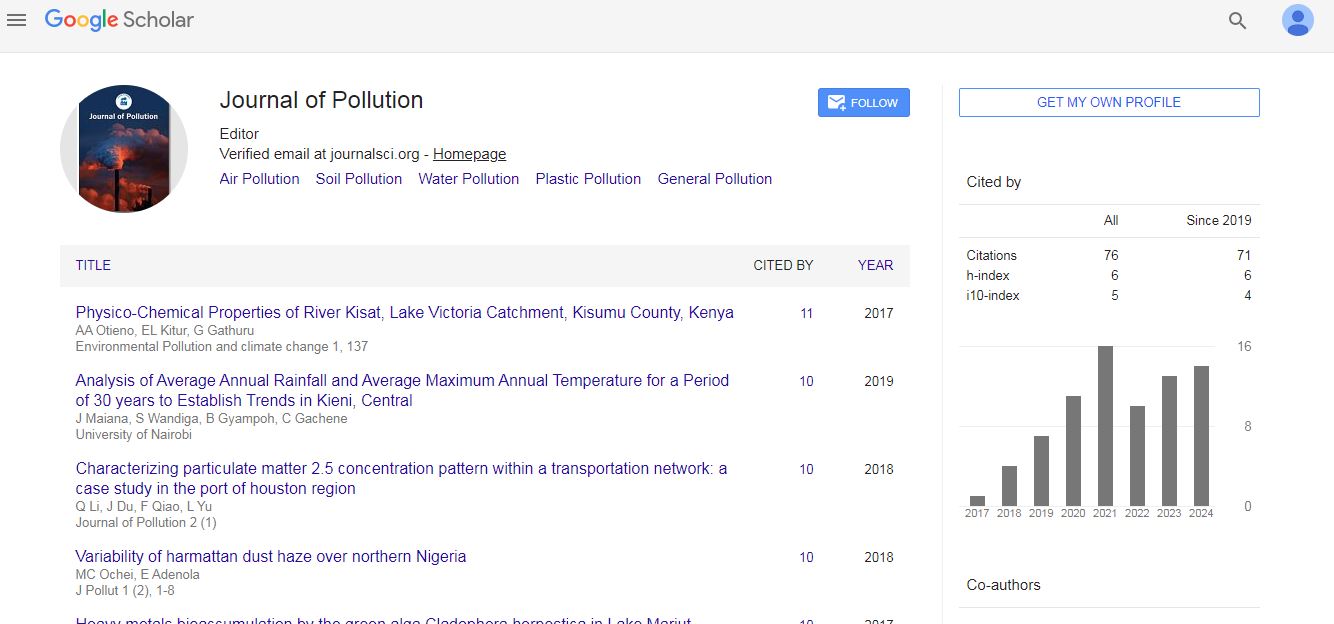
Journal of Pollution received 64 citations as per Google Scholar report