Commentary - (2025) Volume 13, Issue 6
Received: 01-Dec-2025, Manuscript No. JCMG-26-185574;
Editor assigned: 03-Dec-2025, Pre QC No. P-185574;
Reviewed: 17-Dec-2025, QC No. Q-185574;
Revised: 22-Dec-2025, Manuscript No. R-185574;
Published:
29-Dec-2025
, DOI: 10.37421/2472-128X.2025.13.370
Citation: Zhang, Wei. ”Genomics Ethics: Privacy, Access, and Equity.” J Clin Med Genomics 13 (2025):370.
Copyright: © 2025 Zhang W. This is an open-access article distributed under the terms of the Creative Commons Attribution License, which permits unrestricted use, distribution and reproduction in any medium, provided the original author and source are credited.
Clinical genomics stands at the forefront of personalized medicine, offering unprecedented potential to tailor healthcare interventions to individual genetic profiles. Despite its promise, the widespread integration of genomic approaches into clinical practice is significantly influenced by a spectrum of complex ethical challenges. Among the most prominent are concerns related to safeguarding patient privacy, the intricate process of securing genuinely informed consent for the use of sensitive genomic data, and the imperative to ensure equitable access to these advanced diagnostic tools and therapeutic strategies. Addressing these multifaceted issues necessitates the establishment of robust regulatory frameworks designed to govern genomic data, the implementation of transparent data governance models that foster public trust, and an unwavering commitment to mitigating existing health disparities. The field of genomics must proactively engage with and navigate these evolving ethical landscapes to fully unlock and distribute the profound benefits of genomic medicine to all segments of society [1].
The exponential growth and rapid advancement of genomic technologies have catalyzed a critical need to re-evaluate and potentially redefine established informed consent protocols. Traditional models, often designed for less dynamic data types, frequently prove inadequate in fully capturing the long-term implications and the broad potential for future re-use of an individual's genomic data. This commentary specifically underscores the urgent necessity for the development and adoption of dynamic and adaptive consent mechanisms. Such mechanisms are essential to empower individuals, granting them ongoing and meaningful control over their genetic information, particularly within the context of research endeavors where data sharing and secondary analyses are common [2].
Ensuring equity in the realm of genomic healthcare represents a paramount concern, as pre-existing disparities in healthcare access, socioeconomic status, and other social determinants of health can profoundly exacerbate inequalities in both the utilization and the ultimate benefits derived from genomic medicine. This article meticulously explores the intricate ways in which structural determinants of health, the pervasive influence of implicit biases within healthcare systems, and the persistent lack of diversity within genomic research cohorts collectively contribute to a widening chasm in genomic healthcare outcomes, disproportionately affecting marginalized and underserved populations [3].
The ethical considerations that arise from the identification of incidental findings during clinical genomic sequencing are notably complex and demand careful deliberation. While these unexpected findings can potentially yield valuable health-related information, they simultaneously raise profound questions concerning the professional duty to disclose such information, the fundamental principles of patient autonomy in decision-making, and the potential for inducing psychological distress in patients. The establishment and adherence to best practices for effectively managing incidental findings are contingent upon clear, transparent communication, comprehensive patient education, and the consistent application of a patient-centered approach to all subsequent decision-making processes [4].
Protecting the privacy of genomic data is an absolute imperative, given its inherently sensitive, highly personal, and uniquely identifiable nature. This review undertakes a comprehensive examination of the continuously evolving landscape of genomic data privacy. It critically analyzes the significant challenges posed by increasing data sharing initiatives, the inherent limitations of current de-identification techniques, and the pressing need for the implementation of robust and multi-layered security measures. Ultimately, it advocates for the development and adoption of comprehensive data protection strategies that judiciously balance the pursuit of research innovation with the unwavering protection of individual privacy rights [5].
The successful implementation of genomic screening programs, encompassing initiatives such as newborn screening or carrier screening for genetic conditions, introduces a distinct set of ethical and practical challenges that warrant thorough consideration. This article meticulously discusses the indispensable importance of subjecting such programs to robust ethical review processes, ensuring the clear and transparent communication of both the potential benefits and the inherent limitations of the screening, and critically, providing accessible and comprehensive genetic counseling services. These elements are crucial to empower individuals and families to make truly informed decisions and to adequately prepare them for any potential outcomes, whether positive or negative [6].
A significant and pressing ethical concern pertains to the substantial global disparity in access to the transformative benefits of genomic medicine. Numerous factors, including prohibitive costs, inadequate healthcare infrastructure, and insufficient workforce development, collectively contribute to a profound divide between high-income nations and low- and middle-income countries. Effectively bridging this critical gap necessitates concerted international collaboration, targeted capacity-building initiatives within resource-limited settings, and the strategic development of genomic solutions that are contextually appropriate and sustainable [7].
The increasing integration of artificial intelligence (AI) into the field of clinical genomics introduces a novel set of ethical dimensions that demand careful attention and proactive management. Particular focus is placed on concerns surrounding potential algorithmic bias, the complexities of ensuring data security in AI-driven systems, and establishing clear lines of accountability. This paper explores the significant potential for AI to enhance and accelerate genomic analysis while concurrently highlighting the critical and urgent need for the development and implementation of robust ethical guidelines and stringent regulatory oversight. These measures are essential to guarantee fairness, transparency, and the ultimate trustworthiness of all AI-driven genomic applications [8].
Fundamental to the practice of ethical genomic medicine are the principles of patient education and active engagement. This article strongly emphasizes the vital importance of providing individuals with clear, accessible, and easily understandable information regarding genomic tests, their multifaceted implications, and the intended uses of their data. Such comprehensive information empowers patients to make truly autonomous and informed decisions about their healthcare. Furthermore, the development and implementation of effective communication strategies are absolutely crucial for cultivating patient trust and ensuring that care is consistently delivered in a patient-centered manner [9].
The ethical challenges associated with the practice of returning genomic results to research participants are inherently multifaceted and require nuanced consideration. This commentary specifically highlights the critical need for the establishment of clear, well-defined policies and procedures governing the return of clinically significant findings. Such policies must carefully consider the potential benefits and harms associated with disclosure, as well as the unique preferences of each participant. Ultimately, it underscores the profound importance of fostering ongoing dialogue and maintaining a posture of continuous ethical reflection throughout the research process [10].
Clinical genomics is poised to revolutionize personalized medicine by enabling healthcare tailored to an individual's genetic makeup. However, its widespread adoption faces significant hurdles rooted in ethical considerations. Key among these are the challenges of maintaining patient privacy, navigating the complexities of obtaining truly informed consent for the use of genetic data, and ensuring that the benefits of advanced genomic diagnostics and therapeutics are accessible to everyone. Overcoming these obstacles requires the development of strong regulatory frameworks, transparent data management practices, and a dedicated effort to reduce health disparities. Proactive engagement with these ethical dimensions is crucial for realizing the full potential of genomics for all individuals [1].
The rapid evolution of genomic technologies necessitates a thorough re-evaluation of the informed consent process. Current standard models often fall short in addressing the long-term consequences and potential for the secondary use of genomic data. This discussion emphasizes the necessity of implementing dynamic and adaptable consent mechanisms. These approaches aim to empower individuals by ensuring their continuous control over their genetic information, especially in research contexts where data may be shared or re-analyzed [2].
Equity in genomic healthcare is a critical issue, as existing disparities in healthcare access and socioeconomic conditions can worsen inequalities in how genomic medicine is used and who benefits from it. This article examines how systemic factors influencing health, unconscious biases held by healthcare providers, and a lack of diversity in genomic research studies contribute to a growing gap in genomic healthcare outcomes for marginalized groups [3].
The ethical dilemmas associated with incidental findings in clinical genomic sequencing are substantial. While these findings can offer valuable health insights, they raise questions about the obligation to inform patients, patient autonomy, and the potential for causing psychological distress. Effective management of incidental findings relies on clear communication, educating patients, and adopting a patient-centered approach to decision-making [4].
Protecting the privacy of genomic data is of utmost importance due to its sensitive and identifiable nature. This review explores the current challenges in genomic data privacy, including those arising from data sharing, the limitations of de-identification methods, and the need for strong security measures. It advocates for comprehensive data protection strategies that balance the advancement of research with the protection of individual privacy rights [5].
Implementing genomic screening programs, such as those for newborns or carriers, presents unique ethical and practical challenges. This article highlights the importance of rigorous ethical review, clear communication about the benefits and limitations of these programs, and the provision of genetic counseling. These measures are essential to ensure individuals and families can make informed decisions and are prepared for potential results [6].
The global disparity in access to genomic medicine poses a significant ethical challenge. Factors like cost, infrastructure limitations, and workforce development contribute to a divide between high-income countries and lower- and middle-income nations. Bridging this gap requires international cooperation, capacity building, and the development of genomic solutions tailored to specific local needs [7].
The use of artificial intelligence (AI) in clinical genomics introduces new ethical considerations, particularly regarding algorithmic bias, data security, and accountability. This paper discusses how AI can improve genomic analysis while emphasizing the critical need for ethical guidelines and regulatory oversight to ensure fairness, transparency, and reliability in AI-powered genomic applications [8].
Patient education and engagement are foundational to ethical genomic practice. This article stresses the importance of providing clear and accessible information about genomic tests, their implications, and data usage. This empowers patients to make autonomous decisions. Effective communication strategies are vital for building trust and ensuring patient-centered care [9].
Ethical issues surrounding the return of genomic results to research participants are complex. This commentary emphasizes the need for clear policies on disclosing clinically significant findings, considering potential benefits, harms, and participant preferences. It highlights the importance of ongoing dialogue and ethical reflection in research [10].
Clinical genomics offers personalized medicine but faces ethical challenges like patient privacy, informed consent, and equitable access. Addressing these requires robust regulations, transparent data governance, and efforts to reduce health disparities. The field needs to adapt consent processes for dynamic genomic data and combat biases that exacerbate inequalities for marginalized populations. Managing incidental findings, protecting genomic data privacy, and implementing screening programs ethically are crucial. Global disparities in access must be bridged through international collaboration and contextually appropriate solutions. The integration of AI in genomics demands ethical oversight for fairness and transparency. Patient education and engagement are paramount for autonomous decision-making and trust. Ethical guidelines for returning research results are essential for participant well-being and research integrity.
None
None
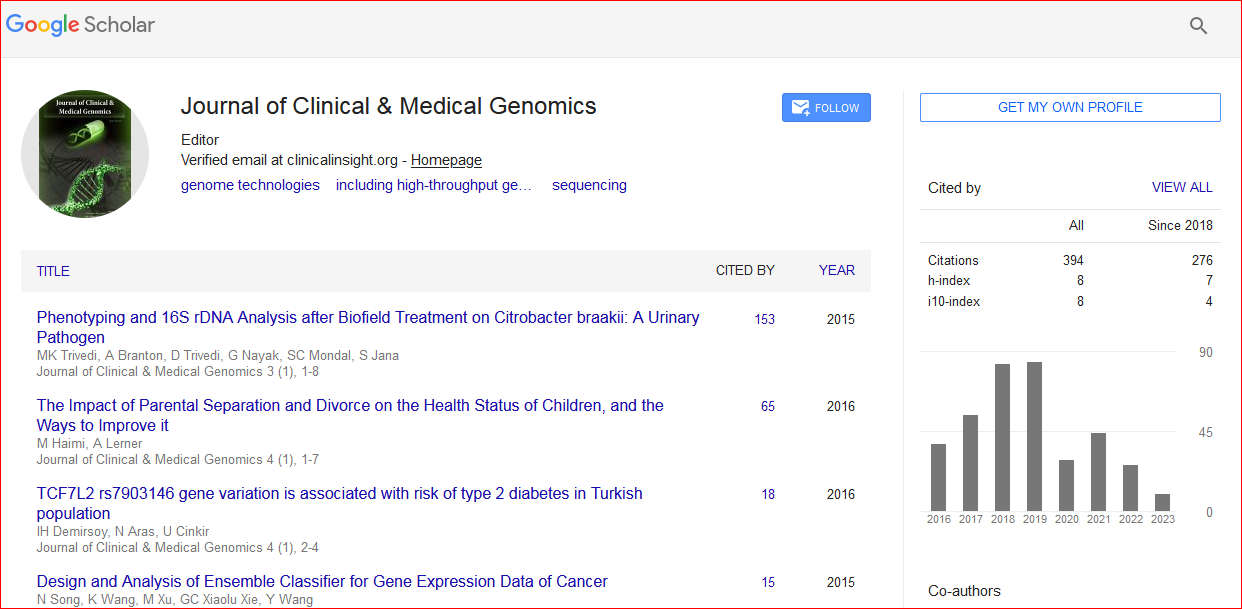
Journal of Clinical & Medical Genomics received 391 citations as per Google Scholar report