Brief Report - (2025) Volume 16, Issue 3
Received: 01-Aug-2025, Manuscript No. hgec-25-174738;
Editor assigned: 04-Aug-2025, Pre QC No. P-174738;
Reviewed: 18-Aug-2025, QC No. Q-174738;
Revised: 22-Aug-2025, Manuscript No. R-174738;
Published:
29-Aug-2025
, DOI: 10.37421/2161-0436.2025.16.292
Citation: Ferreira, Camila Duarte. ”Genetic Discoveries Revolutionize Disease Understanding, Therapy.” Human Genet Embryol 16 (2025):292.
Copyright: © 2025 Ferreira D. Camila This is an open-access article distributed under the terms of the Creative Commons Attribution License, which permits unrestricted use, distribution and reproduction in any medium, provided the original author and source are credited.
This research illuminates the genetic landscape of hereditary nonpolyposis colorectal cancer (HNPCC), pinpointing specific germline mutations in genes like MLH1, MSH2, and MSH6. Understanding these inherited genetic defects is crucial for early diagnosis, risk assessment, and guiding personalized treatment strategies for affected individuals and their families. Identifying these mutations helps predict who's at high risk, allowing for proactive screening and interventions [1].
Here's the thing about autism spectrum disorder (ASD): its genomic architecture is incredibly complex. This study meticulously maps the genetic contributions to ASD, identifying a variety of common and rare genetic variations and their interplay in neurodevelopmental pathways. Knowing these genetic risk factors provides deeper insights into the disorder's heterogeneity and points towards potential targets for future therapeutic development [2].
This article offers a clear look at the molecular genetics behind Parkinson's disease. It highlights the growing number of genes linked to both familial and sporadic forms of the disease, like SNCA, LRRK2, and GBA. Understanding these genetic connections helps researchers unravel the cellular mechanisms that go wrong in Parkinson's, which is critical for devising new treatments that target the root causes [3].
When it comes to critical COVID-19, it's not just about viral exposure; your genes play a role too. This study identified specific genetic variations that predispose individuals to severe outcomes, including respiratory failure. These findings are important because they shed light on the biological pathways involved in severe disease, suggesting potential targets for drug development and allowing for better identification of at-risk patients [4].
Let's break down CRISPR-Cas systems: they've moved from being a bacterial immune defense to a revolutionary tool for eukaryotic genome engineering. This review details how these systems function, their incredible diversity, and their broad applications in everything from basic research to gene therapy and agriculture. It really shows how this technology lets us precisely edit DNA, opening doors to correct genetic defects and develop new treatments [5].
Epigenetics is a fascinating field, and this paper makes it clear how these mechanisms are deeply involved in human disease. It covers crucial epigenetic modifications like DNA methylation, histone modifications, and non-coding RNAs, explaining how they regulate gene expression without altering the underlying DNA sequence. What this means for us is that understanding these processes could lead to therapies that reverse disease-causing epigenetic changes, offering new avenues for treatment in areas like cancer and neurological disorders [6].
For a long time, Alzheimer's disease seemed like a mystery, but this article highlights how much we're learning about its genetic underpinnings. It details both common genetic risk factors, like APOE ε4, and rare pathogenic variants, showing how they contribute to disease development and progression. This understanding is key for identifying individuals at risk earlier and for developing targeted interventions that address the specific genetic pathways involved in neurodegeneration [7].
This paper tackles the critical role of somatic mutations in cancer. It describes how these genetic changes, acquired during a person's lifetime, drive tumor initiation, progression, and resistance to therapy. Understanding the spectrum and functional consequences of these mutations is essential for developing precision cancer medicine, where treatments are tailored to the specific genetic profile of an individual's tumor [8].
Mitochondria are more than just powerhouses; their genetics are key to many human diseases. This article explores how mutations in mitochondrial DNA, as well as nuclear genes that affect mitochondrial function, contribute to a wide range of conditions, from rare metabolic disorders to more common neurodegenerative diseases. This really highlights the complexity of mitochondrial genetics and offers clues for novel therapeutic strategies for these often-debilitating conditions [9].
Understanding complex traits, from height to disease susceptibility, is a huge challenge. This paper details how genomic approaches, especially large-scale genome-wide association studies (GWAS), are revolutionizing our ability to unravel the genetic architecture of these traits. What this really means is that by identifying numerous genetic loci, we're gaining unprecedented insights into the biological pathways underlying complex human characteristics and diseases, paving the way for predictive medicine [10].
This research reveals the genetic landscape of hereditary nonpolyposis colorectal cancer (HNPCC), pinpointing specific germline mutations in genes like MLH1, MSH2, and MSH6. Understanding these inherited genetic defects is crucial for early diagnosis, risk assessment, and guiding personalized treatment strategies for affected individuals and their families. What this really means is, identifying these mutations helps predict who's at high risk, allowing for proactive screening and interventions [1]. This paper tackles the critical role of somatic mutations in cancer. It describes how these genetic changes, acquired during a person's lifetime, drive tumor initiation, progression, and resistance to therapy. Understanding the spectrum and functional consequences of these mutations is essential for developing precision cancer medicine, where treatments are tailored to the specific genetic profile of an individual's tumor [8].
Here's the thing about autism spectrum disorder: its genomic architecture is incredibly complex. This study meticulously maps out the genetic contributions to ASD, identifying a variety of common and rare genetic variations and their interplay in neurodevelopmental pathways. Knowing these genetic risk factors provides deeper insights into the disorder's heterogeneity and points towards potential targets for future therapeutic development [2]. This article offers a clear look at the molecular genetics behind Parkinson's disease. It highlights the growing number of genes linked to both familial and sporadic forms of the disease, like SNCA, LRRK2, and GBA. Understanding these genetic connections helps researchers unravel the cellular mechanisms that go wrong in Parkinson's, which is critical for devising new treatments that target the root causes [3]. For a long time, Alzheimer's disease seemed like a mystery, but this article highlights how much we're learning about its genetic underpinnings. It details both common genetic risk factors, like APOE ε4, and rare pathogenic variants, showing how they contribute to disease development and progression. This understanding is key for identifying individuals at risk earlier and for developing targeted interventions that address the specific genetic pathways involved in neurodegeneration [7].
Mitochondria are more than just powerhouses; their genetics are key to many human diseases. This article explores how mutations in mitochondrial DNA, as well as nuclear genes that affect mitochondrial function, contribute to a wide range of conditions, from rare metabolic disorders to more common neurodegenerative diseases. This really highlights the complexity of mitochondrial genetics and offers clues for novel therapeutic strategies for these often-debilitating conditions [9]. When it comes to critical COVID-19, it's not just about viral exposure; your genes play a role too. This study identified specific genetic variations that predispose individuals to severe outcomes, including respiratory failure. These findings are important because they shed light on the biological pathways involved in severe disease, suggesting potential targets for drug development and allowing for better identification of at-risk patients [4].
Understanding complex traits, from height to disease susceptibility, is a huge challenge. This paper details how genomic approaches, especially large-scale genome-wide association studies (GWAS), are revolutionizing our ability to unravel the genetic architecture of these traits. What this really means is that by identifying numerous genetic loci, we're gaining unprecedented insights into the biological pathways underlying complex human characteristics and diseases, paving the way for predictive medicine [10]. Epigenetics is a fascinating field, and this paper makes it clear how these mechanisms are deeply involved in human disease. It covers crucial epigenetic modifications like DNA methylation, histone modifications, and non-coding RNAs, explaining how they regulate gene expression without altering the underlying DNA sequence. What this means for us is that understanding these processes could lead to therapies that reverse disease-causing epigenetic changes, offering new avenues for treatment in areas like cancer and neurological disorders [6]. Let's break down CRISPR-Cas systems: they've moved from being a bacterial immune defense to a revolutionary tool for eukaryotic genome engineering. This review details how these systems function, their incredible diversity, and their broad applications in everything from basic research to gene therapy and agriculture. It really shows how this technology lets us precisely edit DNA, opening doors to correct genetic defects and develop new treatments [5].
Recent research highlights the profound impact of genetics on various human diseases and traits, spanning from inherited conditions to acquired disorders. We now understand the intricate genetic landscape of hereditary nonpolyposis colorectal cancer (HNPCC), identifying germline mutations in genes like MLH1, MSH2, and MSH6. This knowledge is vital for early diagnosis and personalized treatment. Similarly, the complex genomic architecture of autism spectrum disorder (ASD) has been meticulously mapped, revealing common and rare genetic variations that influence neurodevelopmental pathways, offering insights for future therapies. Molecular genetics also unravels the basis of neurodegenerative conditions. Parkinson's disease is linked to genes like SNCA, LRRK2, and GBA, guiding research into cellular mechanisms and new treatments. Alzheimer's disease genetics, including factors like APOE ε4 and rare pathogenic variants, is crucial for early risk identification and targeted interventions. Beyond inherited conditions, somatic mutations acquired during a lifetime are recognized as drivers of cancer initiation, progression, and therapy resistance, underpinning precision cancer medicine. Mitochondrial genetics also plays a significant role in human disease, with mutations in mitochondrial DNA contributing to metabolic and neurodegenerative disorders. The genetic predisposition to severe outcomes in critical illnesses, like COVID-19, has been identified, shedding light on biological pathways for drug development. Moving to broader impacts, genomic approaches, especially genome-wide association studies (GWAS), are revolutionizing our understanding of complex traits and disease susceptibility, paving the way for predictive medicine. Here's the thing about epigenetics: mechanisms like DNA methylation and histone modifications profoundly influence gene expression without altering DNA sequence, suggesting new therapeutic avenues for diseases such as cancer. This era of genetic discovery is also empowered by revolutionary tools like CRISPR-Cas systems, which have evolved from bacterial defense to precise eukaryotic genome engineering, opening doors for correcting genetic defects and developing new treatments in diverse fields.
None
None
Indexed at, Google Scholar, Crossref
Indexed at, Google Scholar, Crossref
Indexed at, Google Scholar, Crossref
Indexed at, Google Scholar, Crossref
Indexed at, Google Scholar, Crossref
Indexed at, Google Scholar, Crossref
Indexed at, Google Scholar, Crossref
Indexed at, Google Scholar, Crossref
Indexed at, Google Scholar, Crossref
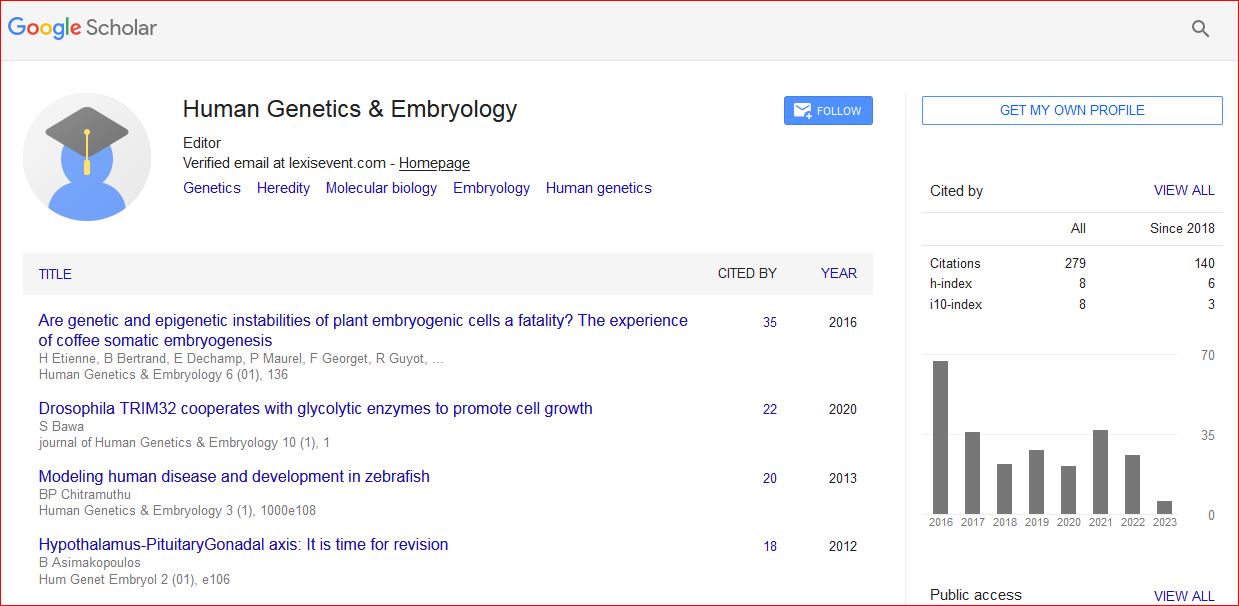
Human Genetics & Embryology received 309 citations as per Google Scholar report