Short Communication - (2025) Volume 10, Issue 2
Received: 02-Mar-2025, Manuscript No. PE-26-179259;
Editor assigned: 04-Mar-2025, Pre QC No. P-179259;
Reviewed: 18-Mar-2025, QC No. Q-179259;
Revised: 24-Mar-2025, Manuscript No. R-179259;
Published:
31-Mar-2025
, DOI: 10.37421/2472-1042.2025.10.280
Citation: Torres, Camila. ”Generic Medicines: Economic Benefits For All.” Pharmacoeconomics 10 (2025):280.
Copyright: © 2025 Torres C. This is an open-access article distributed under the terms of the Creative Commons Attribution License, which permits unrestricted use, distribution and reproduction in any medium, provided the original author and source are credited.
The economic impact of generic medicines on healthcare systems is a subject of considerable importance, directly influencing patient access to essential treatments and the overall sustainability of healthcare infrastructure. Generics, by offering substantially lower prices compared to their branded counterparts, play a pivotal role in enhancing affordability and broadening the availability of therapeutic options for a diverse patient population. This economic advantage is crucial for healthcare systems worldwide, allowing for the reallocation of limited resources towards other critical health services or the timely introduction of novel and innovative medical therapies. The analysis of generic medicines also underscores the impact of regulatory policies and evolving market dynamics on their widespread adoption and utilization, highlighting the need for strategic approaches to maximize their uptake. The direct cost savings and broader economic benefits associated with the extensive use of generic pharmaceuticals are quantifiable, significantly impacting drug expenditures for both public and private payers and contributing substantially to national health budgets. Furthermore, the concept of therapeutic substitution, supported by comprehensive education for physicians and pharmacists, is increasingly recognized as a key driver in promoting the adoption of cost-effective generic alternatives, advocating for policies that prioritize generic prescribing. The landscape of pharmaceutical policy plays a critical role in shaping the competition between generic and branded medicines, with regulatory frameworks significantly influencing market dynamics and pricing structures. Robust patent laws, when combined with streamlined and efficient generic approval processes, are essential for cultivating a market environment where generic drugs can flourish and provide economic benefits. The implications of these policies are particularly pronounced in low- and middle-income countries, where accelerating generic market penetration is crucial for maximizing cost savings and improving drug accessibility. Patient perspectives and adherence patterns represent another vital dimension in the successful integration of generic medications. Concerns regarding perceived efficacy and safety, often rooted in a lack of awareness or misinformation, can pose barriers to widespread acceptance. However, studies indicate that with appropriate patient education and clear communication from healthcare providers, adherence rates to generics can be comparable to those of branded drugs, ensuring that the economic benefits are fully realized through patient confidence in their quality and therapeutic equivalence. The principles underlying generic medicines are also being extended to the realm of biologic drugs through biosimilars, which offer similar cost-saving potential for complex and often expensive treatments. Biosimilars introduce significant price competition into the biologic market, leading to substantial savings for healthcare systems and expanding patient access to advanced therapies. The challenges and opportunities within the biosimilar market emphasize the necessity of clear regulatory pathways and the development of physician confidence to ensure their cost-effective adoption. The lifecycle of branded drugs and the subsequent economic shifts upon the entry of generic competition are well-documented phenomena. Patent expirations create an opening for numerous generic manufacturers, leading to a dramatic reduction in prices and a significant increase in the overall affordability of treatments. The interplay between strategies employed by branded and generic companies profoundly influences market dynamics and the financial health of healthcare systems. Ensuring the quality and equivalence of generic medicines is paramount to their acceptance and widespread use. Rigorous quality assurance and regulatory oversight mechanisms are in place globally to guarantee that generics meet stringent standards for bioequivalence and therapeutic efficacy, assuring patients and providers that they are as safe and effective as their branded counterparts, thereby validating their cost-effectiveness. The economic model of pharmaceuticals is often discussed in terms of value-based pricing, which stands in contrast to the cost-effectiveness derived from generic competition. While branded drugs may command higher prices due to innovation, generics are indispensable for providing essential affordability and accessibility across a wide spectrum of therapeutic areas, necessitating a balanced approach to ensure sustainable healthcare. The active involvement of pharmacists in promoting the use of generic medicines is a critical factor in realizing their full potential. Pharmacists are uniquely positioned to educate patients on the safety, efficacy, and cost-effectiveness of generics and to advise physicians on appropriate prescribing practices, thereby enhancing generic substitution rates and generating substantial savings. The influence of established brand loyalty and physician prescribing habits can create significant barriers to the uptake of generic medicines, even when substantial cost savings are evident. Overcoming these entrenched patterns requires targeted interventions, including strategic formulary management and comprehensive educational campaigns aimed at maximizing the economic benefits of generic medications. [1][2][3][4][5][6][7][8][9][10]
The cost-effectiveness of generic versus branded medicines is a central theme in contemporary healthcare economics, profoundly impacting patient access to necessary treatments and the long-term sustainability of healthcare systems. Generics, by virtue of their significantly lower price points, demonstrably enhance affordability and expand the availability of therapeutic options across a broad patient demographic. This economic advantage is instrumental for healthcare systems globally, enabling the redirection of finite financial resources towards other vital health services or the timely incorporation of novel and innovative medical interventions. The examination of generic medicines also critically assesses the influence of regulatory policies and evolving market dynamics on their broad adoption and effective utilization, underscoring the imperative for strategic initiatives to maximize their penetration. The quantifiable direct cost savings and more extensive economic advantages stemming from the widespread implementation of generic pharmaceuticals represent a significant reduction in drug expenditures for both public and private payers, making a substantial contribution to national health budgets. Moreover, the principle of therapeutic substitution, buttressed by comprehensive educational programs for physicians and pharmacists, is increasingly acknowledged as a primary catalyst for promoting the acceptance of cost-effective generic alternatives, thereby advocating for policies that prioritize generic prescribing. The intricate relationship between pharmaceutical policy and the competitive landscape of generic versus branded medicines is a crucial determinant, with diverse regulatory frameworks exerting considerable influence on market dynamics and pricing strategies. The establishment of robust patent laws, complemented by efficient and streamlined generic approval processes, is indispensable for fostering a market environment conducive to the flourishing of generic drugs and the realization of their economic benefits. The ramifications of these policies are particularly pronounced in resource-constrained settings such as low- and middle-income countries, where expediting generic market penetration is paramount for maximizing cost savings and improving overall drug accessibility. Patient perceptions and patterns of adherence constitute another indispensable facet in the successful integration of generic medications into clinical practice. Concerns pertaining to perceived efficacy and safety, often arising from a deficiency in awareness or from misinformation, can present obstacles to widespread acceptance. Nevertheless, research consistently indicates that with appropriate patient education and clear, consistent communication from healthcare providers, adherence rates to generics can achieve parity with those of branded drugs, thereby ensuring that the economic benefits are fully actualized through patient confidence in their quality and therapeutic equivalence. The fundamental principles underpinning generic medicines are also being adeptly applied to the domain of biologic drugs through the development of biosimilars, which offer comparable potential for cost reduction in the context of complex and often exorbitantly priced treatments. Biosimilars introduce substantial price competition into the biologic drug market, yielding significant savings for healthcare systems and broadening patient access to cutting-edge therapies. The inherent challenges and emerging opportunities within the biosimilar market highlight the critical need for transparent regulatory pathways and the cultivation of physician confidence to ensure their cost-effective adoption and maximize their benefits. The economic trajectory of branded drugs and the subsequent economic transformations that occur following the advent of generic competition are well-documented phenomena. The expiration of patents creates a critical opening for multiple generic manufacturers, invariably leading to a dramatic decline in prices and a commensurate increase in the overall affordability of therapeutic interventions. The strategic maneuvers employed by both branded and generic pharmaceutical companies significantly shape market dynamics and profoundly impact the financial stability of healthcare systems. Ensuring the unwavering quality and demonstrable equivalence of generic medicines is a prerequisite for their broad acceptance and widespread clinical use. Comprehensive quality assurance protocols and stringent regulatory oversight mechanisms are universally implemented to guarantee that generics rigorously adhere to exacting standards for bioequivalence and therapeutic efficacy, thereby assuring both patients and healthcare providers of their safety and effectiveness comparable to their branded counterparts, which justifies their cost-effectiveness. The prevailing economic paradigm for pharmaceuticals is frequently conceptualized through the lens of 'value-based pricing,' which presents a distinct contrast to the cost-effectiveness achieved through robust generic competition. While branded medications may command higher price tags attributed to their innovative nature, generics serve an indispensable function in ensuring essential affordability and accessibility across a wide spectrum of medical conditions and therapeutic classes, necessitating a judiciously balanced approach to maintain healthcare system sustainability. The proactive engagement of pharmacists in the promotion of generic medicine utilization is a critical determinant in realizing their full economic and therapeutic potential. Pharmacists occupy a uniquely advantageous position for educating patients about the safety, efficacy, and cost-effectiveness of generics, as well as for advising physicians on appropriate prescribing practices, thereby significantly elevating generic substitution rates and generating considerable cost savings. The enduring influence of brand loyalty and established physician prescribing habits can create formidable impediments to the uptake of generic medicines, even in situations where substantial cost savings are readily apparent. The systematic overcoming of these deeply ingrained patterns necessitates targeted interventions, encompassing strategic formulary management and comprehensive educational initiatives designed to maximize the economic advantages derived from generic medications. [1][2][3][4][5][6][7][8][9][10]
This collection of research highlights the significant economic benefits of generic medicines for healthcare systems and patients. Generics improve affordability, expand access to treatments, and drive down healthcare expenditures by introducing price competition. Regulatory policies and efficient approval processes are crucial for fostering a competitive generic market. Patient education and pharmacist involvement are key to overcoming barriers like brand loyalty and misinformation, ensuring confidence in the quality and equivalence of generics. The principles of generic cost-effectiveness are also being extended to biosimilars, offering similar savings for biologic drugs. Ultimately, a balanced approach incorporating both innovation and generic availability is vital for sustainable healthcare, with pharmacists playing a crucial role in promoting generic utilization and maximizing cost savings.
None
None
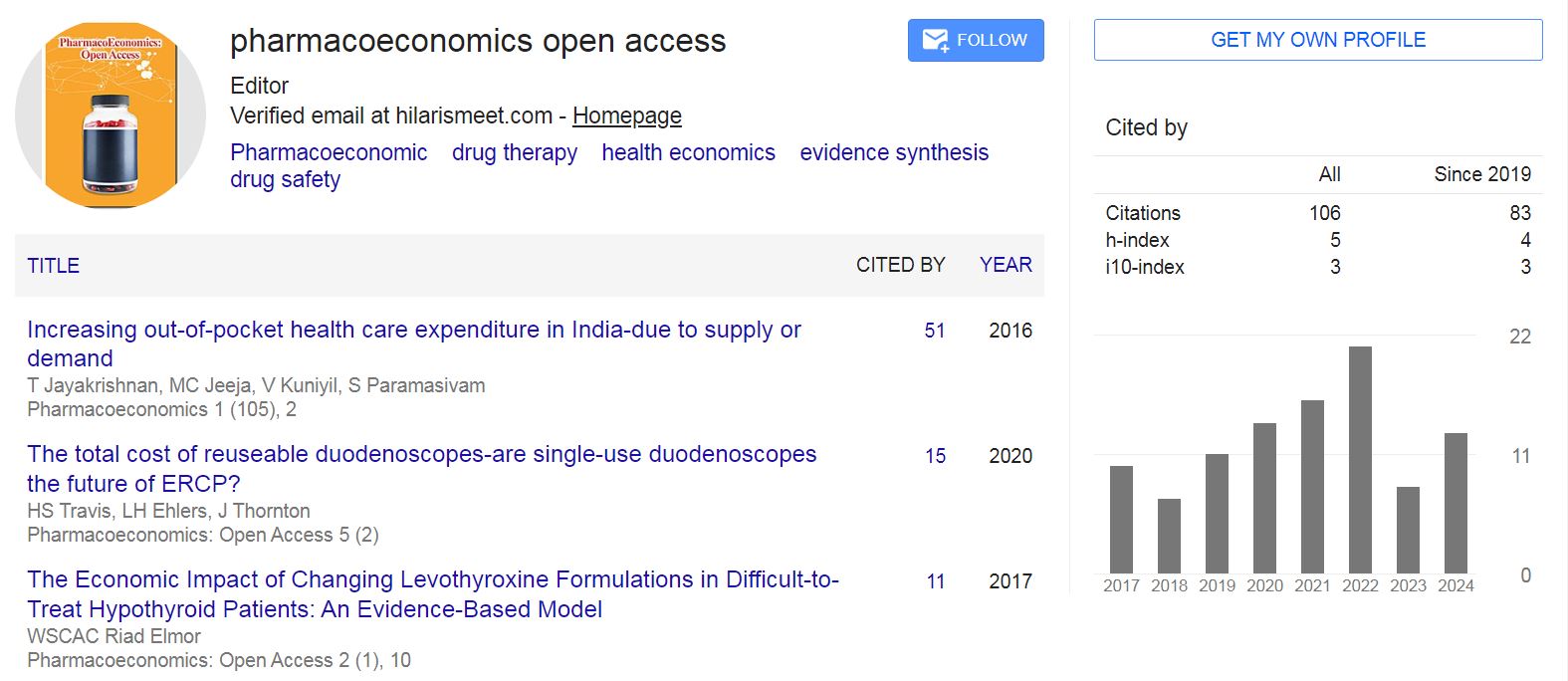
Pharmacoeconomics: Open Access received 106 citations as per Google Scholar report