Commentary - (2025) Volume 19, Issue 6
Received: 01-Dec-2025, Manuscript No. jmgm-26-188397;
Editor assigned: 03-Dec-2025, Pre QC No. P-188397;
Reviewed: 17-Dec-2025, QC No. Q-188397;
Revised: 22-Dec-2025, Manuscript No. R-188397;
Published:
29-Dec-2025
, DOI: 10.37421/1747-0862.2025.19.755
Citation: Salem, Khaled Ben. ”Gene Editing: Promise, Ethics, and Responsible Innovation.” J Mol Genet Med 19 (2025):755.
Copyright: © 2025 Salem B. Khaled This is an open-access article distributed under the terms of the Creative Commons Attribution License, which permits unrestricted use, distribution and reproduction in any medium, provided the original author and source are credited.
Gene editing technologies, exemplified by CRISPR-Cas9, represent a paradigm shift in molecular medicine, offering unprecedented precision in DNA manipulation for therapeutic interventions [1].
The advent of CRISPR-Cas9 has revolutionized molecular medicine, providing a powerful tool for precise genome editing with significant implications for treating genetic diseases [2].
Molecular medicine is increasingly leveraging gene editing to combat a range of complex diseases, including but not limited to cancer, through targeted DNA alterations [3].
The precise editing capabilities of molecular tools have opened doors to treating inherited disorders by correcting the underlying genetic defects [4].
Molecular medicine's progress in gene editing is undeniable, with applications spanning from rare monogenic diseases to more common ailments, promising novel therapeutic avenues [5].
The increasing sophistication of gene editing tools necessitates a parallel growth in our ethical understanding and governance to ensure responsible application [6].
Molecular medicineâ??s ability to precisely edit genes opens avenues for curing previously untreatable diseases, offering new hope for patients with genetic conditions [7].
The rapid advancements in gene editing technologies, particularly CRISPR-Cas9, present both remarkable therapeutic opportunities and significant ethical dilemmas that require careful consideration [8].
Molecular medicine's integration of gene editing offers a powerful toolkit for tackling genetic disorders, holding immense promise for future medical advancements [9].
The transformative potential of gene editing in molecular medicine is undeniable, offering hope for curing diseases at their genetic roots by directly addressing the source of the illness [10].
Gene editing technologies like CRISPR-Cas9 present immense potential for treating genetic diseases by precisely altering DNA, offering targeted interventions for conditions previously considered untreatable [1].
The advent of CRISPR-Cas9 has revolutionized molecular medicine, offering unprecedented precision in genome editing, and its application in developing novel therapeutics for monogenic diseases is rapidly advancing [2].
While somatic gene editing for therapeutic purposes is generally viewed favorably, the prospect of germline editing raises profound societal questions regarding its application in combating complex diseases like cancer [3].
The precise editing capabilities of molecular tools have opened doors to treating inherited disorders by correcting the underlying genetic defects, but ethical considerations remain paramount [4].
Molecular medicine's progress in gene editing is undeniable, with applications spanning from rare diseases to more common ailments, necessitating an evolving ethical framework to guide scientific advancements [5].
While somatic gene therapies offer great promise, the ethical quandaries of germline editing, particularly concerning its long-term evolutionary impact and potential for misuse, demand rigorous debate and international collaboration [6].
Molecular medicineâ??s ability to precisely edit genes opens avenues for curing previously untreatable diseases, but the ethical debate is especially sharp around germline edits, which affect subsequent generations [7].
While somatic cell editing for disease treatment is widely explored, the ethical implications of germline editing, including its impact on future generations and potential for non-therapeutic enhancements, remain a subject of intense global discussion [8].
Molecular medicine's integration of gene editing offers a powerful toolkit for tackling genetic disorders, but the ethical landscape is complex, particularly concerning germline modifications and ensuring responsible use [9].
Central to the ethical challenges accompanying the transformative potential of gene editing in molecular medicine are the implications of germline editing for future generations, the risks of off-target edits, and the crucial need for equitable access to these advanced therapies globally [10].
Gene editing technologies, particularly CRISPR-Cas9, offer revolutionary potential for treating genetic diseases by precisely altering DNA. While somatic gene editing for therapeutic purposes is promising, significant ethical considerations arise with germline modifications, impacting future generations. Key concerns include off-target edits, equitable access to therapies, the distinction between enhancement and therapy, and the long-term consequences of altering the human genome. Navigating these challenges requires careful scientific advancement alongside robust societal dialogue and regulatory frameworks to ensure responsible innovation and prevent exacerbating health disparities.
None
None
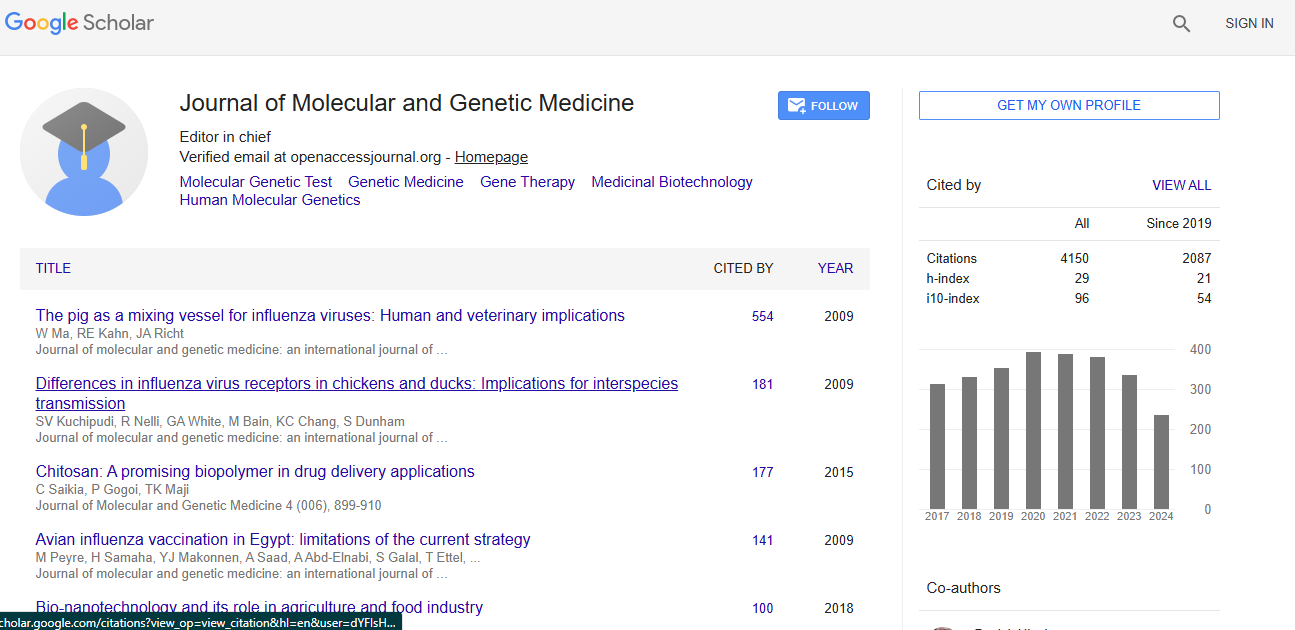
Molecular and Genetic Medicine received 3919 citations as per Google Scholar report