Perspective - (2025) Volume 10, Issue 5
Received: 01-Sep-2025, Manuscript No. PE-26-179305;
Editor assigned: 03-Sep-2025, Pre QC No. P-179305;
Reviewed: 17-Sep-2025, QC No. Q-179305;
Revised: 22-Sep-2025, Manuscript No. R-179305;
Published:
29-Sep-2025
, DOI: 10.37421/2472-1042.2025.10.305
Citation: Venkatesan, Suraj. ”Funding Rare Disease Therapies: Equitable Access Strategies.” Pharmacoeconomics 10 (2025):305.
Copyright: © 2025 Venkatesan S. This is an open-access article distributed under the terms of the Creative Commons Attribution License, which permits unrestricted use, distribution and reproduction in any medium, provided the original author and source are credited.
The evaluation of rare disease therapies presents a unique set of challenges, particularly when considering resource-limited settings. These settings often grapple with competing health priorities and constrained budgets, making it difficult to justify the high costs associated with novel treatments for conditions affecting small patient populations [1].
The economic frameworks proposed for these situations must be context-specific, extending beyond direct medical expenses to encompass broader societal burdens and exploring innovative funding avenues to ensure equitable access [1].
Pharmacoeconomic methodologies applied to rare diseases face inherent difficulties in accurately estimating treatment benefits and costs. This is often due to disease heterogeneity and the scarcity of robust data, necessitating adaptive trial designs and advanced modeling approaches to guide decision-making in resource-constrained environments [2].
In low- and middle-income countries, budget impact models are crucial for assessing the financial feasibility of adopting new rare disease treatments. Such analyses must meticulously consider factors like population size, disease prevalence, and the acquisition costs of drugs to ensure sustainability within healthcare systems [3].
The pricing and reimbursement of orphan drugs are fraught with ethical considerations and equity concerns across diverse healthcare systems. A balanced approach is essential, one that incentivizes innovation while simultaneously striving for affordable access, especially in settings with limited financial capacity [4].
A specialized framework for conducting cost-effectiveness analyses of gene therapies for rare diseases is essential. These therapies often involve substantial upfront investments and offer long-term benefits, requiring methods to quantify lifetime benefits and incorporate uncertainty analysis tailored for resource-limited contexts [5].
Patient access schemes for rare disease treatments are being evaluated for their feasibility in countries with limited healthcare budgets. Various models, including outcome-based agreements and risk-sharing arrangements, are discussed as potential avenues to improve access while mitigating financial risks [6].
Real-world evidence (RWE) plays a significant role in the economic evaluation of rare disease therapies, particularly when clinical trial data is limited. RWE can enhance cost-effectiveness models and bolster policy decisions within resource-constrained healthcare systems by providing a more comprehensive understanding of treatment outcomes [7].
The economic evaluation of rare disease treatments should extend beyond direct costs to incorporate societal perspectives. This broader view acknowledges the substantial burdens borne by families and society, proposing methods to capture intangible costs and benefits for a more complete assessment [8].
Innovative financing mechanisms are being explored for rare disease therapies in emerging economies. Strategies such as health impact bonds and pooled procurement hold promise for improving affordability and accessibility while maintaining the sustainability of healthcare systems [9].
Adapting universal health coverage (UHC) principles to ensure access to rare disease treatments presents a complex challenge. This involves navigating trade-offs in resource allocation and developing strategies for the equitable inclusion of these high-cost, low-prevalence interventions within existing UHC frameworks [10].
The economic evaluation of therapies for rare diseases in resource-limited settings necessitates a tailored approach that addresses significant challenges. These settings often face competing demands on healthcare budgets, making it difficult to allocate funds for expensive treatments that benefit small patient populations. Consequently, proposed economic frameworks must be contextually relevant, moving beyond direct medical costs to account for the broader societal impact of these conditions and exploring innovative funding models to ensure fair access [1].
Pharmacoeconomic research into rare diseases encounters substantial hurdles in precisely quantifying treatment benefits and costs. This is largely attributed to the inherent variability within rare diseases and the limited availability of comprehensive data. To overcome these obstacles, adaptive clinical trial designs and sophisticated modeling techniques are advocated to inform decision-making, especially within financially constrained healthcare systems [2].
For low- and middle-income countries, the implementation of budget impact models is a critical step in determining the financial viability of adopting new rare disease treatments. These models must rigorously incorporate crucial variables such as population size, disease prevalence, and the procurement costs of pharmaceuticals to ascertain the sustainability of such interventions [3].
Key ethical and equity considerations arise in the pricing and reimbursement of orphan drugs across different healthcare systems globally. A balanced strategy is paramount, one that effectively stimulates innovation while simultaneously ensuring that these vital treatments remain accessible, particularly in regions with limited financial resources [4].
A specific framework is required for the economic evaluation of gene therapies targeting rare diseases. Given the typically high initial costs and the potential for long-term benefits associated with these advanced treatments, methodologies are needed to accurately value lifetime benefits and incorporate uncertainty analysis appropriate for resource-limited environments [5].
The feasibility of implementing patient access schemes for rare disease treatments in countries with constrained healthcare budgets is a subject of ongoing evaluation. Various innovative schemes, including agreements tied to treatment outcomes and risk-sharing partnerships, are being explored as ways to broaden access while managing financial risks effectively [6].
The utility of real-world evidence (RWE) in the economic assessment of rare disease therapies is increasingly recognized, especially when prospective clinical trial data is scarce. RWE can significantly enrich cost-effectiveness models and provide valuable support for policy formulation in healthcare systems with limited resources [7].
Comprehensive economic evaluations of rare disease treatments should extend their scope to include societal perspectives, acknowledging the impact that these conditions have on families and the wider community. The development of methods to capture these intangible costs and benefits is crucial for a more holistic assessment [8].
Innovative financing mechanisms are being investigated to facilitate the provision of rare disease therapies in emerging economies. Approaches such as health impact bonds and collaborative procurement strategies are being considered to enhance affordability and access without jeopardizing the long-term financial health of healthcare systems [9].
Aligning the principles of universal health coverage (UHC) with the need to provide access to rare disease treatments presents a significant challenge. This involves carefully managing resource allocation and devising strategies to ensure that these high-cost, low-prevalence interventions are equitably integrated into UHC frameworks [10].
This collection of research addresses the complex landscape of evaluating and funding rare disease therapies, with a particular focus on resource-limited settings. Studies explore the development of economic frameworks that consider societal burdens beyond direct medical costs and propose innovative funding mechanisms like budget impact models, patient access schemes, health impact bonds, and pooled procurement to enhance affordability and equitable access. Challenges in pharmacoeconomic evaluation, such as data scarcity and disease heterogeneity, are highlighted, with recommendations for adaptive trial designs and real-world evidence. The ethical and equity implications of orphan drug pricing and reimbursement are discussed, alongside strategies for integrating rare disease treatments within universal health coverage frameworks. The importance of incorporating societal perspectives and valuing long-term benefits, especially for gene therapies, is also emphasized.
None
None
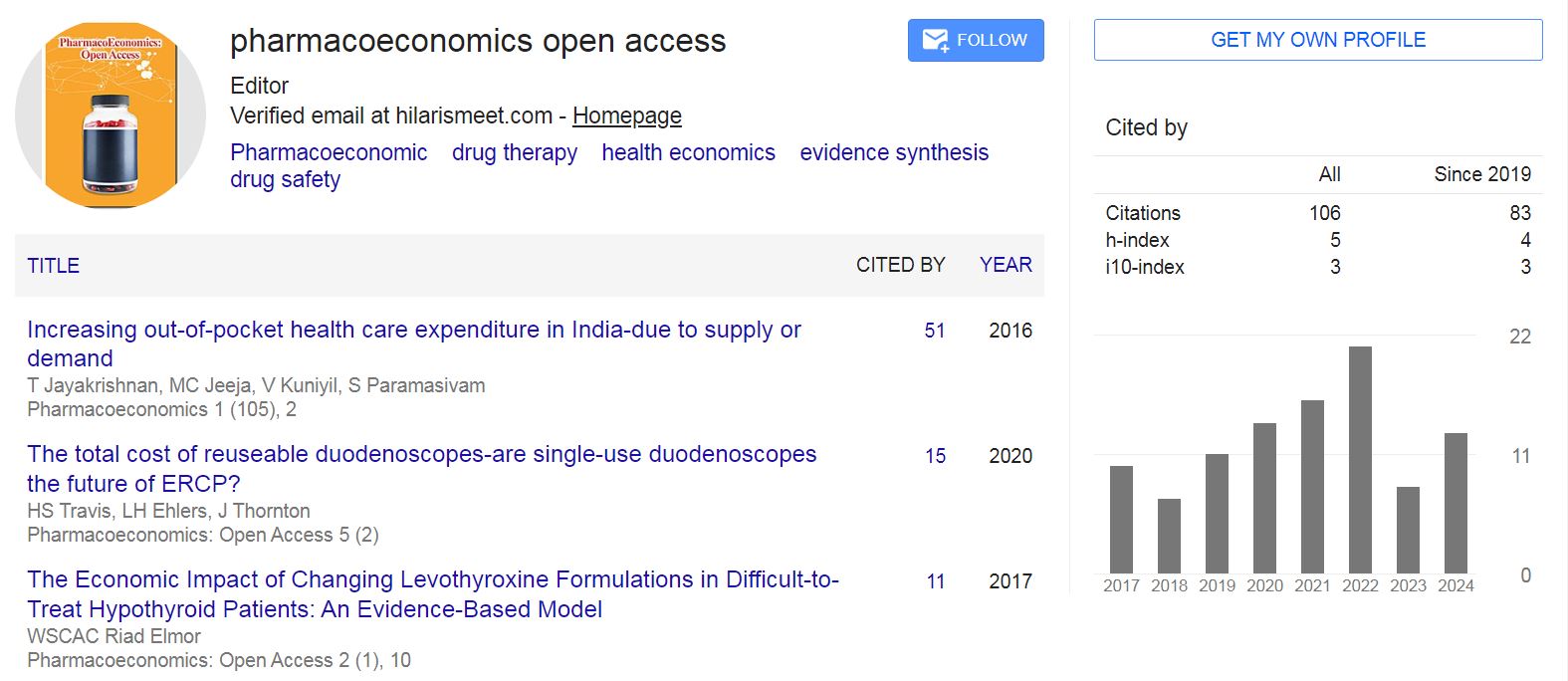
Pharmacoeconomics: Open Access received 106 citations as per Google Scholar report