Commentary - (2025) Volume 14, Issue 3
Received: 01-Sep-2025, Manuscript No. jms-25-172639;
Editor assigned: 03-Sep-2025, Pre QC No. P-172639;
Reviewed: 17-Sep-2025, QC No. Q-172639;
Revised: 22-Sep-2025, Manuscript No. R-172639;
Published:
29-Sep-2025
, DOI: 10.37421/2167-0943.2024.13.412
Citation: Tanaka, Ren. "Food: Health, Sustainability, Innovation, Resilience." J Metabolic Synd 14 (2025):412.
Copyright: © 2025 Tanaka R. This is an open-access article distributed under the terms of the Creative Commons Attribution License, which permits unrestricted use,
distribution and reproduction in any medium, provided the original author and source are credited.
This article dives into how the food we eat influences our gut bacteria, and in turn, how the metabolites produced by these microbes affect our overall health. It highlights the intricate connections between diet, gut microbiota, and various physiological processes, offering insights into preventing and managing diseases through dietary interventions[1].
This review explores the significant connection between dietary patterns and mental well-being, summarizing current evidence on how different foods and nutrients influence mood, cognitive function, and mental health disorders. It points out existing research gaps, suggesting areas for future investigation to better understand food's impact on our brains[2].
This article addresses the evolving landscape of food safety, detailing new threats like emerging pathogens and contaminants, alongside the complexities introduced by global food supply chains. It discusses the efficacy of current management systems and proposes strategies for adaptation to ensure consumer protection in a rapidly changing world[3].
This paper examines the rapid growth of plant-based food products, looking at the motivations behind consumer adoption, the nutritional benefits and challenges of these diets, and the technological innovations driving their development. It considers market trends and the potential impact on public health and environmental sustainability[4].
This review provides an overview of various methods for transforming food waste into valuable resources, such as biofuels, bioplastics, and food additives. It emphasizes the importance of a circular economy approach to minimize environmental impact and create new economic opportunities from discarded food materials[5].
This article explores the emerging field of personalized nutrition, assessing how individual genetic, lifestyle, and gut microbiome data can be used to tailor dietary recommendations for optimal health. It discusses the scientific advancements and technological tools making this approach feasible, as well as the challenges in its widespread implementation[6].
This review highlights the latest innovations in food packaging aimed at enhancing sustainability, including biodegradable materials, active and intelligent packaging, and designs that reduce waste. It examines the environmental benefits, functional properties, and regulatory hurdles associated with these new packaging technologies[7].
This review critically assesses the growing body of evidence linking the consumption of ultra-processed foods to various adverse health outcomes, including obesity, cardiovascular diseases, and mental health issues. It discusses the characteristics of these foods and the mechanisms through which they might affect health, urging for public health interventions[8].
This article surveys the latest breakthroughs in food biotechnology, exploring how genetic engineering, fermentation, and enzyme technology are being applied to improve food production. It covers applications ranging from enhancing nutritional content and extending shelf life to developing novel food ingredients and ensuring food safety[9].
This paper analyzes the vulnerabilities exposed in global food supply chains by recent events like pandemics and climate disasters. It proposes strategies for enhancing resilience through diversification, localized production, and improved logistics, aiming to prevent future disruptions and ensure consistent food access worldwide[10].
The modern landscape of food science and nutrition is multifaceted, exploring deep connections between what we eat and our overall well-being, alongside critical issues of food security, safety, and environmental impact. Recent studies highlight how food choices resonate through complex biological systems and global networks.
For instance, the food we consume directly impacts our gut bacteria, and the metabolites these microbes produce significantly affect our health, offering insights for disease prevention through dietary interventions[1]. Beyond physiological health, dietary patterns play a crucial role in mental well-being, influencing mood, cognitive function, and mental health disorders, pointing to significant research gaps in understanding food's neurological impact[2]. This has spurred interest in personalized nutrition, tailoring dietary advice using individual genetic, lifestyle, and gut microbiome data for optimal health, despite implementation challenges[6]. Conversely, the increasing body of evidence links consumption of ultra-processed foods to adverse health outcomes, including obesity, cardiovascular, and mental health issues, necessitating public health action[8].
Food safety faces evolving challenges from emerging pathogens and contaminants, alongside complexities within global supply chains. Adapting current management systems is paramount to ensure consumer protection in this dynamic environment[3]. Breakthroughs in food biotechnology, utilizing genetic engineering, fermentation, and enzyme technology, are improving food production by enhancing nutritional content, extending shelf life, developing novel ingredients, and boosting safety standards[9].
Recent crises like pandemics and climate disasters have exposed vulnerabilities in global food supply chains. Developing strategies for enhancing resilience, such as diversification, localized production, and improved logistics, is crucial to prevent future disruptions and ensure consistent global food access[10].
A key area of sustainability involves transforming food waste into valuable resources like biofuels, bioplastics, and food additives, embracing a circular economy approach to lessen environmental impact and create new economic opportunities[5]. Simultaneously, innovations in food packaging are focusing on sustainability, developing biodegradable materials, active and intelligent packaging, and waste-reducing designs. These advancements offer environmental benefits, though they come with functional and regulatory considerations[7].
The rapid rise of plant-based food products marks a significant dietary shift, driven by consumer motivations, nutritional aspects, and technological innovations. Understanding these market trends is essential to assess their broad impact on public health and environmental sustainability[4].
Recent research explores the profound influence of diet on health, detailing how food impacts gut bacteria and subsequent metabolite production, directly affecting overall physiological processes and disease management. The connection between dietary patterns and mental well-being is significant, with various foods and nutrients affecting mood, cognitive function, and mental health disorders. Food safety remains a critical concern, addressing new threats from pathogens and contaminants, alongside the complexities of global supply chains, necessitating adaptive management systems. The surge in plant-based food products reflects changing consumer preferences, driven by motivations related to nutrition, public health, and environmental sustainability, supported by technological innovations. Efforts towards a circular economy are evident in the valorization of food waste, transforming it into valuable resources like biofuels, bioplastics, and additives, minimizing environmental impact and creating new economic avenues. Personalized nutrition is emerging, utilizing individual genetic, lifestyle, and gut microbiome data to offer tailored dietary recommendations for optimal health, though its widespread implementation faces challenges. Innovations in food packaging focus on sustainability, introducing biodegradable, active, and intelligent materials to reduce waste and improve environmental benefits, while navigating regulatory hurdles. Concerns about ultra-processed foods are rising, with evidence linking their consumption to adverse health outcomes such as obesity, cardiovascular diseases, and mental health issues, calling for public health interventions. Food biotechnology advancements, including genetic engineering and fermentation, enhance food production by improving nutritional content, extending shelf life, and ensuring safety. Global food supply chains are increasingly vulnerable to crises like pandemics and climate disasters, highlighting the need for resilience strategies through diversification, localized production, and improved logistics to ensure consistent food access.
None
None
Indexed at, Google Scholar, Crossref
Indexed at, Google Scholar, Crossref
Indexed at, Google Scholar, Crossref
Indexed at, Google Scholar, Crossref
Indexed at, Google Scholar, Crossref
Indexed at, Google Scholar, Crossref
Indexed at, Google Scholar, Crossref
Indexed at, Google Scholar, Crossref
Indexed at, Google Scholar, Crossref
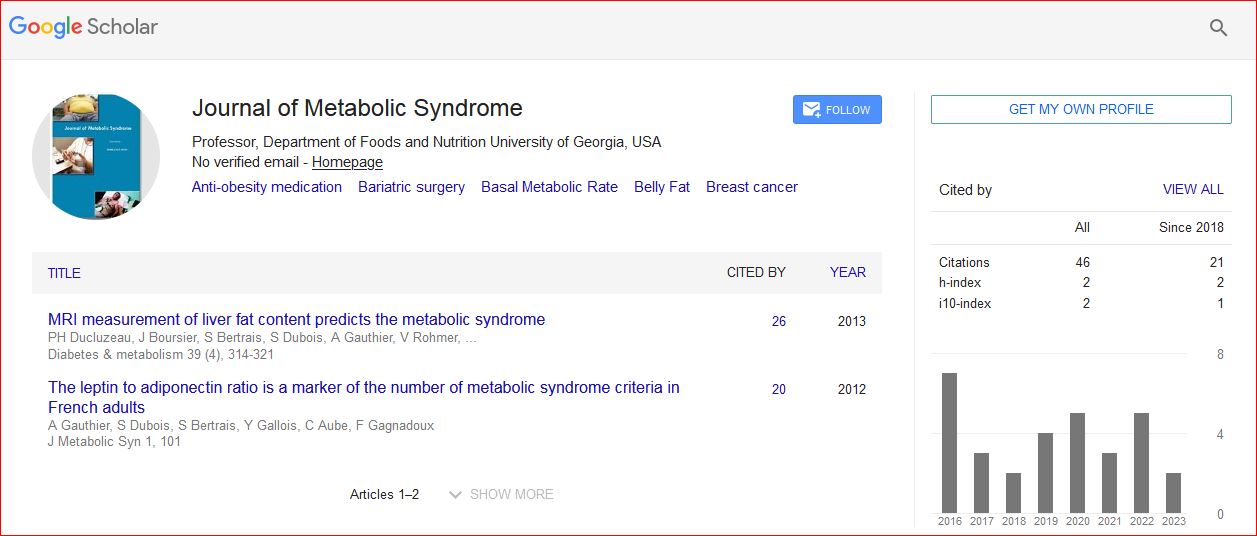
Journal of Metabolic Syndrome received 48 citations as per Google Scholar report