Perspective - (2025) Volume 14, Issue 3
Received: 01-Sep-2025, Manuscript No. jms-25-172643;
Editor assigned: 03-Sep-2025, Pre QC No. P-172643;
Reviewed: 17-Sep-2025, QC No. Q-172643;
Revised: 22-Sep-2025, Manuscript No. R-172643;
Published:
29-Sep-2025
, DOI: 10.37421/2167-0943.2024.13.417
Citation: Leroux, Hugo. "Extensive Nutritional Challenges: Lifespan Impact, Solutions." J Metabolic Synd 14 (2025):417.
Copyright: © 2025 Leroux H. This is an open-access article distributed under the terms of the Creative Commons Attribution License, which permits unrestricted use,
distribution and reproduction in any medium, provided the original author and source are credited.
Early life nutritional disorders, covering both undernutrition and overnutrition, profoundly impact growth, development, and chronic disease risk from conception through early childhood. These critical vulnerabilities necessitate integrated public health initiatives. Effective strategies require discussing current diagnostic approaches, preventive measures, and therapeutic interventions to effectively address these significant global challenges [1].
A comprehensive overview reveals prevalent micronutrient deficiencies in children globally, including iron, zinc, and vitamin D, significantly affecting cognitive, motor, and socio-emotional development. These deficiencies stem from inadequate dietary intake, malabsorption, and increased physiological demands. Targeted public health interventions, like fortification programs and supplementation, are essential to mitigate the long-term developmental consequences of these widespread nutritional issues [2].
The complex 'malnutrition-obesity paradox' describes populations experiencing simultaneous undernutrition (micronutrient deficiencies) and overnutrition (obesity). Shared environmental, socioeconomic, and biological drivers, such as poor dietary quality and food insecurity, perpetuate this phenomenon. Integrated, sustainable interventions are crucial to address both ends of the nutritional spectrum, breaking this vicious cycle and improving global health outcomes effectively [3].
Severe nutritional and medical complications are associated with various eating disorders, including anorexia nervosa, bulimia nervosa, and Avoidant/Restrictive Food Intake Disorder (ARFID). These conditions cause physiological impacts from prolonged starvation, purging, and binge eating on organ systems, metabolism, and bone health. Specialized nutritional rehabilitation and refeeding protocols are critical components of multidisciplinary treatment, essential for restoring physical health and normalizing eating patterns [4].
A systematic review evaluates nutritional strategies against sarcopenia, the age-related loss of muscle mass and function. It assesses protein intake, vitamin D supplementation, and other micronutrientsâ?? impact on muscle strength, physical performance, and body composition in older adults. Findings confirm adequate protein intake, often with resistance exercise, is crucial, highlighting research needs to optimize sarcopenia prevention and management guidelines [5].
Individuals with celiac disease commonly experience nutritional deficiencies in iron, folate, vitamin B12, vitamin D, calcium, and zinc, even on a gluten-free diet. These are often due to malabsorption, poor dietary choices, or inflammation. Regular nutritional screening, dietary counseling, and targeted supplementation are vital to prevent complications and optimize the health of celiac patients effectively [6].
The potentially life-threatening refeeding syndrome is a metabolic complication in severely malnourished individuals upon nutritional reintroduction. It involves shifts in fluid and electrolyte balance, notably hypophosphatemia, hypokalemia, and hypomagnesemia, with systemic consequences. Clear guidelines are provided for identifying at-risk patients, initiating cautious refeeding, and vigilant monitoring to prevent severe adverse outcomes [7].
Nutritional immunity is a fascinating concept where hosts sequester essential nutrients, such as iron, zinc, and manganese, from invading pathogens to restrict their growth. This review discusses the molecular mechanisms in this host-pathogen nutrient battle, emphasizing its impact on infection outcomes. Modulating nutritional immunity could offer novel therapeutic strategies against infectious diseases [8].
Malnutrition, especially undernutrition, profoundly impacts gut microbiota composition and function. Dysbiosis, an imbalance in microbial communities, can exacerbate nutritional deficiencies, impair immune function, and contribute to inflammation and impaired growth. Microbiota-targeted interventions, including prebiotics, probiotics, and fecal microbiota transplantation, show potential as innovative approaches to combat malnutrition and restore gut health effectively [9].
Malnutrition is highly prevalent in hospitalized patients, negatively impacting outcomes like increased morbidity, mortality, prolonged hospital stays, and healthcare costs. Routine nutritional screening with validated tools is crucial for early identification of at-risk individuals. Timely and appropriate nutritional support strategies are advocated to improve patient recovery and reduce adverse events within the hospital setting [10].
Nutritional health presents a complex landscape of challenges spanning the entire human lifespan. Early life nutritional disorders, encompassing both undernutrition and overnutrition, are particularly critical. These issues from conception through early childhood profoundly impact long-term growth, development, and chronic disease risk, necessitating integrated public health interventions [1]. Beyond this, widespread micronutrient deficiencies in children, affecting essential elements like iron, zinc, and vitamin D, have severe consequences for cognitive, motor, and socio-emotional development. These deficiencies often arise from inadequate dietary intake and malabsorption, requiring targeted public health interventions such as fortification and supplementation to mitigate their lasting developmental impacts [2]. Furthermore, a significant global health challenge is the 'malnutrition-obesity paradox,' where individuals or populations simultaneously experience both micronutrient deficiencies and obesity. This paradox is driven by shared environmental, socioeconomic, and biological factors, including poor dietary quality and food insecurity, underscoring the urgent need for integrated, sustainable interventions addressing both ends of the nutritional spectrum [3].
The spectrum of nutritional challenges extends to various specific health conditions, each with its unique demands. Eating disorders, including anorexia nervosa, bulimia nervosa, and Avoidant/Restrictive Food Intake Disorder (ARFID), are associated with severe nutritional and medical complications. Prolonged starvation, purging behaviors, and binge eating significantly impact organ systems, metabolism, and bone health, highlighting the essential role of specialized nutritional rehabilitation and refeeding protocols within multidisciplinary treatment plans to restore physical health and normalize eating patterns [4]. Concurrently, celiac disease patients, even those adhering to a gluten-free diet, frequently exhibit deficiencies in vital nutrients like iron, folate, vitamin B12, vitamin D, calcium, and zinc, often due to malabsorption or inadequate dietary choices. Therefore, regular nutritional screening, counseling, and targeted supplementation are critical for optimizing their health and preventing complications [6]. For older adults, combating sarcopeniaâ??the age-related loss of muscle mass and functionâ??is a significant concern. Research emphasizes the efficacy of nutritional strategies, particularly adequate protein intake often combined with resistance exercise, and the role of vitamin D supplementation in improving muscle strength and physical performance [5].
Acute clinical scenarios also highlight significant nutritional vulnerabilities. Refeeding syndrome, a potentially life-threatening metabolic complication, can occur when nutrition is reintroduced to severely malnourished individuals. This syndrome involves dangerous shifts in fluid and electrolyte balance, specifically hypophosphatemia, hypokalemia, and hypomagnesemia, leading to systemic consequences. Therefore, clear guidelines for patient identification, cautious refeeding, and vigilant monitoring are indispensable to prevent severe adverse outcomes [7]. Similarly, malnutrition is highly prevalent among hospitalized patients across diverse clinical settings. Its substantial negative impact includes increased morbidity, mortality, prolonged hospital stays, and elevated healthcare costs. This underscores the critical importance of routine nutritional screening using validated tools for early identification and timely, appropriate nutritional support to enhance patient recovery and reduce adverse events [10].
Beyond these direct impacts, emerging concepts reveal deeper interactions within nutritional science. Nutritional immunity, for instance, describes a fascinating host defense mechanism where the body actively sequesters essential nutrients like iron, zinc, and manganese from invading pathogens to restrict their growth. Understanding the molecular mechanisms involved in this nutrient battle offers novel therapeutic strategies against infectious diseases [8]. Moreover, the gut microbiota plays a pivotal role in malnutrition, particularly undernutrition. Dysbiosis, an imbalance in microbial communities, can exacerbate nutritional deficiencies, compromise immune function, and contribute to inflammation and impaired growth. This understanding opens avenues for microbiota-targeted interventions, such as prebiotics, probiotics, and fecal microbiota transplantation, as innovative approaches to combat malnutrition and restore overall gut health [9].
Nutritional challenges are extensive and multifaceted, impacting individuals from conception through old age. Early life nutritional disorders, encompassing both undernutrition and overnutrition, hold profound long-term consequences for growth, development, and chronic disease risk. Widespread micronutrient deficiencies in children, like iron, zinc, and vitamin D, significantly impede cognitive and motor development. A complex "malnutrition-obesity paradox" exists, where populations face both nutrient deficiencies and obesity due to shared drivers like poor diet and food insecurity, requiring integrated interventions. Specific conditions further complicate nutritional health. Eating disorders such as anorexia nervosa, bulimia nervosa, and ARFID lead to severe physiological impacts, demanding specialized nutritional rehabilitation. In older adults, sarcopenia, the loss of muscle mass, can be mitigated through adequate protein intake and vitamin D supplementation. Celiac disease often results in deficiencies in iron, folate, and B12, even on a gluten-free diet, necessitating regular screening and supplementation. Acute nutritional issues also pose significant risks. Refeeding syndrome, a dangerous metabolic complication in severely malnourished individuals, requires careful reintroduction of nutrition and vigilant monitoring. Hospitalized patients frequently suffer from malnutrition, increasing morbidity and healthcare costs, underscoring the need for routine screening and timely support. Emerging fields like nutritional immunity highlight how hosts battle pathogens by sequestering essential nutrients, suggesting new therapeutic avenues. Furthermore, the gut microbiota plays a crucial role in malnutrition, where dysbiosis can exacerbate deficiencies, making microbiota-targeted interventions promising for restoring health.
None
None
Indexed at, Google Scholar, Crossref
Indexed at, Google Scholar, Crossref
Indexed at, Google Scholar, Crossref
Indexed at, Google Scholar, Crossref
Indexed at, Google Scholar, Crossref
Indexed at, Google Scholar, Crossref
Indexed at, Google Scholar, Crossref
Indexed at, Google Scholar, Crossref
Indexed at, Google Scholar, Crossref
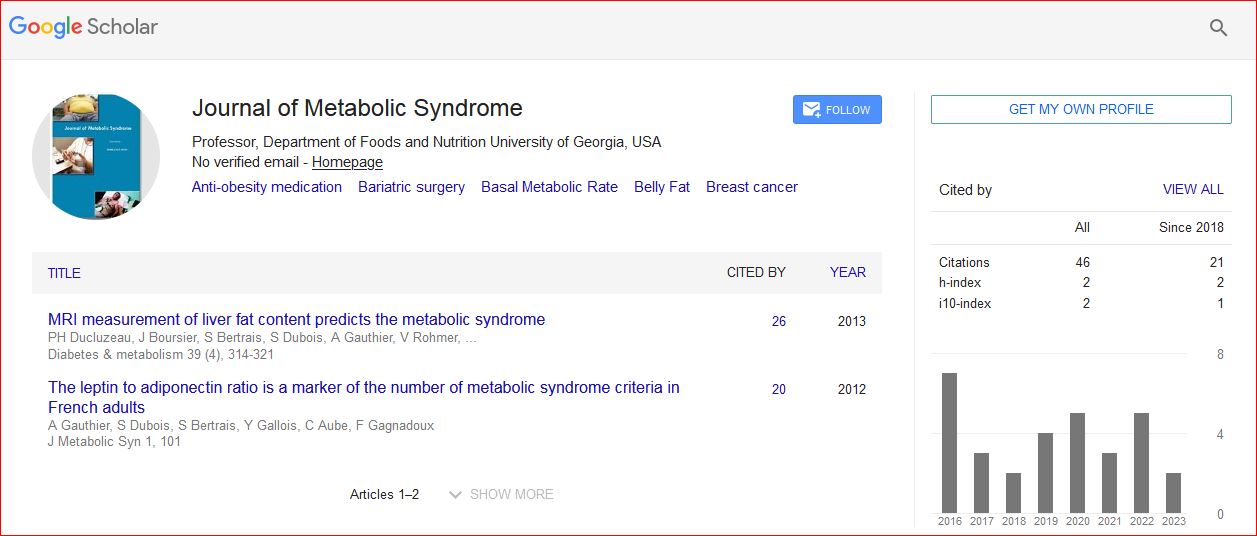
Journal of Metabolic Syndrome received 48 citations as per Google Scholar report