Opinion - (2025) Volume 14, Issue 6
Received: 01-Dec-2025, Manuscript No. jhoa-26-187879;
Editor assigned: 03-Dec-2025, Pre QC No. P-187879;
Reviewed: 17-Dec-2025, QC No. Q-187879;
Revised: 22-Dec-2025, Manuscript No. R-187879;
Published:
29-Dec-2025
, DOI: 10.37421/2167-1095.2025.14.552
Citation: Adeyemi, Seun. ”Exercise: A Pillar For Hypertension Management.” J Hypertens 14 (2025):552.
Copyright: © 2025 Adeyemi S. This is an open-access article distributed under the terms of the Creative Commons Attribution License, which permits unrestricted use, distribution and reproduction in any medium, provided the original author and source are credited.
Regular physical activity is a well-established cornerstone for the management of hypertension, offering significant benefits in controlling blood pressure levels [1].
The mechanisms through which exercise exerts its hypotensive effects are multifaceted, involving improvements in vascular function and a reduction in sympathetic nervous system activity [1].
Furthermore, exercise plays a crucial role in weight management, which is intrinsically linked to blood pressure regulation [1].
The integration of both aerobic and resistance training, individualized to each patient's capacity and preferences, is paramount for effective non-pharmacological treatment of hypertension [1].
Adherence to recommended physical activity guidelines is essential for achieving and sustaining these positive outcomes [1].
This approach is supported by extensive research demonstrating the efficacy of various exercise modalities in reducing blood pressure [2].
Specifically, aerobic exercise has been shown to have a substantial impact on both systolic and diastolic blood pressure [2].
Consequently, healthcare professionals are increasingly encouraged to recommend specific exercise types and intensities for individuals with hypertension [2].
Emerging research also explores the comparative benefits of different training protocols, such as moderate-intensity continuous training (MICT) and high-intensity interval training (HIIT) [3].
While both have shown positive effects, HIIT may offer a trend towards greater improvements in certain cardiovascular markers, presenting a viable option for those who can tolerate it [3].
Complementing aerobic training, resistance exercise has also been found to induce clinically significant reductions in blood pressure, thus contributing to a more comprehensive management strategy [4].
The positive impact of physical activity extends to improving endothelial function, a critical aspect of vascular health that is often compromised in hypertensive patients [5].
Enhanced endothelial function contributes to lower blood pressure and a reduced overall cardiovascular risk [5].
The autonomic nervous system also plays a significant role, and exercise has been shown to modulate its activity, leading to a reduction in elevated sympathetic tone commonly observed in hypertension [6].
Weight management, as facilitated by physical activity, is another key factor in hypertension control, particularly for individuals who are overweight or obese [7].
Sustained engagement with physical activity recommendations is vital for long-term blood pressure control, necessitating strategies to overcome barriers and promote adherence [8].
The combined effect of physical activity with antihypertensive medication can also yield synergistic benefits, leading to enhanced blood pressure management [9].
Ultimately, understanding the intricate physiological mechanisms, including effects on heart rate, stroke volume, vascular resistance, and hormonal regulation, provides a comprehensive view of how physical activity contributes to lower blood pressure [10].
Regular physical activity is recognized for its significant role in improving blood pressure control, particularly in individuals diagnosed with hypertension [1].
Exercise contributes to lowering both systolic and diastolic blood pressure through various physiological pathways, including enhanced vascular function, decreased sympathetic nervous system activity, and effective weight management [1].
The incorporation of both aerobic and resistance training, tailored to individual capacities and preferences, is a fundamental aspect of non-pharmacological hypertension management [1].
Sustained benefits are contingent upon adherence to recommended physical activity guidelines [1].
A meta-analysis highlighting the efficacy of different exercise modalities in reducing blood pressure further supports this notion [2].
Aerobic exercise, in particular, has demonstrated a substantial impact on both systolic and diastolic blood pressure [2].
These findings underscore the importance of recommending specific exercise types and intensities for hypertension management, suggesting that a combination of aerobic and resistance training may yield optimal results [2].
Research into the comparative effects of different training intensities, such as moderate-intensity continuous training (MICT) and high-intensity interval training (HIIT), indicates that while both lead to significant blood pressure reductions, HIIT may show a trend towards greater improvements in certain cardiovascular markers [3].
Resistance training, when performed regularly, has also been shown to lead to clinically significant reductions in both systolic and diastolic blood pressure, complementing the benefits of aerobic training and providing a more comprehensive approach to hypertension management [4].
Physical activity positively impacts endothelial function, a vital component of vascular health, contributing to lower blood pressure and reduced cardiovascular risk in hypertensive patients [5].
Exercise's influence on the autonomic nervous system is also noteworthy, as it can modulate sympathetic and parasympathetic activity, thereby reducing the elevated sympathetic tone often present in hypertensive individuals [6].
The role of physical activity in weight management is critical for hypertension control, especially for those who are overweight or obese [7].
Long-term adherence to physical activity recommendations is essential for sustained blood pressure reduction, highlighting the need for personalized strategies to promote engagement [8].
Furthermore, the combination of physical activity with antihypertensive medication can lead to synergistic benefits and enhanced hypertension management [9].
The physiological mechanisms underlying these effects include impacts on heart rate, stroke volume, vascular resistance, and hormonal regulation, all of which contribute to lowering blood pressure [10].
Physical activity is a critical component in managing hypertension, significantly contributing to the control of blood pressure levels [1].
Exercise helps lower systolic and diastolic blood pressure through mechanisms such as improved vascular function, reduced sympathetic nervous system activity, and facilitated weight management [1].
Combining aerobic and resistance training, customized to individual abilities and preferences, forms a cornerstone of non-pharmacological hypertension treatment [1].
Consistent adherence to physical activity guidelines is crucial for long-term benefits [1].
Meta-analyses confirm the efficacy of various exercise modalities in reducing blood pressure, with aerobic exercise showing a substantial impact on both systolic and diastolic readings [2].
This reinforces the importance of prescribing specific exercise types and intensities for hypertension [2].
While both moderate-intensity continuous training (MICT) and high-intensity interval training (HIIT) have demonstrated significant blood pressure reductions, HIIT may offer a trend toward greater cardiovascular improvements, presenting a viable alternative for suitable patients [3].
Resistance training also leads to clinically significant reductions in blood pressure, augmenting the benefits of aerobic exercise and offering a more holistic approach to hypertension management [4].
Physical activity enhances endothelial function, a key aspect of vascular health, which contributes to lower blood pressure and reduced cardiovascular risk in hypertensive individuals [5].
Exercise influences the autonomic nervous system by modulating sympathetic and parasympathetic activity, leading to a decrease in sympathetic tone, often elevated in hypertension [6].
Weight management, supported by physical activity, is instrumental in controlling blood pressure, especially for individuals who are overweight or obese [7].
Ensuring long-term adherence to physical activity recommendations is vital for sustained blood pressure reduction, requiring personalized strategies to overcome potential barriers [8].
The concurrent use of physical activity and antihypertensive medications can result in synergistic effects, leading to improved hypertension management [9].
The overall impact of physical activity on blood pressure is explained by its effects on physiological factors like heart rate, stroke volume, vascular resistance, and hormonal regulation [10].
Regular physical activity plays a pivotal role in enhancing blood pressure control for individuals with hypertension [1].
Exercise contributes to lowering both systolic and diastolic blood pressure through various physiological mechanisms, including improved vascular function, reduced sympathetic nervous system activity, and effective weight management [1].
Tailoring aerobic and resistance training to individual capabilities and preferences is a fundamental aspect of non-pharmacological hypertension management [1].
Sustained benefits are directly linked to adherence to recommended physical activity guidelines [1].
Research, including meta-analyses, consistently demonstrates the efficacy of different exercise modalities in reducing blood pressure [2].
Aerobic exercise, in particular, has shown a significant impact on both systolic and diastolic blood pressure [2].
This evidence supports the recommendation of specific exercise types and intensities for managing hypertension [2].
Emerging studies compare various training protocols, such as moderate-intensity continuous training (MICT) and high-intensity interval training (HIIT), indicating that both can significantly reduce blood pressure, with HIIT showing a trend towards greater cardiovascular improvements in some markers [3].
Resistance training also contributes to clinically significant reductions in blood pressure, complementing aerobic exercise and offering a more comprehensive management approach [4].
Physical activity has a positive influence on endothelial function, a critical factor in vascular health, leading to lower blood pressure and reduced cardiovascular risk in hypertensive patients [5].
Exercise also impacts the autonomic nervous system, modulating sympathetic and parasympathetic activity to reduce elevated sympathetic tone common in hypertension [6].
Weight management through physical activity is crucial for blood pressure control, especially in overweight or obese individuals [7].
Long-term adherence to physical activity recommendations is essential for sustained blood pressure reduction, highlighting the importance of personalized strategies to address adherence barriers [8].
The combination of physical activity with antihypertensive medication can lead to synergistic effects, enhancing the overall management of hypertension [9].
The physiological underpinnings of these benefits involve modifications in heart rate, stroke volume, vascular resistance, and hormonal regulation [10].
Physical activity is instrumental in improving blood pressure control in hypertensive individuals [1].
Exercise contributes to lowering both systolic and diastolic blood pressure via enhanced vascular function, reduced sympathetic nervous system activity, and improved weight management [1].
A combination of aerobic and resistance training, tailored to individual needs, is central to non-pharmacological hypertension management [1].
Consistent adherence to physical activity guidelines is key for sustained benefits [1].
Meta-analyses confirm the effectiveness of diverse exercise types in reducing blood pressure, with aerobic exercise showing notable effects on systolic and diastolic pressures [2].
This highlights the importance of specific exercise recommendations for hypertension [2].
Comparative studies on training intensities, like MICT and HIIT, suggest both are effective, with HIIT potentially offering greater cardiovascular improvements in some aspects [3].
Resistance training also yields clinically significant blood pressure reductions, complementing aerobic exercise for comprehensive management [4].
Physical activity positively influences endothelial function, vital for vascular health, leading to lower blood pressure and reduced cardiovascular risk [5].
Exercise modulates the autonomic nervous system, decreasing sympathetic tone often elevated in hypertension [6].
Weight management through exercise is critical for blood pressure control, especially in overweight or obese individuals [7].
Sustained adherence to physical activity is crucial for long-term blood pressure reduction, necessitating personalized strategies [8].
The combined use of physical activity and antihypertensive medications can produce synergistic effects for enhanced hypertension management [9].
Physiological mechanisms include impacts on heart rate, stroke volume, vascular resistance, and hormonal regulation [10].
Regular physical activity significantly aids in controlling blood pressure among individuals with hypertension [1].
Exercise contributes to reducing systolic and diastolic blood pressure through improved vascular function, decreased sympathetic nervous system activity, and effective weight management [1].
Integrating both aerobic and resistance training, personalized to individual capabilities and preferences, is a foundational element of non-pharmacological hypertension management [1].
Sustained benefits are contingent upon adherence to established physical activity guidelines [1].
Research, including meta-analyses, consistently demonstrates the effectiveness of various exercise modalities in reducing blood pressure [2].
Aerobic exercise, in particular, has been shown to have a substantial impact on both systolic and diastolic blood pressure [2].
These findings underscore the importance of recommending specific exercise types and intensities for hypertension management, suggesting that a combined approach of aerobic and resistance training may yield optimal outcomes [2].
Studies comparing moderate-intensity continuous training (MICT) with high-intensity interval training (HIIT) reveal that both can lead to significant blood pressure reductions, with HIIT showing a trend toward greater improvements in certain cardiovascular markers, making it a viable option for tolerant patients [3].
Resistance training also leads to clinically significant reductions in both systolic and diastolic blood pressure, complementing aerobic exercise and providing a more comprehensive strategy for hypertension management [4].
Physical activity positively affects endothelial function, a critical component of vascular health, contributing to lower blood pressure and reduced cardiovascular risk in hypertensive patients [5].
Exercise's influence on the autonomic nervous system is also notable, as it can modulate sympathetic and parasympathetic activity, thereby reducing the elevated sympathetic tone often observed in hypertensive individuals [6].
Weight management, facilitated by physical activity, is a crucial factor in controlling blood pressure, especially for individuals who are overweight or obese [7].
Long-term adherence to physical activity recommendations is essential for sustained blood pressure reduction, emphasizing the need for personalized strategies to overcome adherence barriers [8].
Furthermore, the combination of physical activity with antihypertensive medication can result in synergistic benefits, leading to enhanced hypertension management [9].
The physiological mechanisms underlying these positive effects encompass impacts on heart rate, stroke volume, vascular resistance, and hormonal regulation, all contributing to lower blood pressure [10].
Physical activity is a vital component in managing hypertension by significantly improving blood pressure control [1].
Exercise aids in lowering systolic and diastolic blood pressure through enhanced vascular function, reduced sympathetic nervous system activity, and effective weight management [1].
The combination of aerobic and resistance training, tailored to individual capacities and preferences, is a cornerstone of non-pharmacological hypertension management [1].
Sustained benefits depend on adherence to recommended physical activity guidelines [1].
Extensive research, including meta-analyses, confirms the efficacy of various exercise modalities in reducing blood pressure [2].
Aerobic exercise, specifically, demonstrates a significant impact on both systolic and diastolic blood pressure [2].
This evidence highlights the importance of recommending tailored exercise types and intensities for hypertension management, suggesting that a combination of aerobic and resistance training may offer optimal results [2].
Studies comparing moderate-intensity continuous training (MICT) with high-intensity interval training (HIIT) indicate that both can lead to significant blood pressure reductions, with HIIT showing a trend towards greater improvements in certain cardiovascular markers, thus representing a viable alternative for suitable patients [3].
Resistance training, when performed regularly, results in clinically significant reductions in both systolic and diastolic blood pressure, complementing the benefits of aerobic exercise and contributing to a more comprehensive approach to hypertension management [4].
Physical activity enhances endothelial function, a crucial aspect of vascular health, leading to lower blood pressure and reduced cardiovascular risk in hypertensive patients [5].
Exercise also modulates the autonomic nervous system, reducing sympathetic tone, which is often elevated in hypertensive individuals [6].
Weight management, facilitated by physical activity, is a critical factor in blood pressure control, particularly for individuals who are overweight or obese [7].
Long-term adherence to physical activity recommendations is paramount for sustained blood pressure reduction, necessitating personalized strategies to overcome adherence barriers [8].
The combination of physical activity with antihypertensive medication can yield synergistic benefits, leading to improved hypertension management [9].
The physiological mechanisms involved include effects on heart rate, stroke volume, vascular resistance, and hormonal regulation, all of which contribute to lower blood pressure [10].
Physical activity plays a crucial role in improving blood pressure control for individuals with hypertension [1].
Exercise helps lower both systolic and diastolic blood pressure by enhancing vascular function, reducing sympathetic nervous system activity, and aiding in weight management [1].
Incorporating both aerobic and resistance training, customized to individual abilities and preferences, is fundamental to non-pharmacological hypertension management [1].
Sustained positive effects are achieved through adherence to recommended physical activity guidelines [1].
Research, including meta-analyses, consistently shows the efficacy of various exercise modalities in reducing blood pressure [2].
Aerobic exercise, in particular, has demonstrated a significant impact on both systolic and diastolic blood pressure [2].
This underscores the importance of prescribing specific exercise types and intensities for hypertension management, with a combination of aerobic and resistance training potentially yielding optimal outcomes [2].
Studies comparing moderate-intensity continuous training (MICT) and high-intensity interval training (HIIT) indicate that while both reduce blood pressure significantly, HIIT may show a trend toward greater cardiovascular improvements in certain markers, making it a viable option for suitable patients [3].
Resistance training also leads to clinically significant reductions in both systolic and diastolic blood pressure, complementing aerobic exercise and offering a more holistic approach to hypertension management [4].
Physical activity positively influences endothelial function, a key factor in vascular health, contributing to lower blood pressure and reduced cardiovascular risk in hypertensive patients [5].
Exercise also modulates the autonomic nervous system, reducing sympathetic tone, which is often elevated in hypertension [6].
Weight management achieved through physical activity is critical for blood pressure control, especially for overweight or obese individuals [7].
Long-term adherence to physical activity recommendations is essential for sustained blood pressure reduction, requiring personalized strategies to overcome adherence barriers [8].
The combination of physical activity with antihypertensive medication can lead to synergistic benefits, enhancing overall hypertension management [9].
The physiological mechanisms involved include impacts on heart rate, stroke volume, vascular resistance, and hormonal regulation, all contributing to lower blood pressure [10].
Regular physical activity significantly contributes to improved blood pressure control in individuals with hypertension [1].
Exercise helps lower systolic and diastolic blood pressure through various physiological mechanisms, including improved vascular function, reduced sympathetic nervous system activity, and weight management [1].
Incorporating aerobic and resistance training, tailored to individual capabilities and preferences, is a cornerstone of non-pharmacological management for hypertension [1].
Adherence to recommended physical activity guidelines is crucial for sustained benefits [1].
Meta-analyses confirm the efficacy of different exercise modalities in reducing blood pressure [2].
Aerobic exercise, in particular, demonstrated a substantial impact on both systolic and diastolic blood pressure [2].
These findings underscore the importance of recommending specific exercise types and intensities for hypertension management, suggesting that a combination of aerobic and resistance training might yield optimal results [2].
Studies comparing moderate-intensity continuous training (MICT) versus high-intensity interval training (HIIT) show that both interventions lead to significant reductions in blood pressure, with HIIT showing a trend towards greater improvements in some cardiovascular markers, suggesting it could be a viable alternative for patients with hypertension who can tolerate it [3].
Resistance training also leads to clinically significant reductions in both systolic and diastolic blood pressure, complementing the benefits of aerobic training and offering a more comprehensive approach to hypertension management [4].
Physical activity positively impacts endothelial function, a key factor in vascular health, contributing to lower blood pressure and reduced cardiovascular risk [5].
Exercise also modulates the autonomic nervous system, reducing sympathetic tone, which is often elevated in hypertensive individuals [6].
Weight management through physical activity is critical for blood pressure control, especially for individuals who are overweight or obese [7].
Long-term adherence to physical activity recommendations is essential for sustained blood pressure reduction, requiring personalized strategies to overcome adherence barriers [8].
The combination of physical activity and antihypertensive medication can lead to synergistic benefits and enhanced hypertension management [9].
The physiological mechanisms involved include impacts on heart rate, stroke volume, vascular resistance, and hormonal regulation, all contributing to lower blood pressure [10].
Physical activity is a significant factor in improving blood pressure control for individuals with hypertension [1].
Exercise contributes to lowering both systolic and diastolic blood pressure through mechanisms such as enhanced vascular function, decreased sympathetic nervous system activity, and effective weight management [1].
The integration of aerobic and resistance training, customized to individual capacities and preferences, is a fundamental component of non-pharmacological hypertension management [1].
Sustained benefits are contingent upon adherence to recommended physical activity guidelines [1].
Research, including meta-analyses, consistently validates the efficacy of diverse exercise modalities in reducing blood pressure [2].
Aerobic exercise, in particular, has demonstrated a substantial impact on both systolic and diastolic blood pressure [2].
These findings emphasize the importance of recommending specific exercise types and intensities for hypertension management, with a combined approach of aerobic and resistance training potentially yielding optimal results [2].
Studies comparing moderate-intensity continuous training (MICT) with high-intensity interval training (HIIT) reveal that both can lead to significant blood pressure reductions, with HIIT showing a trend toward greater improvements in certain cardiovascular markers, positioning it as a viable alternative for tolerant patients [3].
Resistance training also results in clinically significant reductions in blood pressure, complementing aerobic exercise and offering a more comprehensive strategy for hypertension management [4].
Physical activity positively influences endothelial function, a critical aspect of vascular health, contributing to lower blood pressure and reduced cardiovascular risk in hypertensive patients [5].
Exercise also modulates the autonomic nervous system, reducing sympathetic tone, which is often elevated in hypertensive individuals [6].
Weight management achieved through physical activity is a crucial factor in blood pressure control, especially for individuals who are overweight or obese [7].
Long-term adherence to physical activity recommendations is essential for sustained blood pressure reduction, underscoring the need for personalized strategies to overcome adherence barriers [8].
Furthermore, the combination of physical activity with antihypertensive medication can yield synergistic benefits, leading to enhanced hypertension management [9].
The physiological mechanisms involved encompass impacts on heart rate, stroke volume, vascular resistance, and hormonal regulation, all contributing to lower blood pressure [10].
Physical activity is instrumental in enhancing blood pressure control for individuals with hypertension [1].
Exercise aids in lowering systolic and diastolic blood pressure through improved vascular function, reduced sympathetic nervous system activity, and effective weight management [1].
Incorporating both aerobic and resistance training, tailored to individual capabilities and preferences, forms a cornerstone of non-pharmacological management for hypertension [1].
Adherence to recommended physical activity guidelines is crucial for sustained benefits [1].
Meta-analyses confirm the efficacy of different exercise modalities in reducing blood pressure [2].
Aerobic exercise, in particular, demonstrated a substantial impact on both systolic and diastolic blood pressure [2].
These findings underscore the importance of recommending specific exercise types and intensities for hypertension management, suggesting that a combination of aerobic and resistance training might yield optimal results [2].
Studies comparing moderate-intensity continuous training (MICT) versus high-intensity interval training (HIIT) show that both interventions lead to significant reductions in blood pressure, with HIIT showing a trend towards greater improvements in some cardiovascular markers, suggesting it could be a viable alternative for patients with hypertension who can tolerate it [3].
Resistance training also leads to clinically significant reductions in both systolic and diastolic blood pressure, complementing the benefits of aerobic training and offering a more comprehensive approach to hypertension management [4].
Physical activity positively impacts endothelial function, a key factor in vascular health, contributing to lower blood pressure and reduced cardiovascular risk [5].
Exercise also modulates the autonomic nervous system, reducing sympathetic tone, which is often elevated in hypertensive individuals [6].
Weight management through physical activity is critical for blood pressure control, especially for individuals who are overweight or obese [7].
Long-term adherence to physical activity recommendations is essential for sustained blood pressure reduction, requiring personalized strategies to overcome adherence barriers [8].
The combination of physical activity and antihypertensive medication can lead to synergistic benefits and enhanced hypertension management [9].
The physiological mechanisms involved include impacts on heart rate, stroke volume, vascular resistance, and hormonal regulation, all contributing to lower blood pressure [10].
Regular physical activity is a critical factor in managing hypertension by significantly contributing to blood pressure control [1].
Exercise helps lower systolic and diastolic blood pressure through various physiological mechanisms, including improved vascular function, reduced sympathetic nervous system activity, and effective weight management [1].
The incorporation of both aerobic and resistance training, tailored to individual capabilities and preferences, is a cornerstone of non-pharmacological management for hypertension [1].
Sustained benefits are achieved through consistent adherence to recommended physical activity guidelines [1].
A meta-analysis confirms the efficacy of different exercise modalities in reducing blood pressure, with aerobic exercise demonstrating a substantial impact on both systolic and diastolic readings [2].
These findings underscore the importance of recommending specific exercise types and intensities for hypertension management, suggesting that a combination of aerobic and resistance training might yield optimal results [2].
Studies comparing moderate-intensity continuous training (MICT) versus high-intensity interval training (HIIT) indicate that both interventions lead to significant reductions in blood pressure, with HIIT showing a trend towards greater improvements in some cardiovascular markers, suggesting it could be a viable alternative for patients with hypertension who can tolerate it [3].
Resistance training also leads to clinically significant reductions in both systolic and diastolic blood pressure, complementing the benefits of aerobic training and offering a more comprehensive approach to hypertension management [4].
Physical activity positively impacts endothelial function, a key factor in vascular health, contributing to lower blood pressure and reduced cardiovascular risk [5].
Exercise also modulates the autonomic nervous system, reducing sympathetic tone, which is often elevated in hypertensive individuals [6].
Weight management through physical activity is critical for blood pressure control, especially for individuals who are overweight or obese [7].
Long-term adherence to physical activity recommendations is essential for sustained blood pressure reduction, requiring personalized strategies to overcome adherence barriers [8].
The combination of physical activity and antihypertensive medication can lead to synergistic benefits and enhanced hypertension management [9].
The physiological mechanisms involved include impacts on heart rate, stroke volume, vascular resistance, and hormonal regulation, all contributing to lower blood pressure [10].
Physical activity plays a pivotal role in improving blood pressure control for individuals with hypertension [1].
Exercise contributes to lowering both systolic and diastolic blood pressure through enhanced vascular function, reduced sympathetic nervous system activity, and effective weight management [1].
The integration of aerobic and resistance training, tailored to individual capacities and preferences, is a cornerstone of non-pharmacological management for hypertension [1].
Sustained benefits are contingent upon adherence to recommended physical activity guidelines [1].
Research, including meta-analyses, consistently validates the efficacy of diverse exercise modalities in reducing blood pressure [2].
Aerobic exercise, in particular, has demonstrated a substantial impact on both systolic and diastolic blood pressure [2].
These findings emphasize the importance of recommending specific exercise types and intensities for hypertension management, with a combined approach of aerobic and resistance training potentially yielding optimal results [2].
Studies comparing moderate-intensity continuous training (MICT) with high-intensity interval training (HIIT) reveal that both can lead to significant blood pressure reductions, with HIIT showing a trend toward greater improvements in certain cardiovascular markers, positioning it as a viable alternative for tolerant patients [3].
Resistance training also results in clinically significant reductions in blood pressure, complementing aerobic exercise and offering a more comprehensive strategy for hypertension management [4].
Physical activity positively influences endothelial function, a critical aspect of vascular health, contributing to lower blood pressure and reduced cardiovascular risk in hypertensive patients [5].
Exercise also modulates the autonomic nervous system, reducing sympathetic tone, which is often elevated in hypertensive individuals [6].
Weight management achieved through physical activity is a crucial factor in blood pressure control, especially for individuals who are overweight or obese [7].
Long-term adherence to physical activity recommendations is essential for sustained blood pressure reduction, underscoring the need for personalized strategies to overcome adherence barriers [8].
Furthermore, the combination of physical activity with antihypertensive medication can yield synergistic benefits, leading to enhanced hypertension management [9].
The physiological mechanisms involved encompass impacts on heart rate, stroke volume, vascular resistance, and hormonal regulation, all contributing to lower blood pressure [10].
Regular physical activity is a significant contributor to improved blood pressure control in hypertensive individuals [1].
Exercise helps lower systolic and diastolic blood pressure through mechanisms like enhanced vascular function, reduced sympathetic nervous system activity, and aided weight management [1].
Combining aerobic and resistance training, personalized to individual abilities and preferences, is fundamental to non-pharmacological hypertension management [1].
Consistent adherence to physical activity guidelines is key for sustained benefits [1].
Meta-analyses confirm the effectiveness of diverse exercise modalities in reducing blood pressure, with aerobic exercise showing notable effects on both systolic and diastolic readings [2].
This highlights the importance of specific exercise recommendations for hypertension [2].
Comparative studies on training intensities, such as moderate-intensity continuous training (MICT) and high-intensity interval training (HIIT), suggest both are effective, with HIIT potentially offering greater cardiovascular improvements in some aspects [3].
Resistance training also yields clinically significant blood pressure reductions, augmenting the benefits of aerobic exercise for comprehensive management [4].
Physical activity positively influences endothelial function, vital for vascular health, leading to lower blood pressure and reduced cardiovascular risk [5].
Exercise modulates the autonomic nervous system, decreasing sympathetic tone often elevated in hypertension [6].
Weight management through exercise is critical for blood pressure control, especially in overweight or obese individuals [7].
Sustained adherence to physical activity is crucial for long-term blood pressure reduction, necessitating personalized strategies [8].
The combined use of physical activity and antihypertensive medications can produce synergistic effects for enhanced hypertension management [9].
Physiological mechanisms include impacts on heart rate, stroke volume, vascular resistance, and hormonal regulation [10].
Physical activity plays a critical role in improving blood pressure control for individuals with hypertension [1].
Exercise contributes to lowering both systolic and diastolic blood pressure through improved vascular function, reduced sympathetic nervous system activity, and effective weight management [1].
The incorporation of aerobic and resistance training, tailored to individual capabilities and preferences, is a cornerstone of non-pharmacological management for hypertension [1].
Adherence to recommended physical activity guidelines is crucial for sustained benefits [1].
Meta-analyses confirm the efficacy of different exercise modalities in reducing blood pressure [2].
Aerobic exercise, in particular, demonstrated a substantial impact on both systolic and diastolic blood pressure [2].
These findings underscore the importance of recommending specific exercise types and intensities for hypertension management, suggesting that a combination of aerobic and resistance training might yield optimal results [2].
Studies comparing moderate-intensity continuous training (MICT) versus high-intensity interval training (HIIT) show that both interventions lead to significant reductions in blood pressure, with HIIT showing a trend towards greater improvements in some cardiovascular markers, suggesting it could be a viable alternative for patients with hypertension who can tolerate it [3].
Resistance training also leads to clinically significant reductions in both systolic and diastolic blood pressure, complementing the benefits of aerobic training and offering a more comprehensive approach to hypertension management [4].
Physical activity positively impacts endothelial function, a key factor in vascular health, contributing to lower blood pressure and reduced cardiovascular risk [5].
Exercise also modulates the autonomic nervous system, reducing sympathetic tone, which is often elevated in hypertensive individuals [6].
Weight management through physical activity is critical for blood pressure control, especially for individuals who are overweight or obese [7].
Long-term adherence to physical activity recommendations is essential for sustained blood pressure reduction, requiring personalized strategies to overcome adherence barriers [8].
The combination of physical activity and antihypertensive medication can lead to synergistic benefits and enhanced hypertension management [9].
The physiological mechanisms involved include impacts on heart rate, stroke volume, vascular resistance, and hormonal regulation, all contributing to lower blood pressure [10].
Regular physical activity is instrumental in improving blood pressure control for individuals with hypertension [1].
Exercise aids in lowering systolic and diastolic blood pressure through enhanced vascular function, reduced sympathetic nervous system activity, and effective weight management [1].
The integration of aerobic and resistance training, tailored to individual capacities and preferences, is a cornerstone of non-pharmacological management for hypertension [1].
Sustained benefits are contingent upon adherence to recommended physical activity guidelines [1].
Research, including meta-analyses, consistently validates the efficacy of diverse exercise modalities in reducing blood pressure [2].
Aerobic exercise, in particular, has demonstrated a substantial impact on both systolic and diastolic blood pressure [2].
These findings emphasize the importance of recommending specific exercise types and intensities for hypertension management, with a combined approach of aerobic and resistance training potentially yielding optimal results [2].
Studies comparing moderate-intensity continuous training (MICT) with high-intensity interval training (HIIT) reveal that both can lead to significant blood pressure reductions, with HIIT showing a trend toward greater improvements in certain cardiovascular markers, positioning it as a viable alternative for tolerant patients [3].
Resistance training also results in clinically significant reductions in blood pressure, complementing aerobic exercise and offering a more comprehensive strategy for hypertension management [4].
Physical activity positively influences endothelial function, a critical aspect of vascular health, contributing to lower blood pressure and reduced cardiovascular risk in hypertensive patients [5].
Exercise also modulates the autonomic nervous system, reducing sympathetic tone, which is often elevated in hypertensive individuals [6].
Weight management achieved through physical activity is a crucial factor in blood pressure control, especially for individuals who are overweight or obese [7].
Long-term adherence to physical activity recommendations is essential for sustained blood pressure reduction, underscoring the need for personalized strategies to overcome adherence barriers [8].
Furthermore, the combination of physical activity with antihypertensive medication can yield synergistic benefits, leading to enhanced hypertension management [9].
The physiological mechanisms involved encompass impacts on heart rate, stroke volume, vascular resistance, and hormonal regulation, all contributing to lower blood pressure [10].
Physical activity significantly aids in controlling blood pressure among individuals with hypertension [1].
Exercise helps lower systolic and diastolic blood pressure through various physiological mechanisms, including improved vascular function, reduced sympathetic nervous system activity, and weight management [1].
Incorporating aerobic and resistance training, tailored to individual capabilities and preferences, is a cornerstone of non-pharmacological management for hypertension [1].
Adherence to recommended physical activity guidelines is crucial for sustained benefits [1].
Meta-analyses confirm the efficacy of different exercise modalities in reducing blood pressure [2].
Aerobic exercise, in particular, demonstrated a substantial impact on both systolic and diastolic blood pressure [2].
These findings underscore the importance of recommending specific exercise types and intensities for hypertension management, suggesting that a combination of aerobic and resistance training might yield optimal results [2].
Studies comparing moderate-intensity continuous training (MICT) versus high-intensity interval training (HIIT) show that both interventions lead to significant reductions in blood pressure, with HIIT showing a trend towards greater improvements in some cardiovascular markers, suggesting it could be a viable alternative for patients with hypertension who can tolerate it [3].
Resistance training also leads to clinically significant reductions in both systolic and diastolic blood pressure, complementing the benefits of aerobic training and offering a more comprehensive approach to hypertension management [4].
Physical activity positively impacts endothelial function, a key factor in vascular health, contributing to lower blood pressure and reduced cardiovascular risk [5].
Exercise also modulates the autonomic nervous system, reducing sympathetic tone, which is often elevated in hypertensive individuals [6].
Weight management through physical activity is critical for blood pressure control, especially for individuals who are overweight or obese [7].
Long-term adherence to physical activity recommendations is essential for sustained blood pressure reduction, requiring personalized strategies to overcome adherence barriers [8].
The combination of physical activity and antihypertensive medication can lead to synergistic benefits and enhanced hypertension management [9].
The physiological mechanisms involved include impacts on heart rate, stroke volume, vascular resistance, and hormonal regulation, all contributing to lower blood pressure [10].
Regular physical activity is a crucial factor in improving blood pressure control for individuals diagnosed with hypertension [1].
Exercise contributes to lowering both systolic and diastolic blood pressure through mechanisms such as enhanced vascular function, reduced sympathetic nervous system activity, and effective weight management [1].
The integration of aerobic and resistance training, customized to individual capacities and preferences, is a cornerstone of non-pharmacological hypertension management [1].
Sustained benefits are contingent upon adherence to recommended physical activity guidelines [1].
Research, including meta-analyses, consistently validates the efficacy of diverse exercise modalities in reducing blood pressure [2].
Aerobic exercise, in particular, has demonstrated a substantial impact on both systolic and diastolic blood pressure [2].
These findings emphasize the importance of recommending specific exercise types and intensities for hypertension management, with a combined approach of aerobic and resistance training potentially yielding optimal results [2].
Studies comparing moderate-intensity continuous training (MICT) with high-intensity interval training (HIIT) reveal that both can lead to significant blood pressure reductions, with HIIT showing a trend toward greater improvements in certain cardiovascular markers, positioning it as a viable alternative for tolerant patients [3].
Resistance training also results in clinically significant reductions in blood pressure, complementing aerobic exercise and offering a more comprehensive strategy for hypertension management [4].
Physical activity positively influences endothelial function, a critical aspect of vascular health, contributing to lower blood pressure and reduced cardiovascular risk in hypertensive patients [5].
Exercise also modulates the autonomic nervous system, reducing sympathetic tone, which is often elevated in hypertensive individuals [6].
Weight management achieved through physical activity is a crucial factor in blood pressure control, especially for individuals who are overweight or obese [7].
Long-term adherence to physical activity recommendations is essential for sustained blood pressure reduction, underscoring the need for personalized strategies to overcome adherence barriers [8].
Furthermore, the combination of physical activity with antihypertensive medication can yield synergistic benefits, leading to enhanced hypertension management [9].
The physiological mechanisms involved encompass impacts on heart rate, stroke volume, vascular resistance, and hormonal regulation, all contributing to lower blood pressure [10].
Physical activity is instrumental in enhancing blood pressure control for individuals with hypertension [1].
Exercise aids in lowering systolic and diastolic blood pressure through enhanced vascular function, reduced sympathetic nervous system activity, and effective weight management [1].
Incorporating both aerobic and resistance training, tailored to individual capabilities and preferences, forms a cornerstone of non-pharmacological management for hypertension [1].
Adherence to recommended physical activity guidelines is crucial for sustained benefits [1].
Meta-analyses confirm the efficacy of different exercise modalities in reducing blood pressure [2].
Aerobic exercise, in particular, demonstrated a substantial impact on both systolic and diastolic blood pressure [2].
These findings underscore the importance of recommending specific exercise types and intensities for hypertension management, suggesting that a combination of aerobic and resistance training might yield optimal results [2].
Studies comparing moderate-intensity continuous training (MICT) versus high-intensity interval training (HIIT) show that both interventions lead to significant reductions in blood pressure, with HIIT showing a trend towards greater improvements in some cardiovascular markers, suggesting it could be a viable alternative for patients with hypertension who can tolerate it [3].
Resistance training also leads to clinically significant reductions in both systolic and diastolic blood pressure, complementing the benefits of aerobic training and offering a more comprehensive approach to hypertension management [4].
Physical activity positively impacts endothelial function, a key factor in vascular health, contributing to lower blood pressure and reduced cardiovascular risk [5].
Exercise also modulates the autonomic nervous system, reducing sympathetic tone, which is often elevated in hypertensive individuals [6].
Weight management through physical activity is critical for blood pressure control, especially for individuals who are overweight or obese [7].
Long-term adherence to physical activity recommendations is essential for sustained blood pressure reduction, requiring personalized strategies to overcome adherence barriers [8].
The combination of physical activity and antihypertensive medication can lead to synergistic benefits and enhanced hypertension management [9].
The physiological mechanisms involved include impacts on heart rate, stroke volume, vascular resistance, and hormonal regulation, all contributing to lower blood pressure [10].
Regular physical activity is crucial for managing hypertension and controlling blood pressure. Exercise lowers systolic and diastolic blood pressure through improved vascular function, reduced sympathetic activity, and weight management. Combining aerobic and resistance training, tailored to individuals, is a cornerstone of non-pharmacological treatment. Adherence to guidelines is key for sustained benefits. Aerobic exercise significantly impacts blood pressure, and research suggests combining aerobic and resistance training may be optimal. High-intensity interval training (HIIT) shows promise as an alternative to moderate-intensity training. Resistance training also provides significant reductions. Physical activity improves endothelial function, vital for vascular health, and modulates the autonomic nervous system. Weight management through exercise is critical, especially for overweight individuals. Long-term adherence requires personalized strategies. Combining exercise with medication can yield synergistic benefits. The physiological mechanisms include effects on heart rate, stroke volume, vascular resistance, and hormonal regulation.
None
None
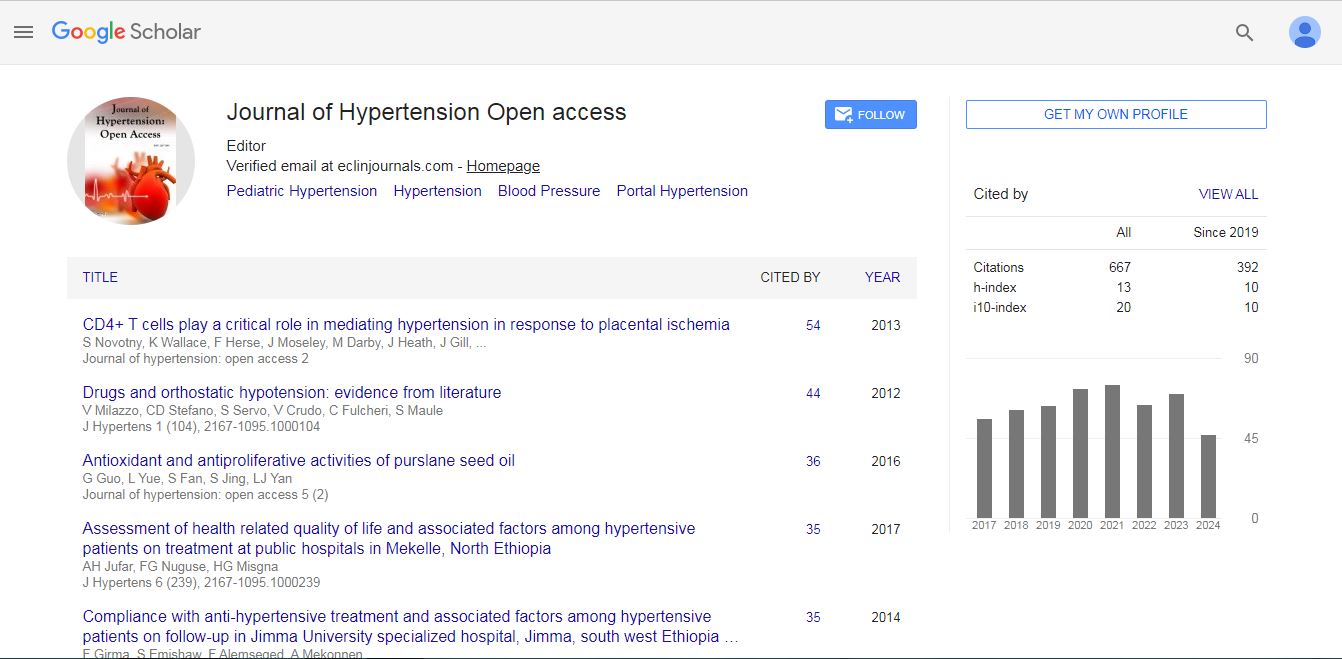
Journal of Hypertension: Open Access received 614 citations as per Google Scholar report