Brief Report - (2025) Volume 13, Issue 4
Received: 01-Jul-2025, Manuscript No. economics-26-186055;
Editor assigned: 03-Jul-2025, Pre QC No. P-186055;
Reviewed: 17-Jul-2025, QC No. Q-186055;
Revised: 22-Jul-2025, Manuscript No. R-186055;
Published:
29-Jul-2025
, DOI: 10.37421/2375-4389.2025.13.531
Citation: Herrera, Miguel Angel. ”Exchange Rate Volatility’s Toll
on Trade and SMEs.” J Glob Econ 13 (2025):531.
Copyright: © 2025 Herrera A. Miguel This is an open-access article distributed under the terms of the Creative Commons Attribution License, which permits unrestricted use,
distribution and reproduction in any medium, provided the original author and source are credited.
Exchange rate volatility has emerged as a significant concern in the realm of international trade, introducing a considerable degree of uncertainty for businesses engaged in cross-border transactions across the globe. This inherent unpredictability often translates into a tangible reduction in trade volumes. The primary mechanism through which this occurs is by elevating the perceived risk associated with international dealings and consequently increasing the costs associated with hedging against adverse currency movements. This phenomenon is not uniformly experienced; rather, it disproportionately affects smaller entities within the global marketplace. Specifically, small and medium-sized enterprises (SMEs) often possess fewer resources and less capacity to effectively manage and absorb the impacts of fluctuating currency values, making them particularly vulnerable. Recognizing this, policymakers have increasingly focused on interventions aimed at stabilizing exchange rates. Such measures are believed to foster greater trade integration, which in turn can stimulate economic growth, especially within developing economies that are often more sensitive to external economic shocks. The empirical evidence from emerging markets suggests a clear link between exchange rate stability and enhanced trade performance [1].
Further investigation into the intricate relationship between exchange rate volatility and international trade reveals nuanced patterns dependent on a country's developmental stage. Developed economies, with their more robust financial systems and sophisticated risk management tools, appear to possess a greater capacity to absorb the shocks and disruptions caused by exchange rate fluctuations. These economies can better weather the storm of currency instability, maintaining relatively stable trade flows. In contrast, developing countries often experience a more pronounced negative impact from exchange rate volatility. This heightened vulnerability underscores the critical importance of developing strong financial markets and implementing prudent exchange rate management policies. These measures are essential for mitigating the adverse effects that currency fluctuations can have on their trade activities and overall economic stability [2].
The impact of exchange rate volatility on international trade is not a monolithic phenomenon; rather, it exhibits considerable heterogeneity across different industries and economic sectors. This variability necessitates a more granular analysis to understand how diverse industries respond to the challenges posed by currency fluctuations. Research indicates that sectors characterized by longer production cycles and a higher reliance on imported or exported inputs and outputs tend to be more sensitive to exchange rate volatility. For these industries, the extended timeframe of transactions and the significant proportion of international sourcing or sales amplify the potential for losses due to currency shifts. Consequently, industries facing these challenges often resort to strategic measures such as currency hedging instruments and the diversification of their trading partners to navigate the inherent risks and maintain operational stability [3].
Examining the role of exchange rate regimes provides further insight into how countries manage the transmission of volatility to trade flows. Different exchange rate systems, ranging from fixed to managed floating and pure free-floating regimes, exhibit varying degrees of effectiveness in insulating trade from currency fluctuations. Empirical findings suggest that fixed or managed floating regimes often provide a more stable environment for trade activities, particularly in economies where financial markets are still developing and may lack sophisticated mechanisms for risk management. However, the success and stability offered by these regimes are contingent upon their credibility and the underlying strength of the country's economic fundamentals. A well-managed and credible exchange rate regime can act as a significant stabilizer [4].
Beyond the type of exchange rate regime, the level of financial development within a country plays a crucial role in shaping how exchange rate volatility affects international trade. Economies that boast deeper and more sophisticated financial markets are generally better equipped to handle the challenges posed by currency fluctuations. This enhanced capability stems from the availability of a wider array of financial tools and instruments, such as derivatives and hedging products, which allow businesses to effectively manage currency risks. By buffering the potential negative impacts of volatility, these advanced financial markets can help maintain and even promote international trade, enabling firms to engage more confidently in cross-border transactions [5].
Intra-industry trade, a significant component of modern global commerce where countries simultaneously export and import similar goods, is also demonstrably affected by exchange rate volatility. The increased uncertainty introduced by fluctuating exchange rates can lead to a reduction in both the volume and intensity of such trade. This occurs because higher volatility raises the risk for firms that are involved in exporting and importing comparable products, making them more hesitant to engage in these complex transactions. The effect is particularly pronounced for differentiated products, where brand reputation and market positioning are crucial and can be jeopardized by unpredictable currency swings, thus impacting the dynamics of intra-industry trade [6].
The influence of exchange rate volatility extends to fundamental firm-level decisions concerning international engagement, specifically impacting foreign direct investment (FDI) and export commitments. Heightened currency volatility can act as a significant deterrent to long-term investments, such as establishing foreign subsidiaries or making substantial capital outlays in overseas markets. Furthermore, it can compel firms to adopt a more cautious stance regarding the expansion of their export markets. This often results in a 'wait-and-see' approach, where businesses delay significant international commitments until a period of greater exchange rate stability, ultimately leading to reduced trade flows and investment [7].
Empirical analyses continue to explore the persistent nexus between exchange rate volatility and international trade, with recent data reinforcing established findings. The consensus remains that exchange rate volatility generally exerts a negative and statistically significant impact on trade volumes. However, contemporary research also delves into the moderating influence of institutional quality. Findings indicate that countries with stronger institutions, characterized by good governance, rule of law, and transparent regulatory frameworks, are better positioned to mitigate the adverse effects of currency fluctuations on their trade activities. Robust institutions can provide a stabilizing framework for businesses operating in international markets [8].
The ramifications of exchange rate volatility are not confined to the sheer quantity of goods and services traded; they also extend to the composition and sophistication of international trade. Currency fluctuations can influence the value-added content of exports, potentially leading to a discernible shift in the types of products that firms choose to export. Specifically, increased volatility may prompt firms to move away from exporting complex, high value-added goods and instead focus on simpler, lower value-added products. This strategic adjustment is often a risk-reduction tactic, as firms seek to minimize potential losses by concentrating on less intricate export offerings during periods of economic uncertainty [9].
Finally, the role of international cooperation through trade agreements in mitigating the negative consequences of exchange rate volatility on trade is a critical area of study. Evidence suggests that participation in regional trade agreements can act as a significant buffer against the disruptive effects of currency fluctuations. The institutional frameworks established within these agreements, coupled with the reduction of trade barriers, can provide firms with enhanced mechanisms for managing currency risks. This improved risk management capacity helps firms maintain their trade relationships and continue engaging in cross-border commerce even amidst volatile exchange rate environments [10].
The pervasive influence of exchange rate volatility on international trade necessitates a thorough understanding of its multifaceted impacts across various economic contexts. This phenomenon introduces a significant degree of uncertainty for businesses involved in cross-border transactions, thereby posing challenges to global commerce. The core mechanism through which this uncertainty manifests is an increase in perceived risk and a rise in the costs associated with hedging against unfavorable currency movements, ultimately leading to a reduction in overall trade volumes. This effect is particularly acute for small and medium-sized enterprises (SMEs), which often lack the financial robustness and risk management capacity to effectively navigate these currency fluctuations. Consequently, policy interventions aimed at fostering exchange rate stability are viewed as crucial for promoting greater trade integration and stimulating economic development, especially in economies that are more susceptible to external shocks [1].
Further research has illuminated how exchange rate volatility affects bilateral trade flows, with findings indicating a disparity in impact based on economic development levels. Developed economies, benefiting from more resilient financial markets and established risk management protocols, demonstrate a greater ability to absorb the disruptions caused by exchange rate fluctuations. Conversely, developing economies tend to experience a more pronounced negative effect from such volatility. This disparity highlights the critical importance of financial market development and the implementation of effective exchange rate management strategies as key measures to buffer the adverse consequences of currency volatility on trade [2].
The impact of exchange rate volatility on trade is not uniform across all industries; rather, it exhibits significant sectoral heterogeneity. Investigations into this area reveal that industries with longer production cycles and a higher proportion of imported or exported goods are more susceptible to the destabilizing effects of currency fluctuations. The extended timelines inherent in these sectors, coupled with their reliance on international inputs or markets, amplify the potential for financial losses due to currency shifts. To counteract these risks, firms in these sectors often adopt strategies such as currency hedging and the diversification of their trading partners to enhance resilience and maintain stability in their international trade operations [3].
An essential dimension of this complex relationship involves the role of exchange rate regimes in mediating the transmission of volatility to trade. Different regimes, including fixed, managed floating, and free-floating systems, offer varying degrees of protection against currency fluctuations. Evidence suggests that fixed or managed floating regimes tend to foster greater stability in trade flows, particularly in economies where financial markets are less developed and may lack sophisticated risk management tools. However, the efficacy of these regimes is contingent upon their credibility and the underlying economic stability of the nation implementing them [4].
The level of financial development within a country is a pivotal determinant in how exchange rate volatility influences international trade. Economies endowed with deeper and more sophisticated financial markets are inherently better positioned to mitigate currency risks. The availability of advanced financial instruments, such as derivatives and hedging tools, empowers businesses to protect themselves against adverse currency movements, thereby reducing the negative impact of volatility on trade volumes. In contrast, economies with limited access to such financial mechanisms are more vulnerable to the trade-dampening effects of exchange rate instability [5].
The dynamics of intra-industry trade, a significant segment of global commerce involving reciprocal trade of similar goods, are also demonstrably affected by exchange rate volatility. Increased volatility tends to diminish both the volume and intensity of intra-industry trade. This occurs because heightened uncertainty raises the perceived risk for firms engaged in exporting and importing comparable products, leading to a more cautious approach. The effect is particularly pronounced for differentiated products, where market positioning and brand integrity are crucial and can be undermined by unpredictable currency swings, impacting the overall dynamics of intra-industry trade [6].
Furthermore, exchange rate volatility significantly influences firm-level decisions regarding internationalization, specifically concerning foreign direct investment (FDI) and export commitments. Elevated currency volatility can dissuade firms from undertaking long-term investments in foreign markets, such as establishing production facilities or expanding operational footprints. It also fosters a more risk-averse approach towards extending export market reach, often leading to a 'wait-and-see' attitude that curtails trade flows and international business expansion [7].
Recent empirical analyses continue to reaffirm the negative correlation between exchange rate volatility and trade volumes, consistently demonstrating a statistically significant impact. Contemporary research also sheds light on the moderating role of institutional quality. Studies indicate that countries with strong institutions, characterized by robust legal frameworks and effective governance, are better equipped to mitigate the adverse effects of exchange rate volatility on their trade activities. These institutions provide a stable environment for businesses operating internationally [8].
Beyond quantitative measures, exchange rate volatility also affects the qualitative aspects of international trade, specifically the value-added content of exports. Increased currency fluctuations can incentivize firms to shift their export strategies towards less sophisticated, lower value-added goods. This strategic adaptation is often a response to risk aversion, as firms seek to simplify their export products to minimize potential financial exposures during periods of economic uncertainty, thereby impacting the sophistication of a nation's export basket [9].
Finally, the role of trade agreements in mitigating the adverse impacts of exchange rate volatility on trade is increasingly recognized. Participation in regional trade agreements can offer a valuable protective mechanism. The established institutional structures and reduced trade barriers within these agreements provide firms with a more predictable framework for managing currency risks, thereby facilitating the maintenance of trade relationships and promoting smoother cross-border commerce even amidst volatile exchange rate environments [10].
Exchange rate volatility significantly impacts international trade by increasing uncertainty, perceived risk, and hedging costs, leading to reduced trade volumes. This effect is more pronounced for Small and Medium-sized Enterprises (SMEs) and in developing economies. Developed economies and those with robust financial markets are better equipped to manage these fluctuations. Sectors with longer production cycles are more sensitive. Exchange rate regimes, particularly managed floats, can offer stability. Volatility also affects firm-level decisions on foreign direct investment and export commitments, often leading to a cautious approach. Stronger institutions and trade agreements can mitigate these negative impacts. Furthermore, volatility can influence the value-added content of exports, potentially leading to a shift towards less sophisticated products.
None
None
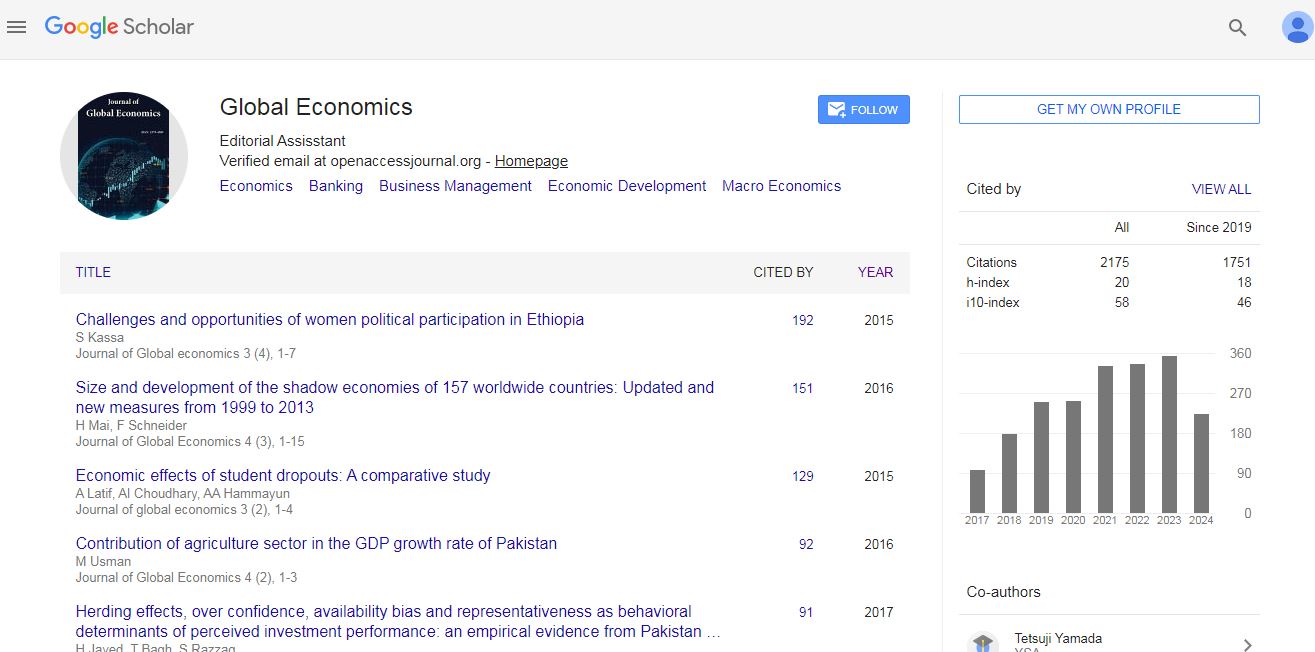
Journal of Global Economics received 2175 citations as per Google Scholar report