Perspective - (2025) Volume 16, Issue 3
Received: 02-Jun-2025, Manuscript No. jar-25-176622;
Editor assigned: 04-Jun-2025, Pre QC No. P-176622;
Reviewed: 18-Jun-2025, QC No. Q-176622;
Revised: 23-Jun-2025, Manuscript No. R-176622;
Published:
30-Jun-2025
, DOI: 10.37421/2155-6113.2025.16.1067
Citation: Zayed, Lina. ”Evolving Multi-Drug Therapies: Efficacy,
Risks, Personalization.” J AIDS Clin Res 16 (2025):1067.
Copyright: © 2025 Zayed L. This is an open-access article distributed under the terms of the Creative Commons Attribution License, which permits unrestricted use, distribution
and reproduction in any medium, provided the original author and source are credited.
Initial treatment strategies for Helicobacter pylori infection are critical, particularly in areas facing high antibiotic resistance. A meta-analysis clearly shows that bismuth-containing quadruple therapy often outperforms standard triple therapy as a first-line approach. This finding suggests that clinicians should consider a four-drug regimen over the traditional three-drug one for a more effective initial attack against H. pylori [1].
Further reinforcing this, a meta-analysis comparing levofloxacin-based triple therapy against bismuth quadruple therapy for H. pylori eradication found bismuth quadruple therapy to be generally superior. This highlights the ongoing challenge posed by H. pylori resistance and the continuous need for updated, more potent treatment plans that favor complex approaches over simpler triple therapies [2].
For patients with atrial fibrillation undergoing percutaneous coronary intervention (PCI), balancing clot prevention with avoiding dangerous bleeding is a major concern. A meta-analysis comparing triple antithrombotic therapy to dual therapy revealed that while triple therapy effectively reduces ischemic events, it carries a significantly higher risk of bleeding. This means careful patient selection and a thorough risk-benefit assessment are crucial when determining the optimal antithrombotic strategy [3].
An updated network meta-analysis offers a comprehensive view on antithrombotic strategies for patients with atrial fibrillation who undergo PCI or experience acute coronary syndrome. The research emphasizes the intricate decisions involved in selecting between various dual and triple therapy regimens. It truly underlines the importance of tailoring treatment based on an individual patient's unique bleeding and thrombotic risks, ultimately refining our understanding of how to minimize adverse outcomes in this high-risk group [4].
Navigating the use of triple antithrombotic therapy in patients presenting with both atrial fibrillation and coronary artery disease is a complex undertaking. This article provides current evidence and expert consensus on managing these challenging cases. It stresses that despite triple therapy's potency, its heightened bleeding risk means it's often reserved for very specific scenarios and for a limited duration. This discussion offers a practical roadmap for clinicians balancing these therapeutic demands [5].
For Chronic Obstructive Pulmonary Disease (COPD) management, triple therapy has gained significant attention. A recent update provides a clear overview of its current status, summarizing the evidence supporting the benefits of adding an inhaled corticosteroid to dual bronchodilator therapy. This approach is particularly beneficial for patient groups at a higher risk of exacerbations, guiding clinicians on how to best integrate triple therapy into their practice [6].
Focusing on COPD patients with a history of frequent exacerbations, research indicates a specific and vital role for triple therapy. This work highlights that for such patients, triple therapy can be exceptionally effective in reducing exacerbation rates and improving lung function. This suggests that identifying patients prone to these events is key to optimizing treatment outcomes with this advanced regimen [7].
Further understanding of triple therapy in COPD involves assessing the impact of blood eosinophil counts on its effectiveness and safety, particularly concerning exacerbations and pneumonia risk. The key insight here is that eosinophil levels can serve as a predictor for which patients might gain the most benefit from the inhaled corticosteroid component of triple therapy, while also identifying those at an elevated risk of pneumonia. This supports a more personalized approach to triple therapy, leveraging a simple, yet powerful, biomarker [8].
In the realm of HIV-1 infection, newer, highly effective triple-combination antiretroviral regimens have emerged, notably those incorporating dolutegravir or bictegravir. What this means is that these simplified, well-tolerated, and potent once-daily therapies have dramatically improved outcomes for people living with HIV. This represents a huge step forward in managing the infection, making treatment both easier and significantly more effective for patients worldwide [9].
Overall management of Helicobacter pylori infection demands evolving strategies, moving beyond traditional triple therapy to include more aggressive quadruple and salvage options. Here's the thing: rising antibiotic resistance makes a one-size-fits-all approach obsolete. Clinicians must make informed decisions on treatment selection, with a clear trend towards more potent regimens to ensure successful eradication [10].
For Helicobacter pylori infection, initial treatment decisions are crucial. A meta-analysis comparing bismuth-containing quadruple therapy to standard triple therapy for a first-line attack showed that quadruple therapy often outperforms triple therapy, especially in areas with high antibiotic resistance. This suggests a move away from traditional three-drug regimens for more effective initial treatment [1]. Another meta-analysis diving into the effectiveness of levofloxacin-based triple therapy versus bismuth quadruple therapy for initial H. pylori eradication also found bismuth quadruple therapy to be generally superior. This highlights the ongoing challenge of H. pylori resistance and the need for updated, more potent regimens, often favoring more complex approaches over simpler triple therapies [2]. Overall, managing H. pylori infection demands evolving strategies, contrasting traditional triple therapy with more aggressive quadruple and salvage therapies. Rising antibiotic resistance means a one-size-fits-all approach no longer works, guiding clinicians towards informed decisions on treatment selection and a move towards more potent regimens for successful eradication [10].
Switching gears to cardiovascular health, specifically patients with atrial fibrillation who need percutaneous coronary intervention (PCI), balancing clot prevention with bleeding risk is a major concern. One meta-analysis compared triple antithrombotic therapy to dual therapy, finding that while triple therapy effectively reduces ischemic events, it comes with a significantly higher risk of bleeding. This means careful patient selection and risk balancing are crucial for deciding the best antithrombotic strategy [3].
Further insights come from a recent network meta-analysis which provides a comprehensive update on antithrombotic strategies for patients with atrial fibrillation who undergo PCI or experience acute coronary syndrome. The research underscores the complexities of choosing between various dual and triple therapy regimens. It highlights the importance of tailoring treatment based on individual patient bleeding and thrombotic risks, refining our understanding of how to minimize adverse events in this high-risk population [4]. Additionally, addressing the tricky balance of using triple antithrombotic therapy in patients with both atrial fibrillation and coronary artery disease, current evidence and expert opinions outline management for these complex cases. While potent, its increased bleeding risk means triple therapy is often reserved for very specific situations and for a limited duration, offering a roadmap for clinicians navigating this therapeutic tightrope [5].
In the context of Chronic Obstructive Pulmonary Disease (COPD), triple therapy is gaining traction. A clear overview of its current status summarizes the evidence supporting the benefits of adding an inhaled corticosteroid to dual bronchodilator therapy for certain patient groups, especially those at higher risk of exacerbations. This helps clinicians understand who benefits most and how to integrate triple therapy into their practice [6]. For COPD patients with a history of frequent exacerbations, this therapy can be particularly effective in reducing exacerbation rates and improving lung function. Identifying patients prone to exacerbations is key to optimizing treatment outcomes with this advanced regimen [7].
Moreover, understanding the impact of blood eosinophil counts on the effectiveness and safety of triple therapy in COPD, particularly concerning exacerbations and pneumonia risk, is vital. Eosinophil levels can help predict which patients might benefit most from the inhaled corticosteroid component of triple therapy, while also identifying those at higher risk of pneumonia. This suggests a more personalized approach to triple therapy based on a simple biomarker [8].
Finally, the management of HIV-1 infection has seen significant advancements with the advent of newer, highly effective triple-combination antiretroviral regimens, specifically those incorporating dolutegravir or bictegravir. These simplified, well-tolerated, and potent once-daily therapies have significantly improved outcomes for people living with HIV, making treatment easier and more effective, marking a huge step forward in managing the infection [9].
Recent medical research highlights the evolving landscape of multi-drug therapies across diverse conditions. For Helicobacter pylori infections, there's a clear consensus: quadruple therapy generally outperforms traditional triple therapy, especially in areas with high antibiotic resistance. This signals a necessary shift towards more potent, complex regimens to achieve effective eradication. When it comes to cardiovascular care, particularly for atrial fibrillation patients undergoing percutaneous coronary intervention, the use of triple antithrombotic therapy presents a balancing act. While effective in reducing ischemic events, it carries a substantially higher risk of bleeding. This underscores the critical need for personalized treatment strategies, carefully weighing individual patient risks. In Chronic Obstructive Pulmonary Disease (COPD), triple therapy is proving beneficial, especially for those prone to frequent exacerbations. The role of blood eosinophil counts emerges as a key biomarker, helping predict which patients might benefit most from inhaled corticosteroids within this regimen, while also signaling pneumonia risk. This allows for a more tailored approach to COPD management. Finally, significant strides have been made in HIV-1 treatment. Newer triple-combination antiretroviral regimens, incorporating drugs like dolutegravir or bictegravir, have dramatically simplified and improved outcomes for people living with HIV, making once-daily therapies more potent and well-tolerated.
Indexed at, Google Scholar, Crossref
Indexed at, Google Scholar, Crossref
Indexed at, Google Scholar, Crossref
Indexed at, Google Scholar, Crossref
Indexed at, Google Scholar, Crossref
Indexed at, Google Scholar, Crossref
Indexed at, Google Scholar, Crossref
Indexed at, Google Scholar, Crossref
Indexed at, Google Scholar, Crossref
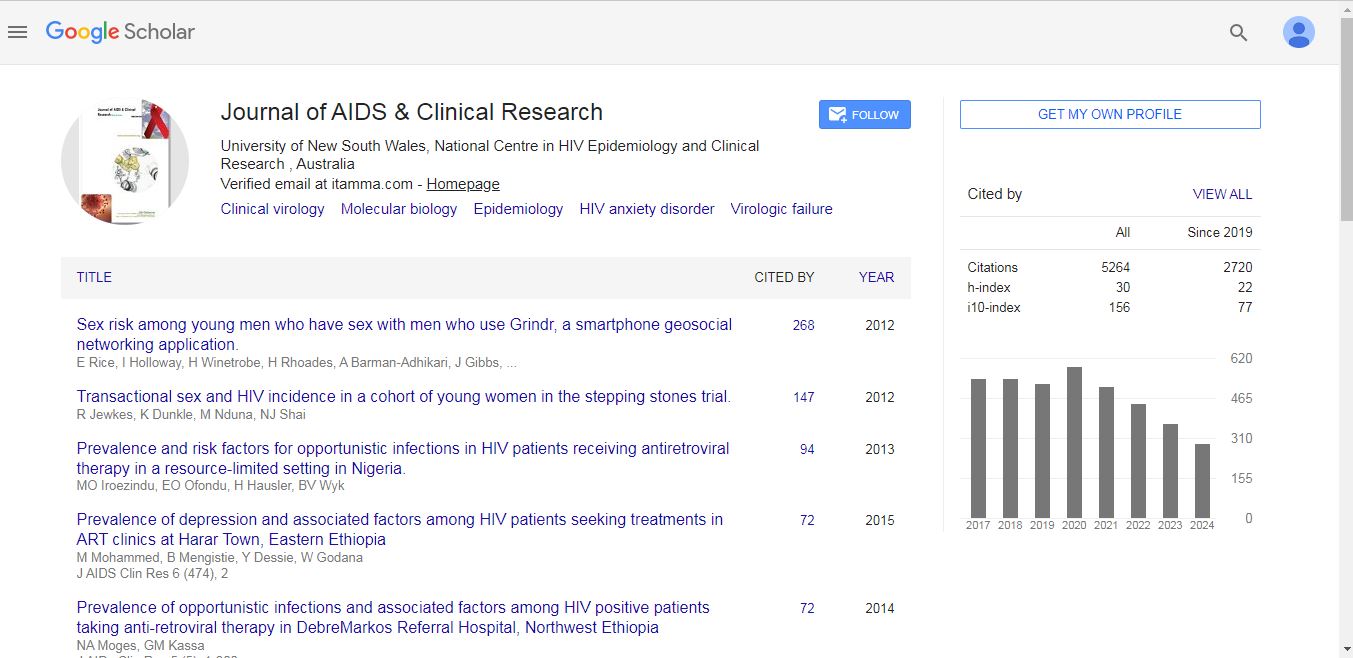
Journal of AIDS & Clinical Research received 5264 citations as per Google Scholar report