Short Communication - (2025) Volume 14, Issue 3
Received: 01-Sep-0025, Manuscript No. .jms-25-172646;
Editor assigned: 03-Sep-2025, Pre QC No. P-172646;
Reviewed: 17-Sep-2025, QC No. Q-172646;
Revised: 22-Sep-2025, Manuscript No. R-172646;
Published:
29-Sep-2025
, DOI: 10.37421/2167-0943.2024.14.420
Citation: Matsuda, Riku. "Evolving Diabetes Research, Management, and Technology." J Metabolic Synd 14 (2025):420
Copyright: © 2025 Matsuda R. This is an open-access article distributed under the terms of the Creative Commons Attribution License, which permits unrestricted use,
distribution and reproduction in any medium, provided the original author and source are credited.
The intricate pathophysiology of Type 2 Diabetes (T2DM) involves insulin resistance and beta-cell dysfunction, which are critical elements detailed in comprehensive reviews. These studies also outline current diagnostic criteria and a broad spectrum of management strategies, encompassing lifestyle modifications, oral hypoglycemic agents, and injectable therapies, all with an emphasis on personalized care [1].
Cardiovascular disease (CVD) represents a significant burden for individuals with Type 2 Diabetes. Recent reviews offer an updated perspective on this challenge, highlighting the underlying mechanisms, precise risk stratification, and the profound impact of various glucose-lowering and lipid-modifying therapies on cardiovascular outcomes. This work aims to guide clinicians toward integrated management approaches [2].
Management of diabetic kidney disease has seen substantial advancements, particularly with novel therapeutic agents such as SGLT2 inhibitors and GLP-1 receptor agonists. These agents demonstrate renoprotective effects that extend beyond simple glycemic control. The focus here is on early detection and multidisciplinary approaches designed to slow disease progression and ultimately improve patient outcomes [3].
Gestational Diabetes Mellitus (GDM) is another area with evolving diagnostic criteria and ongoing challenges in implementing effective screening protocols. Contemporary perspectives review these aspects, providing an updated overview of management strategies, which include dietary modifications, exercise regimens, and appropriate pharmacological interventions to optimize both maternal and fetal outcomes [4].
Significant progress continues in the treatment of Type 1 Diabetes (T1D). Key innovations include advanced insulin delivery systems, specifically automated insulin delivery (AID), and promising emerging immunotherapies. These therapies are primarily aimed at preserving residual beta-cell function. The broader discussion also covers the potential of precision medicine and the persistent challenges in ensuring widespread access to these advanced care options [5].
Diabetic neuropathy, a complex complication, involves intricate metabolic and vascular mechanisms in its pathogenesis. Comprehensive reviews critically evaluate current diagnostic tools and a range of therapeutic strategies, covering both pharmacological and non-pharmacological approaches. These reviews also point toward crucial future research directions necessary for developing more effective interventions [6].
The effectiveness of various diabetes prevention strategies is a focal point, emphasizing the critical roles of lifestyle interventions, pharmacological agents, and broader public health initiatives. Discussions include the inherent challenges in implementing widespread prevention programs and highlight the potential for personalized approaches, grounded in genetic and lifestyle risk factors, to significantly mitigate the global burden of diabetes [7].
For diabetic retinopathy, the current therapeutic landscape is broad, encompassing established methods like laser photocoagulation, anti-VEGF injections, and corticosteroid implants. Research also explores emerging treatments and advanced surgical interventions for severe stages of the disease. Crucially, the importance of early diagnosis and consistent monitoring to prevent irreversible vision loss is continuously underscored [8].
GLP-1 receptor agonists have been extensively reviewed, with detailed examinations of their mechanisms of action and impressive efficacy in achieving glycemic control. Beyond this, their significant non-glycemic benefits, such as substantial weight reduction, along with cardiovascular and renal protection, are highlighted. This underscores their increasingly important role in Type 2 Diabetes management and future therapeutic implications [9].
Finally, the rapid evolution of technology in diabetes care continues to transform patient management. This includes continuous glucose monitoring (CGM), sophisticated automated insulin delivery (AID) systems, and expansive digital health platforms. The impact of these technologies on glycemic control, patient quality of life, and the future landscape of personalized diabetes management is a critical area of evaluation [10].
Diabetes management and research represent a dynamic field, with distinct approaches tailored to different forms of the disease. For instance, Type 2 Diabetes (T2DM) is characterized by intricate pathophysiology involving insulin resistance and beta-cell dysfunction. Comprehensive reviews detail its current diagnostic criteria and a broad array of management strategies, which extend from lifestyle modifications to oral hypoglycemic agents and various injectable therapies, all emphasizing personalized patient care [1]. Similarly, Gestational Diabetes Mellitus (GDM) requires specific attention, with ongoing developments in diagnostic criteria and screening protocols. Management strategies for GDM, including dietary adjustments, exercise, and pharmacological interventions, are continually refined to optimize both maternal and fetal outcomes [4]. In the realm of Type 1 Diabetes (T1D), significant strides have been made in treatment through innovative insulin delivery systems like automated insulin delivery (AID) and promising immunotherapies aimed at preserving beta-cell function. The promise of precision medicine in T1D, however, faces challenges regarding equitable access to advanced care [5].
A critical aspect of diabetes care involves understanding and managing its numerous complications, particularly in Type 2 Diabetes. Cardiovascular disease (CVD) represents a substantial burden, where updated perspectives highlight underlying mechanisms, robust risk stratification, and the profound impact of both glucose-lowering and lipid-modifying therapies on cardiovascular outcomes. This work guides clinicians toward integrated management, aiming for holistic patient well-being [2]. Diabetic kidney disease (DKD) management has seen a surge of novel therapeutic agents, prominently SGLT2 inhibitors and GLP-1 receptor agonists, which offer renoprotective effects beyond their primary role in glycemic control. Early detection and multidisciplinary approaches are crucial to slow disease progression and enhance patient outcomes in DKD [3]. Furthermore, diabetic neuropathy presents with complex metabolic and vascular pathogenic mechanisms. Diagnostic tools and therapeutic strategies, spanning pharmacological and non-pharmacological interventions, are continually evaluated, pointing towards necessary future research directions for effective solutions [6]. Likewise, diabetic retinopathy's therapeutic landscape includes established treatments such as laser photocoagulation, anti-VEGF injections, and corticosteroid implants. Research also explores emerging treatments and surgical interventions for advanced stages, underscoring the vital importance of early diagnosis and consistent monitoring to prevent vision loss [8].
Beyond general management, specific therapeutic advancements are reshaping treatment paradigms. GLP-1 receptor agonists, for example, have undergone comprehensive review, revealing their detailed mechanisms of action and impressive efficacy in glycemic control. What stands out are their significant non-glycemic benefits, including substantial weight reduction, along with cardiovascular and renal protection. These attributes firmly establish their growing role in Type 2 Diabetes management and suggest expansive future therapeutic implications [9]. The integration of such agents, often alongside others like SGLT2 inhibitors, reflects a shift towards therapies offering multifaceted benefits in diabetes care [3, 9].
Prevention remains a cornerstone in addressing the global burden of diabetes. Various strategies are reviewed for their effectiveness, with a strong emphasis on lifestyle interventions, targeted pharmacological agents, and broader public health initiatives. Acknowledging the inherent challenges in implementing widespread prevention programs, researchers increasingly highlight the potential of personalized approaches, which are meticulously based on individual genetic and lifestyle risk factors [7]. Complementing these efforts is the rapid evolution of technology in diabetes care. Continuous glucose monitoring (CGM) systems, sophisticated automated insulin delivery (AID) systems, and diverse digital health platforms are transforming how diabetes is managed. These technologies are rigorously evaluated for their impact on glycemic control, patient quality of life, and their role in shaping the future landscape of truly personalized diabetes management [10]. The ongoing development of these tools promises to further refine and streamline diabetes care, offering patients more precise and adaptable control over their condition.
The diverse landscape of diabetes research highlights significant advancements across its various forms, from Type 1 to Type 2 and Gestational Diabetes. Comprehensive reviews detail the intricate pathophysiology of Type 2 Diabetes, covering insulin resistance, beta-cell dysfunction, diagnostic criteria, and a broad spectrum of management strategies including lifestyle changes, oral agents, and injectable therapies. Cardiovascular disease poses a major burden in Type 2 Diabetes, with mechanisms, risk stratification, and the impact of glucose-lowering and lipid-modifying treatments being continuously evaluated for integrated management. Diabetic kidney disease management has progressed with novel agents like SGLT2 inhibitors and GLP-1 receptor agonists demonstrating renoprotective effects. Gestational Diabetes Mellitus sees evolving diagnostic criteria and updated management strategies to optimize maternal and fetal outcomes. For Type 1 Diabetes, innovations in insulin delivery systems, such as automated insulin delivery, and emerging immunotherapies aim to preserve beta-cell function, moving towards precision medicine. Complications like diabetic neuropathy and retinopathy are also thoroughly investigated, covering their complex pathogenesis, diagnostic tools, and therapeutic landscapes which include laser photocoagulation, anti-VEGF injections, and advanced surgical options. Prevention strategies emphasize lifestyle interventions, pharmacological agents, and public health initiatives, acknowledging the potential of personalized approaches. Furthermore, GLP-1 receptor agonists are recognized for their efficacy beyond glycemic control, offering weight reduction and cardiovascular/renal protection in Type 2 Diabetes management. The rapid evolution of technology, including continuous glucose monitoring and digital health platforms, profoundly impacts glycemic control, quality of life, and the future of personalized diabetes care.
None
None
Indexed at, Google Scholar, Crossref
Indexed at, Google Scholar, Crossref
Indexed at, Google Scholar, Crossref
Indexed at, Google Scholar, Crossref
Indexed at, Google Scholar, Crossref
Indexed at, Google Scholar, Crossref
Indexed at, Google Scholar, Crossref
Indexed at, Google Scholar, Crossref
Indexed at, Google Scholar, Crossref
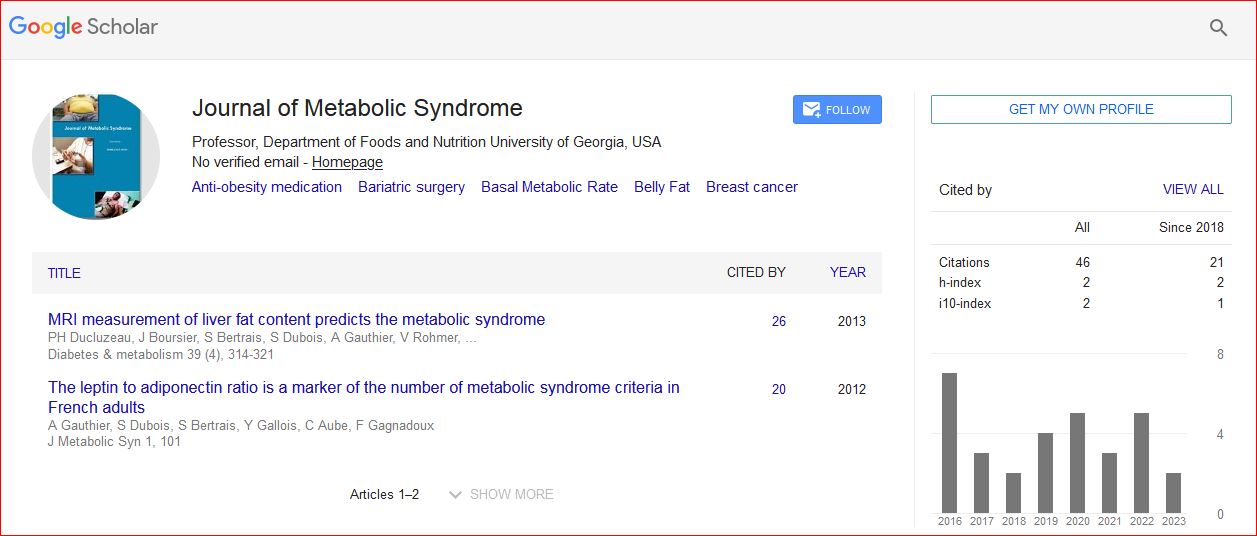
Journal of Metabolic Syndrome received 48 citations as per Google Scholar report