Perspective - (2025) Volume 16, Issue 6
Received: 01-Nov-2025, Manuscript No. jhmi-26-178899;
Editor assigned: 03-Nov-2025, Pre QC No. P-178899;
Reviewed: 17-Nov-2025, QC No. Q-178899;
Revised: 24-Nov-2025, Manuscript No. R-178899;
Published:
29-Nov-2025
, DOI: 10.37421/2157-7420.2025.16.624
Citation: Moore, Catherine J.. ”Ethical Challenges of AI in Medical Informatics.” J Health Med Informat 16 (2025):624.
Copyright: © 2025 Moore J. Catherine This is an open-access article distributed under the terms of the Creative Commons Attribution License, which permits unrestricted use, distribution and reproduction in any medium, provided the original author and source are credited.
The deployment of artificial intelligence (AI) in medical informatics presents a complex landscape of ethical considerations that warrant thorough examination. This field is rapidly evolving, promising significant advancements in healthcare delivery, diagnostics, and treatment, yet it also introduces novel challenges that demand careful navigation. A primary concern revolves around patient privacy and the security of sensitive health data, which are increasingly digitized and utilized for AI model training and operation. The potential for unauthorized access or breaches necessitates robust security protocols and stringent data governance frameworks to maintain public trust and comply with privacy regulations. This article delves into the intricate ethical considerations surrounding the deployment of artificial intelligence (AI) in medical informatics. It highlights key areas of concern, including patient privacy and data security, algorithmic bias leading to health inequities, issues of accountability and responsibility when AI makes diagnostic or treatment recommendations, and the potential impact on the patient-physician relationship. The authors emphasize the need for robust regulatory frameworks, transparent AI development, and ongoing ethical deliberation to ensure AI in healthcare serves humanity responsibly and equitably. Focusing on algorithmic bias, this research scrutinizes how AI models in medical informatics can perpetuate or even amplify existing health disparities. It examines the sources of bias, such as skewed training data and flawed feature selection, and proposes methods for bias detection and mitigation. The article underscores the critical importance of fairness and equity in AI-driven healthcare to prevent adverse outcomes for underrepresented patient populations. This study addresses the complex issue of accountability when AI systems are involved in clinical decision-making. It explores different models of responsibility, from developers and healthcare institutions to clinicians, and the legal and ethical challenges of assigning blame when errors occur. The authors advocate for clear guidelines and frameworks to ensure that accountability remains with human oversight and that AI serves as a supportive tool, not a sole arbiter. Patient privacy and data security are paramount concerns in medical informatics, especially with the increasing use of AI. This paper examines the vulnerabilities associated with large datasets required for AI training and the ethical imperative to protect sensitive patient information. It discusses various data anonymization techniques, secure data storage protocols, and the ethical implications of data sharing for AI development. The integration of AI into medical informatics has profound implications for the traditional patient-physician relationship. This article explores how AI-driven tools might alter communication, trust, and the humanistic aspects of care. It argues for a balanced approach where AI augments, rather than replaces, the empathetic and communicative skills of healthcare professionals, ensuring that technology enhances, not detracts from, patient-centered care. This systematic review examines the current landscape of regulatory frameworks for AI in medical informatics. It identifies gaps and challenges in existing policies and proposes recommendations for developing comprehensive and adaptable regulations. The authors stress the need for international collaboration and continuous reassessment of ethical guidelines as AI technology evolves. Transparency and explainability are critical ethical requirements for AI in medical informatics. This article investigates methods for developing 'explainable AI' (XAI) in healthcare, enabling clinicians and patients to understand the reasoning behind AI-generated insights. The authors highlight how XAI can foster trust, facilitate error detection, and ensure more informed clinical decision-making. This research explores the ethical implications of AI in personalized medicine, focusing on how AI can tailor treatments and diagnostics to individual patient profiles. While acknowledging the potential benefits, the authors raise concerns about data privacy, the equitable access to personalized AI-driven therapies, and the potential for over-reliance on AI in complex therapeutic decisions. The ethical deployment of AI in medical informatics requires continuous education and training for healthcare professionals. This article discusses the competencies needed to effectively and ethically utilize AI tools, including understanding their limitations, potential biases, and the importance of maintaining human oversight. It advocates for integrating AI ethics into medical curricula. This paper examines the ethical implications of AI in healthcare resource allocation, particularly in the context of diagnostic and treatment prioritization. It addresses concerns about fairness, equity, and the potential for AI to exacerbate existing disparities in access to care. The authors call for transparent and ethically sound algorithms to guide resource allocation decisions.
The ethical considerations surrounding the implementation of artificial intelligence (AI) in medical informatics are multifaceted and require careful attention to ensure responsible and beneficial integration into healthcare systems. One significant concern is the potential for algorithmic bias within AI models used in medical informatics. These biases can arise from skewed training data or flawed feature selection, leading to AI systems that perpetuate or even amplify existing health disparities. Addressing this requires rigorous methods for bias detection and mitigation to ensure fairness and equity in AI-driven healthcare, preventing adverse outcomes for vulnerable patient populations. This article delves into the intricate ethical considerations surrounding the deployment of artificial intelligence (AI) in medical informatics. It highlights key areas of concern, including patient privacy and data security, algorithmic bias leading to health inequities, issues of accountability and responsibility when AI makes diagnostic or treatment recommendations, and the potential impact on the patient-physician relationship. The authors emphasize the need for robust regulatory frameworks, transparent AI development, and ongoing ethical deliberation to ensure AI in healthcare serves humanity responsibly and equitably. Focusing on algorithmic bias, this research scrutinizes how AI models in medical informatics can perpetuate or even amplify existing health disparities. It examines the sources of bias, such as skewed training data and flawed feature selection, and proposes methods for bias detection and mitigation. The article underscores the critical importance of fairness and equity in AI-driven healthcare to prevent adverse outcomes for underrepresented patient populations. This study addresses the complex issue of accountability when AI systems are involved in clinical decision-making. It explores different models of responsibility, from developers and healthcare institutions to clinicians, and the legal and ethical challenges of assigning blame when errors occur. The authors advocate for clear guidelines and frameworks to ensure that accountability remains with human oversight and that AI serves as a supportive tool, not a sole arbiter. Patient privacy and data security are paramount concerns in medical informatics, especially with the increasing use of AI. This paper examines the vulnerabilities associated with large datasets required for AI training and the ethical imperative to protect sensitive patient information. It discusses various data anonymization techniques, secure data storage protocols, and the ethical implications of data sharing for AI development. The integration of AI into medical informatics has profound implications for the traditional patient-physician relationship. This article explores how AI-driven tools might alter communication, trust, and the humanistic aspects of care. It argues for a balanced approach where AI augments, rather than replaces, the empathetic and communicative skills of healthcare professionals, ensuring that technology enhances, not detracts from, patient-centered care. This systematic review examines the current landscape of regulatory frameworks for AI in medical informatics. It identifies gaps and challenges in existing policies and proposes recommendations for developing comprehensive and adaptable regulations. The authors stress the need for international collaboration and continuous reassessment of ethical guidelines as AI technology evolves. Transparency and explainability are critical ethical requirements for AI in medical informatics. This article investigates methods for developing 'explainable AI' (XAI) in healthcare, enabling clinicians and patients to understand the reasoning behind AI-generated insights. The authors highlight how XAI can foster trust, facilitate error detection, and ensure more informed clinical decision-making. This research explores the ethical implications of AI in personalized medicine, focusing on how AI can tailor treatments and diagnostics to individual patient profiles. While acknowledging the potential benefits, the authors raise concerns about data privacy, the equitable access to personalized AI-driven therapies, and the potential for over-reliance on AI in complex therapeutic decisions. The ethical deployment of AI in medical informatics requires continuous education and training for healthcare professionals. This article discusses the competencies needed to effectively and ethically utilize AI tools, including understanding their limitations, potential biases, and the importance of maintaining human oversight. It advocates for integrating AI ethics into medical curricula. This paper examines the ethical implications of AI in healthcare resource allocation, particularly in the context of diagnostic and treatment prioritization. It addresses concerns about fairness, equity, and the potential for AI to exacerbate existing disparities in access to care. The authors call for transparent and ethically sound algorithms to guide resource allocation decisions.
This collection of articles explores the multifaceted ethical challenges of artificial intelligence (AI) in medical informatics. Key issues include safeguarding patient privacy and data security against vulnerabilities inherent in large datasets. Algorithmic bias, stemming from skewed training data, is identified as a significant contributor to health inequities, necessitating robust detection and mitigation strategies. The papers also address the complex question of accountability when AI systems assist in clinical decisions, emphasizing the need for clear human oversight and established frameworks for responsibility. Furthermore, the potential impact of AI on the patient-physician relationship is examined, advocating for AI as a tool to augment, rather than replace, empathetic care. The importance of transparency and explainability in AI systems is highlighted to build trust and enable informed decision-making. The ethical dimensions of AI in personalized medicine and healthcare resource allocation are also discussed, stressing fairness and equitable access. Finally, the need for continuous education of healthcare professionals on ethical AI use and the development of comprehensive regulatory frameworks are underscored as crucial for responsible AI deployment in healthcare.
None
None
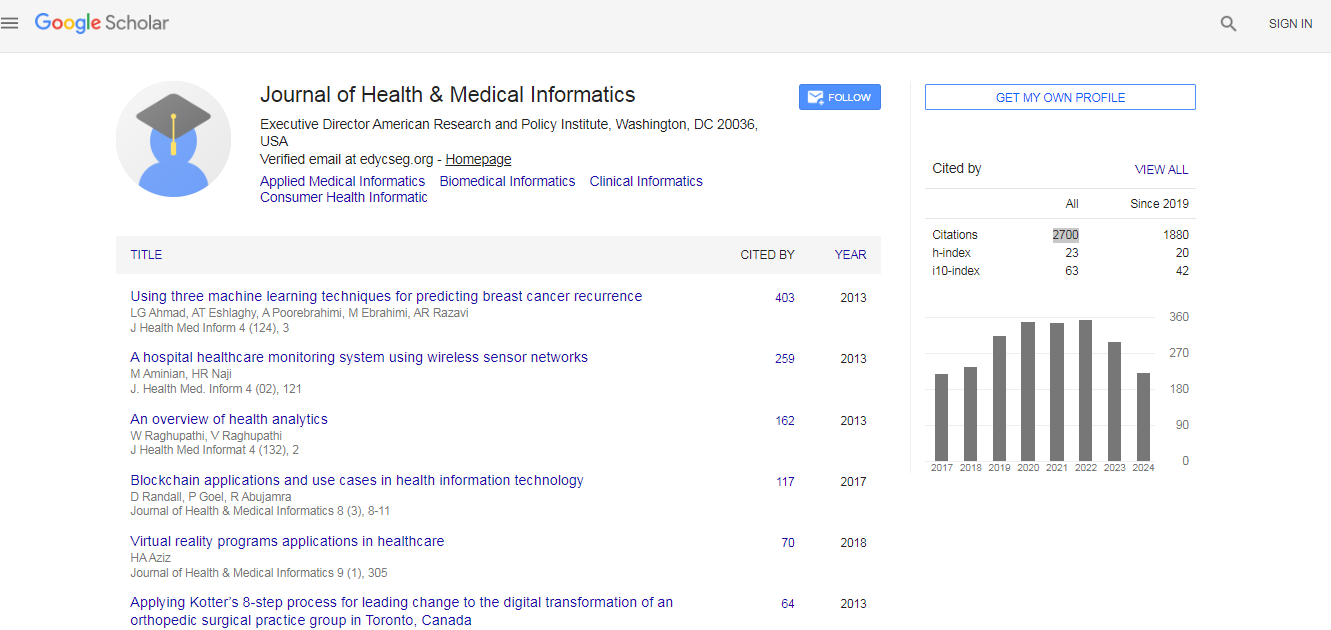
Journal of Health & Medical Informatics received 2700 citations as per Google Scholar report