Brief Report - (2025) Volume 19, Issue 5
Received: 01-Oct-2025, Manuscript No. jmgm-26-188381;
Editor assigned: 03-Oct-2025, Pre QC No. P-188381;
Reviewed: 17-Oct-2025, QC No. Q-188381;
Revised: 22-Oct-2025, Manuscript No. R-188381;
Published:
29-Oct-2025
, DOI: 10.37421/1747-0862.2025.19.743
Citation: Conti, Valeria. ”Epigenetic Drugs: Reversing Cancer Gene Silencing.” J Mol Genet Med 19 (2025):743.
Copyright: © 2025 Conti V. This is an open-access article distributed under the terms of the Creative Commons Attribution License, which permits unrestricted use, distribution and reproduction in any medium, provided the original author and source are credited.
Epigenetic drugs are emerging as powerful tools in the fight against cancer, offering a novel approach to target and reverse abnormal gene silencing, a hallmark characteristic of many oncological diseases. These innovative therapies primarily aim to inhibit key epigenetic enzymes, such as DNA methyltransferases (DNMTs) and histone deacetylases (HDACs). By blocking these enzymes, epigenetic drugs can effectively reactivate tumor suppressor genes that have been epigenetically silenced, thereby restoring normal cellular functions and potentially overcoming drug resistance [1].
Aberrant DNA methylation is recognized as a critical driving force in the development of cancer, frequently leading to the silencing of essential tumor suppressor genes. DNA methyltransferase inhibitors (DNMTis), exemplified by drugs like azacytidine and decitabine, represent a significant class of epigenetic agents. Their mechanism involves the demethylation of DNA, which facilitates the re-expression of silenced genes and can promote cancer cell differentiation or induce apoptosis. Ongoing research is focused on refining the clinical application of these agents and identifying reliable biomarkers for patient selection [2].
Histone deacetylase (HDAC) inhibitors constitute another major category of epigenetic drugs employed in cancer therapy. The inhibition of HDACs results in the hyperacetylation of histones, a process that loosens the chromatin structure. This loosening allows for the reactivation of transcription of silenced genes, including those that encode tumor suppressors. The development and clinical evaluation of various HDAC inhibitors are actively progressing, with a particular emphasis on targeting specific HDAC isoforms and exploring combination therapies [3].
The intricate interplay between DNA methylation and histone modifications is fundamental to understanding the complexities of epigenetic regulation in cancer. Epigenetic drugs are designed to target components within these pathways, with the ultimate goal of disrupting the aberrant epigenetic landscape that drives tumorigenesis. Emerging therapeutic strategies are exploring the potential of combining DNMT inhibitors and HDAC inhibitors, or integrating epigenetic therapy with conventional chemotherapy or immunotherapy to achieve enhanced efficacy [4].
Reversing aberrant gene silencing through the application of epigenetic drugs is a rapidly advancing field, characterized by continuous innovation and discovery. A crucial aspect of developing targeted therapies is a thorough understanding of the specific epigenetic alterations present in different cancer types. The field is increasingly oriented towards precision epigenetics, where treatment strategies are meticulously tailored to the individual patient's unique molecular profile, a direction strongly supported by advancements in molecular biology research [5].
One of the paramount objectives in the development of novel epigenetic drugs is to achieve improved specificity and reduced toxicity. Identifying reliable biomarkers that can accurately predict a patient's response to epigenetic therapy is also critically important for optimizing clinical outcomes. This line of research is directly aligned with the core objectives of cellular and molecular biology departments dedicated to investigating the fundamental mechanisms of cancer [6].
Drug resistance presents a significant hurdle in the effective treatment of cancer, and epigenetic modifications have been implicated in its development. Epigenetic drugs hold the potential to overcome or resensitize tumors to existing therapies by reversing the epigenetic changes that confer resistance, such as the reactivation of previously silenced tumor suppressor genes that were responsible for drug sensitivity [7].
The role of microRNAs (miRNAs) in the complex network of epigenetic regulation within cancer is attracting considerable attention, as is their potential as therapeutic targets. miRNAs can exert influence over the epigenetic machinery, and conversely, epigenetic alterations can significantly impact miRNA expression levels. This intricate regulatory interplay constitutes a key area of ongoing investigation in the field of molecular oncology [8].
The therapeutic efficacy of targeting specific epigenetic pathways has been well-established in hematological malignancies, where DNMT inhibitors and HDAC inhibitors are already considered standard treatments for certain types of leukemia and lymphoma. A major goal of current research endeavors is to successfully extrapolate these proven successes to the treatment of solid tumors, which often present greater therapeutic challenges [9].
The integration of epigenetic drug therapies with other treatment modalities, notably immunotherapy, represents a highly promising avenue for substantially improving cancer treatment outcomes. By effectively reversing immunosuppressive epigenetic states and enhancing antigen presentation, epigenetic drugs may exhibit synergistic effects when combined with immune checkpoint inhibitors, thereby unlocking new therapeutic possibilities [10].
Epigenetic therapies represent a paradigm shift in oncology, focusing on modulating gene expression without altering the underlying DNA sequence. These drugs target the epigenetic machinery, which controls gene activity through mechanisms like DNA methylation and histone modification. By reversing aberrant gene silencing, a common feature in many cancers, epigenetic drugs aim to restore the expression of tumor suppressor genes, thereby inhibiting cancer cell proliferation and survival. The Department of Cellular and Molecular Biology at Sapienza University of Rome is actively investigating the complex mechanisms and therapeutic potential of these agents in cancer treatment [1].
DNA methylation plays a crucial role in cancer initiation and progression by leading to the transcriptional silencing of tumor suppressor genes. DNA methyltransferase inhibitors (DNMTis), such as azacytidine and decitabine, are a cornerstone of epigenetic therapy. These compounds function by inhibiting DNMTs, leading to DNA demethylation and the subsequent re-expression of silenced genes. This re-expression can trigger cancer cell differentiation or induce apoptosis. Ongoing research efforts are dedicated to optimizing the use of DNMTis and identifying predictive biomarkers to enhance patient response and minimize off-target effects. The advancements in this area are of significant interest to researchers in departments focused on cellular and molecular biology [2].
Histone deacetylase (HDAC) inhibitors are another significant class of epigenetic drugs utilized in cancer therapy. HDACs are enzymes that remove acetyl groups from histones, leading to chromatin condensation and gene silencing. By inhibiting HDACs, these drugs promote histone hyperacetylation, which loosens chromatin structure and facilitates the reactivation of transcription for silenced genes, including critical tumor suppressors. The development of new HDAC inhibitors and their clinical evaluation are ongoing, with a focus on identifying inhibitors with greater specificity for particular HDAC isoforms and exploring their efficacy in combination therapies [3].
The intricate relationship between DNA methylation and histone modifications is central to understanding epigenetic regulation in cancer. Aberrant epigenetic marks create a landscape that promotes tumor growth and survival. Epigenetic drugs are designed to counteract these changes by targeting the enzymes and proteins involved in maintaining this aberrant landscape. Current research trends include the development of combination therapies, such as the co-administration of DNMT inhibitors and HDAC inhibitors, or the integration of epigenetic therapy with conventional treatments like chemotherapy or immunotherapy to achieve synergistic anti-cancer effects [4].
The ability to reverse aberrant gene silencing using epigenetic drugs marks a rapidly evolving frontier in cancer therapeutics. A fundamental prerequisite for developing effective targeted therapies is a comprehensive understanding of the specific epigenetic alterations that characterize different cancer types. This understanding is paving the way for the emergence of precision epigenetics, a strategy that involves tailoring treatment regimens to the individual molecular profile of each patient. This personalized approach is strongly supported by the continuous progress in molecular biology research [5].
A key area of research in epigenetic drug development focuses on creating novel agents with enhanced specificity for their molecular targets and reduced systemic toxicity. Furthermore, the identification of reliable biomarkers that can predict patient responsiveness to epigenetic therapy is of paramount importance for optimizing treatment outcomes. These research endeavors are directly aligned with the foundational goals of cellular and molecular biology departments engaged in studying the complex mechanisms of cancer [6].
Drug resistance represents a formidable challenge in the management of cancer, and epigenetic alterations have been identified as significant contributors to its development. Epigenetic drugs offer a potential strategy to overcome or resensitize tumors to existing therapies by reversing the epigenetic modifications that confer resistance. This includes the reactivation of silenced tumor suppressor genes that may have been responsible for the tumor's initial sensitivity to treatment [7].
MicroRNAs (miRNAs) are increasingly recognized for their significant role in epigenetic regulation within cancer, and they are also emerging as promising therapeutic targets. miRNAs can influence the activity of epigenetic machinery, while conversely, epigenetic changes can profoundly affect miRNA expression levels. This complex and dynamic regulatory network represents an active area of investigation in molecular oncology [8].
The therapeutic benefits of targeting specific epigenetic pathways have been demonstrably established in hematological malignancies. In these blood cancers, DNMT inhibitors and HDAC inhibitors are already integral components of standard treatment protocols for specific leukemias and lymphomas. A primary objective of ongoing research is to successfully translate these established successes to the treatment of solid tumors, which often exhibit more complex biological behaviors and therapeutic resistance [9].
Combining epigenetic drug therapies with other treatment modalities, particularly immunotherapy, represents a highly promising strategy for improving the overall outcomes of cancer treatment. Epigenetic drugs can potentially reverse epigenetic states that contribute to immune evasion and enhance tumor antigen presentation, thereby creating a more favorable environment for immune-mediated tumor destruction. This synergistic approach may significantly enhance the efficacy of treatments like immune checkpoint inhibitors [10].
Epigenetic drugs are a promising new class of cancer therapies that work by reversing abnormal gene silencing, a common feature of cancer. These drugs primarily target DNA methyltransferases (DNMTs) and histone deacetylases (HDACs) to reactivate silenced tumor suppressor genes. DNMT inhibitors like azacytidine and decitabine work by demethylating DNA, while HDAC inhibitors promote histone acetylation, leading to gene re-expression. The development of these drugs is an active area of research, with a focus on improving specificity, reducing toxicity, and identifying biomarkers for patient selection. Novel strategies involve combining epigenetic drugs with chemotherapy, immunotherapy, or other epigenetic agents to enhance efficacy and overcome drug resistance. Understanding the intricate interplay of epigenetic modifications and their impact on gene expression is crucial for advancing precision epigenetics and tailoring treatments to individual patients. The therapeutic potential of these agents is well-established in hematological malignancies, and ongoing research aims to expand their application to solid tumors.
None
None
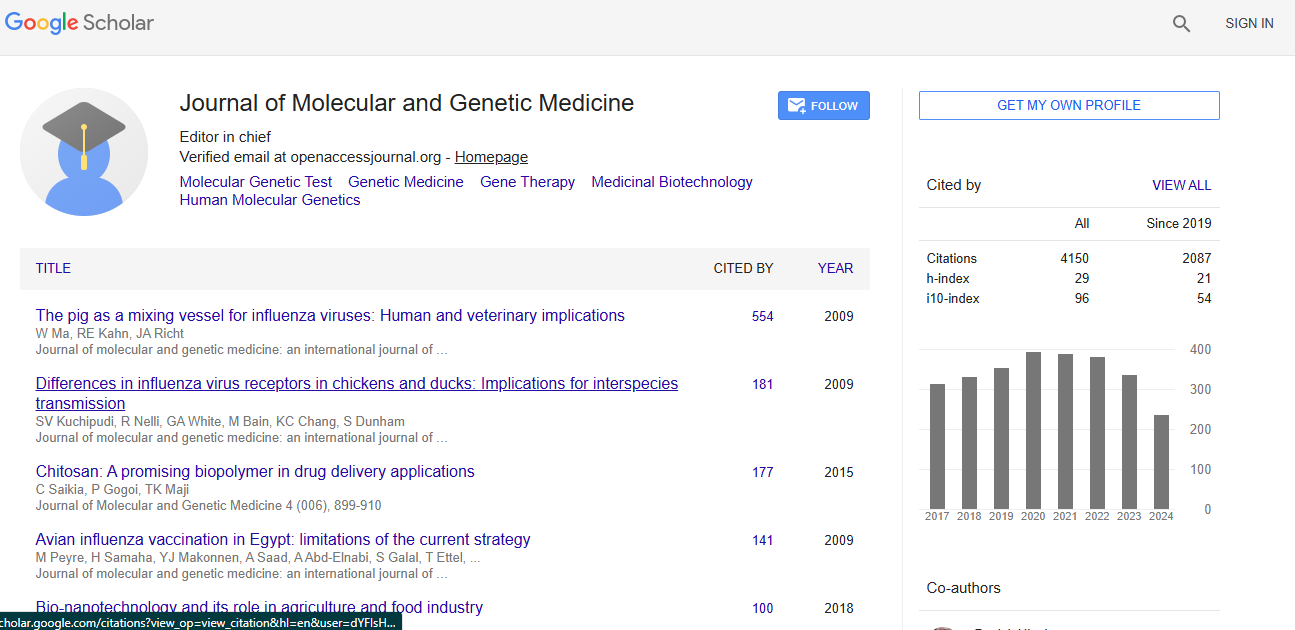
Molecular and Genetic Medicine received 3919 citations as per Google Scholar report