Commentary - (2025) Volume 14, Issue 6
Received: 01-Nov-2025, Manuscript No. pbt-25-178148;
Editor assigned: 03-Nov-2025, Pre QC No. P-178148;
Reviewed: 17-Nov-2025, QC No. Q-178148;
Revised: 24-Nov-2025, Manuscript No. R-178148;
Published:
29-Nov-2025
, DOI: 10.37421/2167-7689.2025.14.509
Citation: Rao, Ananya. ”Ensuring Patient Safety Through Drug Regulatory Compliance.” Pharmaceut Reg Affairs 14 (2025):509
Copyright: © 2025 Rao A. This is an open-access article distributed under the terms of the Creative Commons Attribution License, which permits unrestricted use, distribution
and reproduction in any medium, provided the original author and source are credited.
Navigating the intricate landscape of drug regulatory compliance is an imperative for pharmaceutical entities, fundamentally safeguarding patient welfare and facilitating market access [1].
This multifaceted domain necessitates rigorous adherence to the stringent guidelines established by regulatory bodies such as the Food and Drug Administration (FDA) and the European Medicines Agency (EMA), encompassing the entire pharmaceutical lifecycle from initial drug development and manufacturing through to post-market surveillance [1].
Central to these efforts are robust quality management systems, unwavering data integrity, and comprehensive pharmacovigilance [1].
A profound understanding and diligent implementation of these requirements are instrumental in streamlining product approval processes and sustaining essential market authorization [1].
Ensuring the integrity of data throughout the entire drug development and commercialization continuum is a cornerstone of regulatory adherence. This involves the establishment and maintenance of sophisticated data management practices, secure and meticulous record-keeping protocols, and the thorough validation of all electronic systems to preclude any unauthorized alterations or deletions [2].
Regulatory agencies are increasingly focusing their scrutiny on data accuracy and completeness, rendering a steadfast commitment to data integrity indispensable for the success of regulatory submissions and subsequent inspections [2].
Pharmacovigilance systems are critically important for the ongoing monitoring of the safety profiles of drugs once they have entered the market. The implementation of effective pharmacovigilance entails the systematic collection, detection, assessment, monitoring, and prevention of adverse drug reactions [3].
Pharmaceutical companies are mandated to possess and operate robust systems that facilitate the prompt reporting of suspected adverse events to the appropriate regulatory authorities [3].
This proactive stance on drug safety represents a fundamental pillar of both regulatory compliance and the overarching goal of ensuring patient well-being [3].
Quality management systems (QMS) serve as the foundational structure for achieving and maintaining drug regulatory compliance. A meticulously implemented QMS guarantees that pharmaceutical products are manufactured consistently in accordance with predetermined quality standards [4].
This encompasses the establishment of well-defined processes for documentation, change control, deviation management, and the continuous pursuit of process improvement [4].
Strict adherence to QMS principles is not only essential for compliance with Good Manufacturing Practices (GMP) but also vital for overall regulatory success [4].
Regulatory submissions to health authorities demand documentation that is both comprehensive and impeccably accurate. The adoption of the Common Technical Document (CTD) format has emerged as a globally recognized standard for presenting data to regulatory bodies, thereby promoting harmonization and enhancing operational efficiency [5].
A thorough comprehension of the CTD structure and the meticulous compilation of all requisite information are crucial elements for expediting the regulatory review and approval timeline [5].
The regulatory framework governing biologics and biosimilars presents a distinct set of challenges. Guaranteeing the quality, safety, and therapeutic efficacy of these complex biological products necessitates the application of specialized analytical methodologies and strict adherence to specific regulatory pathways designed for these entities [6].
Significant efforts are continuously being undertaken to harmonize regulatory requirements for biosimilars across various geographical regions, with the objective of facilitating their development and subsequent approval [6].
Post-market surveillance and comprehensive lifecycle management are integral components of sustained drug regulatory compliance. This involves the continuous monitoring of product performance in real-world clinical settings, the prompt investigation and mitigation of any emerging safety concerns, and the effective management of any subsequent product modifications [7].
Regulatory agencies maintain the expectation that companies will exhibit ongoing vigilance throughout the entire lifespan of a product to ensure its continued safety and therapeutic effectiveness [7].
The ongoing digitalization of regulatory processes, including the widespread adoption of electronic submission systems and the use of electronic signatures, is fundamentally reshaping the landscape of drug regulatory compliance. The embrace of these advanced technologies serves to enhance operational efficiency, minimize the occurrence of errors, and foster improved communication channels with regulatory agencies [8].
Concurrently, this digital transformation mandates the implementation of robust cybersecurity measures and adherence to the evolving regulatory requirements pertaining to digital health [8].
Global regulatory harmonization represents a dynamic and ongoing endeavor aimed at standardizing drug approval requirements on an international scale. Key initiatives, such as the guidelines developed by the International Council for Harmonisation (ICH), play a pivotal role in advancing this objective [9].
Regulatory harmonization serves to streamline the complex web of regulatory processes, thereby alleviating the burden on pharmaceutical companies and ultimately facilitating more rapid patient access to safe and effective medicinal products worldwide [9].
Inspections conducted by regulatory authorities constitute a critical mechanism for verifying adherence to established compliance standards. Pharmaceutical companies must undertake thorough preparation for these inspections by ensuring their systems and processes are meticulously documented and by cultivating an organizational culture that prioritizes compliance [10].
Effective preparation and a transparent approach during regulatory inspections can culminate in favorable outcomes and reinforce the trust between industry and regulatory bodies [10].
The paramount importance of drug regulatory compliance for pharmaceutical companies cannot be overstated, as it directly impacts patient safety and the ability to access global markets. This compliance framework is built upon adherence to strict guidelines set forth by regulatory agencies like the FDA and EMA, covering all stages from drug discovery and manufacturing to post-market monitoring. Key elements within this framework include the implementation of robust quality management systems, ensuring the integrity of all data generated, and maintaining vigilant pharmacovigilance practices. Effectively understanding and implementing these regulatory demands is crucial for expediting product approvals and maintaining ongoing market authorization [1].
Data integrity is a critical requirement throughout the entire lifecycle of a pharmaceutical product. This entails the development and adherence to stringent data management practices, the maintenance of secure and auditable records, and the validation of all electronic systems to prevent any unauthorized modifications or data loss. Regulatory bodies are increasingly emphasizing the accuracy and completeness of submitted data, making a strong organizational commitment to data integrity a prerequisite for successful regulatory submissions and inspections [2].
Pharmacovigilance systems are indispensable for the continuous monitoring of drug safety after a product has been released to the market. Effective pharmacovigilance involves a systematic approach to collecting, detecting, assessing, monitoring, and preventing adverse events associated with drug use. Companies are required to have well-established systems in place to promptly report suspected adverse reactions to regulatory authorities. This proactive approach to drug safety is a fundamental aspect of regulatory compliance and is essential for protecting public health [3].
Quality management systems (QMS) form the essential foundation for drug regulatory compliance. A properly implemented QMS ensures that pharmaceutical products are consistently manufactured to meet predefined quality standards. This includes rigorous processes for documentation, managing changes to products or processes, handling deviations from standard procedures, and fostering a culture of continuous improvement [4].
Compliance with QMS principles is fundamental to adhering to Good Manufacturing Practices (GMP) and achieving overall regulatory success [4].
Successful regulatory submissions depend heavily on the provision of comprehensive and accurate documentation. The Common Technical Document (CTD) format has become a universally accepted standard for submitting regulatory data, promoting harmonization and improving efficiency in the review process. A thorough understanding of the CTD structure and meticulous attention to detail in compiling all required information are vital for accelerating the review and approval of new drug applications [5].
The regulatory landscape for biologics and biosimilars presents unique and complex challenges. Ensuring the consistent quality, safety, and efficacy of these sophisticated products requires the use of specialized analytical techniques and strict adherence to specific regulatory pathways. Ongoing efforts are dedicated to harmonizing the regulatory requirements for biosimilars across different international regions to facilitate their development and approval processes [6].
Post-market surveillance and ongoing lifecycle management are critical components of maintaining drug regulatory compliance throughout a product's commercial life. This involves actively monitoring product performance in real-world settings, addressing any identified safety concerns promptly, and managing any necessary product changes or updates. Regulatory agencies expect pharmaceutical companies to maintain continuous vigilance to ensure the ongoing safety and effectiveness of their products [7].
The increasing digitalization of regulatory processes, including the transition to electronic submissions and the use of e-signatures, is significantly transforming drug regulatory compliance. Embracing these technological advancements leads to enhanced efficiency, reduced errors, and improved communication with regulatory agencies. However, this shift also necessitates a strong focus on cybersecurity and adaptation to evolving digital health regulations [8].
Global regulatory harmonization is a continuous and essential process aimed at standardizing drug approval requirements worldwide. Collaborative initiatives, such as the development and implementation of International Council for Harmonisation (ICH) guidelines, are instrumental in achieving this goal. Harmonization simplifies regulatory procedures, reduces the operational burden on companies, and ultimately contributes to faster patient access to safe and effective medicines globally [9].
Inspections conducted by regulatory authorities are a crucial element in verifying compliance with established standards. Pharmaceutical companies must be well-prepared for these inspections by maintaining well-documented systems and processes and by fostering a strong culture of compliance throughout the organization. Demonstrating preparedness and maintaining transparency during inspections can lead to positive outcomes and strengthen the confidence of regulatory bodies in the company's commitment to quality and compliance [10].
Drug regulatory compliance is essential for patient safety and market access, requiring adherence to guidelines from bodies like the FDA and EMA. Key areas include quality management systems, data integrity, and pharmacovigilance. Robust data management and secure record-keeping are critical, with regulators scrutinizing data accuracy. Pharmacovigilance systems monitor drug safety post-market, necessitating prompt reporting of adverse events. Quality management systems ensure consistent product quality and are vital for GMP. Comprehensive and accurate documentation, often in the CTD format, is crucial for regulatory submissions. Biologics and biosimilars face unique regulatory challenges, requiring specialized approaches. Post-market surveillance and lifecycle management ensure ongoing product safety. Digitalization of regulatory processes enhances efficiency but requires robust cybersecurity. Global regulatory harmonization, supported by ICH guidelines, streamlines approvals and improves patient access. Regulatory inspections are critical for compliance, demanding thorough preparation and transparency.
None
None
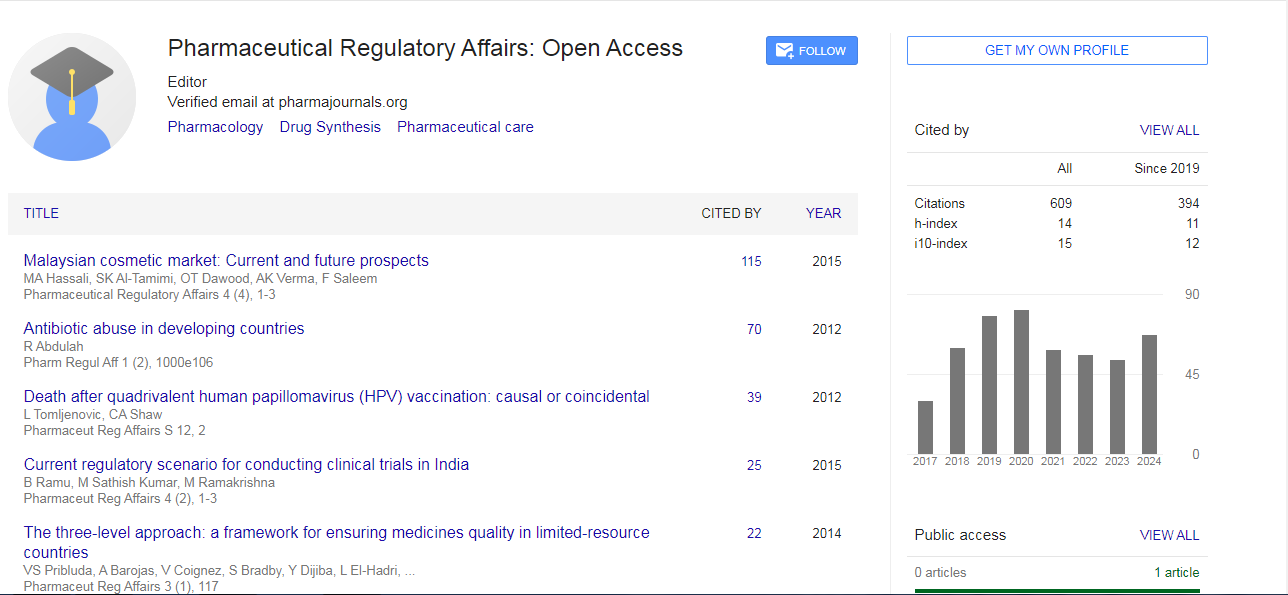
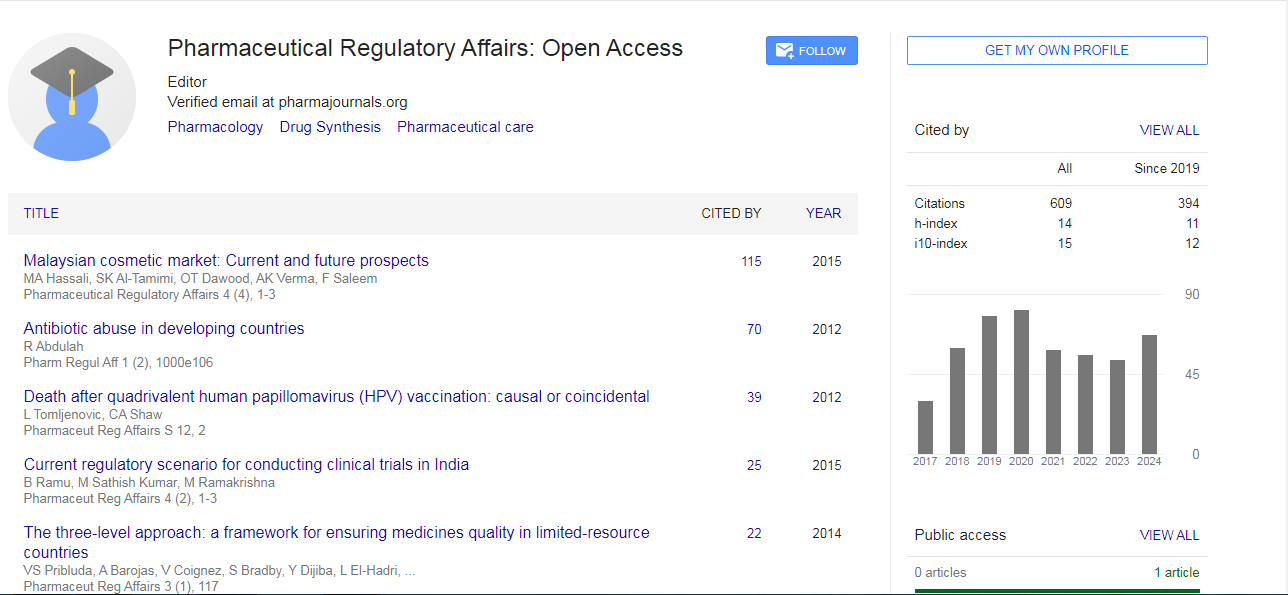
Pharmaceutical Regulatory Affairs: Open Access received 533 citations as per Google Scholar report