Brief Report - (2025) Volume 9, Issue 3
Received: 01-Aug-2025, Manuscript No. jeh-25-165351;
Editor assigned: 04-Aug-2025, Pre QC No. P-165351;
Reviewed: 15-Aug-2025, QC No. Q-165351;
Revised: 22-Aug-2025, Manuscript No. R-165351;
Published:
29-Aug-2025
, DOI: 10.37421/2684-4923.2025.9.267
Citation: Kowalska, Marta. ”Endocrine Disruptors: A Widespread Chemical Threat.” J Environ Hazard 09 (2025):267.
Copyright: © 2025 Kowalska M. This is an open-access article distributed under the terms of the Creative Commons Attribution License, which permits unrestricted use,
distribution and reproduction in any medium, provided the original author and source are credited.
Endocrine disruptors represent a significant class of chemical agents capable of interfering with the intricate hormonal systems of the body, consequently leading to detrimental health outcomes. These substances are pervasive in numerous daily products, including plastics, pesticides, and cosmetics, where they can act by either mimicking or blocking the action of natural hormones. Such interference can precipitate a cascade of adverse effects impacting development, reproduction, neurological function, and immune responses. The inherent persistence of many endocrine disruptors allows them to accumulate within both the environment and the human organism, thereby posing long-term health risks, especially during crucial developmental stages. Effective management of this issue necessitates a comprehensive strategy encompassing robust regulatory frameworks, dedicated research into the development of safer alternatives, and widespread public education and awareness campaigns. The insidious nature of these chemicals demands a vigilant and proactive approach from scientific, governmental, and public sectors alike to mitigate their pervasive impact [1].
Bisphenols, such as Bisphenol A (BPA) and Bisphenol S (BPS), are notable examples of endocrine disruptors extensively employed in the production of food packaging materials and thermal paper. Subsequent research has strongly implicated these compounds in the etiology of metabolic disorders, reproductive complications, and potentially in the exacerbation of obesity and diabetes. These effects are understood to manifest primarily through endocrine disruption mechanisms that directly influence metabolic pathways within the body. A critical ongoing research endeavor is the comprehensive understanding of the dose-response relationships and the cumulative effects of these widely utilized chemicals. [2] Phthalates, another prominent group of endocrine disruptors, are commonly incorporated into plastics and a wide array of personal care products. Investigative studies have established a correlation between prenatal exposure to phthalates and adverse outcomes in male reproductive development, specifically noting higher incidences of hypospadias and reduced anogenital distance. Their demonstrated ability to disrupt androgen signaling pathways renders them a particular focus of concern regarding reproductive health and its long-term implications. [3] Pesticides, especially certain organochlorines and some neonicotinoids, are well-recognized endocrine disruptors contributing significantly to widespread environmental contamination. These chemical agents possess the capacity to disrupt the normal functioning of thyroid hormones, interfere with metabolic processes, and negatively impact neurodevelopment. The enduring environmental persistence of some pesticides, coupled with their tendency to biomagnify through food chains, creates ongoing pathways for human exposure and associated health risks that require continuous monitoring and mitigation efforts. [4] Flame retardants, integral components in furnishings, electronic devices, and textiles, have also been identified as endocrine disruptors with concerning implications for human health. Exposure to specific types of flame retardants has been linked to disruptions in thyroid hormone regulation, deficits in neurodevelopment, and reproductive impairments.
Given their ubiquitous presence in indoor environments, further in-depth investigation into the precise exposure routes and the full spectrum of resulting health consequences is critically necessary. [5] The profound impact of endocrine disruptors on thyroid function represents a significant and actively researched area within environmental health science. These chemicals can exert their influence by interfering with the synthesis, transport, and metabolic processing of thyroid hormones, which are indispensable for normal growth and development across all life stages. Such disruption can manifest in a wide array of health issues, including but not limited to developmental abnormalities and severe metabolic dysregulation. [6] Neurodevelopmental toxicity stemming from exposure to endocrine disruptors is a particularly critical concern, especially for vulnerable pediatric populations. Exposure during sensitive developmental windows can result in enduring cognitive deficits and behavioral abnormalities that may persist throughout an individual's life. A thorough understanding of the complex and often subtle interplay between chemical exposure and the intricate processes of neuronal development is paramount for accurate risk assessment and effective preventive strategies. [7] The potential endocrine-disrupting properties of microplastics represent an emerging and increasingly important frontier in environmental research. As microplastics undergo degradation and interact with various environmental contaminants, they can facilitate the release of associated chemicals or exhibit endocrine-disrupting characteristics themselves. This dynamic adds a significant layer of complexity to the already challenging task of elucidating the full scope of health impacts associated with pervasive plastic pollution. [8] Regulatory approaches designed to manage and mitigate the risks posed by endocrine disruptors are in a continuous state of evolution, largely propelled by the accumulating body of scientific evidence detailing their harmful effects. These efforts involve the systematic identification and subsequent restriction of hazardous substances found in consumer goods and industrial releases into the environment. The successful and effective control of these chemicals hinges critically on robust international collaboration and the implementation of well-defined and scientifically sound risk assessment frameworks. [9] The development and widespread adoption of safer chemical alternatives to existing endocrine disruptors stand as a paramount objective in public health and environmental protection efforts. This endeavor necessitates innovation in chemical synthesis, the diligent application of green chemistry principles, and rigorous testing protocols to ascertain that newly developed substances do not pose equivalent or novel risks. A successful transition to demonstrably safer products requires a concerted and collaborative effort involving industry stakeholders, the scientific research community, and governmental regulatory bodies. [10]
Endocrine disruptors are a diverse group of chemicals that fundamentally interfere with the body's complex hormonal system, leading to a wide spectrum of adverse health effects. These substances, often encountered in everyday consumer products such as plastics, pesticides, and cosmetics, possess the ability to either mimic the actions of natural hormones or block their essential functions. This disruption can manifest as developmental abnormalities, reproductive issues, neurological impairments, and compromised immune function. Many endocrine disruptors are characterized by their persistence, meaning they can accumulate over time in both the environment and within the human body, thereby presenting long-term health risks, particularly for individuals undergoing critical developmental periods. Addressing this multifaceted challenge requires a coordinated, multi-pronged strategy that includes stringent regulatory actions, dedicated research efforts focused on discovering and implementing safer alternatives, and comprehensive public awareness initiatives to inform and empower individuals and communities.
The pervasive nature of these chemicals necessitates a proactive and vigilant stance to safeguard public health and environmental integrity. [1] Bisphenols, including Bisphenol A (BPA) and Bisphenol S (BPS), are extensively utilized in the manufacturing of food packaging and thermal paper, serving as prime examples of endocrine disruptors with significant public health implications. Scientific research consistently highlights their association with a range of health problems, including metabolic disorders and reproductive complications. Furthermore, emerging evidence suggests potential links to obesity and diabetes, primarily through mechanisms involving endocrine disruption that directly impact critical metabolic pathways. A key area of ongoing scientific investigation is the detailed elucidation of dose-response relationships and the cumulative impacts of these widely distributed chemicals. [2] Phthalates, commonly incorporated into various plastic products and a broad spectrum of personal care items, represent another significant category of endocrine-disrupting chemicals. Studies focusing on prenatal exposure to phthalates have revealed a notable association with adverse outcomes in the development of the male reproductive system, including an increased incidence of hypospadias and a reduction in the anogenital distance.
Their demonstrated capacity to interfere with the crucial androgen signaling pathways makes them a substance of particular concern when evaluating risks to reproductive health. [3] Pesticides, particularly certain classes like organochlorines and specific neonicotinoids, are well-established endocrine disruptors that contribute to widespread environmental contamination. These chemical agents can adversely affect the normal functioning of the thyroid hormone system, disrupt metabolic processes, and negatively impact neurodevelopment. The environmental persistence of some pesticides, coupled with their tendency to biomagnify through food chains, results in continuous human exposure and ongoing health risks that demand rigorous monitoring and control measures. [4] Flame retardants, widely employed in the production of furniture, electronics, and textiles to enhance fire safety, have also been identified as potent endocrine disruptors. Exposure to certain types of flame retardants has been scientifically linked to disruptions in thyroid hormone regulation, deficits in neurodevelopment, and various reproductive health problems. The ubiquitous presence of these chemicals in indoor environments underscores the urgent need for further comprehensive investigation into their specific exposure pathways and the full extent of their associated health consequences. [5] The significant impact of endocrine-disrupting chemicals on the regulation and function of the thyroid gland represents a critical and actively pursued area of scientific research. These exogenous substances possess the ability to interfere with the complex processes involved in the synthesis, transport, and metabolism of thyroid hormones, which are absolutely essential for normal growth and development throughout the lifespan. Such disruptions can lead to a diverse array of health issues, including significant developmental abnormalities and systemic metabolic dysregulation. [6] Neurodevelopmental toxicity associated with exposure to endocrine disruptors is a matter of profound concern, especially when considering the developing brains of children and adolescents. Exposure to these chemicals during critical windows of neurological development can lead to lasting and potentially irreversible cognitive deficits and behavioral abnormalities. Therefore, achieving a comprehensive understanding of the intricate interplay between environmental chemical exposure and the fundamental processes of neuronal development is absolutely crucial for the accurate assessment of risks and the formulation of effective preventive strategies. [7] The endocrine-disrupting potential of microplastics, tiny plastic particles resulting from the degradation of larger plastic items, is an emerging and rapidly expanding area of scientific inquiry. As microplastics fragment and interact with other environmental pollutants, they can either release co-adsorbed chemicals or exhibit endocrine-disrupting properties themselves. This adds a complex and concerning dimension to the ongoing efforts to understand the full scope of health impacts associated with widespread plastic pollution in various ecosystems. [8] Regulatory strategies aimed at managing and controlling the risks posed by endocrine-disrupting chemicals are continuously evolving, largely influenced by the growing body of scientific evidence demonstrating their harmful effects on human and environmental health. These strategies include the identification and subsequent restriction of hazardous substances commonly found in consumer products, as well as efforts to minimize their release into the environment. The successful and effective management of these chemicals is critically dependent on fostering robust international collaboration and implementing scientifically sound, comprehensive risk assessment frameworks [9].
The paramount objective of developing and promoting safer chemical alternatives to current endocrine-disrupting substances is a key priority in safeguarding public health and environmental quality. This critical undertaking involves fostering innovation in chemical synthesis, adhering to the principles of green chemistry, and conducting rigorous testing to ensure that newly introduced substances do not present similar or novel risks. The successful transition to demonstrably safer products requires a collaborative and synergistic effort involving chemical manufacturers, the scientific research community, and regulatory agencies. [10]
Endocrine disruptors are chemicals that interfere with the body's hormonal system, causing adverse health effects such as developmental, reproductive, neurological, and immune problems. Found in everyday products like plastics and cosmetics, they can mimic or block hormones, accumulating in the environment and body over time. Specific examples include bisphenols (BPA, BPS) linked to metabolic and reproductive issues, phthalates affecting male reproductive development, and pesticides like organochlorines disrupting thyroid function and neurodevelopment. Flame retardants are also implicated in thyroid disruption and developmental deficits. Microplastics are emerging as carriers of these disruptors. Addressing this issue requires regulatory action, research into safer alternatives, and public awareness. The development of greener chemicals and collaborative efforts between industry, researchers, and regulators are crucial for mitigating these widespread risks.
None
None
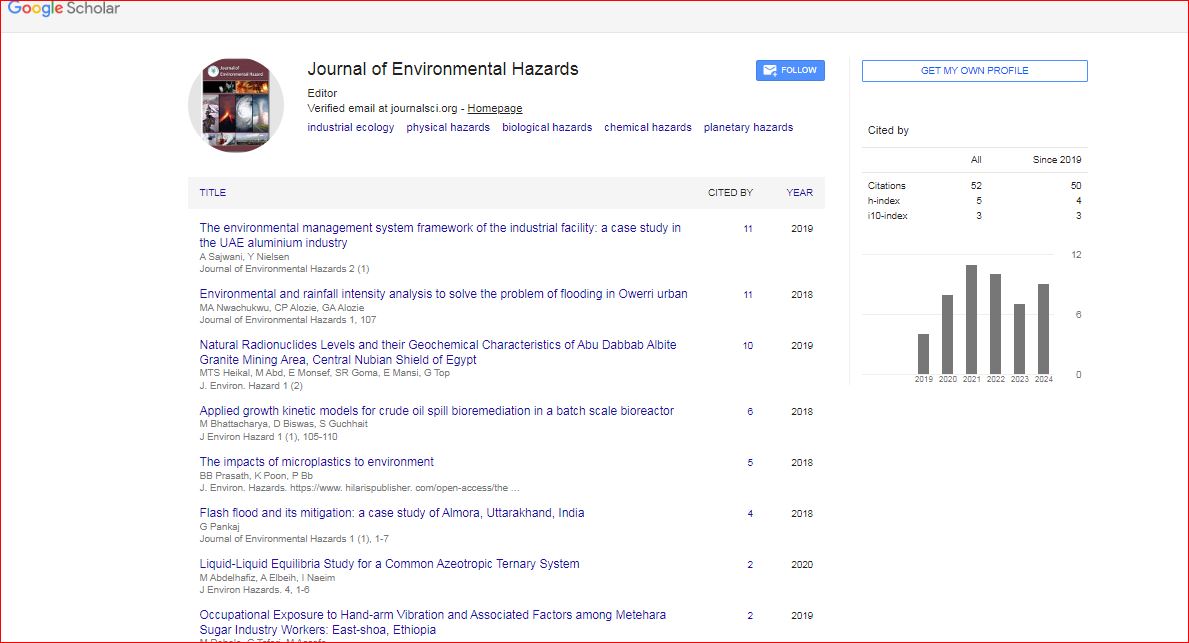
Journal of Environmental Hazards received 51 citations as per Google Scholar report