Short Communication - (2025) Volume 10, Issue 3
Received: 01-May-2025, Manuscript No. PE-26-179286;
Editor assigned: 05-May-2025, Pre QC No. P-179286;
Reviewed: 19-May-2025, QC No. Q-179286;
Revised: 22-May-2025, Manuscript No. R-179286;
Published:
29-May-2025
, DOI: 10.37421/2472-1042.2025.10.290
Citation: Rahman, Fatima. ”Economic Management Of Chronic Diseases: Resource Utilization.” Pharmacoeconomics 10 (2025):290.
Copyright: © 2025 Rahman F. This is an open-access article distributed under the terms of the Creative Commons Attribution License, which permits unrestricted use, distribution and reproduction in any medium, provided the original author and source are credited.
The economic implications of managing chronic diseases represent a significant and growing concern within healthcare systems worldwide. Resource utilization patterns play a pivotal role in determining the overall cost of care, necessitating a focused approach on efficiency and effectiveness. Integrated care models are increasingly recognized for their potential to optimize patient outcomes while concurrently minimizing healthcare expenditures by strategically allocating essential services, pharmaceuticals, and personnel. Evidence-based strategies are crucial for enhancing cost-effectiveness in the long-term management of these complex conditions [1].
In the realm of type 2 diabetes mellitus, patient adherence to prescribed medication regimens has been shown to profoundly influence healthcare resource utilization. Studies indicate a clear correlation between improved adherence and a reduction in hospitalizations, emergency room visits, and overall direct medical costs, underscoring the substantial economic value derived from interventions that promote consistent medication use [2].
Multidisciplinary care programs for chronic conditions such as heart failure have demonstrated a positive impact on both clinical outcomes and resource consumption. These integrated approaches, which involve a collaborative effort among various healthcare professionals, effectively lead to improved patient well-being and a notable reduction in hospital readmissions, thereby lowering the total healthcare resource burden [3].
Rheumatoid arthritis management presents a complex landscape of healthcare resource utilization and associated costs. Comparative analyses of different treatment strategies, particularly biologic therapies, reveal their influence on direct medical expenses, including the frequency of hospitalizations and specialist consultations. This highlights the imperative for personalized treatment plans grounded in cost-effectiveness principles [4].
The presence of comorbidities in patients diagnosed with chronic obstructive pulmonary disease (COPD) significantly escalates healthcare resource utilization. The aggregation of multiple chronic conditions leads to increased physician visits and higher prescription drug expenditures, reinforcing the critical importance of effectively managing comorbidities in the overall treatment strategy for chronic diseases [5].
Telehealth interventions offer a promising avenue for optimizing the management of chronic conditions like hypertension. Remote patient monitoring and virtual consultation services have the potential to decrease the necessity for in-person medical visits, consequently reducing healthcare costs and enhancing access to care for individuals managing chronic hypertension [6].
In the context of type 1 diabetes management, continuous glucose monitoring (CGM) systems, while requiring an initial investment, have demonstrated economic benefits over the long term. These systems can lead to a reduction in hospitalizations and improved glycemic control, ultimately contributing to lower overall resource utilization [7].
Inflammatory bowel disease (IBD) management is characterized by substantial healthcare resource utilization and associated costs. The financial burden is driven by factors such as frequent healthcare visits, surgical interventions, and the use of advanced biologic therapies. Strategies for optimizing resource allocation are therefore essential for mitigating these expenses [8].
Shared decision-making in the treatment of chronic pain holds significant economic implications. By actively involving patients in treatment choices, adherence and satisfaction can be enhanced. This collaborative approach may lead to a reduced reliance on high-cost interventions, thereby improving overall resource efficiency in pain management [9].
Adult asthma management involves distinct healthcare resource utilization patterns and associated costs. Key drivers of high resource use, such as recurrent exacerbations and inadequately controlled disease, can be addressed through evidence-based interventions. The strategic implementation of inhaled corticosteroid therapy and comprehensive patient education programs can effectively mitigate these escalating costs [10].
The economic burden associated with managing chronic diseases is a critical area of focus, with resource utilization patterns directly impacting treatment costs. The implementation of integrated care models is essential for optimizing patient outcomes and minimizing healthcare expenditures. This requires the efficient allocation of services, pharmaceuticals, and personnel, guided by evidence-based strategies to ensure cost-effectiveness in long-term chronic disease management [1].
For patients with type 2 diabetes mellitus, medication adherence is a crucial determinant of healthcare resource utilization. Improved adherence is directly linked to fewer hospitalizations, reduced emergency room visits, and lower overall direct medical costs, highlighting the economic advantages of interventions promoting consistent medication use [2].
A multidisciplinary care program for heart failure patients has proven effective in enhancing clinical outcomes and reducing healthcare resource consumption. This integrated approach, involving diverse healthcare professionals, leads to better patient health and a significant decrease in hospital readmissions, thereby lowering overall resource expenditure [3].
In the management of rheumatoid arthritis, the selection of treatment strategies, particularly biologic therapies, significantly influences healthcare resource utilization and direct medical costs. This includes the frequency of hospitalizations and specialist consultations, emphasizing the need for personalized treatment plans that consider cost-effectiveness [4].
Comorbidities in patients with chronic obstructive pulmonary disease (COPD) substantially increase healthcare resource utilization. The presence of multiple chronic conditions leads to more frequent physician visits and higher prescription drug costs, underscoring the importance of managing comorbidities effectively within the framework of chronic disease treatment [5].
Telehealth interventions for hypertension management demonstrate considerable cost-effectiveness. Remote patient monitoring and virtual consultations can decrease the need for in-person visits, resulting in reduced healthcare costs and improved accessibility of care for individuals with chronic hypertension [6].
The economic evaluation of continuous glucose monitoring (CGM) systems in type 1 diabetes management reveals long-term benefits. Although there is an initial cost, CGM can lead to fewer hospitalizations and better glycemic control, ultimately reducing overall resource utilization [7].
Inflammatory bowel disease (IBD) management incurs significant healthcare resource utilization and costs. Frequent healthcare visits, surgical procedures, and the use of biologic therapies contribute to the high expenses, necessitating strategic optimization of resource allocation [8].
Shared decision-making in chronic pain management has positive economic implications. Patient involvement in treatment choices can improve adherence and satisfaction, potentially reducing reliance on costly interventions and enhancing resource efficiency [9].
Adult asthma management exhibits specific healthcare resource utilization and cost patterns. Frequent exacerbations and uncontrolled disease are major drivers of high resource use, but strategies like inhaled corticosteroid therapy and patient education can effectively mitigate these costs [10].
This collection of research examines the economic aspects of managing various chronic diseases, emphasizing the critical role of resource utilization. Studies highlight that integrated care models, medication adherence, multidisciplinary programs, and personalized treatment plans can significantly reduce healthcare costs. Interventions such as telehealth, continuous glucose monitoring, and shared decision-making are shown to improve efficiency and patient outcomes. Managing comorbidities and optimizing resource allocation are key strategies for addressing the financial burden of chronic conditions like diabetes, heart failure, rheumatoid arthritis, COPD, hypertension, type 1 diabetes, IBD, chronic pain, and asthma. Evidence-based approaches and patient engagement are central to achieving cost-effectiveness in long-term disease management.
None
None
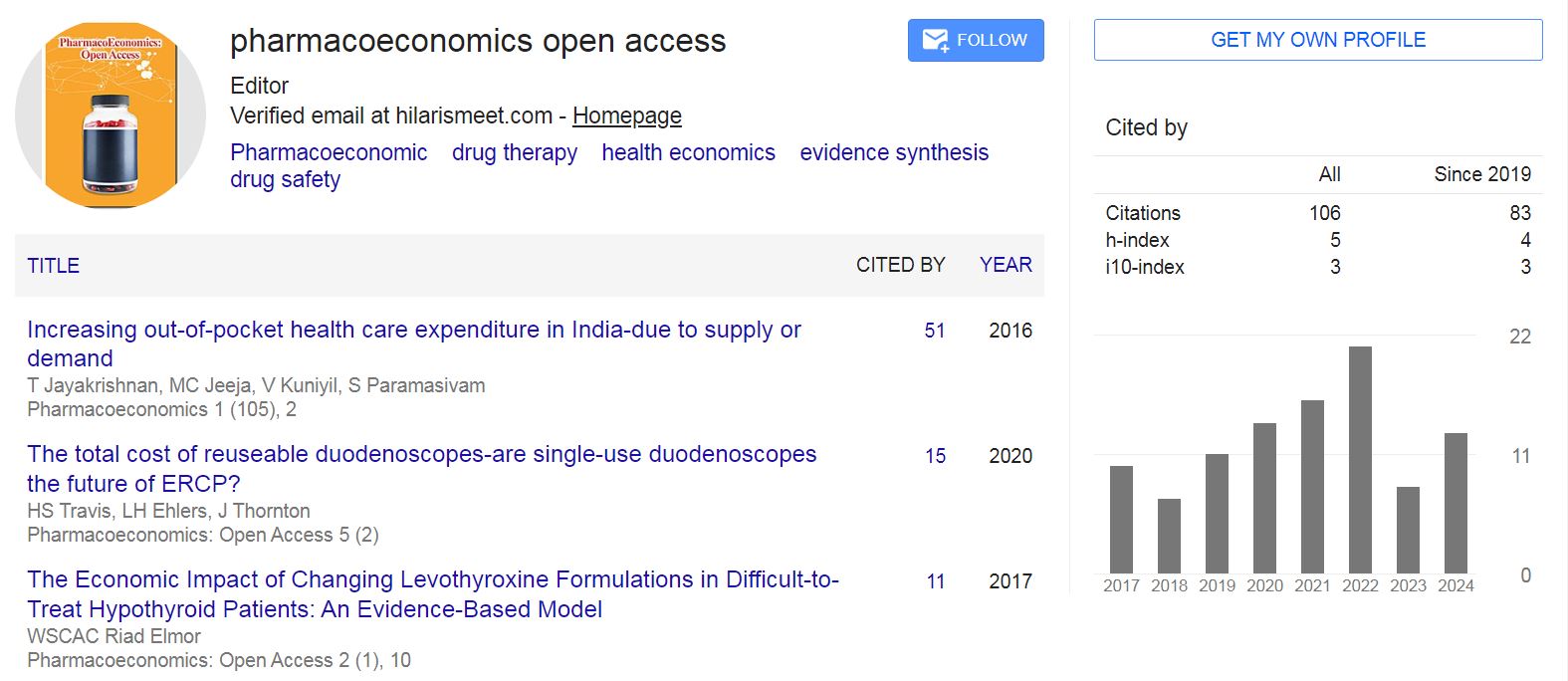
Pharmacoeconomics: Open Access received 106 citations as per Google Scholar report