Perspective - (2025) Volume 9, Issue 2
Received: 01-Apr-2025, Manuscript No. cmcr-25-177683;
Editor assigned: 03-Apr-2025, Pre QC No. P-177683;
Reviewed: 17-Apr-2025, QC No. Q-177683;
Revised: 22-Apr-2025, Manuscript No. R-177683;
Published:
29-Apr-2025
, DOI: 10.37421/2684-4915.2025.9.368
Citation: Reid, Jameson. ”EBP: Education, Leadership, and Patient Care.” Clin Med Case Rep 09 (2025):368.
Copyright: © 2025 Reid J. This is an open-access article distributed under the terms of the Creative Commons Attribution License, which permits unrestricted use, distribution and reproduction in any medium, provided the original author and source are credited.
Evidence-based practice (EBP) is a crucial foundation for contemporary healthcare, vital for improving patient outcomes. In nursing education, integrating EBP is key to preparing future nurses, despite a persistent gap between students' EBP knowledge and its practical application [1].
Effective strategies involve didactic teaching alongside clinical experiences, encouraging students to actively engage with research, critically appraise findings, and apply evidence in real-world settings. This holistic approach ensures true EBP competency. Nurses in acute care settings face distinct challenges and facilitators for EBP adoption. Significant barriers include a lack of time, inadequate resources, limited research access, and insufficient leadership support [2].
Conversely, strong leadership, a culture valuing EBP, and educational programs are essential to bridge the knowledge-practice gap. Organizational support and accessible knowledge are paramount in these demanding environments. Educational interventions demonstrably boost healthcare professionals' EBP knowledge, attitudes, and practical use [3].
Well-designed training programs consistently improve EBP competencies, proving that continuous professional development focused on EBP effectively enhances patient care quality. This underscores the value of structured learning in translating research into practice. The COVID-19 pandemic dramatically influenced EBP, revealing both its vulnerabilities and its absolute necessity [4].
While the pandemic spurred rapid evidence generation, it also highlighted challenges like information overload and the need for swift critical appraisal skills. This experience emphasizes that EBP frameworks must be adaptable and supported by efficient knowledge translation mechanisms, especially during crises. Applying EBP in mental health nursing presents unique hurdles and helpful factors. While strong belief in EBP and educational opportunities can drive progress, significant barriers persist, including heavy workloads, lack of administrative support, and difficulty accessing relevant mental health research [5].
This highlights that context matters immensely, requiring tailored strategies to embed EBP in this specialized field. Frameworks like the Iowa Model are instrumental in integrating EBP into healthcare settings [6].
When organizations actively use such models, it significantly aids in translating research into clinical decision-making, ultimately improving patient care. This shows that effective EBP goes beyond merely having evidence; it requires a structured process to make that evidence actionable, leading to better quality and safer outcomes. Developing critical thinking skills is fundamentally linked to effective EBP, especially for nursing students [7].
Educational approaches like problem-based learning enhance students' ability to understand and apply EBP. This means educators must design learning experiences that challenge students to analyze, synthesize, and evaluate information, essential for true EBP competency. Effective leadership is a cornerstone for successful EBP implementation within healthcare organizations [8].
Leaders need specific competencies, such as championing a culture of inquiry, providing resources, and fostering a supportive environment. This illustrates that EBP is not just a clinical skill, but an organizational imperative demanding strategic leadership that actively removes barriers and builds pathways for evidence to inform practice. Translating research evidence into practice, particularly in high-stakes environments like critical care, involves distinct hurdles [9].
Nurses often grapple with balancing demanding workloads with the time needed to review and implement new evidence. The perceived relevance of generic research to specific patient populations can also be a barrier. This emphasizes the importance of practical, context-specific implementation strategies and ongoing support to bridge the research-practice gap effectively. Interprofessional education in EBP is increasingly vital for collaborative healthcare delivery [10].
Training healthcare professionals together fosters better teamwork and shared understanding of evidence. The key takeaway is that when different professions learn EBP side-by-side, it improves individual competencies and strengthens the collective ability of a healthcare team to integrate evidence into patient care, leading to more coordinated and effective outcomes.
Implementing evidence-based practice (EBP) in nursing education is crucial for preparing future nurses, though a gap persists between theoretical knowledge and practical application among students. Effective strategies combine didactic teaching with clinical experiences, allowing students to critically appraise and apply evidence in real-world scenarios[1]. Developing critical thinking skills is fundamentally linked to effective EBP, especially for nursing students. Educational approaches like problem-based learning significantly enhance students' ability to understand and apply EBP, meaning educators need to design learning experiences that challenge students to analyze, synthesize, and evaluate information for true EBP competency[7]. Beyond individual skill, interprofessional education in EBP is increasingly recognized as vital for collaborative healthcare delivery. Training healthcare professionals together fosters better teamwork and a shared understanding of evidence, improving individual competencies and strengthening the collective ability of a team to integrate evidence into patient care for more coordinated and effective outcomes[10].
Nurses across various settings encounter distinct challenges and facilitators in adopting EBP. In acute care, major barriers include a lack of time, inadequate resources, limited access to research, and insufficient leadership support. Conversely, strong leadership, a culture that values EBP, and educational programs are key facilitators that help bridge the knowledge-practice gap, emphasizing that organizational support and accessible knowledge are paramount[2]. Similarly, mental health nursing presents unique hurdles, such as heavy workloads, lack of administrative support, and difficulties accessing relevant mental health research, despite factors like strong belief in EBP and educational opportunities pushing nurses forward. This highlights the immense importance of context-specific, tailored strategies to embed EBP in specialized fields[5].
In high-stakes environments like critical care, translating research evidence into practice often means nurses grappling with balancing intensely demanding workloads with the time needed to review and implement new evidence. The perceived relevance of generic research to specific patient populations can also act as a significant barrier, calling for practical, context-specific implementation strategies and ongoing support to bridge the research-practice gap effectively[9].
Effective leadership is a cornerstone for successful EBP implementation within healthcare organizations. Leaders require specific competencies, including championing a culture of inquiry, providing resources, and fostering a supportive environment. This indicates that EBP is not merely a clinical skill, but an organizational imperative demanding strategic leadership that actively removes barriers and builds pathways for evidence to inform practice[8]. Complementing leadership, well-established frameworks like the Iowa Model are instrumental in integrating EBP into healthcare settings. When organizations actively use models such as Iowa, it significantly aids in translating research into clinical decision-making, ultimately improving patient care. This reinforces that effective EBP relies not just on possessing evidence, but on having a structured process to make that evidence actionable, leading to better quality and safer outcomes[6].
Educational interventions profoundly impact healthcare professionals' knowledge, attitudes, and actual use of EBP. Meta-analyses show that well-designed training programs effectively improve EBP competencies, indicating that investing in continuous professional development focused on EBP is a proven way to enhance patient care quality. It underscores the value of structured learning in translating research into practice[3]. The COVID-19 pandemic drastically altered how EBP was approached, revealing both its vulnerabilities and its absolute necessity. The urgency of the pandemic pushed for rapid evidence generation and application, yet it also highlighted challenges like information overload and the need for swift critical appraisal skills. This experience underscores that in crises, EBP frameworks are crucial but must be adaptable and supported by efficient knowledge translation mechanisms[4].
Evidence-based practice (EBP) is vital for quality healthcare, particularly in nursing education where bridging the gap between knowledge and application for students is crucial through combined didactic and clinical experiences. Healthcare professionals, including nurses in acute and mental health settings, face barriers like lack of time, resources, and administrative support, but strong leadership, valued EBP culture, and educational programs act as facilitators. Educational interventions are proven effective in boosting EBP competencies, reinforcing the value of continuous professional development. The COVID-19 pandemic highlighted EBP's necessity in crises, emphasizing adaptable frameworks and swift critical appraisal skills. Structured models like the Iowa Model, alongside effective leadership, are instrumental in translating research into practice and improving patient care. Developing critical thinking is key for EBP competency, often enhanced by problem-based learning. Interprofessional education in EBP also improves teamwork and collective integration of evidence, leading to coordinated and effective patient outcomes. Translating evidence into practice, especially in critical care, requires context-specific strategies and support to overcome challenges like heavy workloads and perceived relevance of research. Overall, successful EBP relies on education, supportive environments, effective leadership, and adaptable processes across all healthcare domains.
None
None
Indexed at, Google Scholar, Crossref
Indexed at, Google Scholar, Crossref
Indexed at, Google Scholar, Crossref
Indexed at, Google Scholar, Crossref
Indexed at, Google Scholar, Crossref
Indexed at, Google Scholar, Crossref
Indexed at, Google Scholar, Crossref
Indexed at, Google Scholar, Crossref
Indexed at, Google Scholar, Crossref
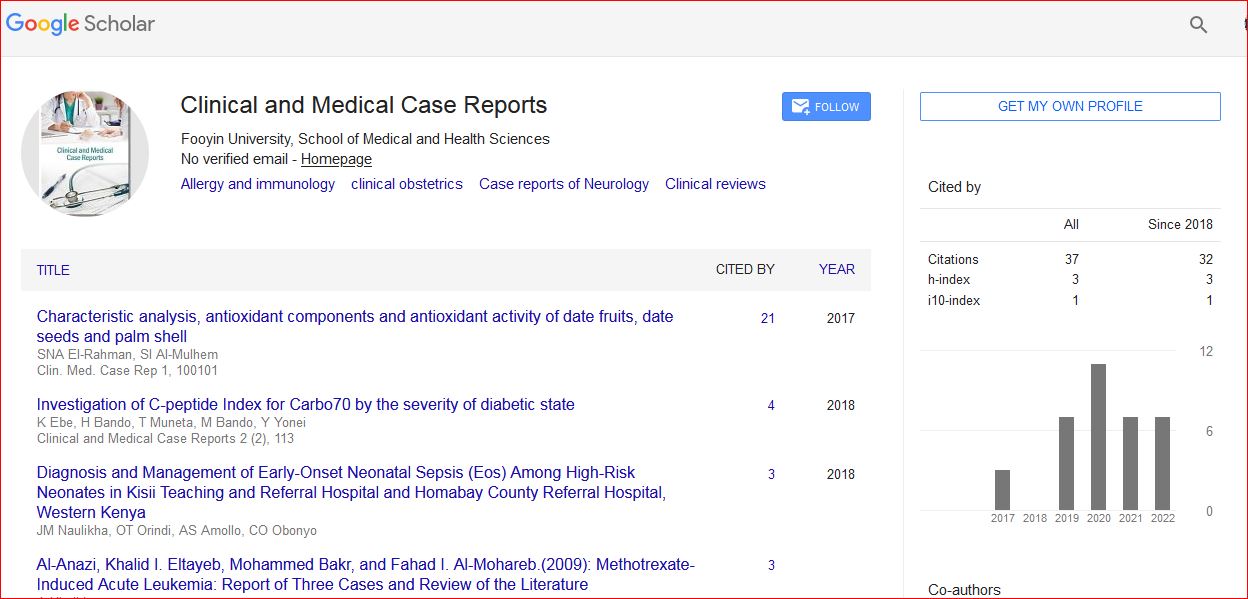
Clinical and Medical Case Reports received 53 citations as per Google Scholar report