Opinion - (2025) Volume 14, Issue 4
Received: 01-Aug-2025, Manuscript No. idse-26-182835;
Editor assigned: 04-Aug-2025, Pre QC No. P-182835;
Reviewed: 18-Aug-2025, QC No. Q-182835;
Revised: 22-Aug-2025, Manuscript No. R-182835;
Published:
29-Aug-2025
, DOI: 10.37421/2168-9768.2025.14.502
Citation: Johansen, Lars. ”Drainage Engineering: Sustainable
Agriculture, Soil, and Water.” Irrigat Drainage Sys Eng 14 (2025):502.
Copyright: © 2025 Johansen L. This is an open-access article distributed under the terms of the Creative Commons Attribution License, which permits unrestricted use,
distribution and reproduction in any medium, provided the original author and source are credited.
Effective drainage engineering is a cornerstone of successful irrigated agriculture, playing a critical role in preventing detrimental issues such as waterlogging and salinization, thereby safeguarding soil health and ensuring optimal crop productivity. This fundamental aspect of agricultural management requires a deep understanding of various interconnected factors, including the specific properties of the soil, the dynamics of the water table, and the precise water requirements of the crops being cultivated. The strategic design of both surface and subsurface drainage systems is paramount to achieving this balance. The core objective lies in harmonizing the application of irrigation water with its efficient removal, a delicate act that is indispensable for achieving sustainable agricultural intensification, particularly in regions facing water scarcity [1].
The design of subsurface drainage systems is a technically intricate process that necessitates a thorough evaluation of several key parameters. These include the soil's hydraulic conductivity, which dictates the rate at which water can move through the soil; the optimal spacing between drainage conduits to ensure adequate coverage; and the appropriate depth at which these systems should be installed. The primary goal of these considerations is to effectively lower the water table and facilitate the removal of surplus water. To achieve accurate system design and reliably assess their performance, the utilization of sophisticated modeling tools, coupled with meticulous field measurements, is indispensable. The success of these drainage interventions has a direct and significant impact on crop yield, as well as on the broader environmental quality of the agricultural landscape [2].
Surface drainage, encompassing techniques such as land leveling and the construction of open ditches, serves a crucial function in the management of irrigated fields. Its primary role is to efficiently remove stagnant surface water, thereby preventing its prolonged accumulation. Furthermore, by facilitating the removal of excess water, surface drainage significantly enhances soil aeration, a vital condition for healthy root development and overall plant growth. The efficacy of these surface drainage methods is inherently influenced by a combination of factors, including the natural topography of the land, the prevailing rainfall patterns experienced in the region, and the discharge capacity of the connected outlet systems. Consequently, the implementation of integrated approaches, which judiciously combine both surface and subsurface drainage strategies, offers a promising pathway to optimize overall water management in agricultural settings [3].
Salinity management in agricultural lands subjected to irrigation is inextricably linked to the functionality of drainage systems. The efficient operation of drainage networks is fundamental in facilitating the process of salt leaching from the root zone of the soil. By removing excess salts, drainage prevents their detrimental accumulation, a phenomenon that can severely impair soil structure and fertility. This proactive approach is essential for maintaining and enhancing the productivity of the soil over the long term. Therefore, a comprehensive understanding of the complex mechanisms governing salt transport within the soil profile, alongside the careful design of appropriate leaching fractions, are critical components for effective salinity control in irrigated agricultural systems [4].
The integration of drainage infrastructure and practices with broader water resource management strategies is increasingly recognized as essential for achieving a higher degree of water use efficiency. Simultaneously, this integrated approach aims to minimize the potential for adverse environmental impacts that can arise from agricultural activities. A prominent example of such integration is the concept of drainage water reuse, which offers a valuable strategy for conserving precious water resources. However, the successful implementation of drainage water reuse is not without its challenges, particularly concerning the quality of the collected drainage water and the potential risk of salt recirculation within the irrigation system [5].
The impacts of climate change, characterized by shifts in precipitation patterns and escalating evaporation rates, are exerting a profound influence on agricultural systems worldwide. These changes necessitate the development and implementation of adaptive drainage strategies that can respond effectively to evolving environmental conditions. The design of drainage systems is therefore moving towards greater flexibility and resilience, equipping them to manage not only periods of water scarcity but also to cope effectively with excessive water events. This adaptability is becoming increasingly critical for the sustained viability of irrigated agriculture in the face of a changing climate [6].
The successful implementation of drainage improvement projects is contingent not only on their technical soundness but also on their socio-economic feasibility and acceptance by the communities they are intended to serve. Therefore, the adoption of participatory approaches, which actively involve stakeholders in the planning and decision-making processes, is highly recommended. Complementing this, rigorous cost-benefit analyses are vital to ensure that proposed drainage interventions are both technically appropriate and economically viable, aligning with the specific needs, capacities, and priorities of the local farming communities [7].
The quality of drainage water represents a significant environmental concern, primarily due to the potential for nutrient and pesticide loads to be transported into receiving surface water bodies. This can lead to eutrophication and contamination of aquatic ecosystems. Consequently, there is a growing emphasis on designing drainage systems that actively minimize the transport of such pollutants. Strategies include improved water management practices within the agricultural landscape and the potential incorporation of bio-treatment measures to purify the drainage water before it enters natural waterways. This area of research is gaining considerable momentum due to its environmental implications [8].
The advent and widespread adoption of remote sensing and Geographic Information System (GIS) technologies have profoundly transformed the field of drainage engineering. These powerful tools enable more accurate land suitability analysis for agricultural use, facilitate the precise mapping of waterlogged areas that require intervention, and provide robust capabilities for monitoring the performance and condition of existing drainage systems. Such data-driven insights are invaluable for informed decision-making processes related to the planning, design, and ongoing management of essential drainage infrastructure in irrigated regions [9].
Emerging technologies, particularly those centered around smart sensors and sophisticated real-time data analytics, are ushering in an era of enhanced precision and efficiency in the operation of both irrigation and drainage systems. These innovative advancements empower systems to make dynamic adjustments to water management strategies based on actual, on-the-ground field conditions. This adaptive approach leads to significant improvements in water use efficiency and a substantial reduction in the overall environmental footprint associated with agricultural water management [10].
Effective drainage engineering is foundational for irrigated agriculture, serving as a critical safeguard against waterlogging and salinization, thereby preserving soil health and maximizing crop yields. Key to successful implementation are fundamental principles that necessitate a thorough understanding of soil properties, the intricate dynamics of water table fluctuations, the specific water requirements of various crops, and the sophisticated design principles for both surface and subsurface drainage installations. The delicate balance between applying sufficient water for crop needs and ensuring its efficient removal is a crucial element for achieving and sustaining agricultural intensification, particularly in arid and semi-arid environments [1].
The design of subsurface drainage systems is a complex undertaking that requires meticulous attention to several vital parameters. These include assessing the soil's hydraulic conductivity to understand water flow rates, determining the optimal spacing between drainage conduits to ensure effective coverage of the affected area, and establishing the appropriate depth for their installation to achieve desired water table control. The primary objective of these design considerations is to efficiently lower the water table and systematically remove excess subsurface water. Comprehensive modeling tools and precise field measurements are indispensable for developing accurate designs and for evaluating the performance of these systems, which ultimately influences crop productivity and the overall environmental health of the agricultural land [2].
Surface drainage, which encompasses practices such as land leveling to facilitate runoff and the construction of open ditches to channel water away, plays an essential role in managing irrigated fields. Its primary function is to address the issue of stagnant surface water, preventing its detrimental accumulation. By effectively removing excess surface water, these practices also significantly enhance soil aeration, creating a more favorable environment for root growth and plant development. The success of surface drainage techniques is significantly influenced by factors such as the land's topography, the local rainfall patterns, and the capacity of the outlet systems to receive and convey the removed water. Therefore, adopting integrated approaches that combine both surface and subsurface drainage methods is often the most effective strategy for optimizing water management in agricultural settings [3].
Salinity control in irrigated agricultural lands is fundamentally dependent on the effective functioning of drainage systems. Efficient drainage systems are imperative for the process of leaching accumulated salts from the root zone, thereby preventing their harmful buildup. This prevention is crucial for maintaining soil productivity and preventing land degradation. Understanding the mechanisms by which salts move through the soil and designing systems that can implement appropriate leaching fractions are key strategies in combating salinity issues in agriculture [4].
Integrating drainage considerations into broader water resource management frameworks is vital for enhancing water use efficiency and minimizing the environmental consequences of agricultural practices. The concept of reusing drainage water, for example, presents an opportunity to conserve water resources. However, this practice also introduces challenges related to the quality of the drainage water, particularly its salt content, and the potential for the recirculation of these salts back into the irrigation system, which needs careful management [5].
The effects of climate change, including altered precipitation regimes and increased evaporation rates, are necessitating the adaptation of existing drainage strategies. This requires the design of drainage systems that are not only robust but also flexible enough to handle both periods of water scarcity and the potential for increased water excess events. Developing resilient drainage infrastructure is therefore becoming increasingly important for ensuring the long-term sustainability of irrigated agriculture, especially in regions vulnerable to climate variability [6].
The socio-economic viability and community acceptance of drainage projects are critical determinants of their successful implementation and long-term effectiveness. Engaging farming communities through participatory approaches ensures that interventions are tailored to local needs and contexts. Furthermore, conducting thorough cost-benefit analyses is essential to confirm that drainage improvements are technically sound, economically justified, and aligned with the social and economic realities of the agricultural sector [7].
The quality of water discharged through drainage systems is a significant environmental concern, particularly with respect to the potential for nutrient and pesticide runoff into natural water bodies. This can lead to issues such as eutrophication and contamination of aquatic ecosystems. Research is increasingly focusing on developing drainage system designs and management practices that minimize the transport of pollutants, potentially through enhanced water management or the use of bio-treatment methods to improve water quality [8].
Remote sensing and Geographic Information System (GIS) technologies have significantly advanced the capabilities within drainage engineering. These tools facilitate comprehensive land suitability assessments, enable the accurate mapping of waterlogged areas requiring attention, and provide essential data for monitoring the performance of drainage infrastructure. The insights gained from these technologies are instrumental in making informed decisions for the planning and effective management of drainage systems in irrigated agricultural landscapes [9].
The implementation of smart technologies, such as advanced sensors and real-time data analysis platforms, is leading to more precise and efficient irrigation and drainage operations. These innovations allow for dynamic and responsive adjustments to water management based on immediate field conditions, ultimately resulting in improved water conservation and reduced environmental impacts from agricultural water use [10].
Effective drainage engineering is crucial for irrigated agriculture to prevent waterlogging and salinization, ensuring soil health and crop productivity. This involves understanding soil properties, water table dynamics, and crop water needs to design appropriate surface and subsurface drainage systems. Balancing water application and removal is key for sustainable intensification. Subsurface drainage design considers hydraulic conductivity, drain spacing, and depth, often using modeling and field data for optimization. Surface drainage, including land leveling and ditches, removes stagnant water and improves aeration, with effectiveness influenced by topography and rainfall. Salinity management is directly linked to drainage, which leaches excess salts from the root zone. Integrating drainage with water resource management, like drainage water reuse, requires careful consideration of water quality. Climate change impacts necessitate adaptive and resilient drainage strategies. Socio-economic factors and community engagement are vital for successful project implementation. Environmental concerns focus on improving drainage water quality by minimizing pollutant transport. Remote sensing and GIS technologies aid in planning and managing drainage infrastructure, while smart sensors and real-time data analytics enhance operational precision and efficiency.
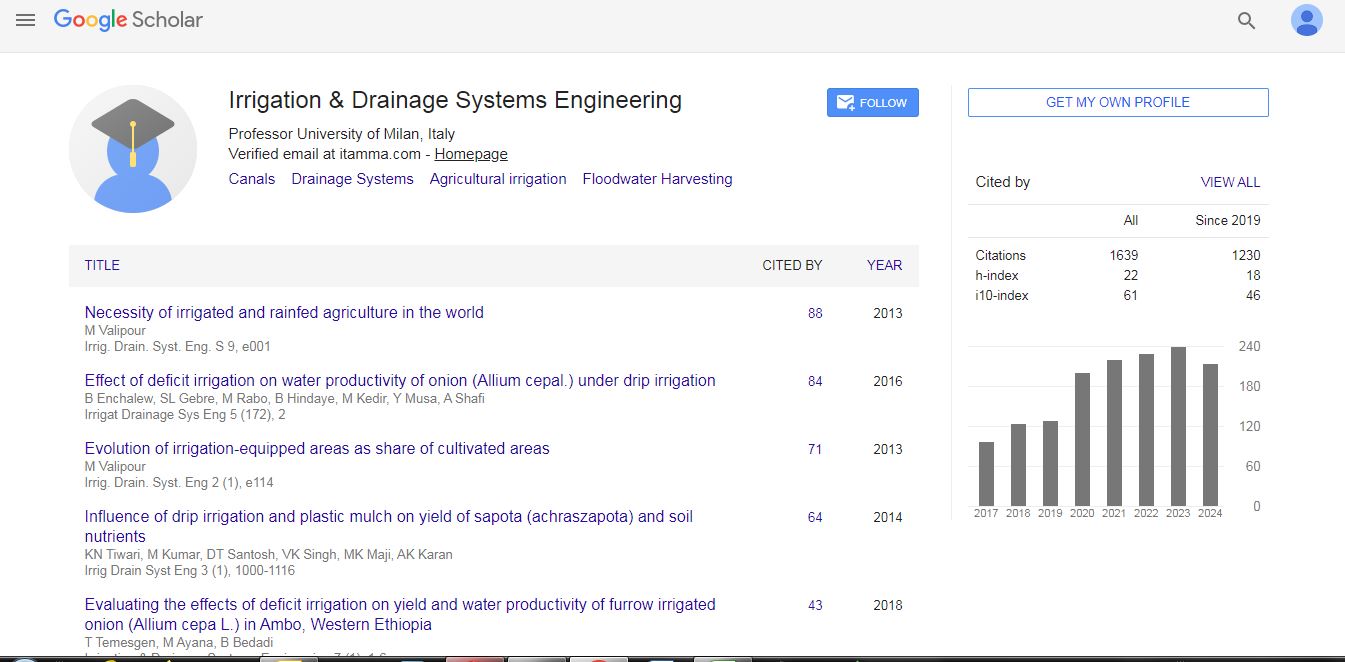
Irrigation & Drainage Systems Engineering received 835 citations as per Google Scholar report