Perspective - (2025) Volume 10, Issue 3
Received: 01-May-2025, Manuscript No. PE-26-179283;
Editor assigned: 05-May-2025, Pre QC No. P-179283;
Reviewed: 19-May-2025, QC No. Q-179283;
Revised: 22-May-2025, Manuscript No. R-179283;
Published:
29-May-2025
, DOI: 10.37421/2472-1042.2025.10.288
Citation: Estévez, María. ”Digital Therapeutics: Driving Economic Value in Healthcare.” Pharmacoeconomics 10 (2025):288.
Copyright: © 2025 Estévez M. This is an open-access article distributed under the terms of the Creative Commons Attribution License, which permits unrestricted use, distribution and reproduction in any medium, provided the original author and source are credited.
Digital therapeutics (DTx) and mobile health (mHealth) interventions are increasingly recognized for their significant economic advantages in healthcare. By improving patient outcomes and increasing access to care, these technologies have the potential to substantially reduce overall healthcare expenditures, even with initial investments in development and technology. The cost-effectiveness of these interventions is influenced by various factors, including the prevalence of the targeted diseases and the rates at which patients adopt these new therapeutic approaches [1].
When considering specific applications, the economic benefits of DTx for managing chronic conditions like diabetes are particularly noteworthy. Studies have shown that these digital tools can lead to significant reductions in key health indicators, such as HbA1c levels, thereby mitigating the risk of costly diabetes-related complications and decreasing hospitalizations. The economic evaluation for these interventions typically encompasses the costs of platform development and implementation against savings realized from reduced medication needs and healthcare utilization [2].
In the realm of cardiovascular disease prevention, mHealth interventions demonstrate considerable promise for generating public health savings. Their capacity to promote adherence to crucial lifestyle modifications and enable remote patient monitoring can avert expensive acute cardiac events. Furthermore, they help alleviate the long-term burden associated with chronic cardiovascular conditions, underscoring the importance of user engagement and seamless system integration for maximizing their economic impact [3].
The application of digital therapeutics in mental health, specifically for conditions like depression and anxiety, also presents a compelling economic argument. Despite initial investment requirements, the long-term benefits of enhanced patient well-being, reduced symptom severity, and decreased reliance on traditional treatments can yield a positive return on investment, with user accessibility and scalability being critical drivers of this cost-effectiveness [4].
A comprehensive synthesis of economic evidence for mHealth interventions in chronic disease management reveals a cost-effective strategy. By empowering patients in self-management and improving treatment adherence, these interventions lead to better health outcomes and a subsequent reduction in the utilization of healthcare resources and associated costs. However, the diversity in intervention designs and outcome measurements can pose challenges to definitive conclusions [5].
Beyond direct clinical benefits, digital therapeutics hold substantial potential for enhancing health equity and, consequently, contributing to cost-effectiveness. Their ability to reach underserved populations with scalable solutions can reduce treatment barriers and promote better health outcomes across diverse communities. This improved health equity ultimately translates into long-term economic benefits through a healthier populace and reduced strain on emergency services [6].
The implementation of mHealth solutions within primary care settings is also being examined for its economic implications. Evidence suggests that these technologies can streamline clinical workflows, improve communication between patients and providers, and facilitate the early detection of health issues, all of which contribute to increased efficiency and significant cost savings. The successful integration of these tools requires careful consideration of implementation challenges and strategies to optimize return on investment [7].
The evolving landscape of digital therapeutics points towards a paradigm shift in healthcare, moving towards more preventative and personalized medicine. This evolution is expected to further enhance cost-effectiveness by addressing health issues proactively. Robust health economic evaluations are consequently crucial to guide policy decisions and direct investment in this rapidly expanding sector of healthcare [8].
Investigating the cost-effectiveness of mHealth for medication adherence in patients with chronic conditions reveals its positive impact. Tailored reminders and consistent support delivered through mHealth platforms can markedly improve adherence rates, leading to superior clinical outcomes and reduced healthcare expenditures that would otherwise arise from poorly managed chronic diseases [9].
Finally, the economic impact of digital therapeutics in obesity management is being actively analyzed. These interventions show potential for cost-effectiveness by improving weight management and reducing the incidence of associated comorbidities. The assessment considers both the direct costs of the DTx and the indirect savings derived from decreased healthcare utilization and an improved quality of life for patients [10].
Digital therapeutics (DTx) and mobile health (mHealth) interventions offer compelling economic advantages by enhancing patient outcomes and broadening access to care, thereby reducing overall healthcare costs. The cost-effectiveness of these digital solutions is contingent upon factors such as disease prevalence, adoption rates among patients, and comparative efficacy against conventional treatments, alongside the specific economic models used for evaluation. While there are initial investments in technology and development, the long-term financial benefits frequently surpass these upfront costs, particularly in the management of chronic conditions and the promotion of preventative care [1].
In the context of diabetes management, digital therapeutics have demonstrated considerable cost-effectiveness. By facilitating a reduction in HbA1c levels and subsequently minimizing diabetes-related complications and hospitalizations, DTx contribute to significant savings. The economic analysis of these interventions involves weighing the costs of platform development, deployment, and patient engagement against the economic benefits derived from reduced medication expenses, decreased healthcare utilization, and improved patient productivity [2].
For the prevention of cardiovascular diseases, mHealth interventions are proving to be a valuable tool for achieving substantial public health cost savings. These interventions encourage greater adherence to essential lifestyle modifications and enable continuous remote monitoring, which helps avert costly acute cardiac events and lessens the overall burden of chronic cardiovascular conditions. The effectiveness of these programs is significantly enhanced by strong user engagement and seamless integration into existing healthcare systems [3].
The economic rationale for employing digital therapeutics in the treatment of mental health conditions, such as depression and anxiety, is also well-supported. Although initial investments are required, the long-term advantages of improved mental well-being, substantial symptom reduction, and decreased reliance on traditional therapies and medications often result in a positive return on investment. Key factors driving this cost-effectiveness include user accessibility and the scalability of the digital solutions [4].
A systematic review and meta-analysis synthesizing the economic evidence for mHealth interventions in chronic disease management indicates their cost-effectiveness. These interventions improve patient self-management and treatment adherence, leading to better health outcomes and a reduction in the utilization of healthcare resources and associated expenditures. Nevertheless, the variability in intervention designs and the methods used for outcome measurement present challenges in drawing universally applicable conclusions [5].
Digital therapeutics have the potential to significantly improve access to healthcare and address health disparities, thereby contributing to overall cost-effectiveness. By extending care to underserved populations and offering scalable treatment options, DTx can lower barriers to accessing necessary medical interventions and promote health equity. This enhanced health equity can yield long-term economic benefits by fostering a healthier population and reducing the demand on emergency healthcare services [6].
The economic implications of integrating mHealth solutions into primary care settings are being actively investigated. Research suggests that mHealth can streamline clinical operations, enhance patient-provider communication, and aid in the early identification of potential health issues, all of which contribute to improved efficiency and cost savings. The successful adoption of mHealth in primary care also necessitates addressing implementation hurdles and developing strategies to maximize financial returns [7].
The expanding role of digital therapeutics in healthcare is reshaping the industry towards preventative and personalized approaches, which are expected to enhance cost-effectiveness. To effectively guide policy development and investment decisions in this burgeoning field, it is imperative to conduct thorough health economic evaluations that accurately assess the value and impact of these technologies [8].
The cost-effectiveness of using mHealth for improving medication adherence among patients with chronic conditions is a critical area of study. Evidence suggests that personalized reminders and ongoing support provided through mHealth platforms can substantially enhance adherence, leading to improved clinical results and lower healthcare costs associated with uncontrolled chronic diseases [9].
An analysis of the economic impact of digital therapeutics for obesity management highlights their potential for cost-effectiveness. These interventions can lead to improved weight management outcomes and a reduction in the prevalence of related comorbidities. The economic assessment takes into account the direct costs associated with the DTx, as well as the indirect savings achieved through reduced healthcare utilization and enhancements in patients' overall quality of life [10].
Digital therapeutics (DTx) and mobile health (mHealth) interventions offer significant economic advantages by improving patient outcomes, increasing access to care, and enhancing efficiency, potentially reducing healthcare costs. Their cost-effectiveness is influenced by factors such as disease prevalence, adoption rates, and comparative effectiveness. DTx have shown economic benefits in managing chronic conditions like diabetes by reducing key health indicators and hospitalizations, and in mental health by improving well-being and reducing reliance on traditional treatments. mHealth interventions are effective in cardiovascular disease prevention by promoting adherence and remote monitoring, and in chronic disease management by improving self-management and reducing healthcare resource utilization. These digital solutions also contribute to cost-effectiveness by improving health equity and access to care, particularly for underserved populations. Furthermore, mHealth streamlines primary care workflows and enhances medication adherence for chronic diseases. The growing importance of these technologies necessitates robust economic evaluations to guide future investments and policies.
None
None
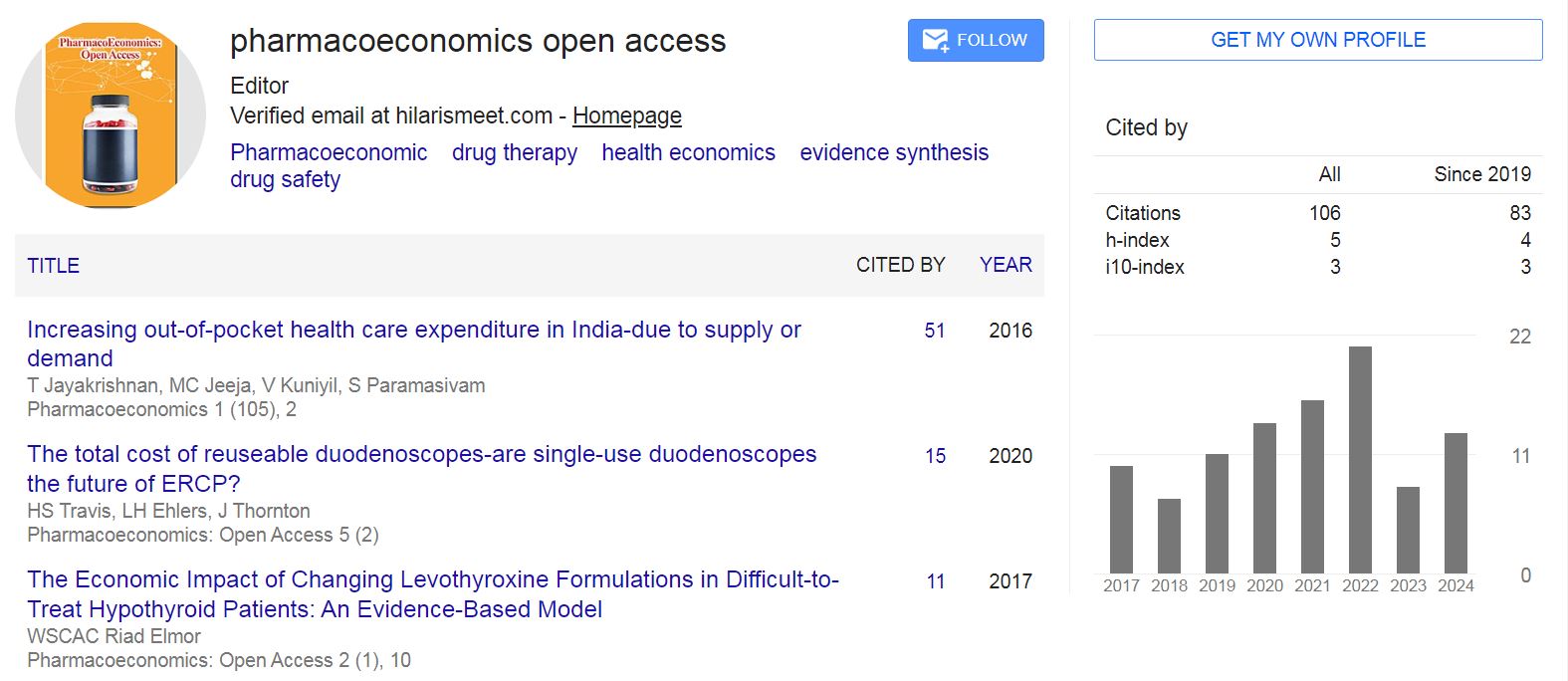
Pharmacoeconomics: Open Access received 106 citations as per Google Scholar report