Commentary - (2025) Volume 16, Issue 4
Received: 01-Jul-2025, Manuscript No. jhmi-26-178848;
Editor assigned: 03-Jul-2025, Pre QC No. P-178848;
Reviewed: 17-Jul-2025, QC No. Q-178848;
Revised: 22-Jul-2025, Manuscript No. R-178848;
Published:
29-Jul-2025
, DOI: 10.37421/2157-7420.2025.16.598
Citation: Ochieng, Samuel K.. ”Digital Health: Revolutionizing Mental Healthcare With Ethical Considerations.” J Health Med Informat 16 (2025):598.
Copyright: © 2025 Ochieng K. Samuel This is an open-access article distributed under the terms of the Creative Commons Attribution License, which permits unrestricted use, distribution and reproduction in any medium, provided the original author and source are credited.
Digital health technologies are revolutionizing mental health assessment and care, significantly enhancing accessibility, engagement, and the personalization of interventions. These advancements offer novel pathways for service delivery, patient progress monitoring, and the early identification of relapse indicators, thereby addressing historical barriers to mental healthcare. Telepsychiatry, a key component of this digital transformation, allows for remote psychiatric consultations and therapy, extending reach to geographically isolated populations and reducing the associated stigma of seeking mental health support. Mobile health applications further contribute by providing accessible platforms for users to manage their mental well-being and track symptoms, fostering a more proactive approach to care. Wearable sensors are emerging as powerful tools for continuous, objective data collection, offering insights into behavioral patterns and physiological markers that can inform clinical decisions. Virtual reality (VR) presents immersive environments for therapeutic interventions, enabling safe and controlled exposure to phobias, PTSD triggers, and social anxiety scenarios, facilitating effective skill-building and cognitive restructuring. The integration of artificial intelligence (AI) is also proving transformative, with AI-powered tools capable of analyzing vast datasets to identify at-risk individuals and personalize treatment plans with unprecedented precision. Gamification principles are being applied to mental health applications to boost user motivation and adherence to treatment protocols, making therapeutic exercises more engaging and sustainable. For individuals with severe mental illnesses, digital tools offer essential self-management support and facilitate vital peer connections, promoting greater independence and recovery. Digital phenotyping, by leveraging data from everyday devices, provides a dynamic method for real-time monitoring of mental health states, detecting subtle changes that might otherwise go unnoticed. Finally, digital therapeutics (DTx) are emerging as evidence-based software solutions designed to prevent, manage, and treat mental health conditions, offering scalable and accessible interventions that complement traditional care pathways [1].
Digital health technologies are profoundly reshaping the landscape of mental health assessment and care through enhanced accessibility, engagement, and personalized interventions. These innovative tools, including telepsychiatry, mobile health applications, wearable sensors, and virtual reality, provide novel methods for delivering services, monitoring patient progress, and detecting early warning signs of relapse. Such technologies effectively bridge geographical divides, mitigate stigma, and offer continuous support, although critical considerations regarding data privacy, digital literacy, and equitable access persist. Telepsychiatry, specifically, has become instrumental in delivering mental health services, particularly to underserved regions, ensuring timely access to crucial psychiatric consultations, therapy, and medication management. This increased accessibility not only improves patient outcomes but also contributes to the reduction of healthcare costs. Mobile applications and wearable devices are demonstrating significant potential in the real-time monitoring of mood and behavior for individuals experiencing depression and anxiety, collecting both passive and active data to offer objective insights. Virtual reality (VR) is emerging as a potent therapeutic modality for a spectrum of mental health conditions such as phobias, PTSD, and social anxiety, offering immersive environments for exposure therapy and skill-building in a secure setting. The application of artificial intelligence (AI) in mental health assessment enables the analysis of extensive datasets derived from various digital sources, aiding in the early detection of mental health risks and the tailoring of treatment strategies. Gamification strategies are being integrated into mental health applications to enhance user engagement and adherence to treatment regimens, motivating individuals through game-like features to actively participate in their recovery. Digital mental health tools are also empowering individuals with severe mental illnesses by providing crucial self-management support and fostering peer connections, thereby promoting recovery and independence. Digital phenotyping, a novel approach, involves the collection of behavioral data from smartphones and other devices to monitor mental health states in real-time, identifying early indicators of symptom changes. Lastly, digital therapeutics (DTx) are evidence-based interventions delivered via software to prevent, manage, or treat medical conditions, offering personalized, accessible, and scalable solutions for various mental health disorders [2].
Digital health technologies are fundamentally transforming the delivery of mental health assessment and care by augmenting accessibility, user engagement, and the tailoring of interventions. Telepsychiatry, mobile health applications, wearable sensors, and virtual reality represent innovative modalities for service provision, progress tracking, and the identification of early relapse indicators, effectively overcoming geographical barriers and reducing stigma. These tools provide continuous support, though challenges related to data privacy, digital literacy, and equitable access necessitate careful consideration. Telepsychiatry has proven particularly vital for mental health service delivery in underserved areas, facilitating prompt access to psychiatric evaluations, therapy, and medication management, which ultimately enhances patient outcomes and reduces healthcare expenditures. Mobile applications and wearable devices are proving valuable for real-time mood and behavior monitoring in individuals with depression and anxiety, utilizing passive and active data to yield objective insights into a patient's condition. Virtual reality (VR) is emerging as an effective therapeutic tool for conditions like phobias, PTSD, and social anxiety, creating immersive and controlled environments for exposure therapy and skill development. The integration of artificial intelligence (AI) into mental health assessment allows for the analysis of large datasets from digital sources to identify at-risk individuals and personalize treatment plans, thereby supporting clinical decision-making. Gamification elements in mental health applications are designed to increase user engagement and adherence to treatment by incorporating game-like features that motivate active participation in recovery. Digital mental health tools can empower individuals with severe mental illnesses by offering self-management support and enabling peer connections, crucial for promoting recovery and independence. Digital phenotyping, through the analysis of behavioral data from smartphones, provides a cutting-edge approach to real-time monitoring of mental health states, detecting early signs of symptom changes. Furthermore, digital therapeutics (DTx) are evidence-based software interventions designed to prevent, manage, or treat mental health conditions, offering personalized, accessible, and scalable solutions that often complement traditional therapies [3].
The significant impact of digital health technologies on mental health assessment and care is characterized by enhanced accessibility, improved engagement, and the development of personalized interventions. Tools such as telepsychiatry, mobile health applications, wearable sensors, and virtual reality are revolutionizing how services are delivered, how patient progress is monitored, and how early indicators of relapse are detected. These technologies serve to overcome geographical limitations, reduce the stigma associated with seeking mental health support, and provide continuous care. Nevertheless, critical challenges related to data privacy, digital literacy, and ensuring equitable access remain focal points for ongoing attention. Telepsychiatry has become an indispensable resource for delivering mental health services, especially in regions with limited access to traditional care, ensuring timely psychiatric consultations, therapy, and medication management, which collectively improve patient outcomes and lower healthcare costs. Mobile applications and wearable devices are showing considerable promise in the continuous monitoring of mood and behavior for individuals diagnosed with depression and anxiety, gathering both passive data like activity levels and sleep patterns, and active self-reported data, to offer objective insights into a patient's status. Virtual reality (VR) is establishing itself as a highly effective therapeutic modality for various mental health concerns, including phobias, post-traumatic stress disorder (PTSD), and social anxiety, by providing immersive and controlled settings for exposure therapy and cognitive restructuring. The integration of artificial intelligence (AI) into mental health assessment facilitates the analysis of extensive datasets from diverse digital sources, enabling the identification of individuals at risk and the creation of tailored treatment plans. Gamification is being leveraged in mental health applications to enhance user engagement and adherence to therapeutic interventions by incorporating elements of game design, such as points and rewards, to motivate consistent participation. Digital tools are also empowering individuals living with severe mental illnesses by offering vital self-management support and facilitating connections with peers, which is instrumental in fostering recovery and promoting independence. Digital phenotyping presents an innovative strategy for the real-time assessment of mental health conditions by collecting and analyzing behavioral data from smartphones and similar devices, thereby enabling the early detection of changes in communication and activity patterns. Finally, digital therapeutics (DTx) are defined as evidence-based therapeutic interventions delivered through software to prevent, manage, or treat medical conditions, offering a scalable and personalized approach to mental health care [4].
Digital health technologies are fundamentally altering the paradigms of mental health assessment and care by significantly improving accessibility, user engagement, and the customization of interventions. Telepsychiatry, mobile health applications, wearable sensors, and virtual reality represent novel avenues for delivering services, monitoring patient progression, and identifying early signs of relapse. These tools effectively dismantle geographical barriers, reduce stigma, and offer continuous support, although critical considerations regarding data privacy, digital literacy, and equitable access remain prominent. Telepsychiatry has emerged as a crucial modality for mental health service provision, particularly in underserved areas, ensuring timely access to psychiatric consultations, therapy, and medication management, leading to improved patient outcomes and reduced healthcare expenses. Mobile applications and wearable devices are proving their utility in real-time monitoring of mood and behavior for individuals with depression and anxiety, collecting passive and active data to provide objective insights into a patient's condition and inform treatment adjustments. Virtual reality (VR) is becoming an increasingly effective therapeutic intervention for a range of mental health conditions, including phobias, PTSD, and social anxiety, offering immersive and controlled environments for exposure therapy and skill-building. The incorporation of artificial intelligence (AI) in mental health assessment allows for the sophisticated analysis of large datasets from various digital sources, aiding in early risk detection and the personalization of treatment plans to support clinical decision-making. Gamification is being integrated into mental health applications to boost user engagement and adherence to treatment by employing game-like elements that motivate individuals to actively participate in their recovery. Digital mental health tools also serve to empower individuals with severe mental illnesses by providing self-management support and fostering peer connections, which are vital for promoting recovery and enhancing independence. Digital phenotyping offers a new approach to monitoring mental health states in real-time by collecting behavioral data from smartphones and other devices, enabling the identification of early indicators of symptom changes. Lastly, digital therapeutics (DTx) are evidence-based software interventions designed to prevent, manage, or treat mental health conditions, presenting personalized, accessible, and scalable solutions that often complement traditional therapeutic approaches [5].
The landscape of mental health assessment and care is being significantly reshaped by digital health technologies, which enhance accessibility, engagement, and the personalization of interventions. Telepsychiatry, mobile health applications, wearable sensors, and virtual reality offer innovative methods for service delivery, patient progress monitoring, and early relapse detection, effectively breaking down geographical barriers, reducing stigma, and providing continuous support, although challenges related to data privacy, digital literacy, and equitable access persist. Telepsychiatry has become a vital tool for delivering mental health services, particularly in underserved areas, ensuring timely access to psychiatric consultations, therapy, and medication management, thereby improving patient outcomes and reducing healthcare costs. Mobile applications and wearable devices show promise in real-time monitoring of mood and behavior for individuals with depression and anxiety, collecting passive and active data to provide objective insights into a patient's condition and inform treatment adjustments. Virtual reality (VR) is emerging as an effective therapeutic modality for various mental health conditions, including phobias, PTSD, and social anxiety, offering immersive and controlled environments for exposure therapy and skill-building. The integration of artificial intelligence (AI) in mental health assessment allows for the analysis of large datasets from various digital sources to identify individuals at risk or to personalize treatment plans, supporting clinical decision-making. Gamification in mental health applications can increase user engagement and adherence to treatment by incorporating game-like elements that motivate individuals to actively participate in their recovery. Digital mental health tools can empower individuals with severe mental illnesses by providing self-management support and facilitating peer connections, which are crucial for promoting recovery and independence. Digital phenotyping offers a novel approach to monitoring mental health states in real-time by collecting behavioral data from smartphones and other devices, enabling the early detection of symptom changes. Furthermore, digital therapeutics (DTx) are evidence-based therapeutic interventions delivered through software to prevent, manage, or treat medical conditions, offering personalized, accessible, and scalable solutions that often complement traditional treatments [6].
Digital health technologies are instrumental in the transformation of mental health assessment and care, improving accessibility, engagement, and the personalization of interventions. Telepsychiatry, mobile health applications, wearable sensors, and virtual reality provide innovative ways to deliver services, monitor patient progress, and identify early warning signs of relapse. These tools help overcome geographical barriers, reduce stigma, and offer continuous support, though challenges concerning data privacy, digital literacy, and equitable access remain significant. Telepsychiatry has become a critical component in delivering mental health services, especially to underserved populations, ensuring prompt access to psychiatric consultations, therapy, and medication management, leading to enhanced patient outcomes and reduced healthcare costs. Mobile applications and wearable devices show considerable potential for real-time monitoring of mood and behavior in individuals with depression and anxiety, collecting both passive and active data to offer objective insights into a patient's condition and guide treatment adjustments. Virtual reality (VR) is increasingly recognized as an effective therapeutic modality for conditions such as phobias, PTSD, and social anxiety, providing immersive and controlled environments for exposure therapy and skill development. The application of artificial intelligence (AI) in mental health assessment enables the analysis of extensive datasets from diverse digital sources, facilitating early risk identification and the tailoring of treatment plans to support clinical decision-making. Gamification strategies are being incorporated into mental health applications to improve user engagement and treatment adherence by using game-like features to motivate consistent participation in recovery efforts. Digital tools are also empowering individuals with severe mental illnesses through self-management support and the facilitation of peer connections, which are vital for fostering recovery and enhancing independence. Digital phenotyping offers a novel methodology for real-time mental health state monitoring by collecting behavioral data from smartphones and other devices, allowing for the early detection of symptom fluctuations. Finally, digital therapeutics (DTx) are evidence-based software interventions designed to prevent, manage, or treat medical conditions, providing personalized, accessible, and scalable solutions that often complement conventional therapies [7].
The advent of digital health technologies is significantly reshaping mental health assessment and care by improving accessibility, engagement, and the personalization of interventions. Telepsychiatry, mobile health applications, wearable sensors, and virtual reality offer novel ways to deliver services, monitor patient progress, and identify early warning signs of relapse, effectively bridging geographical barriers, reducing stigma, and providing continuous support, while also presenting challenges related to data privacy, digital literacy, and equitable access. Telepsychiatry has become a vital tool for delivering mental health services, particularly in underserved areas, facilitating timely access to psychiatric consultations, therapy, and medication management, thereby improving patient outcomes and reducing healthcare costs. Mobile applications and wearable devices demonstrate promise in real-time monitoring of mood and behavior for individuals with depression and anxiety, collecting passive and active data to provide objective insights into a patient's condition and inform treatment adjustments. Virtual reality (VR) is emerging as an effective therapeutic modality for various mental health conditions, including phobias, PTSD, and social anxiety, offering immersive and controlled environments for exposure therapy and skill-building. The integration of artificial intelligence (AI) in mental health assessment allows for the analysis of large datasets from various digital sources to identify individuals at risk or to personalize treatment plans, supporting clinical decision-making. Gamification in mental health applications can increase user engagement and adherence to treatment by incorporating game-like elements that motivate individuals to actively participate in their recovery. Digital mental health tools can empower individuals with severe mental illnesses by providing self-management support and facilitating peer connections, which are crucial for promoting recovery and independence. Digital phenotyping offers a novel approach to monitoring mental health states in real-time by collecting behavioral data from smartphones and other devices, enabling the early detection of symptom changes. Moreover, digital therapeutics (DTx) are evidence-based therapeutic interventions delivered through software to prevent, manage, or treat medical conditions, offering personalized, accessible, and scalable solutions that often complement traditional treatments [8].
Digital health technologies are profoundly influencing mental health assessment and care by enhancing accessibility, engagement, and personalized interventions. Telepsychiatry, mobile health applications, wearable sensors, and virtual reality provide innovative means for service delivery, patient progress monitoring, and early identification of relapse, effectively overcoming geographical barriers, reducing stigma, and offering continuous support, though challenges related to data privacy, digital literacy, and equitable access remain critical. Telepsychiatry has become an essential tool for delivering mental health services, particularly in underserved regions, ensuring timely access to psychiatric consultations, therapy, and medication management, which leads to improved patient outcomes and reduced healthcare costs. Mobile applications and wearable devices show promise in real-time mood and behavior monitoring for individuals with depression and anxiety, collecting passive and active data to offer objective insights into a patient's condition and guide treatment adjustments. Virtual reality (VR) is emerging as an effective therapeutic modality for various mental health conditions, including phobias, PTSD, and social anxiety, providing immersive and controlled environments for exposure therapy and skill-building. The integration of artificial intelligence (AI) in mental health assessment enables the analysis of large datasets from diverse digital sources to identify individuals at risk or to personalize treatment plans, thereby supporting clinical decision-making. Gamification in mental health applications aims to increase user engagement and adherence to treatment by incorporating game-like elements that motivate individuals to actively participate in their recovery journey. Digital mental health tools can empower individuals with severe mental illnesses by providing self-management support and facilitating peer connections, crucial for promoting recovery and independence. Digital phenotyping presents a novel approach to monitoring mental health states in real-time by collecting behavioral data from smartphones and similar devices, allowing for the early detection of symptom changes. Lastly, digital therapeutics (DTx) are evidence-based software interventions designed to prevent, manage, or treat medical conditions, offering personalized, accessible, and scalable solutions that often complement traditional therapeutic approaches [9].
The integration of digital health technologies is fundamentally transforming mental health assessment and care by enhancing accessibility, engagement, and the personalization of interventions. Telepsychiatry, mobile health applications, wearable sensors, and virtual reality offer novel ways to deliver services, monitor patient progress, and identify early warning signs of relapse. These technologies effectively bridge geographical barriers, reduce stigma, and provide continuous support, although critical considerations regarding data privacy, digital literacy, and equitable access persist. Telepsychiatry has become a vital tool for delivering mental health services, particularly in underserved areas, ensuring timely access to psychiatric consultations, therapy, and medication management, thereby improving patient outcomes and reducing healthcare costs. Mobile applications and wearable devices show promise in real-time monitoring of mood and behavior for individuals with depression and anxiety, collecting passive and active data to provide objective insights into a patient's condition and inform treatment adjustments. Virtual reality (VR) is emerging as an effective therapeutic modality for various mental health conditions, including phobias, PTSD, and social anxiety, offering immersive and controlled environments for exposure therapy and skill-building. The integration of artificial intelligence (AI) in mental health assessment allows for the analysis of large datasets from various digital sources to identify individuals at risk or to personalize treatment plans, supporting clinical decision-making. Gamification in mental health applications can increase user engagement and adherence to treatment by incorporating game-like elements that motivate individuals to actively participate in their recovery. Digital mental health tools can empower individuals with severe mental illnesses by providing self-management support and facilitating peer connections, which are crucial for promoting recovery and independence. Digital phenotyping offers a novel approach to monitoring mental health states in real-time by collecting behavioral data from smartphones and other devices, enabling the early detection of symptom changes. Finally, digital therapeutics (DTx) are evidence-based therapeutic interventions delivered through software to prevent, manage, or treat medical conditions, offering personalized, accessible, and scalable solutions that often complement traditional treatments [10].
Digital health technologies are significantly reshaping mental health assessment and care by enhancing accessibility, engagement, and personalized interventions. Telepsychiatry, mobile health applications, wearable sensors, and virtual reality offer novel ways to deliver services, monitor patient progress, and identify early warning signs of relapse. These tools can bridge geographical barriers, reduce stigma, and provide continuous support, although challenges related to data privacy, digital literacy, and equitable access remain critical considerations. Mobile applications and wearable devices show promise in real-time monitoring of mood and behavior for individuals with depression and anxiety. These technologies collect passive data (e.g., activity levels, sleep patterns, social interaction) and active data (e.g., self-reported mood, symptoms) to provide objective insights into a patient's condition. The integration of this data into clinical practice can inform treatment adjustments and predict exacerbations. Telepsychiatry has become a vital tool for delivering mental health services, particularly in underserved areas. It facilitates timely access to psychiatric consultations, therapy, and medication management, thereby improving patient outcomes and reducing healthcare costs. However, ensuring patient privacy, establishing a therapeutic alliance remotely, and addressing technical barriers are ongoing challenges. Virtual reality (VR) is emerging as an effective therapeutic modality for various mental health conditions, including phobias, PTSD, and social anxiety. VR-based interventions provide immersive and controlled environments for exposure therapy, skill-building, and cognitive restructuring, offering a safe space for patients to confront and manage their symptoms. The integration of artificial intelligence (AI) in mental health assessment allows for the analysis of large datasets from various digital sources, such as text, speech, and behavioral patterns, to identify individuals at risk or to personalize treatment plans. AI-powered tools can aid in early detection, provide predictive insights, and support clinical decision-making. Gamification in mental health applications can increase user engagement and adherence to treatment. By incorporating game-like elements such as points, badges, and leaderboards, these tools can motivate individuals to actively participate in their recovery journey and practice therapeutic skills consistently. Digital mental health tools can empower individuals with severe mental illnesses by providing self-management support and facilitating peer connections. Platforms designed for this population need to consider usability, accessibility, and the potential for promoting recovery and independence. The use of digital phenotyping, which involves collecting behavioral data from smartphones and other devices, offers a novel approach to monitoring mental health states in real-time. Changes in communication patterns, location, and activity can serve as early indicators of symptom changes in conditions like bipolar disorder and depression. Digital therapeutics (DTx) are evidence-based therapeutic interventions delivered through software to prevent, manage, or treat medical conditions. In mental health, DTx can offer personalized, accessible, and scalable solutions for a range of disorders, often complementing traditional treatments. The ethical considerations surrounding the use of digital health technologies in mental health are paramount, including data privacy, security, algorithmic bias, and informed consent. Ensuring responsible development and deployment is crucial to foster trust and maximize the benefits for patients.
Digital health technologies are revolutionizing mental health care by enhancing accessibility and personalization through tools like telepsychiatry, mobile apps, and wearable sensors. These innovations facilitate remote consultations, real-time monitoring of mood and behavior, and immersive therapies such as virtual reality. Artificial intelligence aids in risk detection and treatment personalization, while gamification boosts user engagement. Digital tools empower individuals with severe mental illnesses and enable digital phenotyping for early symptom detection. Digital therapeutics offer scalable, evidence-based software solutions. Despite benefits, critical ethical considerations regarding data privacy, security, and equitable access must be addressed for responsible implementation.
None
None
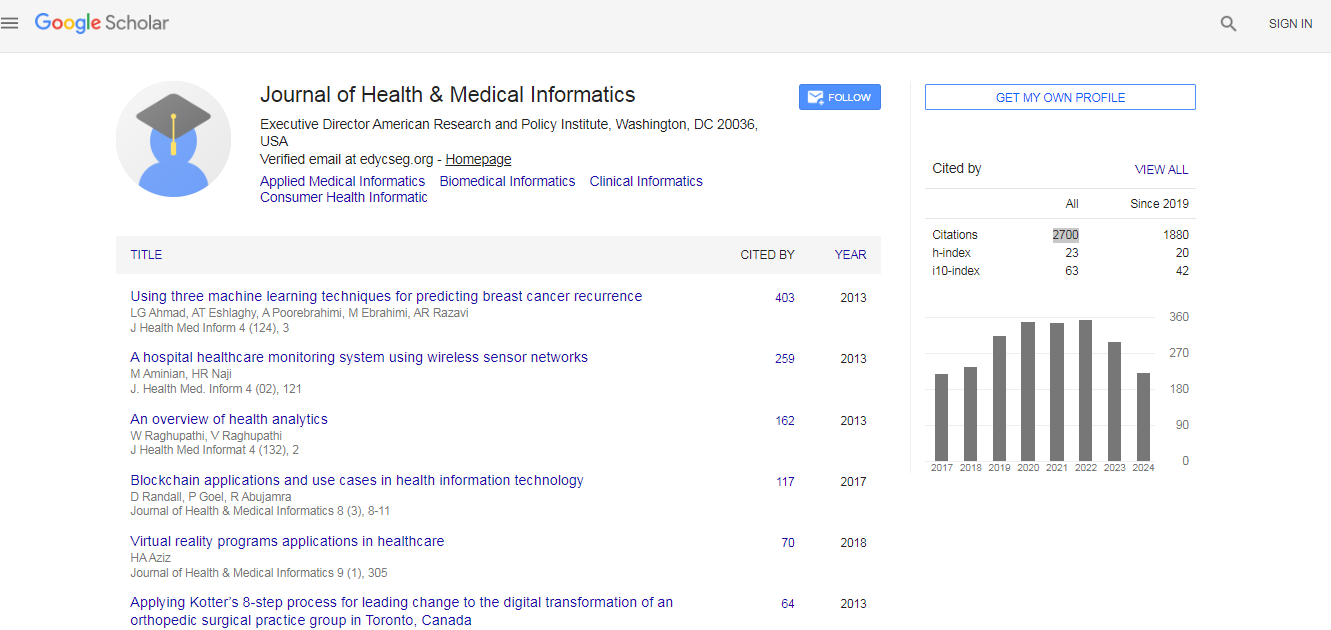
Journal of Health & Medical Informatics received 2700 citations as per Google Scholar report