Brief Report - (2025) Volume 16, Issue 5
Received: 01-Sep-2025, Manuscript No. jhmi-26-178871;
Editor assigned: 03-Sep-2025, Pre QC No. P-178871;
Reviewed: 17-Sep-2025, QC No. Q-178871;
Revised: 22-Sep-2025, Manuscript No. R-178871;
Published:
29-Sep-2025
, DOI: 10.37421/2157-7420.2025.16.611
Citation: Ruiz, Javier M.. ”Digital Health Literacy: Empowering Patient Engagement and Outcomes.” J Health Med Informat 16 (2025):611.
Copyright: © 2025 Ruiz M. Javier This is an open-access article distributed under the terms of the Creative Commons Attribution License, which permits unrestricted use, distribution and reproduction in any medium, provided the original author and source are credited.
The pervasive integration of digital technologies into healthcare has fundamentally reshaped the patient experience, necessitating a deeper understanding of how individuals interact with these evolving tools. At the forefront of this transformation lies digital health literacy, a critical determinant of patient engagement and overall health outcomes. This introductory section will delve into the multifaceted relationship between digital health literacy and its profound impact on patient involvement in their own care, drawing upon a comprehensive review of recent scholarly work. The first study underscores the crucial link between digital health literacy and improved patient engagement. It highlights that a patient's proficiency in understanding and utilizing digital health tools directly influences their active participation in their care. This, in turn, leads to more informed health decisions and a greater adherence to prescribed treatment plans. The research strongly advocates for enhancing digital literacy among patients as a primary strategy to cultivate proactive engagement and ultimately elevate health results [1].
Following this, another investigation delves into the impact of digital health interventions on patient engagement, with a particular emphasis on the foundational role of health literacy. This study demonstrates that individuals possessing adequate digital health literacy are significantly more inclined to effectively use patient portals, mobile health applications, and other digital platforms. Such proficiency fosters enhanced participation in their healthcare journey and promotes better self-management of chronic conditions [2].
Thirdly, research explores how digital literacy directly influences patient engagement within shared decision-making processes. The findings reveal that patients who exhibit higher levels of digital health literacy are better equipped to access, comprehend, and critically appraise health information. This enhanced capability empowers them to actively contribute to discussions about their treatment alternatives with healthcare providers, fostering a more collaborative approach to care [3].
A subsequent paper introduces a conceptual framework that explicitly links digital health literacy to a spectrum of patient engagement outcomes, including adherence to medical advice, patient satisfaction, and self-efficacy. It posits that targeted interventions designed to bolster digital literacy can cultivate a more engaged patient population, which can translate into improved health behaviors and potentially superior clinical outcomes [4].
Furthermore, one study meticulously examines the challenges and opportunities inherent in promoting digital health literacy across diverse patient demographics, with the overarching goal of enhancing engagement. It elaborates on how digital health literacy acts as a pivotal mediator, enabling individuals to interact effectively with digital health technologies and subsequently translate these interactions into meaningful engagement with their health management [5].
Another significant contribution provides an overview of the intricate ways digital health literacy influences patient activation and engagement specifically within the context of telehealth. It emphasizes that equipping patients with the necessary skills to navigate digital platforms is paramount for them to fully benefit from virtual care services and to actively manage their health remotely [6].
Additionally, research has focused on the development and validation of a reliable scale designed to measure digital health literacy. This instrument has been subsequently employed to assess its impact on patient engagement within online health communities. The findings from this study consistently underscore that higher levels of digital literacy correlate with more meaningful and productive participation in these virtual support networks [7].
In parallel, a paper investigates the direct influence of digital health literacy on patient engagement with electronic health records (EHRs) and patient portals. It unequivocally highlights that improved digital literacy empowers patients to navigate these complex systems with greater efficacy, leading to increased utilization and enhanced engagement with their personal health information [8].
Finally, a comprehensive review synthesizes existing evidence concerning the impact of digital health literacy on patient engagement within the specific domain of mobile health (mHealth) applications. This synthesis confirms that a patient's capacity to understand and effectively utilize mHealth tools is a crucial determinant of their sustained engagement with these technologies for health monitoring and management purposes [9].
These foundational studies collectively establish a compelling narrative: digital health literacy is not merely a technical skill but a vital enabler of effective patient engagement, impacting everything from self-management of chronic conditions to active participation in healthcare decisions. Recognizing and addressing disparities in this literacy is essential for equitable access to and benefit from the digital health revolution [10].
The critical nexus between digital health literacy and patient engagement is a burgeoning area of research, with numerous studies highlighting its profound implications for healthcare delivery and patient outcomes. This section will systematically explore the nuances of this relationship, drawing upon the collective insights from the provided research to paint a comprehensive picture of how digital literacy shapes patient involvement in their healthcare journey. The initial study emphasizes that improved digital health literacy directly correlates with enhanced patient engagement outcomes. It highlights that when patients can effectively understand and use digital health tools, they are more likely to actively participate in their own care, leading to better health decisions and improved adherence to treatment. The research strongly advocates for prioritizing the enhancement of digital literacy as a key strategy to foster proactive patient engagement and ultimately achieve better health results [1].
Complementing this, the second study investigates the influence of digital health interventions on patient engagement, specifically underscoring the indispensable role of health literacy. The findings clearly indicate that patients equipped with adequate digital health literacy are more adept at utilizing patient portals, mobile health applications, and other digital resources, which in turn leads to heightened participation in their healthcare and more effective self-management of chronic conditions [2].
Thirdly, research focusing on shared decision-making processes reveals that digital literacy significantly impacts a patient's ability to engage effectively. Patients with higher digital health literacy demonstrate a superior capacity to access, comprehend, and critically evaluate health information, thereby enabling them to actively participate in discussions with healthcare providers regarding their treatment options [3].
A subsequent paper presents a robust conceptual framework that delineates the linkage between digital health literacy and various patient engagement metrics, including adherence, satisfaction, and self-efficacy. It argues convincingly that interventions aimed at improving digital literacy are essential for cultivating a more actively engaged patient population, which is likely to result in improved health behaviors and potentially superior clinical outcomes [4].
Furthermore, one study delves into the complexities of promoting digital health literacy across diverse patient populations to bolster engagement. This research elucidates how digital health literacy functions as a crucial mediator, empowering individuals to interact proficiently with digital health technologies and to translate these interactions into meaningful and sustained engagement with their health [5].
Another relevant contribution offers a broad overview of how digital health literacy affects patient activation and engagement within the rapidly expanding field of telehealth. The findings suggest that equipping patients with the necessary digital navigation skills is crucial for them to fully capitalize on virtual care services and to effectively manage their health remotely [6].
Additionally, research has led to the development and validation of a specific instrument designed to measure digital health literacy. When applied to assess its impact on patient engagement within online health communities, the results consistently demonstrated that higher digital literacy levels are associated with more meaningful and productive interactions within these virtual support networks [7].
In a parallel investigation, the influence of digital health literacy on patient engagement with electronic health records (EHRs) and patient portals is explored. The study highlights that enhanced digital literacy empowers patients to navigate these systems more effectively, thereby increasing their usage and fostering a deeper engagement with their personal health information [8].
Finally, a comprehensive review synthesizes evidence specifically regarding the impact of digital health literacy on patient engagement with mobile health (mHealth) applications. This review confirms that a patient's ability to understand and utilize mHealth tools is a key determinant of their sustained engagement with these technologies for health monitoring and management purposes [9].
Collectively, these studies underscore the pervasive and critical role of digital health literacy. They highlight the urgent need to address disparities and implement targeted strategies to ensure that all patients can benefit from the digital health revolution, promoting equitable engagement and improved health outcomes for all [10].
Digital health literacy is a critical factor in enhancing patient engagement, influencing their ability to understand and utilize digital health tools, leading to better health decisions and treatment adherence. Studies show that improved digital literacy empowers patients to engage more effectively with patient portals, mobile apps, telehealth services, and electronic health records. This increased engagement fosters self-management of chronic conditions, participation in shared decision-making, and more productive interactions in online health communities. Addressing disparities in digital health literacy is crucial for ensuring equitable access and benefits from digital health advancements.
None
None
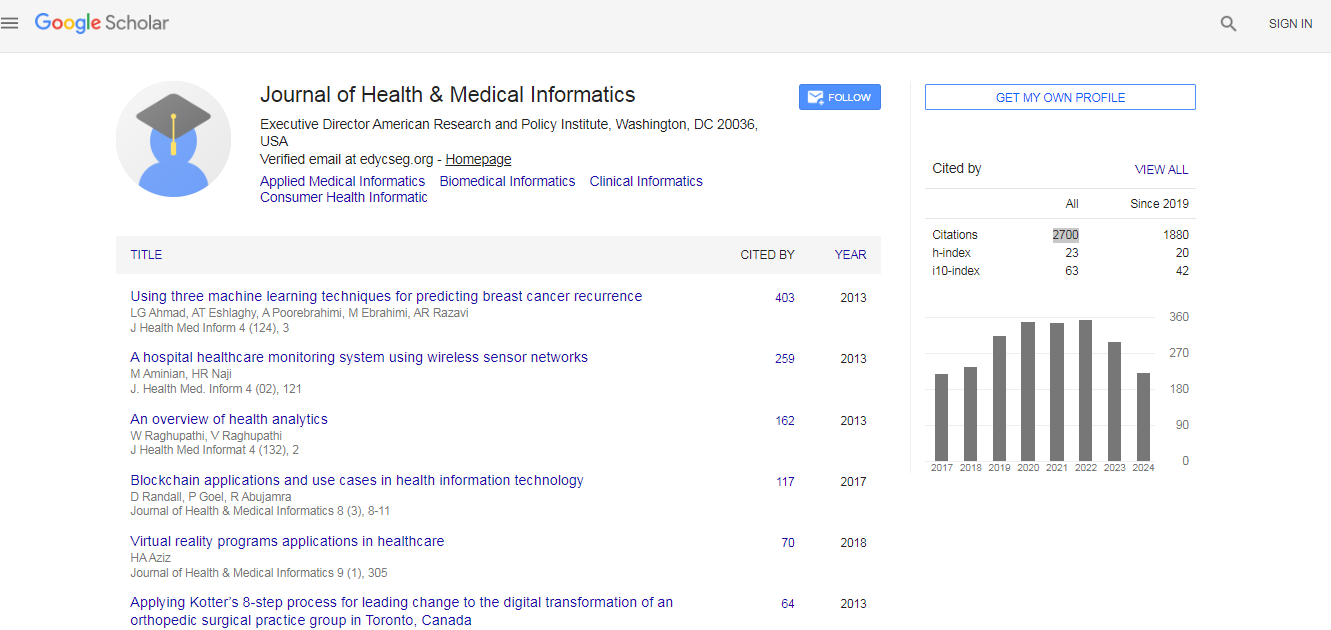
Journal of Health & Medical Informatics received 2700 citations as per Google Scholar report