Brief Report - (2025) Volume 9, Issue 3
Received: 01-Jun-2025, Manuscript No. cmcr-25-178065;
Editor assigned: 03-Jun-2025, Pre QC No. P-178065;
Reviewed: 17-Jun-2025, QC No. Q-178065;
Revised: 23-Jun-2025, Manuscript No. R-178065;
Published:
30-Jun-2025
, DOI: 10.37421/2684-4915.2025.9. 372
Citation: Wallace, Erin. ”Diagnostic Dilemmas Across Medical Specialties.” Clin Med Case Rep 09 (2025):372.
Copyright: © 2025 Wallace E. This is an open-access article distributed under the terms of the Creative Commons Attribution License, which permits unrestricted use, distribution and reproduction in any medium, provided the original author and source are credited.
Diagnostic journeys for rare diseases, particularly when affecting children, are fraught with significant obstacles. These hurdles often involve delayed identification, insufficient awareness among healthcare providers regarding specific rare conditions, and the inherent complexity and variability of symptoms. Such challenges frequently lead to prolonged suffering for patients and their families, alongside increased healthcare burdens. [1] Identifying common infectious diseases when they manifest atypically presents a substantial diagnostic challenge. Healthcare professionals must maintain a high index of suspicion and possess a comprehensive understanding of diverse symptom variations to prevent misdiagnosis, especially in scenarios where typical clinical presentations are absent or misleading. [2] Achieving early cancer detection is fundamentally critical for improving patient outcomes; however, this goal is frequently impeded by the subtle and often non-specific nature of early-stage symptoms. Furthermore, current screening methods often have limitations that hinder timely diagnosis. Promising advancements in biomarker discovery and sophisticated imaging techniques offer significant hope for overcoming these persistent obstacles. [3] Distinguishing between various neurodegenerative syndromes poses a complex diagnostic dilemma, largely due to the considerable symptomatic overlap observed across conditions like Alzheimer's and Parkinson's diseases. This common issue often results in significant diagnostic delays, which in turn complicate the timely initiation of appropriate and targeted treatments. [4] Diagnosing mental health conditions in children and adolescents introduces unique and intricate challenges. These are frequently complicated by critical developmental factors, the common presence of co-occurring disorders, and the non-specific nature of many emotional and behavioral symptoms. Consequently, careful and comprehensive assessment, coupled with a nuanced understanding of young people's emotional and behavioral development, is essential for accurate diagnosis. [5] Systemic autoimmune rheumatic diseases are notoriously difficult to diagnose, primarily due to their highly heterogeneous presentations and the non-specific character of their early symptoms. This inherent complexity frequently leads to extended diagnostic delays, which can severely impact the effectiveness of subsequent treatments and ultimately worsen patient outcomes. [6] Emergency departments routinely encounter significant diagnostic challenges, particularly when dealing with high-risk conditions that present atypically. Factors such as cognitive biases among clinicians and the intense pressure of time contribute significantly to missed diagnoses. This underscores an urgent need for enhanced clinical reasoning skills and the implementation of robust diagnostic support systems within these critical healthcare environments. [7] While Artificial Intelligence (AI) holds considerable promise for enhancing medical diagnosis, particularly in its capacity to analyze vast and complex datasets, its practical implementation faces several significant challenges. These include issues related to data quality, the potential for algorithmic bias, and crucial ethical considerations. Establishing trust and ensuring responsible integration are paramount for AI's effective and beneficial use in healthcare. [8] The diagnostic journey for rare genetic diseases is frequently protracted and often includes multiple misdiagnoses, a challenging experience commonly referred to as the 'diagnostic odyssey.' Advanced genomic technologies, such as whole-exome or whole-genome sequencing, are proving crucial in overcoming these barriers by enabling more precise and timely identification of the underlying genetic causes. [9] Diagnosing critically ill children presents a distinct set of acute challenges. This is primarily due to the rapid progression of their illnesses, the often non-specific nature of their symptoms, and the immediate urgency required for life-saving interventions. Effective clinical decision-making under intense pressure is therefore paramount to ensuring timely and accurate care in pediatric critical care settings. [10]
Diagnostic challenges permeate various medical disciplines, posing significant hurdles to timely and effective patient care. A recurring theme involves the complexities surrounding rare diseases, both general and genetic, particularly in pediatric populations. Delayed identification, limited awareness among healthcare providers, and the inherent complexity of symptoms are central issues, often prolonging patient suffering and increasing healthcare burdens [1]. For rare genetic diseases, this protracted and often misdirected diagnostic process is aptly termed the 'diagnostic odyssey.' Overcoming these barriers increasingly relies on advanced genomic technologies that allow for more precise and timely identification of underlying genetic causes [9]. Similarly, diagnosing critically ill children presents acute challenges due to rapid illness progression, non-specific symptoms, and the urgent need for interventions, emphasizing the critical role of sound clinical decision-making under pressure in pediatric critical care [10].
Another substantial area of difficulty lies in atypical presentations of common conditions and the overlap of symptoms across distinct syndromes. Common infectious diseases, when presenting atypically, require healthcare professionals to maintain a high index of suspicion and a broad understanding of symptom variations to avoid misdiagnosis [2]. The emergency department frequently confronts similar diagnostic dilemmas with high-risk conditions presenting unusually. Cognitive biases and time constraints in this high-pressure environment contribute significantly to missed diagnoses, highlighting the need for improved clinical reasoning and robust diagnostic support systems [7]. Furthermore, differentiating various neurodegenerative syndromes, such as Alzheimer's and Parkinson's diseases, is profoundly complex due to significant symptomatic overlap, which routinely leads to diagnostic delays and difficulties in initiating appropriate, targeted treatments [4].
Chronic and systemic conditions also present their own array of diagnostic complexities. Early cancer detection, while critical for improved patient outcomes, is often hindered by the subtle nature of early symptoms and limitations in current screening methods. Here, advancements in biomarkers and advanced imaging techniques offer considerable promise for overcoming these long-standing obstacles [3]. Systemic autoimmune rheumatic diseases are notoriously difficult to diagnose due to their heterogeneous presentations and non-specific early symptoms. This often results in prolonged diagnostic delays, adversely affecting treatment effectiveness and overall patient outcomes [6].
The field of mental health, especially in younger populations, introduces a unique set of diagnostic challenges. Diagnosing mental health conditions in children and adolescents is frequently complicated by developmental factors, the prevalence of co-occurring disorders, and the non-specific nature of many symptoms. This necessitates a careful, comprehensive assessment and a nuanced understanding of young people's emotional and behavioral development for accurate diagnosis and intervention [5].
Finally, while Artificial Intelligence (AI) holds transformative potential for enhancing medical diagnosis by analyzing complex data, its widespread implementation faces considerable challenges. These include critical issues related to data quality, the potential for algorithmic bias, and multifaceted ethical considerations. Building trust and ensuring responsible integration of AI technologies are paramount for their effective and equitable use in clinical practice, thereby contributing positively to diagnostic accuracy while mitigating risks [8]. The collective understanding and strategic mitigation of these diverse diagnostic challenges across various medical specialities are crucial for advancing patient safety and improving healthcare outcomes globally.
Medical diagnosis across various specialties is fraught with significant challenges, often leading to delayed identification, misdiagnosis, and increased patient suffering. Rare and genetic diseases, especially in children, present a 'diagnostic odyssey' due to complex symptoms, limited awareness, and the need for advanced genomic technologies. Similarly, diagnosing critically ill children is complicated by rapid illness progression and non-specific symptoms, demanding swift, accurate clinical decisions. Atypical presentations of common infectious diseases and high-risk conditions in emergency settings frequently lead to missed diagnoses, exacerbated by cognitive biases and time pressure. Distinguishing between neurodegenerative syndromes is challenging due to overlapping symptoms, causing treatment delays. Early cancer detection is hampered by subtle symptoms and screening limitations, though biomarkers and advanced imaging show promise. Systemic autoimmune diseases also suffer from diagnostic delays due to heterogeneous, non-specific presentations. Mental health diagnoses in children and adolescents are complicated by developmental factors, co-occurring disorders, and non-specific symptoms, requiring nuanced assessment. Even promising advancements like Artificial Intelligence (AI) in diagnosis face hurdles concerning data quality, algorithmic bias, and ethical integration. Addressing these diverse diagnostic complexities across medicine is essential for improving patient outcomes and healthcare efficiency.
None
None
Indexed at, Google Scholar, Crossref
Indexed at, Google Scholar, Crossref
Indexed at, Google Scholar, Crossref
Indexed at, Google Scholar, Crossref
Indexed at, Google Scholar, Crossref
Indexed at, Google Scholar, Crossref
Indexed at, Google Scholar, Crossref
Indexed at, Google Scholar, Crossref
Indexed at, Google Scholar, Crossref
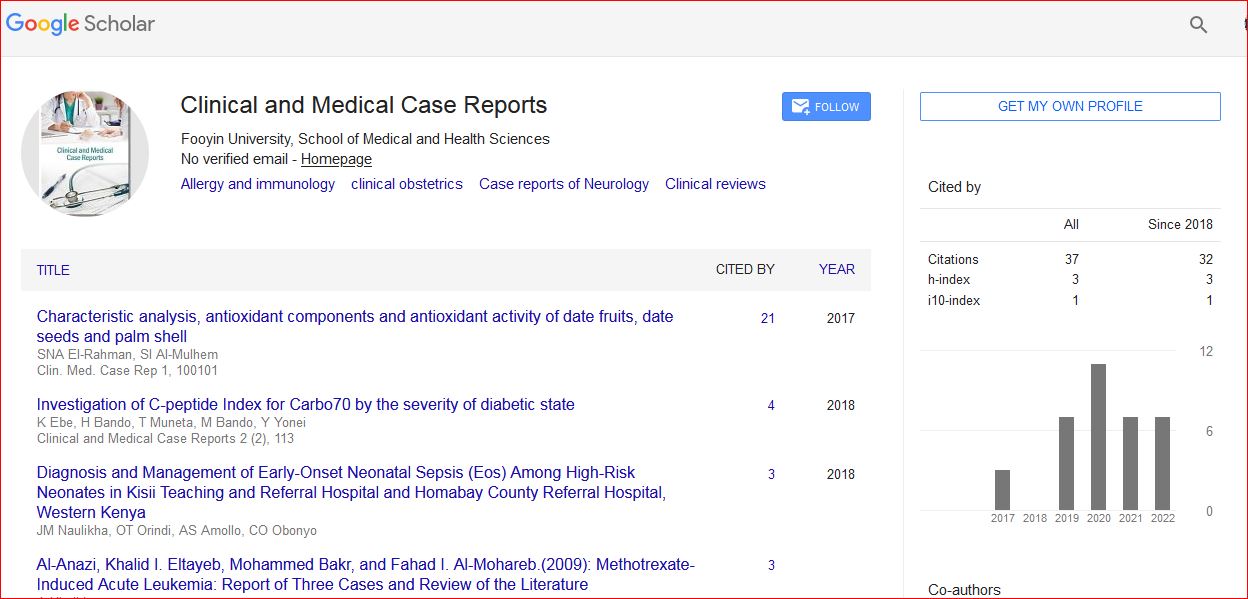
Clinical and Medical Case Reports received 53 citations as per Google Scholar report