Commentary - (2025) Volume 16, Issue 4
Received: 01-Jul-2025, Manuscript No. jhmi-26-178847;
Editor assigned: 03-Jul-2025, Pre QC No. P-178847;
Reviewed: 17-Jul-2025, QC No. Q-178847;
Revised: 22-Jul-2025, Manuscript No. R-178847;
Published:
29-Jul-2025
, DOI: 10.37421/2157-7420.2025.16.597
Citation: Costa, Helena P.. ”Decision Support Systems: Enhancing Healthcare Delivery and Outcomes.” J Health Med Informat 16 (2025):597.
Copyright: © 2025 Costa P. Helena This is an open-access article distributed under the terms of the Creative Commons Attribution License, which permits unrestricted use, distribution and reproduction in any medium, provided the original author and source are credited.
Decision support systems (DSS) are fundamental to the advancement of evidence-based clinical practice, furnishing healthcare professionals with critical information precisely when and where it is needed at the point of care. These sophisticated systems aggregate a wide array of data, encompassing patient medical histories, established clinical guidelines, and the latest research findings, thereby aiding clinicians in making informed decisions regarding diagnoses, selecting appropriate treatments, and accurately assessing patient risks. The efficacy of these systems is intrinsically linked to their ease of use, their accuracy in providing information, and their ability to integrate smoothly into the daily routines of healthcare providers, with the ultimate goal of enhancing patient outcomes and improving the overall efficiency of healthcare delivery. This forms the bedrock of modern medical decision-making, ensuring that care is not only effective but also systematically informed by the best available evidence and clinical expertise. The evolution of these systems has been a continuous process, driven by the need to manage the ever-increasing complexity of medical knowledge and patient data. Their successful implementation is a testament to the growing synergy between technology and clinical practice, promising a future where healthcare is more precise, personalized, and efficient. The ongoing development and refinement of DSS are crucial for navigating the complexities of contemporary medicine and ensuring that patients receive the highest standard of care. Their role extends beyond mere information provision, actively shaping clinical workflows and promoting a culture of continuous learning and improvement within healthcare institutions. The integration of DSS represents a significant stride towards optimizing healthcare processes and achieving better health outcomes for all. This shift towards data-driven decision-making is reshaping the landscape of healthcare, empowering clinicians with tools that were once unimaginable. The future of healthcare is undoubtedly intertwined with the continued innovation and widespread adoption of these vital systems, ensuring that every clinical encounter is supported by the most relevant and accurate information. Ultimately, the impact of DSS is measured in the tangible improvements to patient well-being and the streamlined operation of healthcare services worldwide. AI-driven DSS are poised to revolutionize diagnostic accuracy and the personalization of treatment strategies. By processing and analyzing immense volumes of data, these advanced systems can discern subtle patterns that might elude human observation, thereby facilitating earlier disease detection and the development of more precisely targeted therapies. A significant challenge in this domain involves ensuring the transparency of the algorithms used, addressing potential biases within the data and models, and crucially, maintaining the trust of clinicians in the recommendations provided by AI. The potential for AI to augment human capabilities in medicine is immense, offering new avenues for addressing complex medical conditions. However, the responsible integration of AI requires careful consideration of its limitations and ethical implications. The development of robust validation frameworks is essential to build confidence in AI-powered clinical tools. Furthermore, continuous monitoring and evaluation are necessary to ensure that AI systems perform optimally and ethically in real-world clinical settings. The collaborative efforts of researchers, developers, and clinicians are vital to overcoming the challenges associated with AI in healthcare. This collaborative spirit is key to unlocking the full potential of AI-driven DSS for the benefit of patients. The focus remains on creating systems that are not only intelligent but also reliable, ethical, and seamlessly integrated into clinical workflows. The journey of AI in healthcare is one of continuous learning and adaptation, striving to achieve new benchmarks in patient care and medical innovation. The responsible deployment of these technologies will be a defining factor in their ultimate success and impact on global health. This transformative potential, however, must be balanced with a vigilant approach to potential risks and ethical dilemmas, ensuring that AI serves as a tool to enhance, not replace, human judgment and compassion in medicine. The ongoing dialogue and research in this field are critical for shaping a future where AI truly benefits humanity. User-friendliness and interoperability are paramount for the successful adoption of DSS in clinical environments. Systems that are cumbersome to navigate or that fail to integrate effectively with existing electronic health records (EHRs) are likely to encounter resistance from healthcare professionals. Consequently, a strong emphasis on user-centered design principles and the adherence to robust data exchange standards are essential for maximizing the positive impact and widespread acceptance of DSS. The design of these systems must prioritize the needs and workflows of clinicians to ensure their practical utility. Effective interoperability allows for the seamless flow of information between different healthcare systems, preventing data silos and improving care coordination. This technological integration is crucial for realizing the full benefits of digitized healthcare. When DSS are easy to use and communicate effectively with other systems, they become powerful allies for clinicians. The investment in user-friendly interfaces and standardized data formats pays dividends in terms of improved efficiency and reduced cognitive load on healthcare providers. This focus on usability and interoperability directly translates to better patient care by ensuring that critical information is accessible and actionable. The continuous feedback loop from end-users is invaluable in refining these systems and ensuring they meet the evolving demands of the healthcare landscape. As technology advances, so too must the design and integration strategies for DSS to maintain their relevance and impact. The commitment to these principles is a prerequisite for any successful digital health initiative, fostering trust and encouraging widespread adoption. This holistic approach to system design ensures that technological solutions truly serve the needs of both healthcare providers and the patients they serve, paving the way for a more connected and efficient healthcare ecosystem. Clinical practice guidelines represent a fundamental pillar of evidence-based medicine, and DSS play an indispensable role in facilitating their implementation within clinical settings. By embedding these established guidelines directly into clinical workflows, DSS can effectively prompt clinicians to adhere to the most current best practices, thereby enhancing compliance rates and minimizing unwarranted variations in patient care. The integration of guidelines into the daily practice of medicine is a complex undertaking, and DSS provide a vital bridge. They act as a constant, unobtrusive reminder, ensuring that established protocols are followed even in high-pressure situations. This systematic approach to care delivery is crucial for maintaining high standards across the board. The impact of DSS in promoting guideline adherence extends to reducing the incidence of medical errors and improving patient safety. By standardizing care based on the latest evidence, these systems contribute to a more predictable and reliable healthcare experience for patients. The effectiveness of this approach is underscored by numerous studies demonstrating improved adherence and better patient outcomes. The continuous updating of guidelines within DSS ensures that clinicians always have access to the most up-to-date recommendations. This dynamic nature of DSS is essential in a rapidly evolving medical landscape. The adoption of DSS for guideline implementation is a strategic move towards a more standardized and evidence-driven healthcare system. It empowers clinicians with tools that support their decision-making and uphold the principles of best practice. The widespread use of such systems is a hallmark of a mature and sophisticated healthcare delivery model. Therefore, the role of DSS in operationalizing clinical guidelines is not just beneficial but increasingly essential for delivering quality healthcare. The seamless integration of patient-specific data with comprehensive clinical knowledge is a cornerstone for the effectiveness of DSS. Systems that possess the capability to synthesize individual patient characteristics, such as their unique genomic profiles, existing comorbidities, and personal preferences, in conjunction with current medical evidence, hold the greatest promise for delivering truly personalized patient care. This personalized approach moves beyond a one-size-fits-all model. By considering the unique biological and personal context of each patient, DSS can tailor recommendations with unprecedented precision. The ability to analyze complex interactions between genetic predispositions, existing health conditions, and individual choices allows for a more nuanced and effective treatment strategy. This level of integration is critical for advancing the field of precision medicine. When patient data is expertly combined with medical knowledge, the resulting insights can lead to interventions that are not only more effective but also minimize the risk of adverse events. The potential for DSS to facilitate this level of personalization is immense, offering a pathway to improved therapeutic outcomes and enhanced patient satisfaction. The continuous refinement of these systems ensures that they can adapt to new discoveries and evolving understanding of human health. This dynamic capacity is essential for maintaining their relevance and utility in a constantly changing medical environment. The pursuit of personalized care through sophisticated DSS represents a significant leap forward in the quest for optimal health outcomes. It signifies a shift towards a more patient-centric model of healthcare, where every treatment decision is informed by a deep understanding of the individual. The future of medicine lies in such integrated and personalized approaches, leveraging technology to its fullest potential. The evaluation of the impact that DSS have on clinical outcomes and overall healthcare costs is a critical step in demonstrating their inherent value. Research has consistently shown that thoughtfully designed DSS can significantly contribute to enhanced patient safety, a reduction in medical errors, and a more efficient utilization of healthcare resources. Quantifying these benefits is essential for justifying investment and driving wider adoption. The improvements in patient safety are often a direct result of DSS alerting clinicians to potential drug interactions, allergies, or contraindications. This proactive approach helps prevent adverse events before they occur. Similarly, by guiding clinicians towards evidence-based diagnostic and treatment pathways, DSS can reduce the likelihood of misdiagnosis or the prescription of ineffective therapies, thereby minimizing medical errors. Furthermore, the efficient resource utilization aspect is evident in how DSS can streamline workflows, reduce redundant testing, and optimize the allocation of staff and equipment. These efficiencies translate into significant cost savings for healthcare systems. The economic impact of DSS, when properly implemented, can be substantial, making them an attractive investment for healthcare organizations seeking to improve both quality and cost-effectiveness. The ongoing study of these impacts provides valuable data for further system development and policy-making. This rigorous assessment ensures that DSS remain a valuable tool for healthcare improvement. The evidence supporting their positive influence on both clinical quality and financial sustainability is compelling. Thus, demonstrating value through robust evaluation is a key driver for the continued growth and success of DSS in modern healthcare settings. Data quality and provenance are foundational elements underpinning the reliability and trustworthiness of any DSS. Inaccurate, incomplete, or improperly sourced data can lead to the generation of flawed recommendations, thereby highlighting the indispensable need for robust data governance frameworks and rigorous validation processes. The integrity of the data directly dictates the quality of the insights derived from the system. Without confidence in the input, the output is inherently suspect. Ensuring that data is accurate, up-to-date, and originates from reputable sources is a continuous effort. This involves establishing clear protocols for data collection, entry, and management. Data provenance, which tracks the origin and history of data, is crucial for understanding its context and potential limitations. When clinicians are presented with recommendations from a DSS, they need to be assured that these recommendations are based on sound and reliable information. A failure in data quality can have serious consequences, potentially leading to incorrect diagnoses or inappropriate treatment plans. Therefore, investing in data governance and validation is not merely a technical requirement but a critical safety measure. This commitment to data integrity builds trust in the DSS and fosters its effective use in clinical practice. The continuous monitoring and auditing of data are essential to maintain high standards. Ultimately, the success of a DSS is inextricably linked to the quality and reliability of the data it utilizes, making this a paramount concern for all stakeholders involved. Ethical considerations surrounding the deployment of DSS, particularly those that incorporate artificial intelligence (AI), necessitate meticulous attention and proactive management. Key issues, including accountability for errors, the potential for algorithmic bias, and the preservation of patient autonomy, must be thoroughly addressed to ensure the responsible development and deployment of these powerful technologies. The integration of AI into healthcare decision-making raises profound ethical questions that demand careful deliberation. Determining who is responsible when an AI-driven recommendation leads to an adverse outcome is complex. Furthermore, if the data used to train AI models contains historical biases, these biases can be perpetuated, leading to inequitable care for certain patient populations. Maintaining patient autonomy means ensuring that individuals understand the role of AI in their care and retain the right to make informed decisions. Transparency in how AI systems arrive at their recommendations is crucial for building trust and enabling ethical oversight. The development of clear guidelines and regulatory frameworks is essential to navigate these ethical challenges. This proactive approach helps to mitigate risks and ensure that AI is used to enhance, rather than compromise, ethical healthcare practices. The ongoing dialogue among ethicists, clinicians, policymakers, and technologists is vital for shaping the future of AI in medicine. By prioritizing ethical principles, we can harness the transformative potential of AI while safeguarding patient well-being and promoting justice in healthcare delivery. This commitment to ethical development is paramount for the long-term success and societal acceptance of AI in clinical settings. The rapid pace of advancement in medical knowledge imposes a requirement for dynamic DSS that can be readily and efficiently updated. The ability for these systems to engage in continuous learning and adaptation is therefore paramount to ensuring that they remain relevant, accurate, and effective in reflecting the latest scientific evidence and evolving clinical understanding. Medicine is not a static field; new discoveries, research findings, and treatment modalities emerge constantly. DSS must keep pace with this rapid evolution to remain valuable tools for clinicians. Systems that are not regularly updated can quickly become outdated, providing recommendations based on superseded information. This not only diminishes their utility but can also pose a risk to patient care. Continuous learning mechanisms allow DSS to incorporate new data, refine their algorithms, and adapt to changing clinical paradigms. This ensures that clinicians are always guided by the most current and best-available knowledge. The adaptive nature of DSS is a key factor in their long-term success and their ability to contribute to the ongoing improvement of healthcare quality. The development of sophisticated AI and machine learning techniques is enabling these systems to learn and evolve more autonomously. This ongoing process of refinement is essential for maintaining the integrity and effectiveness of DSS in a constantly changing medical landscape. The commitment to continuous updates and learning is a hallmark of high-performing DSS. It ensures that these systems remain at the forefront of medical informatics, supporting clinicians in providing the best possible care. Therefore, the capacity for dynamic adaptation is not just a feature but a fundamental necessity for modern clinical decision support. The successful development and implementation of effective DSS invariably necessitate a multidisciplinary approach, bringing together the expertise of clinicians, informaticians, and IT specialists. This collaborative synergy is not merely beneficial but absolutely essential to ensure that these complex systems adequately address the multifaceted needs of modern healthcare environments. Healthcare is an intricate ecosystem involving diverse perspectives and specialized knowledge. Clinicians possess the deep understanding of patient care, diagnostic processes, and treatment nuances. Informaticians bridge the gap between clinical needs and technological capabilities, designing systems that are both clinically relevant and technically sound. IT specialists provide the infrastructure, security, and operational support required to deploy and maintain these systems effectively. Without this integrated approach, DSS risk being designed in isolation, failing to meet the practical demands of the clinical setting or encountering insurmountable technical hurdles. The collaborative process allows for the iterative refinement of DSS, ensuring that they are user-friendly, clinically accurate, and seamlessly integrated into existing workflows. This cross-pollination of ideas fosters innovation and leads to solutions that are more robust and impactful. The complex challenges of modern healthcare require integrated solutions, and the development of DSS is a prime example of where such collaboration is indispensable. The shared ownership and understanding fostered by a multidisciplinary team are key to overcoming implementation barriers and achieving the desired improvements in patient care and operational efficiency. This collaborative spirit is the engine driving the evolution of effective clinical decision support.
Clinical decision support systems (DSS) are pivotal in transforming evidence-based clinical practice by providing clinicians with timely, relevant information at the point of care. These systems integrate diverse data sources, including patient records, clinical guidelines, and research findings, to assist in diagnosis, treatment selection, and risk assessment. The effectiveness of DSS hinges on their usability, accuracy, and seamless integration into existing workflows, ultimately aiming to improve patient outcomes and healthcare efficiency [1].
The core function of DSS is to augment clinical judgment by presenting relevant information at critical junctures in the patient care process. They act as intelligent intermediaries, sifting through vast amounts of data to highlight what is most pertinent to the specific clinical scenario. This not only helps clinicians make more informed decisions but also reduces the cognitive burden associated with information retrieval and synthesis. The integration of various data sources is a key strength, allowing for a holistic view of the patient and their condition. By combining EMR data with external knowledge bases like clinical guidelines and research literature, DSS can provide context-aware recommendations. The emphasis on usability ensures that these powerful tools are not hindered by complex interfaces or workflows, thereby promoting widespread adoption and consistent use. Ultimately, the goal is to enhance the quality of care and optimize resource allocation within healthcare systems. Artificial intelligence (AI) is increasingly being integrated into DSS to enhance diagnostic capabilities and personalize treatment plans. These AI-driven systems excel at analyzing extensive datasets to identify subtle patterns that may be overlooked by human practitioners, leading to earlier disease detection and the formulation of more targeted therapies. The primary challenges associated with AI-driven DSS involve ensuring algorithmic transparency, mitigating potential biases, and fostering clinician trust in AI-generated recommendations [2].
The power of AI lies in its ability to process and learn from data at a scale and speed beyond human capacity. This enables the identification of complex correlations and predictive markers that can significantly improve diagnostic accuracy. Personalized treatment plans, tailored to the individual patient's genetic makeup, lifestyle, and disease characteristics, represent a significant advancement in healthcare. However, the 'black box' nature of some AI algorithms can be a barrier to trust; clinicians need to understand why a particular recommendation is being made. Addressing bias is crucial to ensure equitable care, and ongoing validation is necessary to build confidence in these advanced systems. The continuous evolution of AI technologies promises even greater sophistication and utility in clinical decision support. The successful integration of DSS into clinical practice is heavily dependent on their usability and interoperability. Systems that are difficult to navigate or that do not seamlessly integrate with electronic health records (EHRs) often face significant resistance from healthcare professionals. Therefore, a strong focus on user-centered design and the adoption of robust data exchange standards are crucial for maximizing the impact of these systems [3].
Usability refers to how easily and efficiently a user can accomplish their goals with the system. This involves intuitive interfaces, clear navigation, and minimal disruption to existing workflows. Interoperability ensures that the DSS can communicate effectively with other health IT systems, such as EHRs, laboratory information systems, and imaging systems. This seamless data flow is essential for providing comprehensive support and avoiding fragmented care. When DSS are both usable and interoperable, they become valuable tools that enhance clinician productivity and improve the coordination of care. Conversely, systems that lack these qualities can become a source of frustration and inefficiency, hindering their adoption and ultimately limiting their potential benefits. Investing in user-centric design and standardized communication protocols is therefore a critical factor for the success of any DSS implementation. Clinical practice guidelines serve as a cornerstone of evidence-based medicine, and DSS play a vital role in their practical implementation. By embedding these guidelines directly into clinical workflows, DSS can effectively prompt clinicians to adhere to best practices, thereby improving adherence rates and reducing unwarranted variations in care [4].
Guidelines provide a standardized framework for managing specific conditions, ensuring that patients receive care that is consistent with the latest scientific evidence. However, the sheer volume of guidelines and the dynamic nature of medical knowledge can make it challenging for clinicians to consistently apply them. DSS address this challenge by acting as active reminders and guides within the clinical workflow. They can alert clinicians when a patientâ??s condition matches the criteria for a specific guideline, offer relevant recommendations, and even facilitate the documentation of adherence. This proactive approach helps to close the gap between evidence and practice, leading to more consistent, high-quality care. By supporting guideline adherence, DSS contribute to improved patient safety, better outcomes, and a more efficient use of healthcare resources. The effectiveness of DSS is significantly amplified by their ability to synthesize patient-specific data with established clinical knowledge. Systems capable of integrating individual patient characteristics, such as genomic information, comorbidities, and personal preferences, with current medical evidence offer the greatest potential for delivering personalized care [5].
This personalized approach is at the forefront of modern medicine, moving away from a one-size-fits-all model. By understanding the unique biological and contextual factors of each patient, DSS can generate recommendations that are tailored to their specific needs and circumstances. This includes considering how a patient's genetic makeup might influence their response to certain medications or therapies, or how existing health conditions might affect treatment choices. The ability to balance this individual data with the broader body of medical evidence allows for a more precise and effective therapeutic strategy. Such integration is essential for optimizing treatment outcomes, minimizing adverse events, and enhancing patient satisfaction. As genomic sequencing and other advanced diagnostic tools become more widespread, the role of DSS in interpreting and applying this data will become increasingly critical for realizing the full promise of personalized medicine. Evaluating the tangible impact of DSS on clinical outcomes and healthcare costs is essential for demonstrating their value proposition. Studies have consistently indicated that well-designed DSS can lead to significant improvements in patient safety, a reduction in medical errors, and a more efficient utilization of healthcare resources [6].
The ability of DSS to flag potential drug interactions, allergies, or contraindications contributes directly to enhanced patient safety by preventing adverse events. By guiding clinicians toward evidence-based diagnostic and treatment pathways, these systems help to minimize diagnostic errors and the prescription of inappropriate therapies. Furthermore, the streamlining of clinical workflows and the reduction of unnecessary tests or procedures enabled by DSS contribute to more efficient resource allocation. These efficiencies can translate into substantial cost savings for healthcare systems, making DSS a compelling investment for organizations seeking to improve both the quality and economic viability of their services. The ongoing assessment of these impacts provides crucial evidence to support the broader adoption and continued development of DSS. Data quality and provenance are fundamental to ensuring the reliability and trustworthiness of DSS. Inaccurate or incomplete data can lead to flawed recommendations, underscoring the critical need for robust data governance and rigorous validation processes [7].
The integrity of the data fed into a DSS directly influences the accuracy and utility of its outputs. If the underlying data is compromised, the resulting recommendations may be misleading, potentially leading to incorrect clinical decisions. Robust data governance involves establishing clear policies and procedures for data collection, storage, management, and security. Data provenance, which tracks the origin and history of data, is vital for understanding its context and limitations. By ensuring that data is accurate, complete, and sourced from reputable origins, healthcare providers can have greater confidence in the recommendations provided by DSS. This trust is essential for the effective adoption and utilization of these systems. Therefore, investing in strong data management practices is not just a technical requirement but a critical component of ensuring patient safety and the overall efficacy of clinical decision support. Ethical considerations surrounding DSS, particularly those employing artificial intelligence (AI), require careful attention. Issues concerning accountability, algorithmic bias, and patient autonomy must be proactively addressed to ensure the responsible development and deployment of these technologies [8].
As AI becomes more integrated into clinical decision-making, questions arise about who is responsible when an AI-generated recommendation leads to an adverse outcome. Furthermore, biases present in the training data can be amplified by AI algorithms, potentially leading to disparities in care for certain patient populations. Maintaining patient autonomy involves ensuring that individuals are informed about the role of AI in their care and have the ability to make informed choices. Transparency in AI algorithms and clear guidelines for their use are essential for ethical oversight. Addressing these complex ethical challenges proactively is crucial for harnessing the benefits of AI in healthcare while upholding fundamental ethical principles and ensuring equitable and trustworthy patient care. The rapid evolution of medical knowledge mandates that DSS be dynamic and readily updatable. Continuous learning and adaptation are key to ensuring these systems remain relevant and effective in reflecting the latest evidence [9].
Medicine is a continuously evolving field, with new research findings and therapeutic approaches emerging regularly. DSS must be capable of incorporating this new knowledge to remain valuable clinical tools. Systems that are not regularly updated can quickly become outdated, potentially providing recommendations based on superseded information. This necessitates mechanisms for continuous learning, allowing DSS to ingest new data, refine their algorithms, and adapt to changing clinical paradigms. This ensures that clinicians are consistently guided by the most current and best-available scientific evidence. The ability of DSS to learn and adapt is a critical factor in their long-term utility and their contribution to the ongoing improvement of healthcare quality. As medical knowledge expands, the dynamic nature of DSS becomes increasingly important for supporting evidence-based practice effectively. The successful development and implementation of effective DSS require a multidisciplinary approach, involving clinicians, informaticians, and IT specialists. Collaboration is essential to ensure that DSS meet the complex needs of modern healthcare [10].
Healthcare delivery is inherently complex, involving a diverse range of expertise and perspectives. Clinicians provide essential insights into patient care pathways and clinical needs, while informaticians translate these needs into functional system designs. IT specialists ensure the robust technical infrastructure and operational support required for deployment and maintenance. This collaborative synergy is crucial for creating DSS that are not only clinically relevant and accurate but also user-friendly and seamlessly integrated into existing healthcare workflows. By bringing together these diverse skill sets, multidisciplinary teams can address the multifaceted challenges of modern healthcare more effectively, leading to the development of DSS that truly enhance patient care and operational efficiency. This integrated approach fosters innovation and ensures that the final product is a practical and valuable tool for healthcare professionals.
Decision support systems (DSS) are vital for evidence-based clinical practice, providing timely information at the point of care by integrating diverse data sources like patient records and clinical guidelines. Their effectiveness depends on usability, accuracy, and seamless workflow integration, aiming to improve patient outcomes and healthcare efficiency. AI-driven DSS enhance diagnostic accuracy and personalize treatment by analyzing vast datasets, though challenges include algorithmic transparency, bias, and clinician trust. Usability and interoperability are critical for adoption, requiring user-centered design and robust data standards. DSS facilitate the implementation of clinical practice guidelines, prompting adherence to best practices and reducing care variations. The integration of patient-specific data with clinical knowledge is key for personalized care, synthesizing genomic data, comorbidities, and preferences with medical evidence. Evaluating DSS impact on outcomes and costs shows improvements in patient safety, reduced errors, and efficient resource utilization. Data quality and provenance are foundational for DSS reliability, necessitating strong governance and validation to prevent flawed recommendations. Ethical considerations, particularly for AI-driven DSS, require attention to accountability, bias, and patient autonomy. The rapid evolution of medical knowledge demands dynamic DSS capable of continuous learning and adaptation to remain relevant. Ultimately, the development and implementation of effective DSS rely on a multidisciplinary approach involving clinicians, informaticians, and IT specialists to meet the complex needs of modern healthcare.
None
None
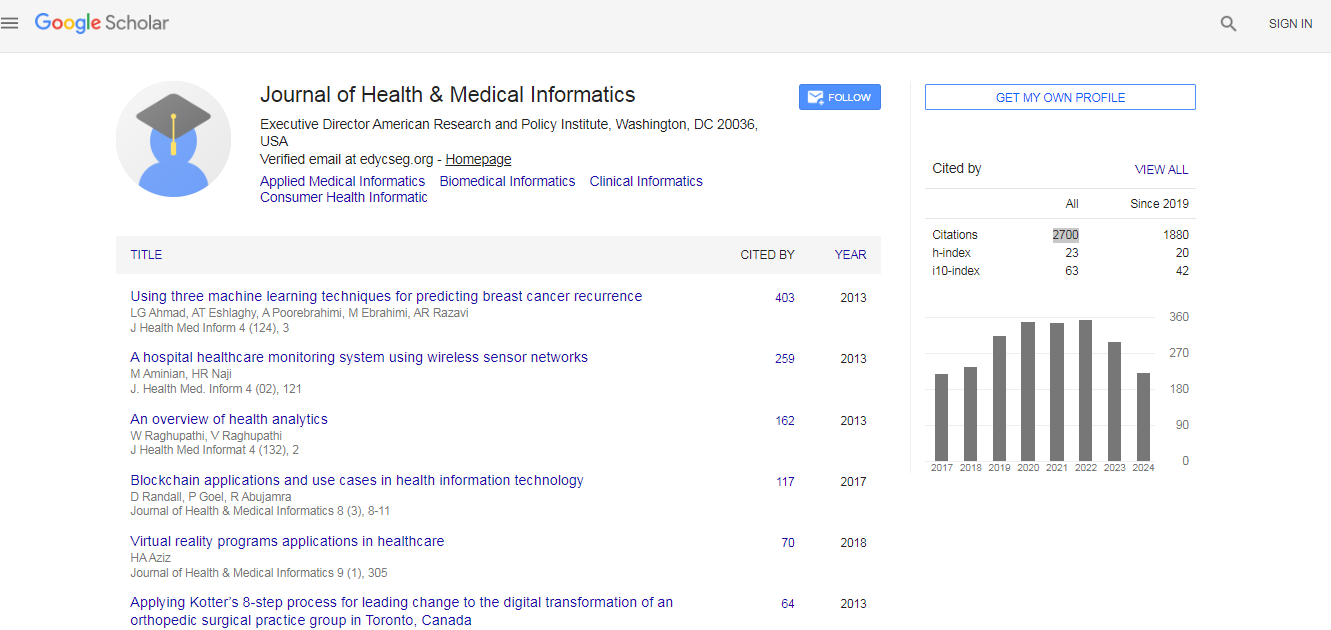
Journal of Health & Medical Informatics received 2700 citations as per Google Scholar report