Short Communication - (2025) Volume 14, Issue 5
Received: 01-Sep-2025, Manuscript No. mcce-26-190190;
Editor assigned: 03-Sep-2025, Pre QC No. P-190190;
Reviewed: 17-Sep-2025, QC No. Q-190190;
Revised: 22-Sep-2025, Manuscript No. R-190190;
Published:
29-Sep-2025
, DOI: 10.37421/2470-6965.2025.14.424
Citation: Jensen, Lars. ”Cross-Border Surveillance: Key to Preventing Malaria Reintroduction.” Malar Contr Elimination 14 (2025):424.
Copyright: © 2025 Jensen L. This is an open-access article distributed under the terms of the Creative Commons Attribution License, which permits unrestricted use, distribution and reproduction in any medium, provided the original author and source are credited.
Strengthening cross-border surveillance is identified as a crucial strategy for preventing the reintroduction of malaria, particularly in areas nearing elimination. This involves enhancing collaboration between neighboring countries, improving data sharing mechanisms, and building capacity for rapid response to imported cases. Key strategies include integrated vector surveillance, prompt diagnosis and treatment of travelers, and community engagement to ensure early reporting of potential cases. Addressing the challenges of porous borders and mobile populations requires innovative and coordinated approaches.[1] Effective cross-border collaboration is fundamental for malaria elimination programs. This encompasses harmonizing surveillance systems, establishing joint response protocols for outbreaks, and fostering trust and information exchange between national malaria programs. The mobility of populations across borders presents a significant challenge, necessitating proactive strategies to identify and manage imported malaria cases. Capacity building for frontline health workers in border areas is also a critical component.[2] The risk of malaria reintroduction is amplified in countries approaching elimination due to imported cases from endemic neighboring regions. Robust surveillance systems at the border, coupled with rapid diagnostic and treatment capabilities, are essential. Mobile populations, including migrant workers and refugees, pose a particular challenge. Integrated approaches that involve community health workers and mobile clinics can help reach these vulnerable groups.[3] Preventing malaria reintroduction relies heavily on strong partnerships and information sharing between countries. Implementing integrated disease surveillance and response (IDSR) systems that extend to border areas is key. This includes training health workers on case detection, reporting, and management of imported malaria, as well as engaging communities in malaria prevention and control efforts.[4] Cross-border surveillance for malaria reintroduction requires a multi-pronged approach, including strengthening national surveillance systems, enhancing inter-country coordination, and engaging with mobile and migrant populations. Early detection and rapid response to imported cases are critical to prevent resurgence. Investments in laboratory capacity and trained personnel are also essential for effective surveillance.[5] To prevent the reintroduction of malaria, robust cross-border surveillance mechanisms are paramount. This involves establishing synchronized monitoring systems between adjacent countries, ensuring seamless data flow, and implementing joint action plans for case management and vector control. Special attention must be given to high-risk mobile populations traversing these borders.[6] Effective malaria elimination strategies must include proactive measures to counter reintroduction. Strengthening cross-border surveillance involves improving the capacity of border health facilities, facilitating rapid diagnostic testing and treatment of imported malaria cases, and fostering inter-agency cooperation. Community-based surveillance can also play a vital role in early detection.[7] Preventing the re-establishment of malaria requires vigilant cross-border surveillance. This necessitates strong coordination between national malaria control programs in neighboring countries, with a focus on shared borders. Key elements include harmonizing reporting systems, joint outbreak investigations, and ensuring that mobile populations are adequately covered by surveillance and control interventions.[8] The success of malaria elimination hinges on preventing reintroduction, and cross-border surveillance is a critical pillar. This entails building robust communication channels and collaborative frameworks between neighboring countries to monitor disease importation and facilitate swift containment. Addressing the specific vulnerabilities of cross-border communities and mobile populations is essential.[9] To safeguard malaria elimination gains, strengthening cross-border surveillance is non-negotiable. This involves establishing integrated surveillance systems that span national borders, promoting data exchange, and developing joint preparedness and response plans. The unique epidemiological context of border regions and the mobility of people necessitate tailored, collaborative interventions.[10]
Strengthening cross-border surveillance is paramount for malaria elimination, focusing on preventing the reintroduction of the disease, especially in regions nearing elimination. This proactive approach necessitates enhanced collaboration between neighboring countries, the establishment of improved data sharing mechanisms, and the development of robust capacity for rapid response to any imported cases that may arise. Integrating vector surveillance with prompt diagnosis and treatment for travelers, alongside active community engagement for early reporting, are identified as key strategies. The complex challenges posed by porous borders and the movement of populations demand innovative and coordinated strategies to maintain malaria-free status.[1] Effective cross-border collaboration serves as a cornerstone for successful malaria elimination programs. This collaboration involves harmonizing surveillance systems across national boundaries, developing unified response protocols for potential outbreaks, and cultivating an environment of trust and open information exchange among national malaria control programs. The inherent mobility of populations across international borders presents a significant hurdle, thus requiring the implementation of proactive measures to identify, track, and manage imported malaria cases. Furthermore, enhancing the capabilities of frontline health workers stationed in border areas is recognized as a critical component of this strategy.[2] Countries on the cusp of malaria elimination face an amplified risk of reintroduction, primarily through imported cases originating from endemic neighboring regions. To mitigate this risk, the establishment of strong surveillance systems at border crossings is essential, complemented by rapid diagnostic and treatment capabilities. Special attention must be paid to mobile populations, such as migrant workers and refugees, who are particularly vulnerable and can act as vectors for disease transmission. Integrated approaches that leverage community health workers and mobile clinics are vital for effectively reaching these populations and ensuring comprehensive coverage.[3] Preventing the reintroduction of malaria is heavily dependent on fostering strong partnerships and facilitating seamless information sharing between countries. The implementation of integrated disease surveillance and response (IDSR) systems that explicitly extend to border regions is a critical step. This initiative includes comprehensive training for health workers on identifying, reporting, and managing imported malaria cases, as well as actively engaging local communities in ongoing malaria prevention and control efforts.[4] Cross-border surveillance for malaria reintroduction requires a multifaceted strategy. This involves reinforcing national surveillance systems, improving coordination between countries, and actively engaging with mobile and migrant populations who frequently cross borders. The early detection and swift response to any imported cases are vital to avert a resurgence of the disease. Significant investments in laboratory infrastructure and the training of skilled personnel are also indispensable for the effectiveness of these surveillance efforts.[5] To effectively prevent the reintroduction of malaria, the establishment of robust cross-border surveillance mechanisms is of utmost importance. This entails the creation of synchronized monitoring systems that operate across adjacent countries, ensuring the unimpeded flow of data between them, and the implementation of joint action plans for both case management and vector control. Particular emphasis must be placed on addressing the risks associated with high-risk mobile populations that traverse these international borders.[6] Strategies aimed at achieving effective malaria elimination must incorporate proactive measures designed to counteract the reintroduction of the disease. Strengthening cross-border surveillance involves enhancing the diagnostic and treatment capacities of health facilities located in border areas, facilitating rapid diagnostic testing and prompt treatment of imported malaria cases, and fostering inter-agency cooperation. Additionally, community-based surveillance approaches can significantly contribute to the early detection of potential outbreaks.[7] Preventing the re-establishment of malaria transmission necessitates vigilant cross-border surveillance efforts. This requires strong and consistent coordination between the national malaria control programs of neighboring countries, with a strategic focus on their shared borders. Key elements of this coordinated approach include harmonizing reporting systems, conducting joint investigations of any reported outbreaks, and ensuring that mobile populations are adequately included within the scope of surveillance and control interventions.[8] The ultimate success of malaria elimination initiatives is intrinsically linked to the ability to prevent disease reintroduction, with cross-border surveillance serving as a fundamental pillar of this effort. This process involves developing and maintaining robust communication channels and collaborative frameworks between adjacent countries. These frameworks are essential for effectively monitoring disease importation and enabling swift containment measures. Crucially, addressing the unique vulnerabilities faced by cross-border communities and mobile populations is indispensable for a comprehensive strategy.[9] To secure and maintain the gains achieved in malaria elimination, the strengthening of cross-border surveillance systems is an absolute necessity. This undertaking involves the creation of integrated surveillance systems that extend across national boundaries, the active promotion of data exchange between relevant authorities, and the development of joint preparedness and response plans. The specific epidemiological contexts found in border regions, coupled with the inherent mobility of people, necessitate the design and implementation of tailored, collaborative interventions.[10]
Preventing the reintroduction of malaria into elimination areas hinges on robust cross-border surveillance. This requires enhanced collaboration, improved data sharing, and capacity building between neighboring countries to rapidly respond to imported cases. Key strategies include integrated vector surveillance, prompt diagnosis and treatment of travelers, and community engagement. Mobile populations and porous borders present significant challenges, necessitating innovative and coordinated approaches. Harmonizing surveillance systems, establishing joint response protocols, and fostering trust between national malaria programs are crucial. Strengthening border health facilities, facilitating rapid diagnostics, and engaging communities are vital. Ultimately, maintaining malaria-free status depends on vigilant, coordinated, and adaptable cross-border surveillance mechanisms that prioritize the unique needs of border regions and mobile populations.
None
None
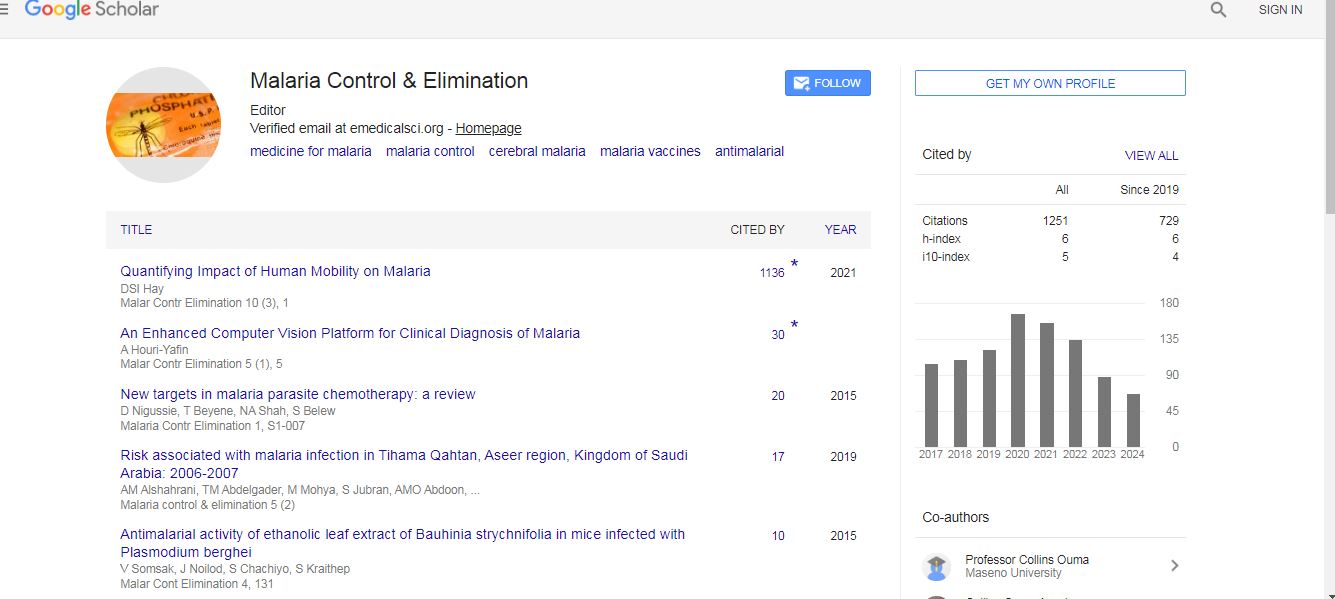
Malaria Control & Elimination received 1187 citations as per Google Scholar report