Brief Report - (2025) Volume 10, Issue 5
Received: 01-Sep-2025, Manuscript No. PE-26-179301;
Editor assigned: 03-Sep-2025, Pre QC No. P-179301;
Reviewed: 17-Sep-2025, QC No. Q-179301;
Revised: 22-Sep-2025, Manuscript No. R-179301;
Published:
29-Sep-2025
, DOI: 10.37421/2472-1042.2025.10.302
Citation: El-Sayed, Yara. ”Cost-Effectiveness of Mental Health Interventions: A Review.” Pharmacoeconomics 10 (2025):302.
Copyright: © 2025 El-Sayed Y. This is an open-access article distributed under the terms of the Creative Commons Attribution License, which permits unrestricted use, distribution and reproduction in any medium, provided the original author and source are credited.
The landscape of mental health treatment cost-effectiveness is a dynamic and evolving field, with significant implications for healthcare systems and patient access. Various interventions, from established pharmacological agents to innovative digital solutions, are being rigorously evaluated for their economic value and clinical impact. Understanding these economic nuances is crucial for guiding clinical practice and policy decisions. Pharmacological interventions and psychotherapies have demonstrated considerable value for money, particularly in addressing prevalent conditions like depression and anxiety. However, the optimal treatment pathway is not a one-size-fits-all approach, necessitating consideration of disorder severity, individual patient preferences, and the operational capacity of healthcare providers. Emerging integrated care models and digital health platforms hold substantial promise for enhancing treatment accessibility and improving patient outcomes. Nevertheless, a more comprehensive body of real-world evidence is required to fully validate their long-term economic benefits and assess their scalability across diverse healthcare settings. For major depressive disorder, while pharmacotherapy often presents a cost-effective option, psychotherapy, specifically cognitive behavioral therapy (CBT), can yield comparable or even superior long-term results. The cost-effectiveness profile of CBT is particularly favorable when considering the broader societal costs associated with untreated or inadequately treated depression. The implementation of stepped-care models, which judiciously tailor treatment intensity to individual patient needs, emerges as a sensible strategy for optimizing resource allocation and ensuring efficient service delivery. In the realm of anxiety disorders, both selective serotonin reuptake inhibitors (SSRIs) and CBT have a well-established track record of cost-effectiveness. The selection between these modalities frequently depends on the degree of symptom severity, a patient's personal preference for medication or therapy, and the availability of qualified mental health professionals. The advent of digital CBT platforms is showing potential to broaden access to care and potentially reduce associated costs, offering a more scalable solution for some individuals. Schizophrenia treatment presents a unique set of economic challenges, with antipsychotic medications being indispensable components of care. The effectiveness of these medications is often amplified when integrated within a comprehensive care framework that prominently includes psychosocial interventions. Although these integrated approaches may demand an initial financial investment, they have been shown to effectively decrease hospitalizations and foster improved long-term functioning, thereby enhancing overall cost-effectiveness. The management of bipolar disorder necessitates a consistent and sustained therapeutic approach. Mood stabilizers and atypical antipsychotics are generally recognized for their cost-effectiveness, but the crucial factor influencing both treatment outcomes and overall expenditure is patient adherence. Psychoeducational interventions and family therapy have proven instrumental in improving adherence rates and reducing the frequency of relapses, consequently bolstering the cost-effectiveness of pharmacological treatments. Substance use disorders represent a significant public health burden with profound economic consequences. Evidence consistently indicates that a range of treatment modalities, encompassing behavioral therapies and medication-assisted treatment (MAT), are cost-effective. These interventions contribute to reduced substance use, improved health indicators, and a decrease in involvement with the criminal justice system. The cost-effectiveness of digital mental health interventions, including mobile applications and online platforms, is an area of active and expanding research. Initial findings suggest a capacity for cost savings through expanded access to care and the provision of scalable solutions, particularly for individuals with mild to moderate mental health conditions. However, the generation of robust evidence concerning their long-term efficacy and demonstrable cost offsets is an ongoing process. Early intervention for psychosis is increasingly recognized for its potential to yield improved long-term patient outcomes and reduce the extensive societal costs associated with severe mental illness. Despite the significant upfront investment required for intensive early intervention programs, they have consistently demonstrated cost-effectiveness by mitigating the enduring impact of chronic mental health conditions. For obsessive-compulsive disorder (OCD), the cost-effectiveness of treatment is modulated by the specific modality employed and the severity of the condition. Exposure and response prevention (ERP), a specialized form of CBT, is recognized for its high efficacy and cost-effectiveness, particularly in cases of severe OCD. Pharmacotherapy, especially the use of SSRIs, also provides good economic value. The cost-effectiveness of treatments for post-traumatic stress disorder (PTSD) reveals that trauma-focused psychotherapies, such as Prolonged Exposure (PE) and Eye Movement Desensitization and Reprocessing (EMDR), are highly effective and offer substantial value for money. Pharmacological interventions can serve as valuable adjuncts to therapy, and their cost-effectiveness is generally considered to be reasonable, contributing to a comprehensive treatment strategy.
Examining the cost-effectiveness of mental health treatments reveals a complex and varied landscape. Pharmacological interventions and psychotherapies have consistently demonstrated strong value for money, especially for common mental health conditions such as depression and anxiety. However, the selection of an optimal treatment strategy is inherently individualized, contingent upon the severity of the disorder, the patient's personal preferences, and the available capacity within healthcare systems. Emerging approaches, including integrated care models and digital health solutions, are being identified as potentially cost-effective methods to improve both access to mental healthcare and overall patient outcomes. Nonetheless, further real-world evidence is critically needed to confirm their long-term economic advantages and assess their feasibility for widespread implementation. In the context of major depressive disorder, economic evaluations highlight that while pharmacotherapy often presents a cost-effective choice, psychotherapy, particularly cognitive behavioral therapy (CBT), can achieve comparable or even superior long-term results. The cost-effectiveness of CBT is further enhanced when considering the broader societal costs associated with depression. The strategic integration of stepped-care models, which tailor the intensity of treatment to individual patient needs, is recognized as a prudent approach for effective resource allocation. For anxiety disorders, the cost-effectiveness of both selective serotonin reuptake inhibitors (SSRIs) and CBT is well-established. The decision between these two primary treatment modalities typically hinges on factors such as symptom severity, the patient's preference for either medication or talk therapy, and the availability of appropriately skilled therapists. The emergence of digital CBT platforms is showing significant promise in expanding access to care and potentially lowering costs, offering a scalable solution. Schizophrenia treatment presents considerable economic challenges. While antipsychotic medications are fundamental to managing the condition, their efficacy is often maximized when delivered within a comprehensive care framework that includes essential psychosocial interventions. These integrated approaches, despite potentially higher initial investments, have been shown to reduce hospitalizations and improve long-term functional outcomes, thus enhancing their cost-effectiveness. The sustained management of bipolar disorder requires a consistent and long-term treatment strategy. The cost-effectiveness of mood stabilizers and atypical antipsychotics is generally accepted, but a critical determinant of successful outcomes and overall cost is patient adherence to treatment. Psychoeducational interventions and family therapy have demonstrated a capacity to improve adherence and decrease relapse rates, thereby augmenting the cost-effectiveness of pharmacological treatments. Substance use disorders constitute a major public health concern with substantial economic repercussions. Existing evidence strongly suggests that various treatment modalities, including behavioral therapies and medication-assisted treatment (MAT), are cost-effective in reducing drug use, improving health outcomes, and decreasing involvement with the criminal justice system. The cost-effectiveness of digital mental health interventions, such as mobile applications and online platforms, represents an evolving area of research. Preliminary studies suggest the potential for cost savings by improving access to care and providing scalable solutions, particularly for individuals experiencing mild to moderate conditions. However, the development of robust evidence regarding their long-term effectiveness and demonstrable cost offsets is still in progress. Early intervention services for psychosis are increasingly being emphasized due to their potential to improve long-term outcomes and reduce the overall societal burden of severe mental illness. Although intensive early intervention programs require a substantial initial financial outlay, they have consistently proven their cost-effectiveness by mitigating the long-term impact of these debilitating conditions. For obsessive-compulsive disorder (OCD), treatment cost-effectiveness is influenced by the specific modality employed and the severity of the illness. Exposure and response prevention (ERP), a form of CBT, is highly effective and considered cost-effective, especially for more severe cases of OCD. Pharmacotherapy, particularly SSRIs, also demonstrates good economic value. An assessment of the cost-effectiveness of treatments for post-traumatic stress disorder (PTSD) indicates that trauma-focused psychotherapies, including Prolonged Exposure (PE) and Eye Movement Desensitization and Reprocessing (EMDR), are highly effective and offer excellent value for money. Pharmacological interventions can play a supportive role, often as an adjunct to therapy, and their cost-effectiveness is generally viewed as reasonable, contributing to comprehensive treatment plans.
Mental health treatment cost-effectiveness varies significantly by intervention and condition. Pharmacological and psychotherapeutic approaches, particularly for depression and anxiety, show strong value. Integrated care and digital solutions are promising for improving access and outcomes, though further evidence is needed. For depression, CBT offers comparable or better long-term results than pharmacotherapy when societal costs are considered. Stepped-care models are prudent for resource allocation. For anxiety, SSRIs and CBT are cost-effective, with digital CBT offering increased accessibility. Schizophrenia treatment benefits from integrated care including psychosocial interventions to reduce long-term costs. Bipolar disorder management relies on adherence to mood stabilizers and antipsychotics, enhanced by psychoeducation and family therapy. Substance use disorder treatments, including MAT, are cost-effective in improving health and reducing societal costs. Digital mental health interventions show potential for cost savings but require more long-term evidence. Early intervention for psychosis and trauma-focused therapies for PTSD are cost-effective by improving long-term outcomes and mitigating impacts.
None
None
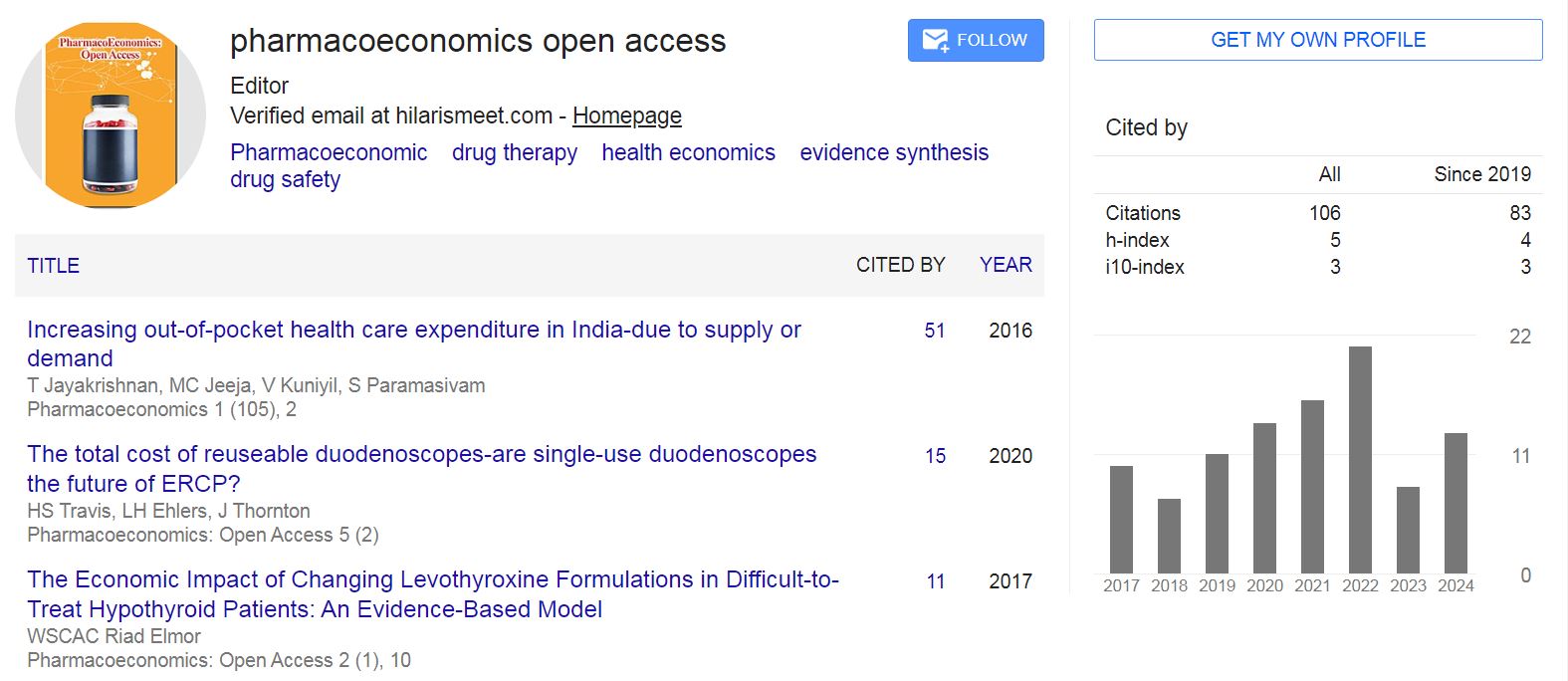
Pharmacoeconomics: Open Access received 106 citations as per Google Scholar report