Opinion - (2025) Volume 10, Issue 6
Received: 01-Nov-2025, Manuscript No. PE-26-179316;
Editor assigned: 03-Nov-2025, Pre QC No. P-179316;
Reviewed: 17-Nov-2025, QC No. Q-179316;
Revised: 24-Nov-2025, Manuscript No. R-179316;
Published:
01-Dec-2025
, DOI: 10.37421/2472-1042.2025.10.313
Citation: Moradi, Leila. ”Drug Repurposing: Economic Gains, Faster Pathways, Rare Diseases.” Pharmacoeconomics 10 (2025):313.
Copyright: © 2025 Moradi L. This is an open-access article distributed under the terms of the Creative Commons Attribution License, which permits unrestricted use, distribution and reproduction in any medium, provided the original author and source are credited.
Drug repurposing offers a pragmatic pathway to accelerate drug development by leveraging existing compounds with established safety profiles. This strategy presents significant economic advantages, primarily by reducing the substantial time and cost associated with traditional preclinical and early-phase clinical trials. Economic evaluations are therefore critical to definitively demonstrate the cost-effectiveness and compelling value proposition of repurposing initiatives when juxtaposed with the development of entirely novel therapeutic agents. A primary consideration is the marked reduction in research and development expenditures, alongside a significantly accelerated timeline for market entry. Furthermore, the potential for lower pricing, a direct consequence of amortized development costs from prior approvals, enhances its economic appeal. The successful implementation of drug repurposing hinges on a thorough understanding of patient access and the complex reimbursement landscapes, which are vital for ensuring therapeutic reach and adoption. [1] Assessing the economic feasibility of repurposing drugs for rare diseases introduces a unique set of challenges and opportunities. Although the patient population for any given rare disease is inherently small, the unmet medical need can be substantial, often justifying higher development costs on a per-patient basis. Therefore, economic models must be carefully designed to account for the intrinsically high cost of developing orphan drugs and the potential for premium pricing strategies. In this context, drug repurposing can substantially de-risk the development process, making it a more attractive proposition for pharmaceutical companies and potentially leading to the availability of more affordable treatment options for these often underserved conditions. [2] The regulatory landscape exerts a pivotal influence on the economic success of drug repurposing endeavors. The implementation of streamlined regulatory pathways specifically designed for repurposed drugs can dramatically accelerate market access and consequently reduce the associated development and approval costs. Economic evaluations must meticulously consider the multifaceted impact of both regulatory hurdles and any available incentives on the overall profitability and feasibility of repurposing projects. A comprehensive understanding of the diverse regulatory frameworks operating in various geographical regions is absolutely essential for conducting a thorough and reliable economic assessment. [3] Cost-effectiveness analysis serves as a fundamental cornerstone for rigorously evaluating the economic viability of various drug repurposing strategies. This analytical approach intrinsically involves a detailed comparison between the costs incurred in repurposing an existing drug and the resultant therapeutic benefits, which are typically quantified using metrics such as quality-adjusted life-years (QALYs). The economic models employed must be robust, transparent, and meticulously account for all relevant cost components, including drug acquisition, administration, patient monitoring, and the management of potential adverse events. The incremental cost-effectiveness ratio (ICER) emerges as a key metric, critically informing reimbursement decisions made by healthcare payers. [4] From the pharmaceutical industry's vantage point, the economic considerations surrounding drug repurposing are profoundly shaped by the imperative to mitigate risk and achieve a faster return on investment. Repurposing inherently leverages existing preclinical and clinical data, thereby significantly reducing the inherent uncertainties that are a hallmark of novel drug discovery. Consequently, economic models for repurposing frequently prioritize the identification of high-value opportunities where a well-characterized drug can effectively address a previously unmet medical need, consequently maximizing market potential while simultaneously minimizing development timelines. It is imperative that the economic incentives driving these decisions align effectively with both the strategic objectives of the companies involved and the broader societal benefits sought. [5] Health technology assessment (HTA) bodies play an indispensable role in the determination of the economic value attributed to repurposed drugs. The evaluations conducted by these bodies directly influence pricing strategies, reimbursement decisions, and, ultimately, the accessibility of these therapies for patients. Consequently, economic models developed for drug repurposing must furnish clear and compelling evidence of value for money, unequivocally demonstrating not only clinical effectiveness but also significant cost savings or demonstrable improvements in healthcare system efficiency when compared against existing treatments or alternative novel therapies. [6] The meticulous construction of economic models for drug repurposing necessitates a scrupulous consideration of the underlying evidence base. The intrinsic strength and overall quality of the available clinical data play a paramount role in determining the reliability and credibility of the derived economic outcomes. Sensitivity analyses are indispensable for thoroughly exploring the potential impact of various uncertaintiesâ??related to efficacy, safety profiles, and cost parametersâ??on the overall economic conclusions. The development of robust economic evaluations is crucial for building confidence among all relevant stakeholders, including healthcare payers, clinicians, and regulatory authorities. [7] The economic impact of drug repurposing transcends the realm of direct healthcare costs, extending to encompass broader societal benefits. It possesses the potential to generate significant productivity gains through a reduced disease burden and an improved quality of life for affected patients. Therefore, comprehensive economic evaluations should judiciously incorporate a societal perspective, carefully considering factors such as lost workdays due to illness and the costs associated with informal care provision. The quantifiable assessment of these wider economic benefits serves to strengthen the compelling case for sustained investment in drug repurposing initiatives. [8] Analyzing the economic viability of repurposing drugs specifically for emerging infectious diseases is of paramount importance, particularly in the context of public health emergencies. The inherent urgency often mandates significantly accelerated development timelines, rendering drug repurposing an exceptionally attractive and pragmatic option. Economic evaluations conducted within this critical domain must strike a delicate balance between addressing immediate, pressing needs and ensuring long-term sustainability, while simultaneously considering the potential for widespread therapeutic application and the imperative for cost-effective solutions. [9] The intricate interplay between intellectual property rights and market exclusivity profoundly influences the economics of drug repurposing. Although the original patents for many existing drugs may have long expired, novel intellectual property can be strategically generated around the repurposed indication, innovative formulations, or refined manufacturing processes. Economic models must therefore diligently account for the potential for establishing new market exclusivity and the associated pricing power that may be conferred, while also considering the eventual emergence of generic competition. [10]
Drug repurposing represents a strategic approach to drug development, capitalizing on existing compounds with established safety profiles to expedite the introduction of new therapies. This methodology offers pronounced economic benefits by significantly diminishing the time and financial investment required for preclinical studies and early clinical trials. Comprehensive economic evaluations are indispensable for substantiating the cost-effectiveness and commercial viability of repurposing projects relative to the development of novel drugs. Key economic advantages include reduced research and development expenses, faster market entry, and the potential for more competitive pricing due to amortized development costs. Effective implementation necessitates a deep understanding of patient access pathways and reimbursement structures. [1] Evaluating the economic feasibility of repurposing drugs for rare diseases presents a distinctive set of challenges and opportunities. Despite the limited patient populations, the significant unmet medical need can justify higher per-patient development expenditures. Economic models must adeptly incorporate the high costs associated with orphan drug development and the potential for premium pricing. Drug repurposing can substantially mitigate development risks, thereby increasing its attractiveness for pharmaceutical companies and potentially leading to more accessible treatments for rare conditions. [2] The regulatory framework plays a crucial role in determining the economic success of drug repurposing. Streamlined regulatory pathways for drugs intended for repurposing can accelerate their market availability and lower associated costs. Economic assessments must integrate the influence of regulatory barriers and incentives on the profitability and practicality of repurposing projects. A thorough understanding of diverse regional regulatory environments is vital for comprehensive economic analysis. [3] Cost-effectiveness analysis is fundamental to assessing the economic value of drug repurposing strategies. This involves comparing the expenses of repurposing an existing drug against its therapeutic benefits, often measured in quality-adjusted life-years (QALYs). Economic models should be rigorous and transparent, encompassing all cost elements such as drug procurement, administration, patient monitoring, and potential adverse effects. The incremental cost-effectiveness ratio (ICER) is a critical metric used to guide reimbursement decisions. [4] From an industry perspective, the economics of drug repurposing are driven by risk reduction and accelerated return on investment. Repurposing leverages existing data, significantly lowering the inherent uncertainties of discovering new drugs. Economic models often focus on identifying lucrative opportunities where an established drug can address an unmet need, thereby maximizing market potential and minimizing development timelines. The economic incentives must be aligned with both corporate goals and societal benefits. [5] Health technology assessment (HTA) bodies are instrumental in evaluating the economic value of repurposed drugs. Their assessments influence pricing, reimbursement, and patient access. Economic models for drug repurposing must provide clear evidence of value for money, demonstrating not only clinical efficacy but also substantial cost savings or improved efficiency compared to existing treatments or novel alternatives. [6] Developing robust economic models for drug repurposing requires careful consideration of the supporting evidence. The quality and strength of clinical data significantly affect the reliability of economic outcomes. Sensitivity analyses are essential for examining how uncertainties in efficacy, safety, and cost parameters impact overall economic conclusions. Strong economic evaluations foster confidence among stakeholders, including payers and healthcare providers. [7] The economic implications of drug repurposing extend beyond direct healthcare expenditures to include productivity gains derived from reduced disease burden and enhanced patient quality of life. Economic evaluations should adopt a societal viewpoint, factoring in elements such as lost workdays and informal care costs. Quantifying these broader economic advantages strengthens the rationale for investing in drug repurposing initiatives. [8] Assessing the economic viability of repurposing drugs for emerging infectious diseases is critical, particularly during public health crises. The urgency often necessitates rapid development, making repurposing a highly attractive option. Economic evaluations in this context must balance immediate needs with long-term sustainability, considering widespread use and the necessity for cost-effective solutions. [9] The complex relationship between intellectual property and market exclusivity affects drug repurposing economics. While original patents may have lapsed, new intellectual property can be developed around specific indications, formulations, or manufacturing methods. Economic models must account for potential market exclusivity and its impact on pricing, as well as the possibility of generic competition. [10]
Drug repurposing offers a pragmatic and economically advantageous path to drug development by utilizing existing compounds, thereby reducing R&D costs and accelerating market entry. This approach is particularly beneficial for rare diseases, where unmet needs justify higher development costs. Streamlined regulatory pathways and robust cost-effectiveness analyses, often measured by ICERs and QALYs, are crucial for economic success. The pharmaceutical industry favors repurposing due to its risk mitigation and faster ROI. Health technology assessment bodies play a key role in determining value and influencing reimbursement. Economic models must be evidence-based and incorporate societal benefits like productivity gains. Intellectual property considerations and market exclusivity are also important factors. The viability of repurposing for emerging infectious diseases requires balancing immediate needs with long-term cost-effectiveness.
None
None
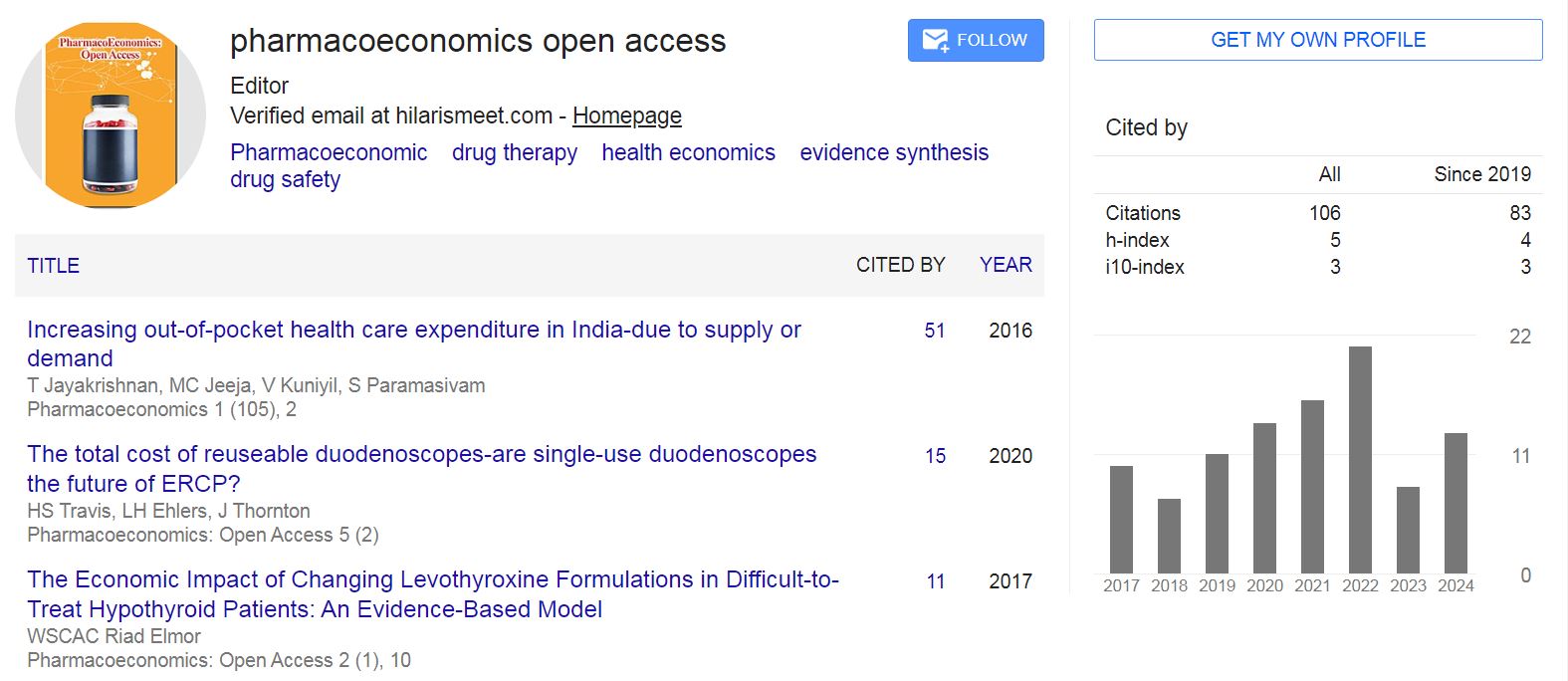
Pharmacoeconomics: Open Access received 106 citations as per Google Scholar report