Commentary - (2025) Volume 11, Issue 3
Received: 01-May-2025, Manuscript No. ohcr-25-174260;
Editor assigned: 05-May-2025, Pre QC No. P-174260;
Reviewed: 19-May-2025, QC No. Q-174260;
Revised: 22-May-2025, Manuscript No. R-174260;
Published:
29-May-2025
, DOI: 10.37421/2471-8726.2025.11.192
Citation: Menon, Harish. ”Comprehensive Dental Trauma Management for Tooth Viability.” Oral Health Case Rep 11 (2025):192.
Copyright: © 2025 Menon H. This is an open-access article distributed under the terms of the Creative Commons Attribution License, which permits unrestricted use, distribution and reproduction in any medium, provided the original author and source are credited.
Managing avulsed teeth properly is crucial for a good outcome. This article lays out the latest International Association of Dental Traumatology guidelines, emphasizing immediate replantation, appropriate storage media if replantation is delayed, and subsequent root canal treatment for mature teeth. These steps are essential to maximize the chances of successful reattachment and survival of the tooth[1].
When a tooth experiences a crown fracture, knowing how to manage it determines the long-term prognosis. This paper provides clear guidelines from the International Association of Dental Traumatology for dealing with various crown fractures, from enamel chips to complicated fractures involving the pulp. Key recommendations include bonding the original fragment, composite restorations, and pulp capping or partial pulpotomy for pulp exposure, aiming to preserve vitality[2].
Luxation injuries are complex and require careful assessment and treatment. This article summarizes the International Association of Dental Traumatology's current recommendations for managing various luxation injuries, like concussion, subluxation, extrusive luxation, lateral luxation, and intrusive luxation. It covers diagnosis, immediate treatment, splinting, and follow-up protocols, all geared towards preserving tooth viability and surrounding structures[3].
Root fractures, though less common, present unique challenges. This piece details the updated International Association of Dental Traumatology guidelines for managing these injuries, focusing on accurate diagnosis, repositioning and stabilization, and long-term monitoring for complications like pulp necrosis or root resorption. The guidelines emphasize preserving the fractured tooth whenever possible, often through rigid or semi-rigid splinting[4].
Dealing with traumatic injuries in primary teeth demands a different approach due to developmental considerations. This article provides the International Association of Dental Traumatology's guidelines for managing injuries specific to primary dentition. The focus here is often on preventing damage to the developing permanent successor and alleviating discomfort, with recommendations for careful observation, repositioning, or sometimes extraction depending on the injury type[5].
For immature permanent teeth with open apices that suffer traumatic injuries leading to apical periodontitis, regenerative endodontic procedures (REPs) offer a promising alternative to traditional apexification. This systematic review and meta-analysis highlights that REPs can lead to favorable outcomes, promoting continued root development and healing of periapical lesions. It underscores their importance in preserving these teeth for the long term[6].
Splinting is a fundamental part of managing many traumatic dental injuries, but the type of splint matters. This review explores the various splinting techniques available, discussing their indications, advantages, and disadvantages. The core message is that flexible splints are generally preferred for most injuries to allow physiological tooth movement, promoting periodontal ligament healing, while rigid splints are reserved for specific situations like root fractures[7].
The long-term prognosis for avulsed permanent teeth can vary widely depending on several factors. This systematic review and meta-analysis critically evaluates the outcomes of avulsion injuries, identifying key prognostic indicators such as the extraoral dry time, storage medium, and stage of root development. The findings highlight the importance of immediate, correct emergency management to improve tooth survival rates and minimize complications[8].
Beyond the physical injury, dental trauma can significantly impact a child's and adolescent's quality of life. This systematic review and meta-analysis explores how traumatic dental injuries affect oral health-related quality of life (OHRQoL). The findings suggest a clear negative impact, particularly concerning aesthetics, speech, and social interactions, emphasizing the need for not just clinical restoration but also psychosocial support in managing these young patients[9].
Accurate diagnosis is the cornerstone of effective dental trauma management. This systematic review compares the diagnostic accuracy of periapical radiography (PR) and cone-beam computed tomography (CBCT) in traumatic dental injuries. It shows that while PR remains a valuable initial tool, CBCT often offers superior diagnostic clarity for complex injuries, especially in detecting root fractures and evaluating the extent of alveolar bone damage, leading to more precise treatment planning[10].
The landscape of traumatic dental injury management is primarily shaped by comprehensive guidelines from the International Association of Dental Traumatology (IADT), which cover a wide array of injuries and their specific treatment protocols. Proper management of avulsed teeth is critical for a positive outcome, emphasizing immediate replantation where possible, the use of appropriate storage media when replantation is delayed, and subsequent root canal treatment for mature permanent teeth. These crucial steps aim to maximize the chances of successful reattachment and survival of the affected tooth [1]. For crown fractures, which can range from minor enamel chips to more complicated fractures involving the pulp, the IADT provides clear directives. Key recommendations include bonding the original fragment back onto the tooth, utilizing composite restorations, and performing pulp capping or partial pulpotomy in cases of pulp exposure, all with the overarching goal of preserving tooth vitality [2]. Luxation injuries, which present as various types such as concussion, subluxation, extrusive, lateral, and intrusive luxation, are complex and require meticulous assessment and treatment. The guidelines summarize current recommendations for diagnosis, immediate therapeutic interventions, the application of splinting, and detailed follow-up protocols. These measures are specifically designed to preserve the viability of the tooth and the integrity of surrounding periodontal structures [3]. Root fractures, though less commonly encountered, pose unique clinical challenges. The updated IADT guidelines focus on precise diagnosis, effective repositioning and stabilization of the fractured segments, and diligent long-term monitoring for potential complications, including pulp necrosis or root resorption. The guiding principle is to preserve the fractured tooth whenever feasible, often achieved through the application of rigid or semi-rigid splinting techniques [4]. Furthermore, managing traumatic injuries in primary teeth necessitates a distinctly different approach, largely due to unique developmental considerations. The IADT guidelines for primary dentition injuries prioritize preventing damage to the developing permanent successor and alleviating patient discomfort. Recommendations typically involve careful observation, repositioning of the tooth, or in certain situations, extraction, all determined by the specific type and severity of the injury [5].
In cases involving immature permanent teeth with open apices that have sustained traumatic injuries leading to apical periodontitis, regenerative endodontic procedures (REPs) present a promising and effective alternative to conventional apexification methods. Systematic reviews and meta-analyses affirm that REPs consistently lead to favorable outcomes, actively promoting continued root development and facilitating the healing of periapical lesions. This highlights the profound importance of REPs in ensuring the long-term preservation of these crucial immature teeth [6]. Splinting is recognized as a fundamental and indispensable component in the management of numerous traumatic dental injuries, though the specific type of splint employed significantly influences the outcome. Current recommendations emphasize that flexible splints are generally preferred for the majority of injuries. This preference stems from their ability to permit physiological tooth movement, which is crucial for promoting effective periodontal ligament healing. In contrast, more rigid splints are typically reserved for highly specific clinical scenarios, such as the stabilization of root fractures where greater immobility is required [7]. The long-term prognosis for avulsed permanent teeth can fluctuate widely, influenced by several critical factors. Comprehensive systematic reviews and meta-analyses have meticulously evaluated outcomes, identifying key prognostic indicators. These include the extraoral dry timeâ??the duration the tooth remains outside the mouthâ??the type of storage medium used before replantation, and the stage of root development at the time of injury. These findings consistently underscore the critical importance of immediate and correct emergency management as a primary determinant for improving tooth survival rates and effectively minimizing the occurrence of post-traumatic complications [8].
Beyond the immediate physical aspects of injury, dental trauma can significantly impact a child's and adolescent's overall quality of life. Systematic reviews and meta-analyses consistently explore how traumatic dental injuries affect oral health-related quality of life (OHRQoL). The findings clearly indicate a negative impact, particularly concerning aesthetic concerns, speech impediments, and challenges in social interactions. This emphasizes a crucial point: successful management extends beyond just clinical restoration, demanding robust psychosocial support for these young patients to address the broader consequences of their injuries [9].
Accurate diagnosis forms the absolute cornerstone of effective management strategies for dental trauma. A systematic review comparing the diagnostic accuracy of periapical radiography (PR) and cone-beam computed tomography (CBCT) in traumatic dental injuries provides valuable insights. While PR remains a valuable initial imaging tool, CBCT frequently offers superior diagnostic clarity, particularly for complex injuries. It excels in detecting elusive root fractures and precisely evaluating the extent of associated alveolar bone damage, thereby leading to significantly more precise and effective treatment planning [10].
Effective management of traumatic dental injuries is paramount for preserving tooth viability and patient quality of life. Guidelines from the International Association of Dental Traumatology provide comprehensive protocols for various injuries, including avulsions, crown fractures, luxations, and root fractures. For avulsed teeth, immediate replantation and proper storage are critical, often followed by root canal treatment for mature teeth. Crown fractures are managed through bonding, composite restorations, or pulp treatments to maintain vitality. Luxation injuries require careful assessment, splinting, and follow-up, while root fractures demand accurate diagnosis and stabilization. Special considerations apply to primary teeth, focusing on protecting permanent successors and alleviating discomfort. Beyond initial care, regenerative endodontic procedures show promise for immature permanent teeth with apical periodontitis. The choice of splinting technique is vital, with flexible splints generally preferred to promote healing. Prognosis for avulsed teeth depends significantly on emergency management factors like extraoral dry time. Dental trauma also profoundly impacts oral health-related quality of life, necessitating psychosocial support alongside clinical treatments. Accurate diagnosis, often enhanced by Cone-Beam Computed Tomography (CBCT) over conventional periapical radiography, underpins successful treatment planning, particularly for complex injuries. This holistic approach ensures better long-term outcomes for patients.
None
None
1. Cécile B, Nestor C, Max AF. "International Association of Dental Traumatology Guidelines for the Management of Traumatic Dental Injuries: Avulsion Injuries".Dent Traumatol 36 (2020):314-322.
Indexed at, Google Scholar, Crossref
2. Ernest K, Mandeep D, Nestor C. "International Association of Dental Traumatology Guidelines for the Management of Traumatic Dental Injuries: Crown Fractures".Dent Traumatol 36 (2020):323-333.
Indexed at, Google Scholar, Crossref
3. Ashraf FF, Paul VA, Georgios T. "International Association of Dental Traumatology Guidelines for the Management of Traumatic Dental Injuries: Luxation Injuries".Dent Traumatol 36 (2020):334-348.
Indexed at, Google Scholar, Crossref
4. Jens OA, Cécile B, Max AF. "International Association of Dental Traumatology Guidelines for the Management of Traumatic Dental Injuries: Root Fractures".Dent Traumatol 36 (2020):349-353.
Indexed at, Google Scholar, Crossref
5. Peter FD, Max AF, Anne CO. "International Association of Dental Traumatology Guidelines for the Management of Traumatic Dental Injuries: Primary Teeth".Dent Traumatol 36 (2020):354-368.
Indexed at, Google Scholar, Crossref
6. Shan-Chuan N, Xuan Z, Xiao-Qian W. "Outcomes of regenerative endodontic procedures for immature permanent teeth with apical periodontitis after traumatic dental injury: A systematic review and meta-analysis".BMC Oral Health 22 (2022):350.
Indexed at, Google Scholar, Crossref
7. Gaurav PS, Shruti G, Shikha A. "A review of different splinting techniques in traumatic dental injuries".J Oral Biol Craniofac Res 11 (2021):236-240.
Indexed at, Google Scholar, Crossref
8. Sanyun H, Wenling G, Tian M. "Prognosis of avulsed permanent teeth: A systematic review and meta-analysis".J Endod 48 (2022):1475-1487.e1.
Indexed at, Google Scholar, Crossref
9. Brena GBL, Luciana N, Paloma RM. "Oral health-related quality of life after traumatic dental injuries in children and adolescents: a systematic review and meta-analysis".Sci Rep 13 (2023):3828.
Indexed at, Google Scholar, Crossref
10. Reza M, Marjan M, Hossein K. "Diagnostic Accuracy of Periapical Radiography and Cone-Beam Computed Tomography in Traumatic Dental Injuries: A Systematic Review".J Endod 49 (2023):529-539.e4.
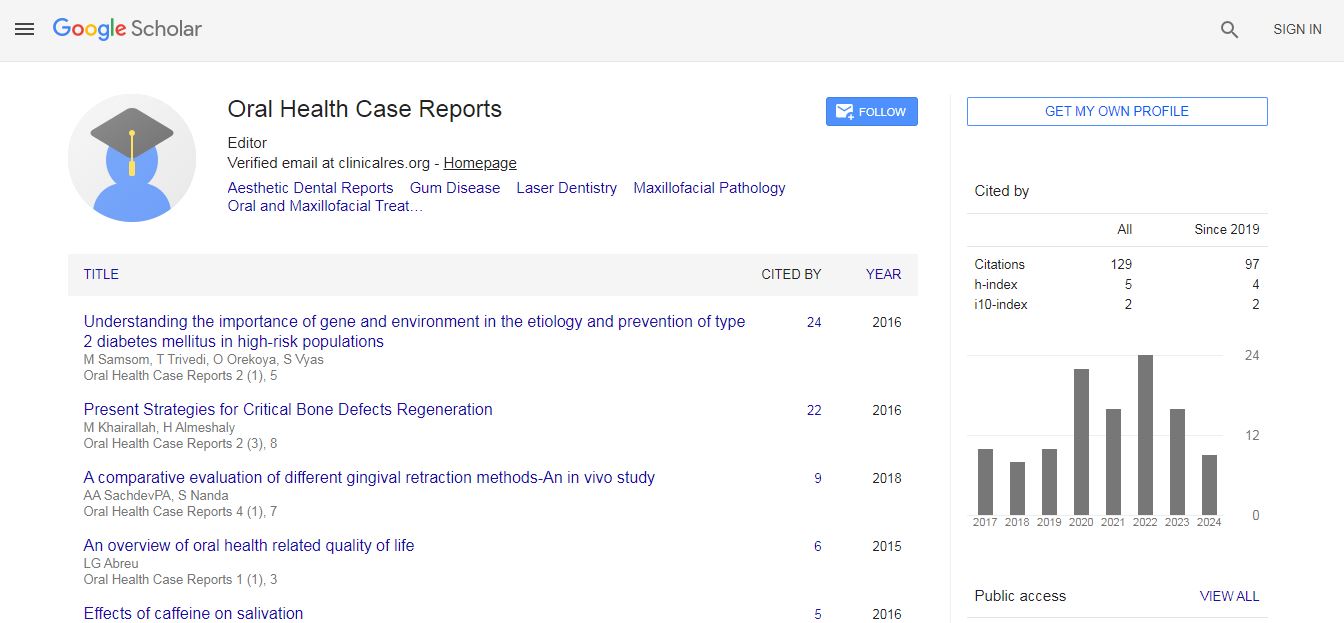
Oral Health Case Reports received 120 citations as per Google Scholar report