Opinion - (2025) Volume 9, Issue 5
Received: 01-Oct-2025, Manuscript No. cmcr-25-178080;
Editor assigned: 03-Oct-2025, Pre QC No. P-178080;
Reviewed: 17-Oct-2025, QC No. Q-178080;
Revised: 22-Oct-2025, Manuscript No. R-178080;
Published:
29-Oct-2025
, DOI: 10.37421/2684-4915.2025.9.396
Citation: Müller, Stefan. ”Complication Management Evolution: Strategies, Safety, AI.” Clin Med Case Rep 09 (2025):396.
Copyright: © 2025 Müller S. This is an open-access article distributed under the terms of the Creative Commons Attribution License, which permits unrestricted use, distribution and reproduction in any medium, provided the original author and source are credited.
Complication management stands as a critical pillar across various medical specialties, demanding sophisticated strategies for prevention, early detection, and effective intervention. The scope of this challenge ranges from emergent surgical settings to chronic disease management and advanced therapeutic interventions. For instance, a scoping review extensively synthesizes current literature on complication management in acute care surgery, highlighting the multidisciplinary approach and the importance of timely recognition and intervention to improve patient outcomes in emergent surgical settings [1] . Similarly, effective strategies for managing postoperative complications following major abdominal surgery emphasize the critical role of preoperative risk assessment, intraoperative precision, and robust postoperative surveillance to mitigate adverse events and ensure patient recovery [2] . Beyond surgical contexts, the management of complications in critically ill patients is paramount. One article offers crucial insights, covering a range of organ system dysfunctions and underscoring the necessity of early detection, aggressive supportive care, and evidence-based protocols to optimize outcomes in intensive care settings [3] . In interventional cardiology, specifically after Left Atrial Appendage Occlusion (LAAO) procedures, understanding the incidence, predictors, and outcomes of complications is vital for risk stratification and guiding effective management strategies to improve safety and efficacy [4] . The rapidly evolving field of cancer treatment also presents unique challenges, as immunotherapy introduces distinct immune-related toxicities. Practical guidance is available on managing these common complications and adverse effects, offering diagnostic approaches and therapeutic strategies to ensure patient safety and optimize treatment continuity [5] . Furthermore, surgical training itself is a critical area for optimization; a narrative review explores effective strategies specifically for complication management, highlighting simulation-based training, structured debriefing, and a culture of safety to equip future surgeons with essential skills [6] . The complexities extend to patients with advanced cancer receiving targeted therapies and immunotherapies, where managing various complications involves an overview of common toxicities and adverse events, alongside practical approaches for early detection and appropriate therapeutic interventions to maintain quality of life and treatment efficacy [7] . Interventional oncology also requires a comprehensive review of complication management, covering various procedures and potential adverse events, and outlining strategies for prevention, early recognition, and treatment to ensure patient safety and procedural success [8] . Even in specialized surgical fields like minimally invasive spine surgery, specific challenges and management strategies for complications, such as nerve injury, dural tears, and infection, are discussed, providing insights into diagnostic tools and surgical or conservative approaches for optimal patient recovery [9] . Looking ahead, the emerging role of Artificial Intelligence (AI) in complication management across various medical fields is being explored. A scoping review highlights how AI technologies, including predictive analytics and machine learning, can enhance risk assessment, early detection, and personalized intervention strategies to improve patient safety and outcomes [10] . Collectively, these diverse areas of focus underscore a unified objective: to enhance patient safety and improve clinical outcomes by proactively addressing and effectively managing medical complications.
Complication management is a multifaceted challenge spanning numerous medical and surgical disciplines, essential for ensuring patient safety and improving clinical outcomes. In acute care surgery, comprehensive scoping reviews emphasize the critical need for a multidisciplinary approach, highlighting how timely recognition and intervention are paramount for effective complication management in emergent settings [1]. This proactive stance extends to major abdominal surgery, where effective strategies for managing postoperative complications are underpinned by meticulous preoperative risk assessment, precise intraoperative execution, and robust postoperative surveillance. These measures are crucial for mitigating adverse events and facilitating patient recovery [2]. For critically ill patients, managing various complications encountered in intensive care settings is a core concern. Insights reveal the importance of early detection of organ system dysfunctions, aggressive supportive care, and adherence to evidence-based protocols to optimize patient outcomes [3].
Specialized interventional procedures also present unique sets of potential complications requiring tailored management. In interventional cardiology, for instance, procedures like Left Atrial Appendage Occlusion (LAAO) necessitate a detailed understanding of complication incidence, predictors, and outcomes. This data is vital for appropriate risk stratification and developing effective management strategies that enhance the safety and efficacy of these increasingly common procedures [4]. Similarly, interventional oncology, encompassing a range of minimally invasive cancer therapies, calls for comprehensive complication management strategies. These strategies cover prevention, early recognition, and treatment of adverse events, all geared towards ensuring patient safety and procedural success [8]. Even within specific surgical subspecialties, such as minimally invasive spine surgery, focused approaches are developed for common issues like nerve injury, dural tears, and infection, integrating advanced diagnostic tools with appropriate surgical or conservative interventions to ensure optimal functional recovery [9].
The landscape of cancer treatment has been profoundly altered by targeted therapies and immunotherapies, introducing new challenges in complication management. These innovative treatments often come with unique immune-related toxicities and adverse effects. Practical guidance is thus crucial for identifying these common complications, offering clear diagnostic approaches, and outlining therapeutic strategies to maintain patient safety while ensuring treatment continuity [5]. This extends to advanced cancer patients undergoing both targeted therapies and immunotherapies, where managing diverse complications involves careful oversight of common toxicities and adverse events. The aim is to provide practical approaches for their early detection and appropriate interventions, thereby preserving patient quality of life and treatment efficacy [7].
Supporting these clinical efforts, advancements in surgical education are pivotal. Optimizing surgical training specifically for complication management involves adopting strategies such as simulation-based training, structured debriefing, and fostering a robust culture of safety. These educational approaches are designed to instill future surgeons with the necessary skills and confidence to competently handle both intraoperative and postoperative complications [6]. Looking towards the future, Artificial Intelligence (AI) is emerging as a transformative tool in complication management across various medical fields. AI technologies, including predictive analytics and machine learning, hold significant promise in enhancing risk assessment, facilitating earlier detection of adverse events, and enabling more personalized intervention strategies, ultimately improving overall patient safety and outcomes [10]. This holistic approach, from advanced training to cutting-edge technology, underscores a collective commitment to reducing patient morbidity and mortality.
Effective complication management is paramount across diverse medical disciplines, encompassing acute care surgery, critically ill patient care, and specialized interventional procedures. Strategies range from multidisciplinary approaches in emergent surgical settings to meticulous preoperative risk assessment and robust postoperative surveillance in major abdominal surgery. Management extends to addressing specific challenges in interventional cardiology, such as Left Atrial Appendage Occlusion (LAAO), and sophisticated interventional oncology procedures, where prevention and early recognition are key. The unique toxicities associated with modern cancer treatments, like immunotherapy and targeted therapies, necessitate specific diagnostic and therapeutic approaches to ensure patient safety and treatment continuity. Furthermore, optimizing surgical training through simulation and fostering a culture of safety equips future surgeons for handling complications. Looking forward, Artificial Intelligence (AI) is poised to revolutionize this field by enhancing risk assessment, early detection, and personalized intervention strategies, highlighting a continuous evolution towards improved patient outcomes through proactive and comprehensive care.
None
None
Indexed at, Google Scholar, Crossref
Indexed at, Google Scholar, Crossref
Indexed at, Google Scholar, Crossref
Indexed at, Google Scholar, Crossref
Indexed at, Google Scholar, Crossref
Indexed at, Google Scholar, Crossref
Indexed at, Google Scholar, Crossref
Indexed at, Google Scholar, Crossref
Indexed at, Google Scholar, Crossref
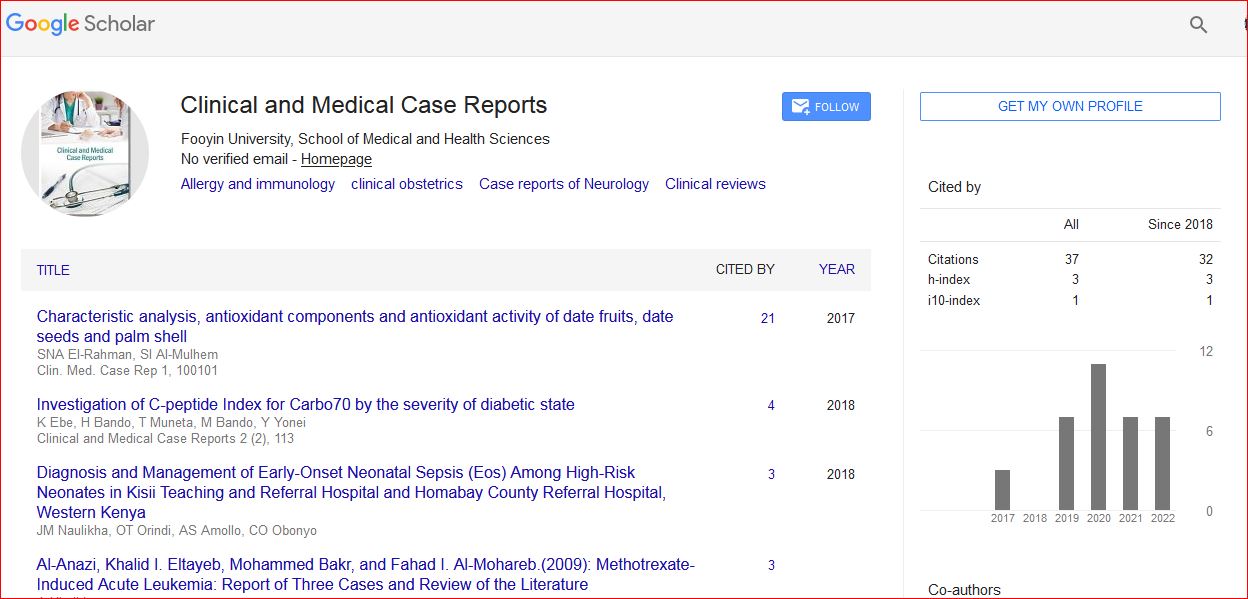
Clinical and Medical Case Reports received 53 citations as per Google Scholar report