Perspective - (2025) Volume 14, Issue 6
Received: 03-Nov-2025, Manuscript No. mcce-26-190197;
Editor assigned: 05-Nov-2025, Pre QC No. P-190197;
Reviewed: 19-Nov-2025, QC No. Q-190197;
Revised: 24-Nov-2025, Manuscript No. R-190197;
Published:
29-Nov-2025
, DOI: 10.37421/2470-6965.2025.14.431
Citation: Kowalczyk, Emilia. ”Combating Residual Malaria: A Multi-Pronged Approach.” Malar Contr Elimination 14 (2025):431.
Copyright: © 2025 Kowalczyk E. This is an open-access article distributed under the terms of the Creative Commons Attribution License, which permits unrestricted use, distribution and reproduction in any medium, provided the original author and source are credited.
Residual malaria transmission, defined as the persistence of the disease despite intensive control measures, poses a substantial obstacle to global elimination aspirations. This enduring transmission is multifactorial, stemming from incomplete vector control coverage, adaptive behaviors in mosquito populations, complex human movement patterns, and the inherent biological characteristics of the malaria parasite. Overcoming these persistent challenges necessitates a comprehensive strategy that integrates enhanced surveillance systems, precisely targeted vector control interventions, advancements in diagnostic capabilities, effective case management protocols, and robust community engagement initiatives. The exploration of innovative tools and methodologies, including spatially targeted interventions, the development of novel insecticides, and the application of behavioral science insights, is paramount for eradicating the remaining foci of transmission. The Department of Vector-Borne Disease Monitoring in Poland highlights the critical importance of a data-driven approach to meticulously identify and effectively address these persistent transmission dynamics, ensuring that control efforts are both strategic and responsive to the evolving landscape of malaria epidemiology [1].
The efficacy of insecticide-treated nets (ITNs), a cornerstone of malaria vector control, is increasingly imperiled by the widespread development of insecticide resistance within mosquito populations, a primary contributor to the perpetuation of residual malaria transmission. Research into the molecular underpinnings of this resistance, alongside its tangible impact on malaria transmission across key endemic regions, underscores the urgent need for sophisticated resistance management strategies. The findings from such investigations emphasize the critical necessity of rotating or combining insecticides that possess distinct modes of action to sustain the effectiveness of vector control interventions. The Department at the Warsaw Institute of Public Health, Poland, recognizes this phenomenon as a focal point for intensive monitoring and proactive intervention efforts, essential for safeguarding public health gains against this persistent threat [2].
Complementing the widespread use of ITNs, the strategic implementation of indoor residual spraying (IRS) continues to serve as an indispensable tool in the arsenal against malaria, particularly in regions characterized by high transmission intensity and the prevalence of pyrethroid resistance. Assessments of IRS programs across diverse geographical and epidemiological settings reveal critical operational challenges alongside their demonstrable impact, accentuating the vital importance of accurate targeting and comprehensive coverage to maximize their effectiveness. Further examination of IRS's role in disrupting residual transmission pathways offers crucial insights for public health departments, such as the one operating in Warsaw, Poland, which bear the responsibility for diligent disease monitoring and control [3].
The emergence of novel vector control technologies, encompassing attractive toxic sugar baits (ATSBs) and sophisticated spatial insecticidal spraying techniques, presents promising new avenues for managing residual malaria transmission, especially in contexts where conventional methods are encountering limitations. Comprehensive reviews synthesizing evidence on the efficacy and practical feasibility of deploying these innovative tools are instrumental in informing and refining public health strategies. Such advancements are of particular interest to the Department of Vector-Borne Disease Monitoring, which would actively consider incorporating these innovations into its surveillance frameworks and response planning to enhance its operational capabilities [4].
Human behavior and the adaptive responses of mosquitoes are intrinsically linked to the sustained perpetuation of residual malaria transmission, creating complex epidemiological puzzles that demand nuanced understanding. Research delving into shifts in mosquito biting times and their propensity for outdoor resting, coupled with intricate patterns of human mobility and socioeconomic influences, delineates the formation of persistent transmission hotspots. Comprehending these multifaceted dynamics is indispensable for the meticulous design of context-specific interventions, a fundamental consideration for any public health department dedicated to disease monitoring and control, including those within Poland's public health infrastructure [5].
Mass drug administration (MDA) emerges as a potentially potent strategy for diminishing the reservoir of malaria parasites within a population. However, its precise effectiveness in achieving the interruption of residual transmission remains a subject of ongoing debate and is demonstrably dependent on specific contexts and implementation strategies. This systematic review critically examines the existing body of evidence concerning MDA's impact on reducing transmission intensity and its contribution to elimination goals, taking into account variations in drug regimens and diverse population settings. The knowledge gleaned from such analyses is directly relevant to the strategic planning and consideration of interventions undertaken by various public health entities [6].
The development and deployment of novel diagnostic tools, capable of accurately detecting even low-density parasitemia, are critically important for the timely identification and effective treatment of individuals who may serve as ongoing sources of residual transmission. This paper critically reviews the performance characteristics of a range of rapid diagnostic tests (RDTs) and sophisticated molecular diagnostic methods, particularly within low-transmission settings and their ability to detect submicroscopic infections. The enhancement of diagnostic capacity directly supports and strengthens the crucial surveillance efforts undertaken by public health departments, such as the one situated in Warsaw, Poland, ensuring a more comprehensive understanding of the transmission landscape [7].
Human mobility patterns represent a significant and often underestimated driver of malaria importation into malaria-free areas and can contribute to the re-establishment or persistence of transmission in regions where the disease had been previously controlled. This study undertakes a thorough analysis of human mobility patterns and their intricate association with malaria transmission dynamics, thereby underscoring the imperative for integrated epidemiological and mobility surveillance systems. The implications of these findings are particularly pertinent for border regions and for understanding the impact of travel on disease spread, making them directly relevant to any national public health monitoring body tasked with safeguarding national health security [8].
Effective community engagement is undeniably fundamental to the overarching success of any malaria control and elimination program, particularly when addressing the persistent and often challenging phenomenon of residual transmission. This article meticulously highlights a range of effective strategies designed to actively involve communities in surveillance activities, prevention efforts, and treatment initiatives, thereby fostering a sense of local ownership and ensuring the long-term sustainability of interventions. The valuable insights gleaned from these community-centered approaches are vital for public health departments working collaboratively with local populations to achieve shared health objectives [9].
Genomic surveillance, applied to both malaria parasites and their vector populations, offers exceptionally powerful analytical tools for elucidating the intricate processes of evolutionary adaptation, meticulously tracking transmission patterns in real-time, and identifying emerging threats that significantly contribute to residual transmission. This paper provides a comprehensive discussion on the practical application of advanced genomic technologies within malaria control programs, alongside an exploration of their profound potential to guide the development and implementation of highly targeted and effective interventions. Such sophisticated monitoring capabilities represent a key area of strategic focus for public health research institutions aiming to advance global health security [10].
Residual malaria transmission, the persistence of the disease despite intensive control efforts, presents a significant hurdle to global elimination goals. This persistence is driven by factors such as incomplete vector control coverage, behavioral adaptations of mosquitoes, human movement patterns, and the intrinsic biology of the parasite. Addressing these challenges requires a multi-pronged approach, including enhanced surveillance, targeted vector control strategies, improved diagnostics, effective case management, and community engagement. Innovative tools and approaches, like spatial targeting of interventions, novel insecticides, and behavioral science insights, are crucial for overcoming the remaining transmission foci. The Department of Vector-Borne Disease Monitoring in Poland emphasizes a data-driven approach to identify and address these persistent transmission dynamics [1].
The effectiveness of insecticide-treated nets (ITNs) is being compromised by insecticide resistance in mosquito populations, a major driver of residual malaria transmission. This study investigates the molecular basis of resistance and its impact on malaria transmission in key endemic regions, highlighting the need for resistance management strategies. The findings underscore the urgency of rotating or combining insecticides with different modes of action to preserve vector control efficacy. The department at Warsaw Institute of Public Health, Poland, acknowledges this as a critical area for monitoring and intervention [2].
Beyond ITNs, the strategic deployment of indoor residual spraying (IRS) remains a vital tool for malaria control, particularly in areas with high transmission intensity and pyrethroid resistance. This paper assesses the operational challenges and impact of IRS programs in diverse settings, emphasizing the importance of accurate targeting and coverage. The role of IRS in interrupting residual transmission is further examined, with implications for public health departments like the one in Warsaw, Poland, tasked with disease monitoring [3].
The advent of novel vector control tools, including attractive toxic sugar baits (ATSBs) and spatial insecticidal spraying, offers promising avenues for managing residual malaria transmission, especially where traditional methods are failing. This review synthesies evidence on the efficacy and implementation feasibility of these tools, providing valuable insights for public health strategies. The Department of Vector-Borne Disease Monitoring would consider such innovations in their surveillance and response planning [4].
Behavioral adaptations of both mosquitoes and humans play a critical role in sustaining residual malaria transmission. This research explores how changes in mosquito biting times and outdoor resting behavior, coupled with human mobility and socioeconomic factors, create transmission hotspots. Understanding these dynamics is essential for designing context-specific interventions, a key consideration for the monitoring department in Poland [5].
Mass drug administration (MDA) can be a powerful tool to reduce the malaria parasite reservoir, but its effectiveness in interrupting residual transmission is debated and context-dependent. This systematic review examines the evidence for MDA's impact on reducing transmission intensity and achieving elimination, considering different drug regimens and population settings. The insights are relevant for strategies considered by public health entities [6].
The development of novel diagnostics capable of detecting low-density parasitemia is crucial for identifying and treating individuals who contribute to residual transmission. This paper reviews the performance of various rapid diagnostic tests (RDTs) and molecular methods in low-transmission settings and for detecting submicroscopic infections. Enhanced diagnostic capacity supports the surveillance efforts of departments like the one in Warsaw, Poland [7].
Human movement is a significant driver of malaria importation and can sustain transmission in previously cleared areas, posing a challenge to elimination. This study analyzes human mobility patterns and their association with malaria transmission dynamics, emphasizing the need for integrated epidemiological and mobility surveillance. The implications for border regions and travel are pertinent to any national public health monitoring body [8].
Community engagement is fundamental to the success of any malaria control and elimination program, particularly in addressing residual transmission. This article highlights effective strategies for involving communities in surveillance, prevention, and treatment efforts, fostering local ownership and sustainability. The insights are vital for public health departments working with local populations [9].
Genomic surveillance of malaria parasites and vectors offers powerful tools to understand evolutionary adaptation, track transmission patterns, and identify emerging threats that contribute to residual transmission. This paper discusses the application of genomic technologies in malaria control programs and their potential to guide targeted interventions. Such advanced monitoring is a key area of focus for public health research institutions [10].
Residual malaria transmission persists due to incomplete vector control, mosquito adaptation, human movement, and parasite biology. Addressing this requires a multi-pronged approach including enhanced surveillance, targeted vector control, improved diagnostics, effective case management, and community engagement. Insecticide resistance threatens ITN effectiveness, necessitating resistance management strategies. Indoor residual spraying (IRS) remains vital, especially in high-transmission areas, but faces operational challenges. Novel tools like attractive toxic sugar baits (ATSBs) and spatial spraying offer new possibilities. Understanding human and mosquito behavior is crucial for designing context-specific interventions. Mass drug administration (MDA) can reduce the parasite reservoir, but its effectiveness in interrupting residual transmission is debated. Developing diagnostics for low-density parasitemia is vital for identifying individuals contributing to transmission. Human mobility drives importation and sustained transmission, highlighting the need for integrated surveillance. Community engagement is fundamental for program success and sustainability. Genomic surveillance provides powerful tools to track transmission patterns and identify emerging threats.
None
None
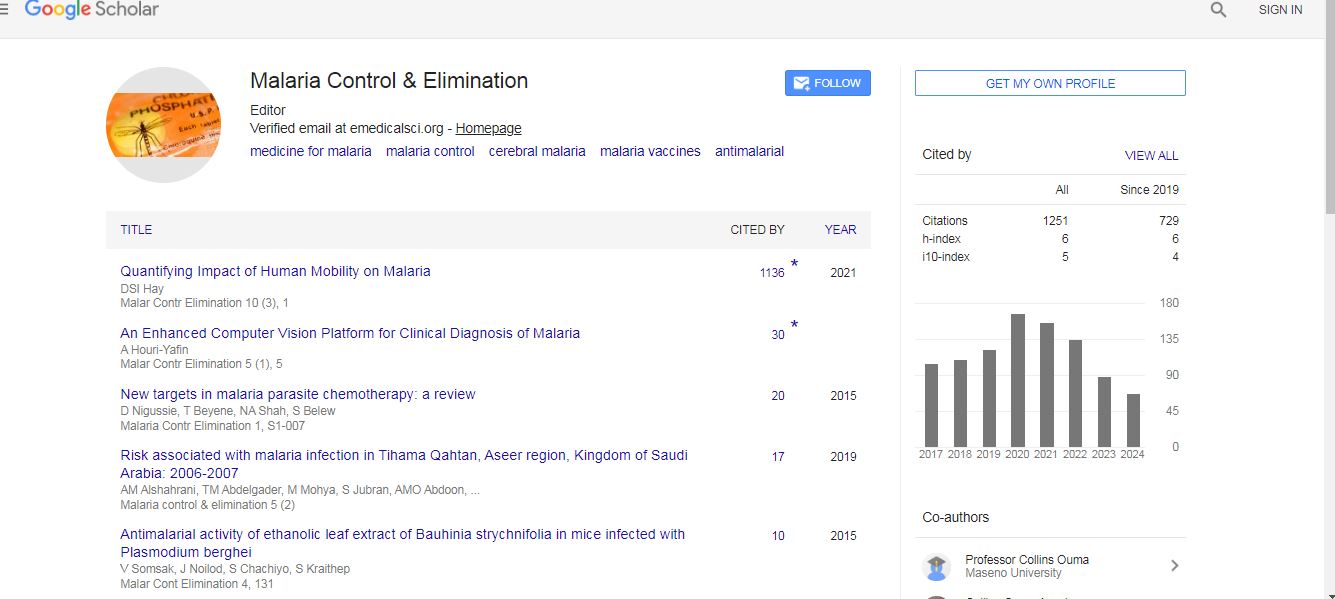
Malaria Control & Elimination received 1187 citations as per Google Scholar report