Perspective - (2025) Volume 19, Issue 5
Received: 01-Jan-2025, Manuscript No. jmgm-26-188376;
Editor assigned: 03-Oct-2025, Pre QC No. P-188376;
Reviewed: 17-Oct-2025, QC No. Q-188376;
Revised: 22-Oct-2025, Manuscript No. R-188376;
Published:
29-Oct-2025
, DOI: 10.37421/1747-0862.2025.19.748
Citation: Kaya, Zeynep. ”Stem Cells and Synthetic Biology: Regenerative Medicine.” J Mol Genet Med 19 (2025):748.
Copyright: © 2025 Kaya Z. This is an open-access article distributed under the terms of the Creative Commons Attribution License, which permits unrestricted use, distribution and reproduction in any medium, provided the original author and source are credited.
The convergence of stem cell technology and synthetic biology presents a transformative paradigm in regenerative medicine, offering unprecedented capabilities for engineering personalized tissues and organs. This interdisciplinary approach leverages precise control over cellular behavior and the creation of sophisticated biomimetic microenvironments to develop tailored therapeutic solutions for individual patients. Advancements in the directed differentiation of stem cells, coupled with the design of advanced synthetic scaffolds, are crucial for constructing complex organoids that accurately mimic native tissue function. These developments pave the way for innovative treatments for organ failure and various diseases by enabling the generation of functional cellular constructs [1].
Synthetic biology is fundamentally reshaping the landscape of therapeutic development by enabling the de novo design and construction of cellular systems with novel functionalities. Researchers are actively engineering cells to exhibit enhanced regenerative capacities or to perform targeted drug delivery, demonstrating a remarkable ability to create more predictable and controllable cellular therapies. The core principles involve the intelligent design of genetic circuits and metabolic pathways within stem cells, allowing for the fine-tuning of cellular responses to achieve specific therapeutic outcomes [2].
The creation of functional organoids from stem cells represents a significant leap towards the in vitro construction of complex human tissues and organs. Recent progress in developing patient-specific organoid models is revolutionizing disease modeling and drug screening processes. Synthetic biology plays a pivotal role in guiding the self-assembly and maturation of these organoids, leading to more accurate recapitulations of human organ structure and function. The use of patient-derived induced pluripotent stem cells (iPSCs) is central to these personalized approaches, offering a platform for studying disease mechanisms and testing therapeutic interventions [3].
Fabricating scaffolds that guide stem cell differentiation and tissue formation is another critical area where synthetic biology principles are being applied. This involves the use of smart biomaterials designed to respond dynamically to cellular cues and facilitate the controlled release of growth factors. These engineered microenvironments are shown to promote the self-organization of stem cells into functional tissue constructs, providing a versatile platform for the bioengineering of complex organs with predictable architectures and functionalities [4].
Personalized medicine hinges on the ability to develop patient-specific cell therapies, and induced pluripotent stem cells (iPSPs) are emerging as a cornerstone in this endeavor. Advances in reprogramming somatic cells into iPSCs, followed by their directed differentiation into desired cell types, are essential for regenerative purposes. Synthetic biology tools are instrumental in enhancing the efficiency and fidelity of this process, ensuring the generation of safe and effective cell-based treatments that are meticulously tailored to individual genetic profiles, thereby maximizing therapeutic potential [5].
The application of synthetic biology to engineer immune cells, particularly in the realm of CAR-T cell therapy, signifies a major advancement in cancer treatment. Novel genetic circuits are being designed to imbue engineered T cells with enhanced specificity, efficacy, and safety. Furthermore, the integration of stem cell properties into these engineered immune cells is being explored to achieve sustained therapeutic effects, marking a substantial step towards highly personalized and effective cancer therapies [6].
Precisely controlling stem cell differentiation using synthetic biological tools is paramount for generating specialized cell types required for effective organ engineering. Researchers are developing methods to design intricate gene regulatory networks and signaling pathways that can effectively guide stem cells towards specific lineages. The ultimate goal is to orchestrate these cellular processes to create functional multicellular tissues and, eventually, entire organs, offering a pathway to address organ shortages and improve patient outcomes [7].
The integration of microfluidics with synthetic biology offers a powerful approach for the high-throughput generation and analysis of organoids. Microfluidic devices are adept at creating highly controlled microenvironments that meticulously mimic the in vivo niche, thereby promoting the development of complex, vascularized organoids from stem cells. This synergistic combination of technologies provides a robust platform for building sophisticated, personalized tissue models that can be used for research and therapeutic applications [8].
As the field of regenerative medicine advances with stem cell and synthetic biology interventions, a thorough examination of the ethical and regulatory considerations becomes imperative. Challenges related to ensuring the safety and efficacy of these novel therapies, as well as achieving equitable access for all patients, must be addressed proactively. Establishing robust ethical frameworks and adaptive regulatory pathways is essential for fostering responsible innovation in the development of personalized tissues and organs [9].
Genome editing technologies, particularly CRISPR-Cas9, are profoundly impacting both stem cell research and synthetic biology. These powerful tools enable precise genomic modifications for engineering stem cells with superior therapeutic properties or for constructing synthetic gene circuits that meticulously control cellular behavior. The synergistic application of these technologies represents a significant frontier in the ongoing effort to build highly personalized tissues and organs for a wide range of medical applications [10].
The intricate interplay between stem cell technology and synthetic biology is forging a new era in regenerative medicine, characterized by the capability to engineer bespoke tissues and organs. This convergence facilitates precise orchestration of cellular activities and the creation of advanced biomimetic microenvironments, leading to personalized therapeutic strategies. Key to this progress are breakthroughs in directed stem cell differentiation, innovative synthetic scaffold design, and the development of complex organoids that replicate native tissue functionality, thereby addressing organ failure and disease through tailored regenerative solutions [1].
Synthetic biology's contribution lies in its capacity to enable the design and construction of cellular systems from the ground up, endowing them with novel therapeutic functionalities. Current research focuses on engineering cells for enhanced regenerative potential or for precise drug delivery mechanisms. The foundational principles involve the meticulous design of genetic circuits and metabolic pathways within stem cells, enabling predictable and controllable cellular therapies that can be fine-tuned for specific medical needs [2].
The generation of functional organoids from stem cells is a monumental achievement in the quest to construct complex human tissues and organs in vitro. Significant advancements have been made in developing patient-specific organoid models, which are revolutionizing disease modeling and accelerating drug screening. Synthetic biology plays a crucial role in directing the self-assembly and maturation of these organoids, ensuring they accurately recapitulate the structure and function of human organs. The utilization of patient-derived induced pluripotent stem cells (iPSCs) is central to this personalized approach, providing a valuable resource for understanding disease pathology and testing novel therapeutic interventions [3].
In the domain of tissue regeneration, synthetic biology principles are being actively employed to engineer biomimetic scaffolds that effectively guide stem cell differentiation and tissue formation. These scaffolds are often fabricated from smart biomaterials capable of responding to cellular signals and delivering growth factors in a controlled manner. The engineered microenvironments are instrumental in promoting the self-organization of stem cells into functional tissue constructs, establishing a versatile platform for the bioengineering of complex organ structures [4].
The advent of personalized medicine is critically dependent on the ability to generate patient-specific cell therapies. Induced pluripotent stem cells (iPSCs) are at the forefront of this revolution, with ongoing research focused on reprogramming somatic cells and subsequently differentiating them into desired cell types for therapeutic applications. Synthetic biology tools are indispensable for optimizing the efficiency and accuracy of these processes, ensuring the production of safe and effective cell-based treatments that are precisely tailored to an individual's unique genetic makeup [5].
In the field of cancer immunotherapy, synthetic biology is making significant inroads through the engineering of immune cells, particularly CAR-T cells. The design of sophisticated genetic circuits is enhancing the specificity, potency, and safety of these engineered T cells. Furthermore, exploring the integration of stem cell characteristics into these modified immune cells holds promise for achieving long-lasting therapeutic effects, representing a key advancement in the development of personalized cancer treatments [6].
Achieving precise control over stem cell differentiation is fundamental for creating the specialized cell types necessary for successful organ engineering. This is being accomplished through the design of intricate gene regulatory networks and signaling pathways that guide stem cells toward desired lineages. The overarching objective is to leverage synthetic biology to orchestrate cellular processes, enabling the creation of functional multicellular tissues and, ultimately, entire organs for transplantation and therapeutic purposes [7].
The synergy between microfluidics and synthetic biology is proving highly effective for the high-throughput production and detailed analysis of organoids. Microfluidic platforms enable the creation of exquisitely controlled microenvironments that closely mimic the in vivo niche, fostering the development of complex, vascularized organoids from stem cells. This integrated approach provides a potent system for constructing advanced, patient-specific tissue models suitable for diverse research and clinical applications [8].
As regenerative medicine therapies involving stem cells and synthetic biology mature, addressing the associated ethical and regulatory challenges is of paramount importance. Key considerations include ensuring the safety and efficacy of these cutting-edge treatments and promoting equitable access to them. The development of comprehensive ethical guidelines and adaptable regulatory frameworks is crucial for responsible advancement in the creation of personalized tissues and organs [9].
Genome editing technologies, such as CRISPR-Cas9, are indispensable tools that are accelerating progress in both stem cell research and synthetic biology. These technologies facilitate precise genetic modifications to engineer stem cells with enhanced therapeutic capabilities or to construct synthetic gene circuits for fine-tuning cellular behavior. The combined application of these powerful technologies is propelling the development of personalized tissues and organs, marking a significant frontier in medical innovation [10].
This collection of research highlights the synergistic potential of stem cell technology and synthetic biology in advancing regenerative medicine. Key areas of focus include engineering personalized tissues and organs through precise control of cellular behavior and biomimetic microenvironments. Advancements in directed stem cell differentiation, synthetic scaffold design, and organoid development are enabling more accurate recapitulations of native tissue function. Synthetic biology is also crucial for de novo design of cellular systems with enhanced therapeutic capabilities, such as improved regenerative capacity or targeted drug delivery, by engineering genetic circuits and metabolic pathways. Patient-specific organoid models are revolutionizing disease modeling and drug screening, with iPSCs playing a central role. Genome editing technologies like CRISPR-Cas9 further enhance the ability to engineer stem cells and synthetic gene circuits. Ethical and regulatory considerations are vital for responsible innovation in this rapidly evolving field. The integration of microfluidics with synthetic biology is also accelerating the generation and analysis of complex organoids. Emerging applications include engineered immune cells for cancer therapy and the development of advanced biomaterials for tissue engineering.
None
None
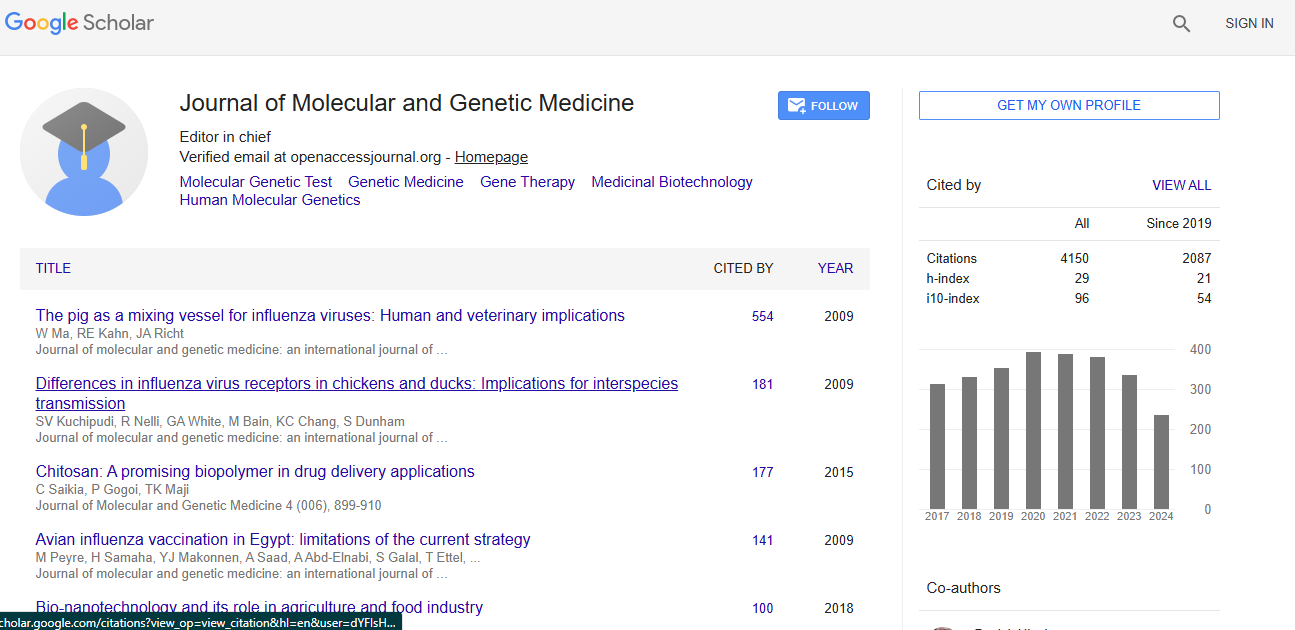
Molecular and Genetic Medicine received 3919 citations as per Google Scholar report