Brief Report - (2025) Volume 9, Issue 6
Received: 01-Dec-2025, Manuscript No. cmcr-25-178323;
Editor assigned: 03-Dec-2025, Pre QC No. P-178323;
Reviewed: 17-Dec-2025, QC No. Q-178323;
Revised: 22-Dec-2025, Manuscript No. R-178323;
Published:
29-Dec-2025
, DOI: 10.37421/2684-4915.2025.9.402
Citation: King, Benjamin. ”CDSS: Revolutionizing Healthcare, Navigating Challenges.” Clin Med Case Rep 09 (2025):402.
Copyright: © 2025 King B. This is an open-access article distributed under the terms of the Creative Commons Attribution License, which permits unrestricted use, distribution and reproduction in any medium, provided the original author and source are credited.
Clinical Decision Support Systems (CDSS) are transformative tools in modern healthcare, integrating advanced technology to enhance clinical practice across numerous domains. These systems provide timely, evidence-based information, guiding decisions from diagnosis to treatment and patient management. Their widespread application demonstrates a significant impact on patient outcomes and operational efficiency. Artificial Intelligence (AI)-enabled Clinical Decision Support Systems are, for example, proving vital in cancer care, with their application enhancing diagnostic accuracy, treatment planning, and overall patient outcomes. Future integration of AI into oncology workflows will demand robust validation and ethical considerations [1].
For diagnostic imaging, Clinical Decision Support Systems effectively improve adherence to imaging guidelines, significantly reducing inappropriate orders. This optimization of resource utilization directly contributes to patient safety within radiology [2].
In primary care, these systems substantially enhance medication safety, actively reducing prescribing errors and adverse drug events. They provide timely alerts and guidance to prescribers, leading to better patient outcomes [3].
However, the successful adoption of CDSS by physicians hinges on several crucial factors. Perceived usefulness, ease of use, seamless workflow integration, and trust in the system's recommendations are vital for maximizing their clinical impact [4].
The adaptability of CDSS was profoundly demonstrated during the COVID-19 pandemic. They played a critical role in early diagnosis, risk stratification, treatment guidance, and resource allocation, highlighting their essential function in managing public health crises [5].
As AI integration advances, ethical challenges surrounding AI-based CDSS become prominent, particularly concerning data privacy, algorithmic bias, accountability, and transparency. A robust ethical framework is necessary to ensure responsible deployment, promoting equity and patient trust [6].
In chronic disease management, CDSS significantly impact patient outcomes by improving adherence to clinical guidelines, enhancing disease control, and fostering better patient self-management. This underscores their potential to revolutionize chronic care [7].
Furthermore, CDSS prove highly effective in enhancing nursing practice. They improve diagnostic accuracy, reduce medication errors, and optimize care planning by equipping nurses with evidence-based guidance at the point of care, thereby bolstering patient safety and quality of care [8].
Usability and user experience are paramount for CDSS, with intuitive interfaces, efficient workflow integration, and minimized cognitive load identified as key design principles. These elements are crucial for optimizing practical utility and ensuring widespread adoption [9].
Finally, in the realm of precision medicine, CDSS are integral to pharmacogenomics. They translate complex pharmacogenomic data into actionable clinical recommendations, guiding personalized medication selection and dosing based on genetic profiles to optimize drug efficacy and minimize adverse reactions [10].
In essence, CDSS represent a diverse and evolving technological landscape within healthcare, offering profound benefits across a spectrum of clinical applications. Their successful deployment hinges on continuous innovation, careful consideration of human factors, and a strong commitment to ethical principles.
Clinical Decision Support Systems (CDSS) are increasingly foundational in modern healthcare, integrating advanced technology to assist clinicians in making informed decisions. These systems leverage algorithms and data to provide personalized, evidence-based guidance across various medical specialties. For instance, the application of Artificial Intelligence (AI) within CDSS is particularly transformative in cancer care, offering the potential to significantly enhance diagnostic precision and tailor treatment strategies, which directly impacts patient outcomes. This integration signals a shift towards more personalized and data-driven oncology, though it necessitates careful validation and adherence to ethical guidelines for responsible deployment [1]. Similarly, CDSS prove invaluable in diagnostic imaging by promoting adherence to established guidelines. This crucial function helps curb inappropriate imaging orders, leading to more efficient resource utilization and strengthening patient safety protocols within radiology departments [2]. In primary care, the impact of CDSS on medication safety is profound, significantly reducing the occurrence of prescribing errors and adverse drug events by delivering critical, timely alerts and recommendations to healthcare providers [3]. These systems act as a vital safety net, ensuring patients receive optimal pharmaceutical care.
Beyond enhancing specific clinical tasks, CDSS also play a critical role in broader healthcare management and crisis response. During the COVID-19 pandemic, CDSS demonstrated remarkable adaptability, proving essential for tasks ranging from early diagnosis and accurate risk stratification to guiding treatment decisions and optimizing the allocation of scarce resources. This highlighted their capacity to function effectively in dynamic and high-stakes public health scenarios [5]. Their utility also extends to chronic disease management, where CDSS improve patient adherence to clinical guidelines and foster better disease control. This empowerment allows patients to engage more actively in their own self-management, revolutionizing how chronic conditions are monitored and treated [7]. Furthermore, CDSS are not just for physicians; they significantly bolster nursing practice by improving diagnostic accuracy, reducing medication errors, and streamlining care planning, providing nurses with evidence-based guidance directly at the point of care and enhancing overall quality of patient care [8].
The successful integration and widespread adoption of CDSS are highly dependent on specific human and technical factors. For physicians, perceived usefulness and ease of use are paramount. A system that integrates smoothly into existing workflows and earns the trust of clinicians in its recommendations is far more likely to be adopted. Understanding and addressing these influencing factors are critical for effective CDSS implementation and for realizing their full clinical potential [4]. This also extends to the overall usability and user experience of these systems. Key design principles, such as intuitive interfaces, efficient workflow integration, and minimized cognitive load, are vital for optimizing user interaction and acceptance. Systems that are cumbersome or difficult to navigate often face resistance, regardless of their underlying capabilities [9]. Therefore, a user-centric design approach is essential to maximize the practical utility and ensure broad adoption of CDSS in diverse clinical environments.
As CDSS continue to evolve, especially with advanced AI capabilities, the ethical landscape becomes increasingly complex. Issues like safeguarding data privacy, mitigating algorithmic bias, establishing clear lines of accountability, and ensuring transparency are fundamental. Developing a robust ethical framework is imperative to ensure that these systems are not only effective but also fair, equitable, and trustworthy in their development and deployment, promoting patient trust and societal benefit [6]. On another advanced front, CDSS are instrumental in advancing precision medicine through pharmacogenomics. They translate intricate genetic data into actionable clinical recommendations, guiding personalized medication selection and precise dosing tailored to an individualâ??s genetic profile. This critical function optimizes drug efficacy and minimizes adverse reactions, heralding a new era of highly individualized medical treatment [10]. The continuous innovation in CDSS, coupled with careful ethical oversight and a focus on user experience, positions them as indispensable tools for the future of healthcare.
Clinical Decision Support Systems (CDSS) are vital tools revolutionizing various facets of healthcare. They significantly enhance diagnostic accuracy and refine treatment planning, particularly evident in Artificial Intelligence (AI)-enabled systems for cancer care. These systems play a crucial role in optimizing resource utilization and ensuring patient safety by improving adherence to imaging guidelines and reducing inappropriate diagnostic orders. In primary care, CDSS have proven effective in boosting medication safety, cutting down prescribing errors, and preventing adverse drug events through timely alerts. Implementing CDSS successfully relies on understanding key factors such as perceived usefulness, ease of integration into workflows, and clinician trust. Their adaptability was highlighted during the COVID-19 pandemic, where CDSS supported early diagnosis, risk stratification, and resource allocation. Beyond crisis management, CDSS positively impact chronic disease management by improving guideline adherence and patient self-management, and empower nursing practice by enhancing diagnostic accuracy and optimizing care plans. However, the proliferation of AI-based CDSS brings ethical challenges, including data privacy, algorithmic bias, and accountability, necessitating a strong ethical framework for responsible development. Usability and user experience are also paramount, with intuitive interfaces and minimal cognitive load being key to adoption. Looking forward, CDSS are integral to precision medicine, translating pharmacogenomic data into personalized medication selection and dosing to optimize drug efficacy. Overall, CDSS are multifaceted tools driving efficiency, safety, and personalized care, while navigating complex ethical and implementation landscapes.
None
None
Indexed at, Google Scholar, Crossref
Indexed at, Google Scholar, Crossref
Indexed at, Google Scholar, Crossref
Indexed at, Google Scholar, Crossref
Indexed at, Google Scholar, Crossref
Indexed at, Google Scholar, Crossref
Indexed at, Google Scholar, Crossref
Indexed at, Google Scholar, Crossref
Indexed at, Google Scholar, Crossref
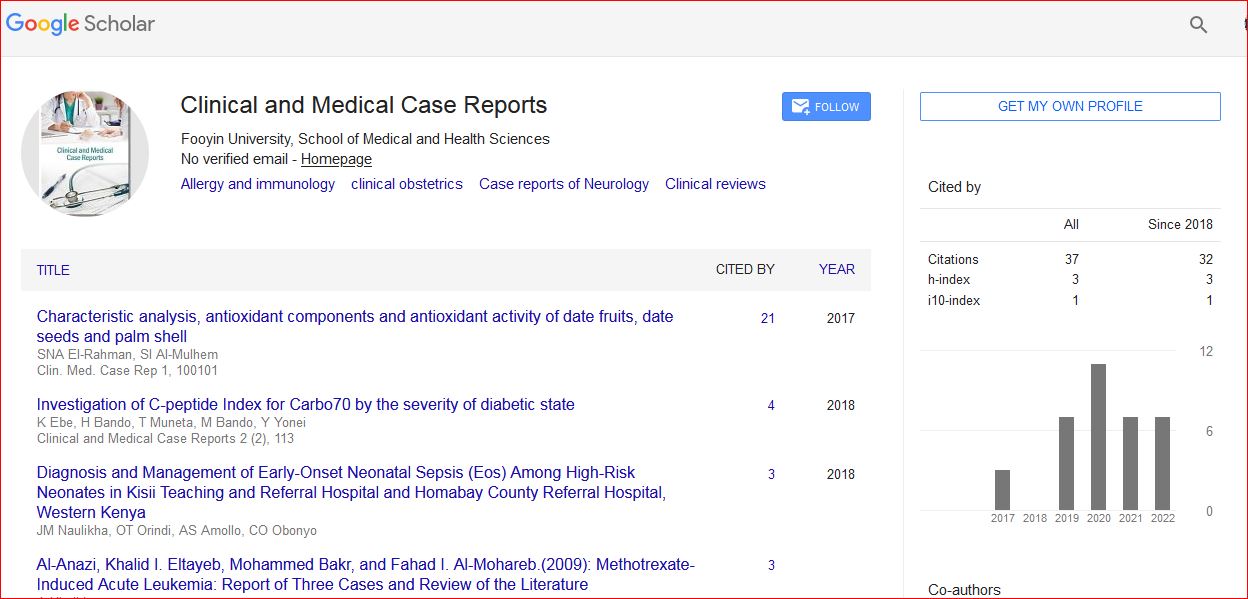
Clinical and Medical Case Reports received 53 citations as per Google Scholar report