Opinion - (2025) Volume 13, Issue 4
Received: 04-Aug-2025, Manuscript No. jcdd-25-176817;
Editor assigned: 06-Aug-2025, Pre QC No. P-176817;
Reviewed: 20-Aug-2025, QC No. Q-176817;
Revised: 25-Aug-2025, Manuscript No. R-176817;
Published:
01-Sep-2025
, DOI: 10.37421/2329-9517.2025.13.683
Citation: Alvarez, Ricardo. Cardiac Rehabilitation: Benefits,
Innovation, and Equity. J Cardiovasc Dis Diagn 13 (2025):683.
Copyright: © 2025 Alvarez R. This is an open-access article distributed under the terms of the Creative Commons Attribution License, which permits unrestricted use,
distribution and reproduction in any medium, provided the original author and source are credited.
Exercise-based cardiac rehabilitation significantly benefits adults with heart failure, leading to improved exercise capacity, fewer hospitalizations, and a better overall quality of life. The evidence strongly supports integrating these structured exercise programs into standard care to improve long-term outcomes and functional status[1].
Telehealth-based cardiac rehabilitation offers a viable and effective alternative to traditional center-based programs. This approach shows comparable improvements in exercise capacity, cardiovascular risk factors, and quality of life, particularly addressing accessibility barriers for patients in rural areas or those with mobility limitations, pointing to a promising future for remote care delivery[2].
Despite the clear benefits, a persistent gap exists between referral to and actual attendance in cardiac rehabilitation programs. Strategies to boost participation include patient-centered approaches, early referral systems, and integrating digital health solutions. These interventions aim to overcome common barriers like travel distance, time constraints, and lack of awareness, emphasizing the need for multi-faceted approaches to enhance patient engagement in these vital secondary prevention programs[3].
For older adults with cardiovascular disease, specific considerations for cardiac rehabilitation and exercise therapy are crucial. Age should not be a barrier; tailored exercise prescriptions can safely and effectively improve functional capacity, reduce symptoms, and enhance independence in this vulnerable population. Individualized programs accounting for comorbidities and functional limitations ensure older patients receive full benefits[4].
Cardiac rehabilitation significantly improves long-term health-related quality of life for patients following myocardial infarction. Studies reveal sustained benefits in physical, mental, and social well-being, indicating these programs offer more than just acute recovery. Consistent engagement is important for lasting improvements in daily life and overall patient satisfaction[5].
Participation in cardiac rehabilitation also leads to significant reductions in psychological distress, including depression and anxiety, among cardiac patients. This highlights the holistic benefits of CR beyond physical recovery. Integrating mental health screenings and support within CR programs is vital for comprehensive patient care and improved long-term outcomes[6].
Beyond clinical efficacy, cardiac rehabilitation programs are also cost-effective. Evidence demonstrates that these interventions reduce healthcare expenditures by preventing rehospitalizations and improving long-term health outcomes, offering good value for money. Increased investment in CR is a sound strategy for public health and cardiovascular disease management[7].
However, health disparities in cardiac rehabilitation remain a critical concern, with significant inequities in access and participation across various demographic groups. Social, economic, and systemic factors contribute to these disparities. Targeted interventions, culturally sensitive programs, and policy changes are proposed to promote health equity, ensuring all eligible patients can access and benefit from CR[8].
Cardiac rehabilitation is highly effective in modifying key cardiovascular risk factors. Structured programs lead to improvements in blood pressure, lipid profiles, glycemic control, and smoking cessation rates. This underscores CRâ??s role as a multifaceted intervention for secondary prevention, empowering patients to adopt healthier lifestyles and reduce future cardiovascular events[9].
The role of digital health interventions in promoting physical activity and long-term adherence within cardiac rehabilitation programs is expanding. Digital tools like mobile apps, wearables, and telemonitoring systems enhance patient engagement and self-management. Integrating these technologies can significantly extend the reach and impact of CR, fostering sustainable healthy behaviors beyond traditional program completion[10].
Cardiac Rehabilitation (CR) consistently demonstrates significant benefits for individuals living with heart failure. Structured exercise programs within CR improve exercise capacity, notably decrease hospitalizations, and elevate the overall quality of life for these patients. The evidence strongly advocates for integrating CR into standard care to enhance long-term outcomes and functional status[1]. Beyond initial recovery, CR also profoundly impacts the long-term health-related quality of life for patients following myocardial infarction. Studies show sustained benefits across physical, mental, and social well-being, indicating that CR offers advantages far beyond acute recovery, promoting lasting improvements in daily lives and overall patient satisfaction[5].
The scope of cardiac rehabilitation extends beyond physical recovery to encompass vital psychological aspects. Participation in CR programs leads to substantial reductions in psychological distress, including symptoms of depression and anxiety among cardiac patients. This underscores the holistic nature of CR and highlights the importance of integrating mental health screenings and support for comprehensive patient care and improved long-term outcomes[6]. Furthermore, CR is highly effective in modifying key cardiovascular risk factors. Structured programs consistently lead to significant improvements in blood pressure, lipid profiles, glycemic control, and smoking cessation rates. This positions CR as a critical, multifaceted intervention for secondary prevention, empowering patients to adopt healthier lifestyles and reduce their risk of future cardiovascular events[9].
Accessibility has been a persistent challenge for traditional cardiac rehabilitation models, but new approaches are bridging this gap. Telehealth-based cardiac rehabilitation has emerged as a viable and effective alternative, delivering comparable improvements in exercise capacity, cardiovascular risk factors, and quality of life. This innovative approach is particularly effective in addressing barriers for patients in rural areas or those with mobility limitations, signaling a promising future for remote care delivery[2]. Specific patient populations, such as older adults with cardiovascular disease, also require tailored attention. Clinical reviews emphasize that age should not impede participation in CR; instead, individualized exercise prescriptions can safely and effectively enhance functional capacity, alleviate symptoms, and boost independence in this vulnerable group. Programs must account for comorbidities and functional limitations to ensure full benefits are realized[4].
Despite the clear advantages, boosting participation in cardiac rehabilitation programs remains an ongoing area of focus, given the consistent gap between referral and actual attendance. Effective strategies include patient-centered approaches, early referral systems, and the integration of digital health solutions to overcome barriers such as travel distance, time constraints, and lack of awareness. These multi-faceted interventions are crucial for enhancing patient engagement and ensuring more individuals benefit from these essential secondary prevention programs[3]. In line with this, digital health interventions are playing an increasingly important role in promoting physical activity and long-term adherence within CR. Mobile apps, wearables, and telemonitoring systems effectively enhance patient engagement and self-management, significantly extending the reach and impact of CR by fostering sustainable healthy behaviors beyond traditional program completion[10].
From an economic standpoint, cardiac rehabilitation programs are not only clinically beneficial but also remarkably cost-effective. Systematic reviews provide strong evidence that CR reduces healthcare expenditures by preventing rehospitalizations and improving long-term health outcomes, thereby offering significant value for money. These findings strongly support increased investment in CR as a financially sound strategy for improving public health and managing cardiovascular disease effectively[7]. However, it is imperative to address health disparities in cardiac rehabilitation. Significant inequities in access and participation exist across various demographic groups, driven by social, economic, and systemic factors. A scientific statement by the American Heart Association advocates for targeted interventions, culturally sensitive programs, and policy changes to promote health equity, ensuring all eligible patients, regardless of their background, can access and benefit from CR[8].
Cardiac Rehabilitation (CR) programs offer significant, multifaceted benefits for individuals with cardiovascular disease. They improve exercise capacity, reduce hospitalizations, and enhance overall quality of life, especially for those with heart failure. CR programs also play a crucial role in improving long-term health-related quality of life after myocardial infarction, extending beyond acute recovery to encompass sustained physical, mental, and social well-being. Beyond physical recovery, CR actively addresses psychological distress, including depression and anxiety, among cardiac patients. This holistic approach ensures comprehensive patient care. Moreover, CR is effective in modifying key cardiovascular risk factors, such as blood pressure, lipid profiles, and glycemic control, contributing significantly to secondary prevention and empowering patients to adopt healthier lifestyles. Innovations in CR delivery include telehealth models, which offer a viable and effective alternative to traditional center-based programs, overcoming accessibility barriers for patients in rural areas or with mobility limitations. Digital health interventions, like mobile apps and wearables, further promote physical activity and long-term adherence, extending the impact of CR beyond traditional program completion. Despite these proven benefits, ensuring participation remains a challenge. Strategies like patient-centered approaches, early referral systems, and digital solutions are vital to boost uptake. Tailored programs are particularly important for older adults with cardiovascular disease, demonstrating that age should not be a barrier to participation. Finally, CR is not only clinically beneficial but also economically sound, reducing healthcare expenditures by preventing rehospitalizations. Addressing health disparities is critical to ensure equitable access and participation across all demographic groups, ultimately maximizing the public health impact of these essential programs.
Indexed at, Google Scholar, Crossref
Indexed at, Google Scholar, Crossref
Indexed at, Google Scholar, Crossref
Indexed at, Google Scholar, Crossref
Indexed at, Google Scholar, Crossref
Indexed at, Google Scholar, Crossref
Indexed at, Google Scholar, Crossref
Indexed at, Google Scholar, Crossref
Indexed at, Google Scholar, Crossref
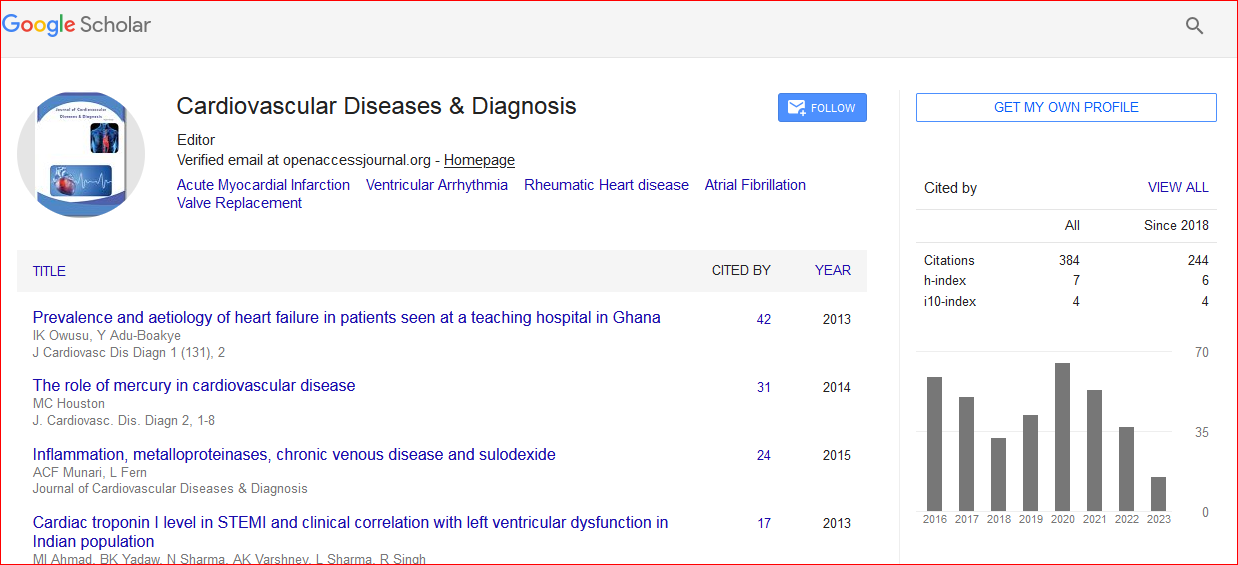
Cardiovascular Diseases & Diagnosis received 427 citations as per Google Scholar report