Perspective - (2025) Volume 14, Issue 2
Received: 01-Apr-2025, Manuscript No. jhoa-26-187775;
Editor assigned: 03-Apr-2025, Pre QC No. P-187775;
Reviewed: 17-Apr-2025, QC No. Q-187775;
Revised: 22-Apr-2025, Manuscript No. R-187775;
Published:
29-Apr-2025
, DOI: 10.37421/2167-1095.2025.14.511
Citation: Nakamura, Keiko. ”Bridging Hypertension Knowledge Gaps: Patient Education Strategies.” J Hypertens 14 (2025):511.
Copyright: © 2025 Nakamura K. This is an open-access article distributed under the terms of the Creative Commons Attribution License, which permits unrestricted use, distribution and reproduction in any medium, provided the original author and source are credited.
This article explores the current state of patient awareness and knowledge regarding hypertension, highlighting significant gaps in understanding crucial aspects such as the definition of hypertension, its risk factors, complications, and management strategies. The findings emphasize the urgent need for improved patient education programs delivered through healthcare providers and accessible public health initiatives. Enhanced patient knowledge is directly linked to better adherence to treatment and lifestyle modifications, ultimately leading to improved blood pressure control and reduced cardiovascular disease burden. The study underscores the role of healthcare professionals in assessing and addressing individual patient knowledge deficits to tailor effective educational interventions. [1] This research investigates the impact of health literacy on hypertension management among a diverse patient population. It demonstrates that lower health literacy levels are associated with poorer understanding of medication instructions, dietary recommendations, and the importance of regular monitoring. The study suggests that interventions aimed at improving health literacy, such as using simplified language, visual aids, and teach-back methods, can significantly enhance patient engagement and self-management of hypertension. The implications point towards a need for healthcare systems to prioritize health literacy assessments and provide tailored educational support. [2] This systematic review synthesizes evidence on the effectiveness of various patient education interventions for hypertension. It identifies that multifactorial approaches, combining educational sessions with ongoing support and technological tools, yield the most favorable outcomes in improving patient knowledge, adherence, and blood pressure control. The review highlights the importance of personalized education that addresses individual patient beliefs, cultural factors, and barriers to self-management. The findings advocate for integrating evidence-based educational strategies into routine hypertension care. [3] This study examines the role of primary care physicians in educating patients about hypertension. It reveals that while physicians acknowledge the importance of patient education, time constraints and lack of standardized educational materials often hinder comprehensive counseling. The research suggests the need for better integration of educational support within primary care settings, potentially through the use of allied health professionals and digital health platforms. The findings underscore the critical position of primary care in shaping patient understanding and self-efficacy for hypertension management. [4] This qualitative study explores patient experiences and perceptions of hypertension education. Participants expressed a desire for more personalized information that considers their lifestyle, cultural background, and existing knowledge. Key themes included the need for clear, jargon-free explanations, practical advice on diet and exercise, and ongoing support to maintain motivation. The study emphasizes that effective hypertension education should be patient-centered and adaptable to individual needs and circumstances. [5] This research evaluates the effectiveness of a digital health intervention aimed at improving hypertension knowledge and self-management. The findings indicate that patients using the app demonstrated significantly greater improvements in understanding hypertension risks and treatment adherence compared to a control group. The study highlights the potential of mobile health technologies to deliver accessible, scalable, and engaging educational content to patients, thereby augmenting traditional healthcare approaches. [6] This study investigates the knowledge and attitudes towards hypertension in an elderly population. It found that while older adults often have a basic understanding of hypertension, their knowledge about specific complications and the synergistic effects of lifestyle on blood pressure can be limited. The research emphasizes the need for age-appropriate educational materials and support systems that cater to the unique needs and potential cognitive changes in older individuals. Strategies should focus on promoting active participation in their care. [7] This article examines the influence of cultural beliefs on hypertension awareness and treatment adherence. It highlights how varying cultural perceptions of illness and healthcare can affect patient understanding of hypertension and their willingness to engage with medical advice. The study advocates for culturally sensitive communication and education strategies that respect and integrate diverse beliefs to improve hypertension management outcomes. [8] This research assesses the knowledge gaps regarding lifestyle modifications for hypertension control among patients. The study found that while many patients are aware of the general importance of diet and exercise, their understanding of specific recommendations, portion control, and the impact of different types of physical activity is often superficial. The findings underscore the need for detailed, practical education on lifestyle changes that empowers patients to make sustainable adjustments. [9] This study explores the role of community health workers (CHWs) in improving hypertension knowledge and adherence among underserved populations. Results show that CHWs, through culturally tailored outreach and education, significantly enhanced patients' understanding of hypertension and their self-care behaviors. The research highlights the valuable contribution of CHWs in bridging healthcare access gaps and delivering effective patient education in community settings. [10]
A cross-sectional study investigated patient awareness and knowledge regarding hypertension, identifying significant deficits in understanding its definition, risk factors, complications, and management. The research strongly advocates for enhanced patient education programs through healthcare providers and public health initiatives, noting a direct correlation between increased knowledge and improved treatment adherence, lifestyle modifications, blood pressure control, and a reduced cardiovascular disease burden. The importance of healthcare professionals assessing and addressing individual patient knowledge gaps to tailor educational interventions was emphasized. [1] A separate investigation focused on the impact of health literacy on hypertension management within a diverse patient cohort. Findings revealed that lower health literacy is linked to a poorer comprehension of medication instructions, dietary guidelines, and the necessity of regular monitoring. The study proposed that interventions designed to boost health literacy, such as employing simplified language, visual aids, and the teach-back method, can substantially improve patient engagement and their ability to self-manage hypertension, stressing the need for healthcare systems to prioritize health literacy assessments and provide personalized educational support. [2] A comprehensive systematic review synthesized evidence concerning the efficacy of various patient education interventions for hypertension. It concluded that multifaceted approaches, integrating educational sessions with continuous support and technological tools, achieve the most beneficial results in enhancing patient knowledge, treatment adherence, and blood pressure control. The review underscored the value of personalized education that accounts for individual patient beliefs, cultural contexts, and barriers to self-management, advocating for the incorporation of evidence-based educational strategies into standard hypertension care. [3] An examination of the role of primary care physicians in patient hypertension education revealed that while physicians recognize its significance, practical challenges like time constraints and the absence of standardized educational materials often impede thorough counseling. The research suggested that improved integration of educational support within primary care, possibly via allied health professionals and digital platforms, is necessary. The study highlighted primary care's crucial role in shaping patients' understanding and self-efficacy in managing hypertension. [4] A qualitative inquiry explored patients' experiences and perspectives on hypertension education, revealing a strong desire for personalized information tailored to individual lifestyles, cultural backgrounds, and existing knowledge levels. Key themes identified included the necessity for clear, easy-to-understand explanations, practical guidance on diet and exercise, and sustained support for motivation. The study underscored that effective hypertension education must be patient-centered and flexible to accommodate diverse individual needs and circumstances. [5] An evaluation of a digital health intervention designed to improve hypertension knowledge and self-management demonstrated its effectiveness. Patients utilizing the app showed marked improvements in understanding hypertension risks and treatment adherence compared to a control group. The study highlighted the potential of mobile health technologies to deliver accessible, scalable, and engaging educational content, thereby complementing traditional healthcare methods. [6] Research investigating the knowledge and attitudes towards hypertension in an elderly population found that while basic understanding was present, knowledge regarding specific complications and the interplay of lifestyle factors with blood pressure was often limited. The study stressed the importance of age-appropriate educational materials and support systems that address the unique needs and potential cognitive changes in older adults, advocating for strategies that encourage active participation in their healthcare. [7] An article analyzing the influence of cultural beliefs on hypertension awareness and treatment adherence indicated that diverse cultural perceptions of illness and healthcare significantly affect patients' understanding of hypertension and their willingness to comply with medical advice. The study recommended the adoption of culturally sensitive communication and education strategies that honor and incorporate varied beliefs to enhance hypertension management outcomes. [8] An assessment of knowledge gaps related to lifestyle modifications for hypertension control revealed that many patients possessed a general awareness of the importance of diet and exercise but lacked detailed understanding of specific recommendations, portion control, and the effects of different physical activities. The findings emphasized the need for precise, actionable education on lifestyle changes to empower patients in making lasting adjustments. [9] A study exploring the role of community health workers (CHWs) in enhancing hypertension knowledge and adherence among underserved populations reported significant positive outcomes. Through culturally adapted outreach and education, CHWs substantially improved patients' comprehension of hypertension and their self-care practices, underscoring the vital role of CHWs in addressing healthcare access disparities and providing effective patient education within community settings. [10]
Current research highlights significant gaps in patient knowledge regarding hypertension, including its definition, risk factors, complications, and management strategies. Low health literacy is associated with poorer understanding of treatment and self-management recommendations. Effective patient education requires personalized, patient-centered approaches that consider individual beliefs, cultural backgrounds, and practical barriers. Multifaceted interventions combining education with ongoing support, and leveraging digital health tools, show promising results. Primary care physicians play a crucial role, but face time constraints. Community health workers can effectively reach underserved populations with tailored education. Addressing these knowledge deficits through improved educational programs is vital for better hypertension control and reduced cardiovascular disease burden.
None
None
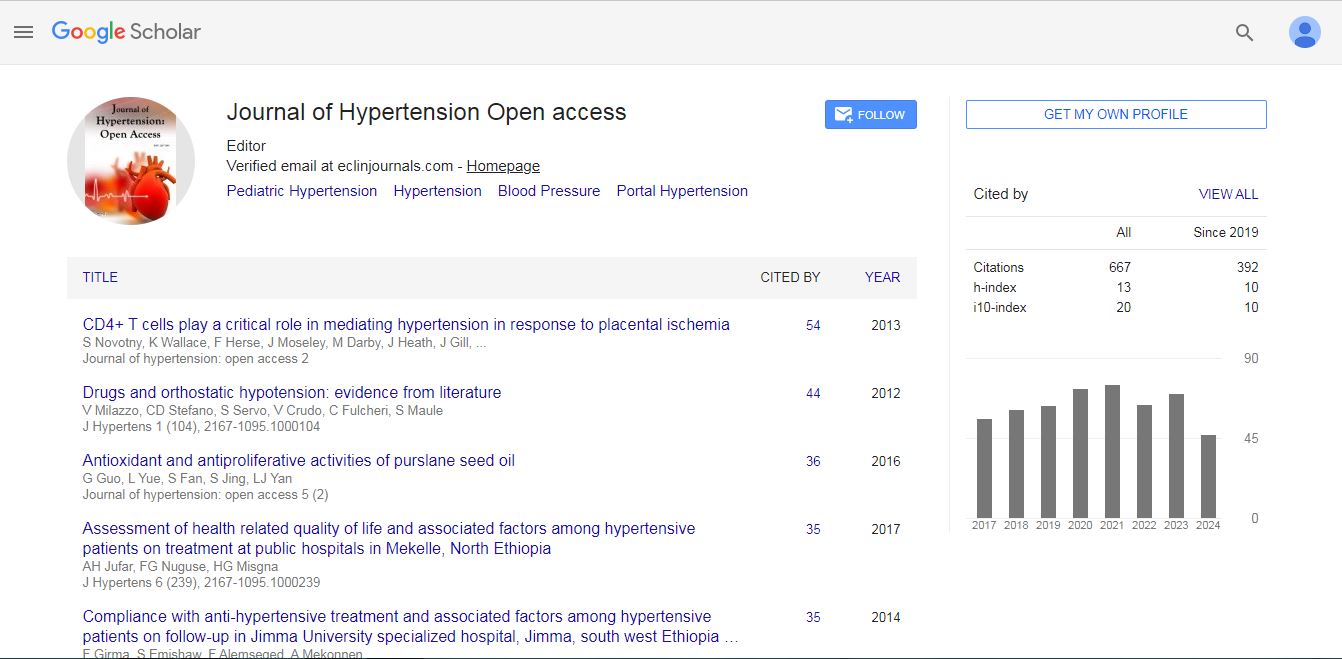
Journal of Hypertension: Open Access received 614 citations as per Google Scholar report