Perspective - (2025) Volume 14, Issue 3
Received: 02-Jun-2025, Manuscript No. jhoa-26-187795;
Editor assigned: 04-Jun-2025, Pre QC No. P-187795;
Reviewed: 18-Jun-2025, QC No. Q-187795;
Revised: 23-Jun-2025, Manuscript No. R-187795;
Published:
30-Jun-2025
, DOI: 10.37421/2167-1095.2025.14.521
Citation: Silva, Ana. ”Bridging Gaps: Rural Hypertension Screening and Control.” J Hypertens 14 (2025):521.
Copyright: © 2025 Silva A. This is an open-access article distributed under the terms of the Creative Commons Attribution License, which permits unrestricted use, distribution and reproduction in any medium, provided the original author and source are credited.
Hypertension, a pervasive global health concern, presents unique and substantial challenges within rural settings. These areas often grapple with limited access to healthcare infrastructure, a factor that significantly impedes effective screening, diagnosis, and management of the condition. The complexities of reaching dispersed populations and addressing their specific health needs necessitate tailored approaches and innovative strategies. This review aims to synthesize current research on hypertension screening and control in rural environments, highlighting persistent obstacles and promising avenues for improvement. The critical role of hypertension screening programs in rural settings is a recurring theme, underscoring the necessity of addressing barriers such as limited healthcare access, lower health literacy, and transportation challenges. Effective strategies discussed include community-based outreach, mobile clinics, and the pivotal role of primary healthcare workers. The importance of tailoring interventions and employing culturally sensitive methods is emphasized for enhancing adherence and promoting long-term management [1].
Investigating the effectiveness of community health worker-led blood pressure screening programs in remote regions has shown these workers to be instrumental. They play a crucial role in identifying individuals with undiagnosed hypertension and facilitating their linkage to essential care. Such programs have demonstrated a significant increase in hypertension awareness and the initiation of treatment among participants, suggesting that task-shifting to community health workers is a viable and impactful strategy for improving hypertension control in underserved rural populations [2].
Examining the barriers to hypertension screening participation among elderly individuals in rural communities reveals key obstacles. These often include a lack of adequate transportation, limited awareness of available health services, and a degree of mistrust within the healthcare system. The findings from such studies strongly suggest a need for enhanced accessibility through mobile screening units, more effective public health messaging specifically targeted at older adults, and the cultivation of stronger community partnerships to foster greater engagement in vital preventive health measures [3].
The impact of mobile hypertension screening initiatives in remote communities has been significantly observed. These programs have demonstrated success in reaching a substantial proportion of the target population, frequently identifying a high prevalence of previously undiagnosed hypertension. The inherent cost-effectiveness and broad reach of mobile units are highlighted as crucial advantages in overcoming geographical isolation, underscoring the necessity for sustained funding and the development of integrated care pathways for individuals identified with elevated blood pressure [4].
Exploring the perspectives of rural healthcare providers on the implementation of hypertension screening programs brings forth critical insights into practical challenges. Key themes that consistently emerge include the constraints imposed by limited resources, the insufficiency of targeted training, and a clear need for improved patient education materials. This research underscores the importance of developing practical, resource-efficient screening strategies and fostering robust interprofessional collaboration to enhance the overall effectiveness of these programs within rural healthcare landscapes [5].
The role of telemedicine in expanding hypertension screening and management capabilities within geographically isolated communities is increasingly recognized. Studies demonstrate that remote monitoring and virtual consultations can significantly improve access to necessary care, facilitate consistent follow-up appointments, and empower patients in their self-management efforts. The findings advocate for increased investment in telemedicine infrastructure and digital literacy programs to ensure its successful and widespread implementation in rural areas [6].
Developing and implementing culturally adapted hypertension screening materials for diverse rural populations is a critical endeavor. This process highlights the importance of using clear, plain language, incorporating effective visual aids, and actively involving community leaders to ensure that these materials are both understood and trusted by the intended audience. Such culturally sensitive approaches have been shown to lead to increased engagement and higher rates of follow-up appointments, ultimately demonstrating their effectiveness in improving health outcomes [7].
Assessing the cost-effectiveness of various hypertension screening models in rural settings, encompassing opportunistic screening, community-based events, and mobile clinics, provides valuable data for resource allocation. Studies have indicated that well-organized community-based screening events often present a favorable cost-effectiveness ratio, primarily due to their ability to reach a large number of individuals and effectively identify undiagnosed cases. Strategic allocation of resources towards these models is suggested to maximize the impact of hypertension control efforts in rural communities [8].
Longitudinal studies evaluating the outcomes of comprehensive rural hypertension screening and management programs reveal significant long-term benefits. Participants who receive integrated interventions, including patient education and ongoing support, exhibit sustained improvements in blood pressure control and demonstrate increased adherence to medication and lifestyle modifications. These findings emphasize the crucial importance of integrated care models that extend beyond initial screening to ensure lasting health benefits for rural populations [9].
Reviewing the challenges and innovative solutions for hypertension screening in low-resource rural settings, particularly in regions like Sub-Saharan Africa, sheds light on systemic issues. The impact of limited infrastructure, critical workforce shortages, and competing health priorities are significant hurdles. Innovative approaches such as the deployment of point-of-care diagnostic devices, the organization of community-based screening campaigns, and the integration of hypertension control into existing health programs are presented as essential components for achieving effective hypertension control in these challenging contexts [10].
Hypertension screening programs in rural areas are critically examined, revealing significant challenges stemming from limited healthcare access, lower health literacy, and transportation barriers. Effective strategies being implemented include community-based outreach, mobile clinics, and the utilization of primary healthcare workers. The need for tailored interventions and culturally sensitive approaches is paramount for improving adherence and long-term management of hypertension. Furthermore, the integration of technology, such as telemedicine, is emerging as a promising solution to overcome geographical limitations and enhance follow-up care [1].
The effectiveness of community health worker-led blood pressure screening programs in remote rural settings has been evaluated, demonstrating the crucial role these workers play. They are instrumental in identifying individuals with undiagnosed hypertension and facilitating their access to necessary medical care. These programs have shown a marked increase in hypertension awareness and the initiation of treatment among participants, substantiating the viability of task-shifting to community health workers as a strategy to improve hypertension control in underserved rural populations [2].
Barriers to hypertension screening participation among elderly individuals in rural American settings have been extensively studied. Key obstacles identified include a lack of reliable transportation, insufficient awareness of available health services, and a prevailing mistrust of the healthcare system. The research strongly indicates a need for increased accessibility through mobile screening units, more targeted and effective public health messaging aimed at older adults, and the development of stronger community partnerships to boost engagement in preventive health measures [3].
An observational study assessed the impact of a mobile hypertension screening initiative implemented in remote Australian communities. This program successfully engaged a significant portion of the target population, revealing a high prevalence of previously undiagnosed hypertension. The study emphasizes the cost-effectiveness and broad reach of mobile screening units in overcoming geographical isolation, highlighting the critical need for sustained funding and the establishment of integrated care pathways for individuals identified with elevated blood pressure [4].
A qualitative study explored the perspectives of healthcare providers working in rural areas regarding the implementation of hypertension screening programs. Major themes that emerged include the inherent challenges posed by limited resources, inadequate training opportunities, and a deficit in effective patient education materials. The research underscores the necessity of developing practical, resource-efficient screening strategies and fostering robust interprofessional collaboration to enhance the efficacy of these programs within rural healthcare contexts [5].
The potential of telemedicine in extending the reach of hypertension screening and management services to geographically isolated communities is being investigated. Evidence suggests that remote monitoring and virtual consultations can substantially improve access to healthcare, streamline regular follow-up care, and enhance patients' capacity for self-management. The study advocates for increased investment in telemedicine infrastructure and digital literacy programs to support its effective deployment in rural areas [6].
Research focused on the development and deployment of culturally adapted hypertension screening materials for diverse rural populations underscores their significance. The study highlights the importance of utilizing simple language, incorporating visual aids, and engaging community leaders to ensure materials are accessible and trustworthy. Culturally sensitive approaches have been shown to increase engagement and lead to higher rates of follow-up appointments, thereby improving health outcomes [7].
The cost-effectiveness of various hypertension screening models in rural settings, including opportunistic screening, community-based events, and mobile clinics, has been analyzed. Findings suggest that well-organized community-based screening events offer a favorable cost-effectiveness ratio by reaching a broad demographic and identifying undiagnosed cases. The research supports strategic resource allocation towards these models to maximize the impact of hypertension control efforts in rural areas [8].
A longitudinal study evaluated the long-term outcomes of a comprehensive rural hypertension screening and management program, incorporating patient education and ongoing support. Participants receiving these integrated interventions demonstrated sustained improvements in blood pressure control and enhanced adherence to medication and lifestyle modifications compared to a control group. The results stress the importance of integrated care models that extend beyond initial screening to ensure enduring health benefits for rural populations [9].
This review examines the challenges and innovative solutions for hypertension screening in low-resource rural settings, with a particular focus on Sub-Saharan Africa. It addresses the impact of limited infrastructure, workforce shortages, and competing health priorities. Innovative strategies such as point-of-care devices, community-based screening campaigns, and integration with existing health programs are presented as crucial for effective hypertension control in these challenging environments [10].
Hypertension screening and control in rural areas face significant challenges including limited healthcare access, lower health literacy, and transportation barriers. Effective strategies involve community-based outreach, mobile clinics, and leveraging primary healthcare workers. Tailored and culturally sensitive interventions are crucial for adherence. Telemedicine offers a promising solution to overcome geographical limitations and improve follow-up care. Community health worker-led programs have shown success in identifying undiagnosed hypertension and linking individuals to care. Mobile screening initiatives are cost-effective and reach remote populations. Rural healthcare providers highlight resource limitations and the need for better training and patient education materials. Developing culturally adapted screening materials and focusing on integrated care models that extend beyond initial screening are essential for long-term health benefits. Innovations like point-of-care devices and integration with existing health programs are vital in low-resource settings.
None
None
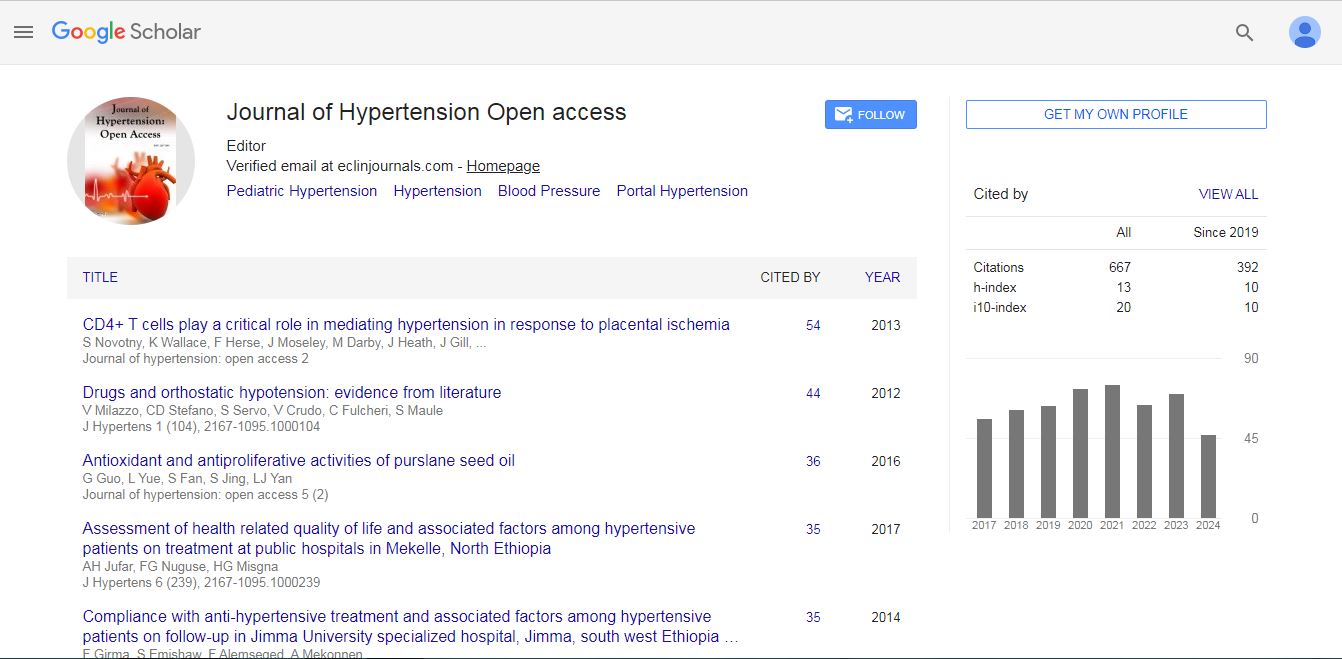
Journal of Hypertension: Open Access received 614 citations as per Google Scholar report