Opinion - (2025) Volume 10, Issue 5
Received: 01-Sep-2025, Manuscript No. PE-26-179302;
Editor assigned: 03-Sep-2025, Pre QC No. P-179302;
Reviewed: 17-Sep-2025, QC No. Q-179302;
Revised: 22-Sep-2025, Manuscript No. R-179302;
Published:
29-Sep-2025
, DOI: 10.37421/2472-1042.2025.10.303
Citation: Brooks, Nathaniel. ”Biosimilars: Affordable Access, Enhanced Healthcare in Developing Nations.” Pharmacoeconomics 10 (2025):303.
Copyright: © 2025 Brooks N. This is an open-access article distributed under the terms of the Creative Commons Attribution License, which permits unrestricted use, distribution and reproduction in any medium, provided the original author and source are credited.
The growing interest in biosimilar medicines within developing nations stems from their profound pharmacoeconomic implications. These advanced therapies offer a pathway to significantly reduce healthcare expenditures by providing more affordable alternatives to originator biologics, thereby enhancing patient access to crucial treatments [1].
Analyzing the economic advantages, studies explore how increased market penetration of biosimilar drugs can lead to substantial cost savings for healthcare systems in low- and middle-income countries, underscoring the role of economic evaluations in policy decisions [2].
Policy and pharmacoeconomic strategies are crucial for integrating biosimil medicines into the healthcare systems of emerging economies. While opportunities for cost containment exist, careful planning regarding reimbursement and physician education is paramount for successful implementation [3].
The economic case for biosimilar adoption in regions with limited healthcare budgets is compelling. Biosimilar pricing strategies can significantly enhance patient access to biologic therapies for chronic diseases, emphasizing the importance of considering total cost of care [4].
From a pharmacoeconomic standpoint, barriers and facilitators to biosimilar adoption in emerging markets include local manufacturing capacity and intellectual property rights, but opportunities arise from government initiatives [5].
Pharmacoeconomic models need adaptation for emerging markets to assess the value of biosimilar medicines. Using locally relevant data can strengthen the evidence base for biosimilar adoption and justify their inclusion in national formularies [6].
The competitive dynamics introduced by biosimil medicines in emerging markets can lead to price reductions for both biosimil and originator biologics, creating significant savings for patients and payers [7].
In resource-constrained healthcare settings, particularly in African nations, biosimilar utilization can enhance access to essential biologic medicines, improving patient outcomes and reducing the burden on national health budgets [8].
A cost-effectiveness analysis of introducing biosimilar versions of high-cost biologic drugs in a representative emerging market suggests substantial savings without compromising clinical outcomes, enhancing healthcare sustainability [9].
Policy and economic frameworks are essential for biosimilar adoption in middle-income countries. Health technology assessments (HTAs) play a critical role in guiding reimbursement decisions and promoting value-based purchasing for cost-effective integration [10].
This article delves into the pharmacoeconomic implications of adopting biosimilar medicines in developing nations, highlighting how their uptake can significantly reduce healthcare expenditures by offering more affordable alternatives to originator biologics. Key insights include the potential for expanded patient access to advanced therapies, the need for robust regulatory frameworks to ensure biosimilar quality and interchangeability, and the economic benefits of increased competition in the pharmaceutical market. The authors emphasize that strategic policy interventions are crucial for maximizing the cost-effectiveness and societal benefits of biosimilar integration in these regions [1].
Analyzing the economic advantages of biosimilar substitution, this study explores how increased market penetration of biosimilar drugs can lead to substantial cost savings for healthcare systems in low- and middle-income countries. It underscores the role of economic evaluations, such as cost-effectiveness and budget impact analyses, in informing policy decisions. The research also touches upon the challenges of physician and patient perception, emphasizing that clear communication and evidence of clinical equivalence are vital for successful adoption [2].
This paper examines the policy landscape and pharmacoeconomic models crucial for integrating biosimilar medicines into healthcare systems of emerging economies. It highlights that while biosimilar introduction presents opportunities for cost containment, careful planning regarding reimbursement policies, tender processes, and physician education is paramount. The authors argue for a phased approach to biosimilar adoption, allowing markets to mature and evidence to accumulate, thereby mitigating risks and ensuring long-term sustainability [3].
The economic case for biosimilar adoption in regions with limited healthcare budgets is explored here. The study emphasizes that biosimilar pricing strategies and the resultant cost savings can significantly enhance patient access to biologic therapies for chronic diseases like diabetes and rheumatoid arthritis. It also discusses the importance of pharmacoeconomic evaluations that consider the total cost of care, not just drug acquisition costs, to fully appreciate the value proposition of biosimilar medicines [4].
This research focuses on the barriers and facilitators to biosimilar adoption in emerging markets from a pharmacoeconomic standpoint. It identifies challenges such as the lack of local manufacturing capacity, weak intellectual property rights enforcement, and insufficient health technology assessment infrastructure. However, it also highlights opportunities arising from government initiatives to promote generic and biosimilar use and the potential for significant savings that can be reinvested in other health services [5].
This article examines how pharmacoeconomic models can be adapted for emerging markets to assess the value of biosimilar medicines. It discusses the importance of considering local disease prevalence, treatment costs, and budget constraints when conducting analyses. The authors propose that using locally relevant data can strengthen the evidence base for biosimilar adoption and justify their inclusion in national formularies, ultimately improving healthcare affordability and accessibility [6].
The competitive dynamics introduced by biosimilar medicines in emerging markets are analyzed from an economic perspective. The study suggests that increased competition can lead to price reductions for both biosimilar and originator biologics, creating significant savings for patients and payers. It also explores the potential for market distortions and the need for regulatory oversight to ensure fair competition and prevent monopolistic practices [7].
This article delves into the pharmacoeconomic implications of biosimilar utilization in resource-constrained healthcare settings, with a particular focus on African nations. It highlights the potential for biosimilar adoption to enhance access to essential biologic medicines for conditions like cancer and autoimmune diseases, thereby improving patient outcomes and reducing the burden on national health budgets. The authors advocate for evidence-based decision-making and collaborative efforts to navigate the challenges associated with biosimilar integration [8].
This study evaluates the cost-effectiveness of introducing biosimilar versions of high-cost biologic drugs in a representative emerging market. It employs Markov modeling to assess the long-term economic impact on the healthcare system, considering factors such as treatment efficacy, adverse events, and patient adherence. The findings suggest that biosimilar substitution can lead to substantial savings without compromising clinical outcomes, making them an attractive option for improving the sustainability of healthcare [9].
This paper examines the policy and economic frameworks that support the adoption of biosimilar medicines in middle-income countries. It emphasizes the critical role of health technology assessments (HTAs) in guiding reimbursement decisions and promoting value-based purchasing. The authors discuss how well-designed HTA processes, informed by pharmacoeconomic evidence, can facilitate the cost-effective integration of biosimilar therapies and expand access to innovative treatments [10].
Biosimilar medicines offer significant pharmacoeconomic benefits for developing nations and resource-limited settings. Their adoption can lead to substantial cost savings for healthcare systems, enabling expanded patient access to advanced biologic therapies. Key to successful integration are robust regulatory frameworks, appropriate economic evaluations, and effective policy interventions. Challenges include local manufacturing capacity and physician perception, but opportunities exist through government initiatives and improved market competition. Adapting pharmacoeconomic models with local data and leveraging health technology assessments are crucial for maximizing the value and sustainability of biosimilar use. Overall, biosimil introduction can improve healthcare affordability and accessibility without compromising clinical outcomes.
None
None
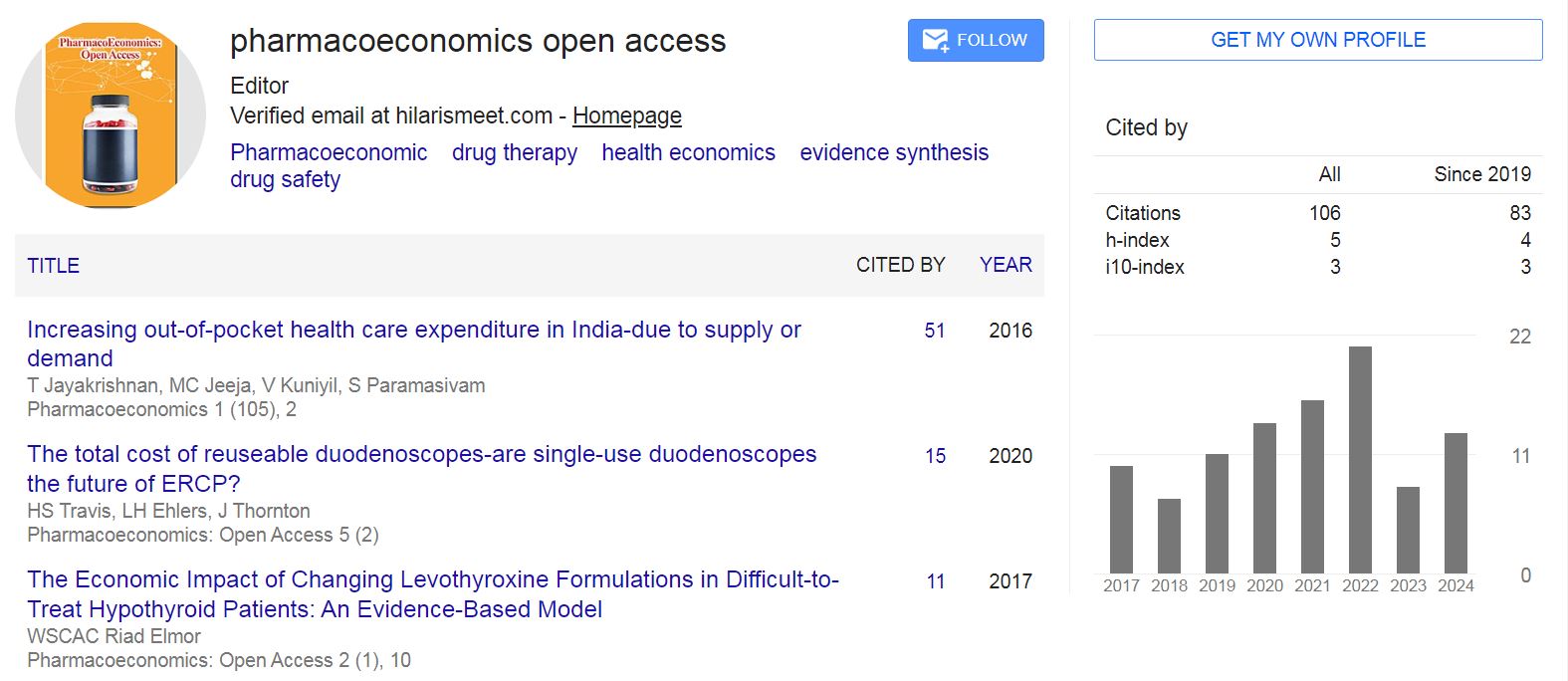
Pharmacoeconomics: Open Access received 106 citations as per Google Scholar report