Short Communication - (2025) Volume 10, Issue 2
Received: 02-Mar-2025, Manuscript No. PE-26-179257;
Editor assigned: 04-Mar-2025, Pre QC No. P-179257;
Reviewed: 18-Mar-2025, QC No. Q-179257;
Revised: 24-Mar-2025, Manuscript No. R-179257;
Published:
31-Mar-2025
, DOI: 10.37421/2472-1042.2025.10.279
Citation: Klein, Tobias. ”Biosimilar Benefits: Competition, Access, and Innovation.” Pharmacoeconomics 10 (2025):279.
Copyright: © 2025 Klein T. This is an open-access article distributed under the terms of the Creative Commons Attribution License, which permits unrestricted use, distribution and reproduction in any medium, provided the original author and source are credited.
Biosimilars represent a significant advancement in pharmaceutical economics, offering substantial pharmacoeconomic gains through increased competition and the potential for reduced drug costs. This enhanced competition can broaden patient access to essential biologic therapies, a critical aspect of modern medicine [1].
The economic impact of biosimilar adoption necessitates sophisticated health economic models. These models must meticulously account for various factors, including price erosion, intricate market share dynamics, and the overarching influence on overall healthcare budgets. Realizing the projected savings is contingent upon effective policy frameworks and streamlined market implementation strategies [2].
The European experience provides a compelling case study, demonstrating how a well-defined regulatory pathway, coupled with robust stakeholder engagement, can effectively facilitate market entry for biosimilars. This, in turn, drives considerable cost savings within healthcare systems. However, variations in reimbursement policies and physician prescribing habits across different European nations can influence the pace of biosimilar adoption [3].
A crucial determinant of biosimilar uptake is physician confidence and comprehensive education. When healthcare providers possess a thorough understanding of the scientific equivalence and biosimilarity of these products to their reference counterparts, they are considerably more inclined to prescribe them, thereby unlocking greater pharmacoeconomic benefits for the healthcare system [4].
Developing and manufacturing biosimilars involves considerable costs. Navigating the complex and often lengthy regulatory pathways further adds to the overall expense. Ensuring timely market entry for these products is paramount to fully realizing their potential to reduce healthcare expenditure and improve affordability [5].
The long-term economic benefits of biosimilar adoption extend beyond immediate direct cost savings. By freeing up financial resources, biosimilars can facilitate further innovation in the pharmaceutical sector and allow for the treatment of a larger patient population with essential biologic therapies. This necessitates sustained investment and supportive market environments for their continued success [6].
Improving patient access to advanced biologic medicines stands as a primary pharmacoeconomic driver for biosimilar development. By effectively reducing the prices of these treatments, biosimilars make them more affordable and accessible to a wider patient demographic, ultimately leading to improved health outcomes across diverse populations [7].
The negotiation of precise pricing and reimbursement agreements for biosimilars is a critical determinant of their pharmacoeconomic success. These agreements must be carefully structured to incentivize both continued innovation in the development of originator biologics and healthy competition from biosimilar manufacturers [8].
Evaluating the cost-effectiveness of biosimilars requires continuous pharmacoeconomic research. This research should incorporate real-world data and consider long-term patient outcomes. Such evidence is indispensable for informing clinical decision-making and shaping effective healthcare policy regarding these important therapeutic agents [9].
The pharmaceutical industry's strategic responses to biosimilar competition, including patent litigation tactics and efforts to extend market exclusivity, significantly shape the pharmacoeconomic landscape. Fostering open competition is fundamental to achieving the intended cost benefits and maximizing patient access to affordable treatments [10].
Biosimilars offer significant opportunities for pharmacoeconomic gains by increasing competition and potentially lowering drug costs, which can expand patient access to important biologic therapies. However, challenges remain in their uptake, including physician and patient education, regulatory hurdles, and market access strategies that can impact their full economic potential [1].
Analyzing the economic impact of biosimilar adoption requires robust health economic models that account for factors like price erosion, market share dynamics, and the impact on overall healthcare budgets. The potential for savings is substantial, but realizing these savings depends on effective policy and market implementation [2].
The European experience with biosimilars demonstrates that a well-defined regulatory pathway and effective stakeholder engagement can facilitate market entry and drive cost savings. However, variability in reimbursement policies and physician prescribing habits across countries can influence the pace of biosimilar adoption [3].
Physician confidence and education are critical for biosimilar uptake. When healthcare providers understand the scientific equivalence and biosimilarity to reference products, they are more likely to prescribe them, leading to greater pharmacoeconomic benefits [4].
The development and manufacturing costs for biosimilars can be high, and navigating complex regulatory pathways adds to the overall expense. Ensuring timely market entry for biosimilars is crucial to realizing their potential to reduce healthcare expenditure [5].
The long-term economic benefits of biosimilar adoption extend beyond direct cost savings, potentially freeing up resources for innovation and for treating more patients with essential biologic therapies. This requires sustained investment and supportive market environments [6].
Improving patient access to advanced biologic medicines is a key pharmacoeconomic driver for biosimilar development. By reducing prices, biosimilars can make these treatments more affordable and accessible to a wider patient population, improving health outcomes [7].
The negotiation of pricing and reimbursement agreements for biosimilars is a critical element in their pharmacoeconomic success. These agreements need to incentivize both innovation in originator biologics and competition from biosimilars [8].
Evaluating the cost-effectiveness of biosimilars requires ongoing pharmacoeconomic research that considers real-world data and long-term outcomes. This evidence is essential for informing clinical decisions and healthcare policy [9].
The pharmaceutical industry's response to biosimilar competition, including strategies for patent litigation and market exclusivity, significantly influences the pharmacoeconomic landscape. Open competition is vital for achieving the intended cost benefits [10].
Biosimilars offer substantial pharmacoeconomic benefits by increasing competition, lowering drug costs, and expanding patient access to biologic therapies. Realizing these benefits requires robust economic models, effective policies, and streamlined market implementation. Successful biosimilar adoption, as seen in Europe, depends on clear regulatory pathways and stakeholder engagement. Physician education and confidence are crucial for increasing prescribing rates. While development and regulatory processes can be costly, timely market entry is essential for cost savings. The long-term economic advantages include resource reallocation for innovation and wider patient treatment. Improved patient access to essential biologics is a primary driver for biosimilar development. Strategic pricing and reimbursement agreements are vital for fostering competition and innovation. Ongoing pharmacoeconomic research using real-world data is necessary for informed decision-making. The pharmaceutical industry's strategies significantly impact biosimilar market dynamics, highlighting the importance of open competition for cost benefits.
None
None
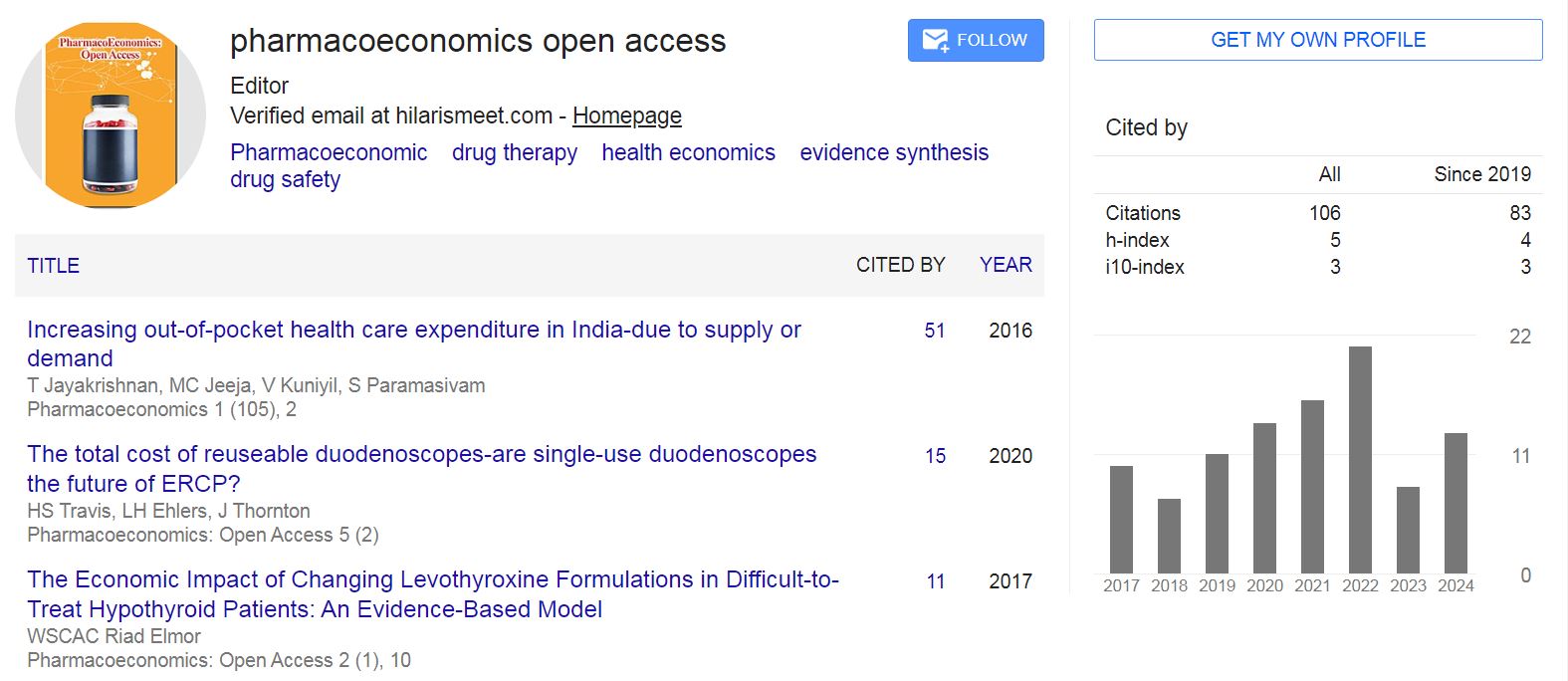
Pharmacoeconomics: Open Access received 106 citations as per Google Scholar report