Brief Report - (2025) Volume 10, Issue 2
Received: 02-Mar-2025, Manuscript No. PE-26-179247;
Editor assigned: 04-Mar-2025, Pre QC No. P-179247;
Reviewed: 18-Mar-2025, QC No. Q-179247;
Revised: 24-Mar-2025, Manuscript No. R-179247;
Published:
31-Mar-2025
, DOI: 10.37421/2472-1042.2025.10.272
Citation: Mendes, Sofia L.. ”Biologics For Autoimmune Disorders: Cost, Value, And Biosimilars.” Pharmacoeconomics 10 (2025):272.
Copyright: © 2025 Mendes L. Sofia This is an open-access article distributed under the terms of the Creative Commons Attribution License, which permits unrestricted use, distribution and reproduction in any medium, provided the original author and source are credited.
The pharmacoeconomic evaluation of biologic drugs for autoimmune disorders is a critical area of research, addressing the substantial costs associated with these advanced therapies and the imperative to ensure their value for healthcare systems and patients [1].
Rheumatoid arthritis (RA) presents a significant economic burden, and the role of biologic therapies in managing this condition, including their cost-effectiveness and impact on lost productivity, is a key area of investigation [2].
Psoriatic arthritis (PsA) also necessitates rigorous pharmacoeconomic assessment of its biologic treatments, with a focus on methodological variations and the crucial need for real-world data to inform treatment decisions and ensure economic sustainability [3].
The economic implications of biologic drugs for Crohn's disease are being extensively studied, with an emphasis on balancing acquisition costs against clinical benefits and exploring the impact of biosimilars on affordability and access [4].
For ankylosing spondylitis (AS), the cost-effectiveness of various biologic agents is evaluated by analyzing their impact on disease activity and quality of life, acknowledging the significant upfront investment but also the potential for long-term cost aversion [5].
Systemic lupus erythematosus (SLE) management with biologic therapies presents unique pharmacoeconomic challenges, requiring demonstrations of benefit beyond symptom control, such as preventing organ damage and improving long-term survival, to justify their cost [6].
Multiple sclerosis (MS) pharmacoeconomics involves contrasting the high cost of disease-modifying biologics with their capacity to slow progression and reduce relapses, thereby impacting long-term care needs and patient quality of life, with a growing focus on biosimilar impact [7].
Inflammatory bowel disease (IBD), encompassing Crohn's disease and ulcerative colitis, sees biologic therapies offering significant improvements in remission and quality of life, though their high cost necessitates careful cost-effectiveness analysis and consideration of biosimilars for enhanced affordability [8].
Psoriasis treatment with biologics involves a review of cost-effectiveness analyses comparing them to traditional therapies, highlighting their impact on disease severity and quality of life, which can offset acquisition costs [9].
Overall, the pharmacoeconomic landscape of biologic drugs in autoimmune disorders demands comprehensive evaluations that extend beyond direct medical costs, incorporating broader societal and patient-centered outcomes, robust modeling, real-world evidence, and strategic policy development to ensure equitable access and affordability through mechanisms like biosimilars [10].
The pharmacoeconomic landscape of biologic drugs for autoimmune disorders is characterized by substantial costs and a critical need for robust economic assessments to ensure value for healthcare systems and patients, considering long-term outcomes and quality of life improvements [1].
The economic burden of rheumatoid arthritis (RA) is significant, and studies examine the cost-effectiveness of biologic therapies, factoring in direct medical costs, indirect costs of lost productivity, and patient-reported outcomes, arguing for long-term economic benefits despite substantial investment [2].
For psoriatic arthritis (PsA), pharmacoeconomic evaluations of biologic therapies are reviewed, noting variations in methodologies and assumptions, and emphasizing the importance of real-world data and patient perspectives for ensuring clinical effectiveness and economic sustainability [3].
Biologic drugs for Crohn's disease are analyzed for their economic implications, focusing on the trade-offs between acquisition costs and clinical benefits, and utilizing cost-utility analyses and budget impact assessments, with consideration for patient heterogeneity and the impact of biosimilars [4].
Ankylosing spondylitis (AS) pharmacoeconomics involves evaluating the cost-effectiveness of various biologic agents, such as TNF inhibitors and IL-17 inhibitors, by analyzing their impact on disease activity and functional status, while acknowledging the significant upfront investment and potential to avert long-term costs [5].
The economic value of biologic therapies for systemic lupus erythematosus (SLE) is explored, highlighting the necessity of demonstrating benefits like preventing organ damage and improving long-term survival to justify high costs and capture intangible benefits, with attention to new agents and budget impacts [6].
Biologic therapies for multiple sclerosis (MS) are investigated for their pharmacoeconomic profile, contrasting high costs with the potential to slow disease progression and reduce relapses, impacting long-term care and quality of life, and utilizing methodologies like Markov models and QALYs, with the emergence of biosimilars being a key theme [7].
Systematic reviews on the cost-effectiveness of biologic therapies for inflammatory bowel disease (IBD) synthesize findings, noting significant impacts on disease remission and quality of life, while addressing challenges in comparing agents and the growing role of biosimilars in improving affordability [8].
Pharmacoeconomic evaluations of biologics in psoriasis review cost-effectiveness studies comparing different agents and traditional therapies, underscoring their impact on disease severity, quality of life, and comorbidities, which can offset acquisition costs [9].
Overall, the pharmacoeconomic challenges and opportunities for biologic drugs in autoimmune disorders are addressed, stressing the need for comprehensive evaluations, robust health economic models, real-world evidence, and policy interventions to ensure equitable access and affordability, particularly through the development and uptake of biosimilars [10].
Biologic drugs for autoimmune disorders present significant pharmacoeconomic considerations due to their high costs. Evaluations consistently highlight the need to assess long-term outcomes, quality of life, and budget impacts. Studies across various conditions like rheumatoid arthritis, psoriatic arthritis, Crohn's disease, ankylosing spondylitis, systemic lupus erythematosus, multiple sclerosis, inflammatory bowel disease, and psoriasis demonstrate that while biologics require substantial investment, their efficacy in disease control, symptom management, and preventing long-term complications can lead to overall economic benefits. Methodologies such as cost-effectiveness analysis, cost-utility analysis, and budget impact models are employed. The emergence and impact of biosimilars are also a recurring theme, offering potential solutions for improving affordability and access to these advanced therapies. Real-world evidence and patient-centered outcomes are increasingly recognized as crucial components of these evaluations to ensure value and sustainable healthcare.
None
None
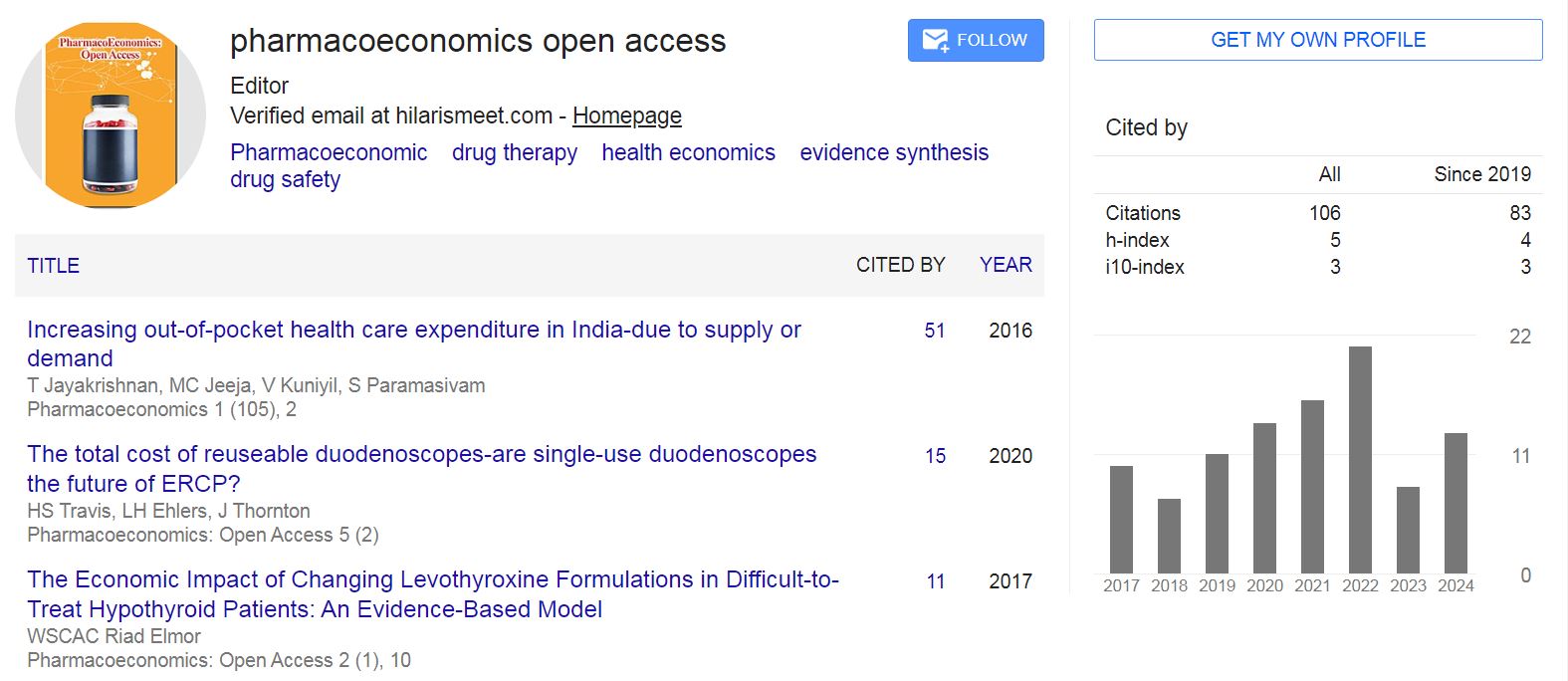
Pharmacoeconomics: Open Access received 106 citations as per Google Scholar report