Brief Report - (2025) Volume 14, Issue 5
Received: 01-Sep-2025, Manuscript No. jtsm-26-179593;
Editor assigned: 03-Sep-2025, Pre QC No. P-179593;
Reviewed: 17-Sep-2025, QC No. Q-179593;
Revised: 22-Sep-2025, Manuscript No. R-179593;
Published:
29-Sep-2025
, DOI: 10.37421/2167-0919.2025.14.523
Citation: Zhao, Mei Ling. ”Big Data: Revolutionizing Telecoms For Efficiency.” J Telecommun Syst Manage 14 (2025):523.
Copyright: © 2025 Zhao L. Mei This is an open-access article distributed under the terms of the Creative Commons Attribution License, which permits unrestricted use,
distribution and reproduction in any medium, provided the original author and source are credited.
Big data analytics is fundamentally reshaping telecommunications management, offering unprecedented capabilities for enhancing network performance, optimizing operations, and deepening customer understanding. This transformative power stems from the ability to process and analyze immense volumes of data generated by network infrastructure, user interactions, and device activities. Through sophisticated analytical techniques, telecommunications companies can gain granular insights into network behavior, identify potential issues before they escalate, and deliver more personalized and reliable services to their customer base. The strategic application of big data allows for a proactive and intelligent approach to managing complex telecommunications systems, a crucial advantage in today's rapidly evolving digital landscape [1].
The telecommunications industry has witnessed a significant revolution in customer relationship management, largely driven by the adoption of big data technologies. By leveraging data from various sources, including social media sentiment, call detail records, and service usage patterns, companies can develop a comprehensive understanding of customer needs, preferences, and behaviors. This deep insight enables the creation of highly targeted marketing campaigns, the provision of proactive customer support, and the design of services that better align with customer expectations. Ultimately, this data-driven approach fosters stronger customer relationships, increases loyalty, and contributes to sustained revenue growth within the competitive telecommunications market [2].
Predictive maintenance, powered by big data analytics and machine learning algorithms, has become an indispensable component of modern telecommunications infrastructure management. By analyzing real-time sensor data, historical network logs, and records of past equipment failures, operators can accurately forecast potential malfunctions in critical network components. This predictive capability allows for proactive interventions, minimizing unexpected service disruptions, significantly reducing costly emergency repairs, and ensuring the continuous reliability and availability of the network infrastructure. The adoption of such strategies is vital for maintaining service quality and operational efficiency [3].
The integration of big data into network traffic management systems enables real-time optimization and sophisticated anomaly detection. Comprehensive analysis of network traffic patterns provides essential information for effective capacity planning, efficient load balancing across network segments, and the early identification of potential security threats or performance bottlenecks. This proactive approach to traffic management contributes to a more robust, efficient, and resilient telecommunications network, capable of handling dynamic demands and mitigating risks effectively [4].
Big data analytics plays a pivotal role in the critical task of understanding and managing customer churn within the telecommunications sector. By meticulously identifying the patterns and underlying factors that contribute to customer attrition, such as issues with service quality, pricing strategies of competitors, or inadequate customer support, companies are empowered to implement precisely targeted retention strategies. These data-informed interventions not only aim to retain existing customers but also significantly enhance customer lifetime value, a key metric for long-term business success [5].
The proliferation of 5G networks has generated an unprecedented scale and complexity of data, making big data analytics an essential tool for effective network management. Analyzing this massive data flow is crucial for enabling efficient resource allocation, facilitating dynamic service provisioning, and unlocking new revenue streams through sophisticated data monetization strategies. The ability to manage and derive value from the extensive data generated by 5G infrastructure is paramount for the evolution and success of next-generation telecommunications services [6].
Security within telecommunications networks is substantially augmented by the application of big data analytics. Continuous monitoring of network activity, coupled with the deep analysis of vast amounts of log data, allows for the rapid detection and mitigation of potential security threats, unauthorized intrusions, and fraudulent activities. This near real-time threat detection capability is crucial for safeguarding the integrity of the network infrastructure and protecting sensitive user data from malicious actors [7].
The operational efficiency of telecommunications companies is dramatically improved through big data-driven insights into service quality. By systematically analyzing performance metrics, gathering customer feedback, and scrutinizing network logs, operators can precisely identify areas of service degradation. This allows for the timely implementation of targeted corrective actions, ensuring a consistently high-quality user experience for all subscribers and maintaining a strong competitive position in the market [8].
Big data plays a vital role in optimizing resource allocation and spectrum management within telecommunications networks. Advanced analytical techniques are employed to predict fluctuations in demand for network resources and to identify underutilized network assets. This enables more efficient and flexible operational strategies, leading to improved service delivery and a more cost-effective utilization of valuable spectrum resources, particularly in wireless communication environments [9].
The personalization of telecommunication services is significantly propelled by insights derived from big data analytics. By developing a granular understanding of individual user preferences, typical usage patterns, and historical service interactions, telecommunications operators can craft and offer highly tailored plans, promotions, and support services. This customized approach enhances customer engagement, fosters loyalty, and plays a crucial role in mitigating customer churn [10].
Big data analytics is fundamentally transforming telecommunications management by enabling enhanced network performance monitoring, predictive maintenance, customer churn prediction, and personalized service offerings. By analyzing vast datasets from network traffic, customer interactions, and device logs, telecommunications operators can optimize resource allocation, proactively identify and resolve network issues, and ultimately improve customer satisfaction and loyalty. This strategic shift facilitates more intelligent decision-making and drives operational efficiency in a market characterized by rapid technological advancements and evolving consumer demands [1].
The application of big data in the telecommunications sector has led to a profound revolution in customer relationship management. Through the meticulous analysis of sentiment expressed on social media platforms, detailed examination of call detail records, and understanding of diverse service usage patterns, companies can acquire deep and actionable insights into the intricate needs and behaviors of their customer base. This enables the development and execution of highly tailored marketing campaigns, the provision of proactive and responsive customer support, and the enhancement of service design to better meet evolving customer expectations, thereby driving customer retention and fostering revenue growth [2].
Predictive maintenance, empowered by the capabilities of big data analytics and machine learning, has emerged as a critical strategy for managing telecommunications infrastructure. The continuous analysis of sensor data, comprehensive network logs, and historical records of equipment failures allows operators to accurately predict potential equipment malfunctions before they manifest as service disruptions. This proactive approach not only minimizes the impact of service outages but also significantly reduces associated maintenance costs, ensuring the steadfast reliability of essential network components and infrastructure [3].
The integration of big data technologies into network traffic management frameworks allows for sophisticated real-time optimization and effective anomaly detection. By analyzing intricate traffic patterns, telecommunications providers can more accurately plan for network capacity, implement dynamic load balancing strategies, and efficiently identify potential security threats or performance bottlenecks that could compromise service quality. This leads to the creation and maintenance of a more efficient, responsive, and resilient telecommunications network capable of adapting to changing demands [4].
Big data analytics serves as a cornerstone in understanding and effectively managing customer churn within the telecommunications industry. By identifying the key patterns and influencing factors that lead to customer attrition, such as specific service quality issues, competitive pricing pressures, or shifts in customer engagement, companies are equipped to develop and implement targeted retention strategies. These data-driven efforts are essential for improving customer lifetime value and ensuring long-term business sustainability [5].
The deployment of advanced 5G networks generates an unprecedented volume and velocity of data, making big data analytics indispensable for managing their inherent complexity and scale. These analytical capabilities are vital for ensuring efficient resource allocation, enabling dynamic service provisioning, and fostering the creation of novel revenue streams through the intelligent monetization of data. Effectively harnessing the data generated by 5G is key to unlocking its full potential for network management and service innovation [6].
Security within telecommunications networks receives a significant boost through the application of big data analytics. The continuous and comprehensive monitoring of network activity, combined with the in-depth analysis of extensive log data, enables the swift detection and mitigation of potential security threats, network intrusions, and fraudulent activities. This near real-time security intelligence is paramount for safeguarding the overall integrity of the network and protecting the sensitive data of its users [7].
The operational efficiency of telecommunications companies experiences substantial enhancement through big data-driven insights focused on service quality. The systematic analysis of key performance metrics, direct customer feedback, and detailed network logs allows for the precise identification of any degradation in service delivery. This enables the timely implementation of corrective actions, thereby ensuring a consistently high-quality user experience and maintaining customer satisfaction [8].
Big data plays a crucial role in the optimization of resource allocation and spectrum management within telecommunications networks. Advanced analytical techniques are employed to predict demand fluctuations and to pinpoint underutilized network resources, facilitating more efficient and flexible network operations. This ultimately leads to improved service delivery and a more effective utilization of valuable communication spectrum [9].
The personalization of telecommunication services is profoundly influenced by the insights derived from big data analytics. By understanding individual user preferences, usage habits, and historical service interactions, operators can offer precisely tailored plans, promotions, and support mechanisms. This customized approach enhances customer engagement, strengthens loyalty, and significantly contributes to reducing customer churn rates [10].
Big data analytics is revolutionizing the telecommunications industry across multiple fronts. It enhances network performance through real-time monitoring and predictive maintenance, leading to greater reliability and reduced downtime. In customer relationship management, big data enables deep insights into customer behavior, facilitating personalized services, targeted marketing, and proactive support, which in turn reduces churn and increases loyalty. The analysis of network traffic patterns optimizes resource allocation and security, while the management of massive data volumes from 5G networks unlocks new revenue streams. Ultimately, big data drives operational efficiency, improves service quality, and fosters innovation in telecommunications.
None
None
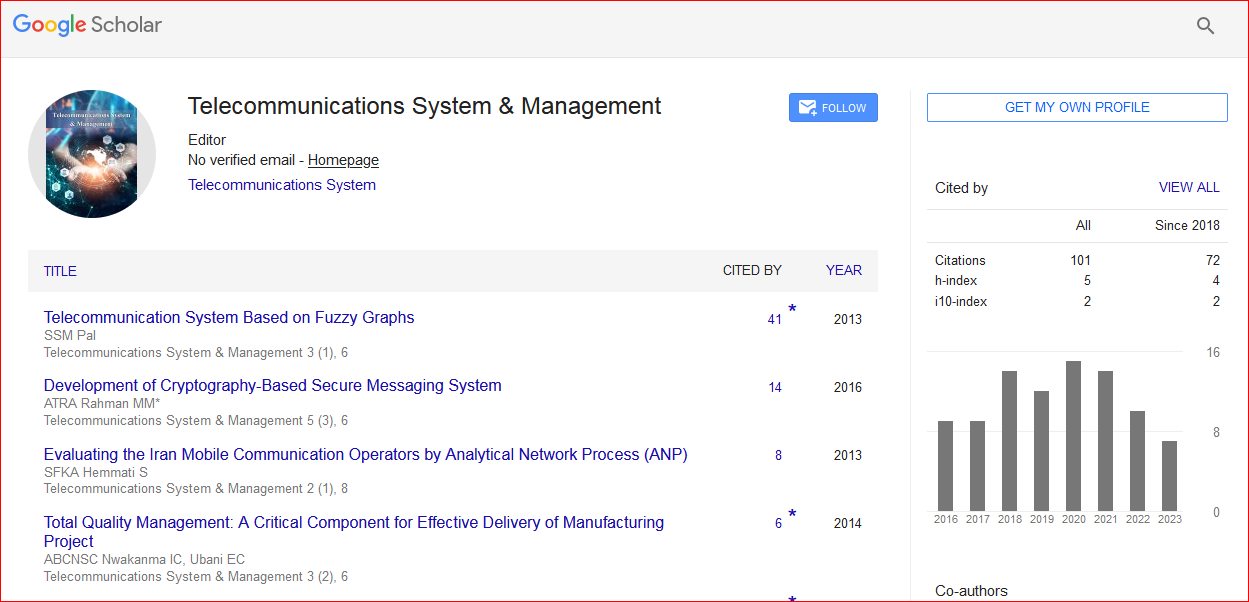
Telecommunications System & Management received 109 citations as per Google Scholar report