Brief Report - (2025) Volume 14, Issue 5
Received: 01-Sep-2025, Manuscript No. jmmd-26-184698;
Editor assigned: 03-Sep-2025, Pre QC No. P-184698;
Reviewed: 17-Sep-2025, QC No. Q-184698;
Revised: 22-Sep-2025, Manuscript No. R-184698;
Published:
29-Sep-2025
, DOI: 10.37421/2161-0703.2025.14.542
Citation: Svensson, Johan. ”Automation Revolutionizes Clinical Microbiology Lab Efficiency.” J Med Microb Diagn 14 (2025):542.
Copyright: © 2025 Svensson J. This is an open-access article distributed under the terms of the Creative Commons Attribution License, which permits unrestricted use, distribution and reproduction in any medium, provided the original author and source are credited.
Automation is fundamentally reshaping clinical microbiology laboratories, leading to significant improvements in efficiency, accuracy, and diagnostic turnaround times. This transformative wave encompasses various technologies, including automated systems for culture identification and antimicrobial susceptibility testing (AST), advanced molecular diagnostic platforms, and integrated laboratory information systems (LIS) [1].
These technological advancements are critical in addressing the growing workloads faced by laboratories, minimizing the incidence of human error, and ultimately enhancing patient care through expedited diagnosis and more precise treatment guidance. The increasing integration of artificial intelligence (AI) and machine learning (ML) into these systems promises further optimization of laboratory workflows and sophisticated data analysis capabilities [1].
Automated systems dedicated to bacterial identification and susceptibility testing play a pivotal role in the rapid detection of pathogenic microorganisms. Technologies such as Matrix-Assisted Laser Desorption/Ionization-Time of Flight Mass Spectrometry (MALDI-TOF MS) and automated phenotypic AST platforms offer substantial gains in speed and accuracy when compared to traditional laboratory methods. This acceleration in results directly contributes to quicker clinical decision-making and supports more effective antibiotic stewardship programs [2].
Molecular diagnostic platforms, which include widely adopted technologies like Polymerase Chain Reaction (PCR) and next-generation sequencing (NGS), are becoming increasingly integral to routine clinical microbiology workflows. These automated tools provide the capability for rapid pathogen detection and the identification of antimicrobial resistance genes, offering superior sensitivity and specificity compared to older diagnostic modalities [3].
Laboratory Information Systems (LIS) serve as the central nervous system for laboratory automation, playing a crucial role in streamlining numerous operational aspects. LIS effectively manage sample tracking, consolidate data management processes, facilitate result reporting, and enable seamless integration with broader electronic health records (EHRs). The successful implementation of an LIS is paramount for achieving enhanced workflow efficiency and maintaining robust data integrity [4].
The impact of automation on laboratory turnaround times (TAT) in clinical microbiology is profound and undeniably positive. By automating and reducing the reliance on manual steps throughout the entire process, from initial sample processing to identification and susceptibility testing, laboratories can significantly expedite the delivery of critical diagnostic results to clinicians. This speed is essential for timely and effective patient management [5].
The deployment of robotics and automated liquid handling systems within microbiology laboratories offers substantial benefits beyond mere efficiency. These systems serve to minimize direct human exposure to potentially infectious biological agents and considerably reduce the likelihood of pre-analytical errors occurring during sample handling and processing, thereby bolstering the overall reliability of diagnostic outcomes [6].
Artificial intelligence (AI) and machine learning (ML) are emerging as exceptionally powerful tools capable of analyzing the complex datasets generated in clinical microbiology. These technologies can be utilized to predict disease outbreaks, optimize the judicious use of antibiotics, and enhance diagnostic accuracy through automated image analysis and sophisticated pattern recognition algorithms [7].
Automation's role extends to the critical quality control (QC) processes within clinical microbiology laboratories. By automating QC procedures, laboratories can ensure the consistent performance of analytical instruments and the reliability of reagents used. This consistent performance is fundamental to achieving more dependable and reproducible diagnostic results [8].
The integration of total laboratory automation (TLA) solutions represents a comprehensive strategy for optimizing clinical microbiology operations. TLA harmonizes pre-analytical, analytical, and post-analytical processes, offering a holistic approach to maximizing laboratory efficiency, minimizing errors, and improving overall throughput, particularly in high-volume settings [9].
Despite the evident advantages, the implementation of laboratory automation is not without its challenges. Significant hurdles include the substantial initial financial investment required, the necessity for personnel with specialized training, the complex process of workflow redesign, and potential integration difficulties with existing IT infrastructure. Successfully navigating these obstacles is essential to fully leverage the manifold benefits that automation offers to clinical microbiology [10].
The transformation of clinical microbiology laboratories is being driven by automation, which enhances efficiency, accuracy, and speed. Key technologies include automated culture identification and antimicrobial susceptibility testing (AST) systems, advanced molecular diagnostics, and integrated Laboratory Information Systems (LIS). These advancements are vital for managing increasing workloads, reducing errors, and improving patient care through faster diagnoses and informed treatment decisions. The incorporation of AI and ML further refines workflows and data analysis [1].
Automated systems are crucial for the rapid identification of bacteria and determination of their susceptibility to antibiotics. Technologies like MALDI-TOF MS and automated phenotypic AST offer significant improvements in speed and accuracy over traditional methods, enabling faster clinical decisions and better antibiotic stewardship [2].
Molecular diagnostic platforms, such as PCR and next-generation sequencing (NGS), are increasingly embedded in routine clinical microbiology. These automated tools facilitate rapid pathogen and resistance gene detection, providing higher sensitivity and specificity in diagnostic testing [3].
Laboratory Information Systems (LIS) are fundamental to laboratory automation, streamlining operations such as sample tracking, data management, and result reporting. Effective LIS implementation is key for enhancing workflow efficiency and ensuring data integrity, including integration with electronic health records (EHRs) [4].
Automation demonstrably impacts turnaround times (TAT) in clinical microbiology. By reducing manual interventions in sample processing, identification, and susceptibility testing, laboratories can deliver critical results to clinicians more rapidly, thereby facilitating timely patient management [5].
Robotics and automated liquid handling systems in microbiology labs enhance safety by minimizing staff exposure to infectious agents. Furthermore, these systems reduce pre-analytical errors, leading to more reliable diagnostic results [6].
Artificial intelligence (AI) and machine learning (ML) are becoming powerful tools for analyzing complex microbiological data. They aid in predicting outbreaks, optimizing antibiotic usage, and improving diagnostic accuracy through automated image analysis and pattern recognition [7].
Automation plays a critical role in quality control (QC) processes within clinical microbiology. It ensures the consistent performance of instruments and reagents, which is essential for achieving reproducible and reliable diagnostic outcomes [8].
Total Laboratory Automation (TLA) offers a comprehensive approach by integrating pre-analytical, analytical, and post-analytical processes. This holistic strategy aims to optimize efficiency, reduce errors, and boost throughput in high-volume clinical microbiology settings [9].
Implementing laboratory automation presents challenges such as high initial costs, the need for specialized personnel, workflow redesign, and IT integration issues. Overcoming these obstacles is essential to fully realize the benefits of automation in clinical microbiology [10].
Automation is revolutionizing clinical microbiology laboratories by improving efficiency, accuracy, and turnaround times through technologies like automated identification and AST systems, molecular diagnostics, and LIS. These advancements help manage workloads, reduce errors, and enhance patient care. AI and machine learning are further optimizing workflows. Automated systems offer rapid pathogen detection and susceptibility testing, while molecular platforms provide high sensitivity and specificity. LIS are crucial for streamlining lab operations and data management. Automation significantly shortens turnaround times, enabling faster patient management. Robotics enhance safety and reduce errors. AI and ML aid in data analysis and prediction. Automated QC ensures consistent results, and total laboratory automation provides a comprehensive approach to efficiency. However, challenges like high costs and integration issues need to be addressed to fully benefit from automation.
None
None
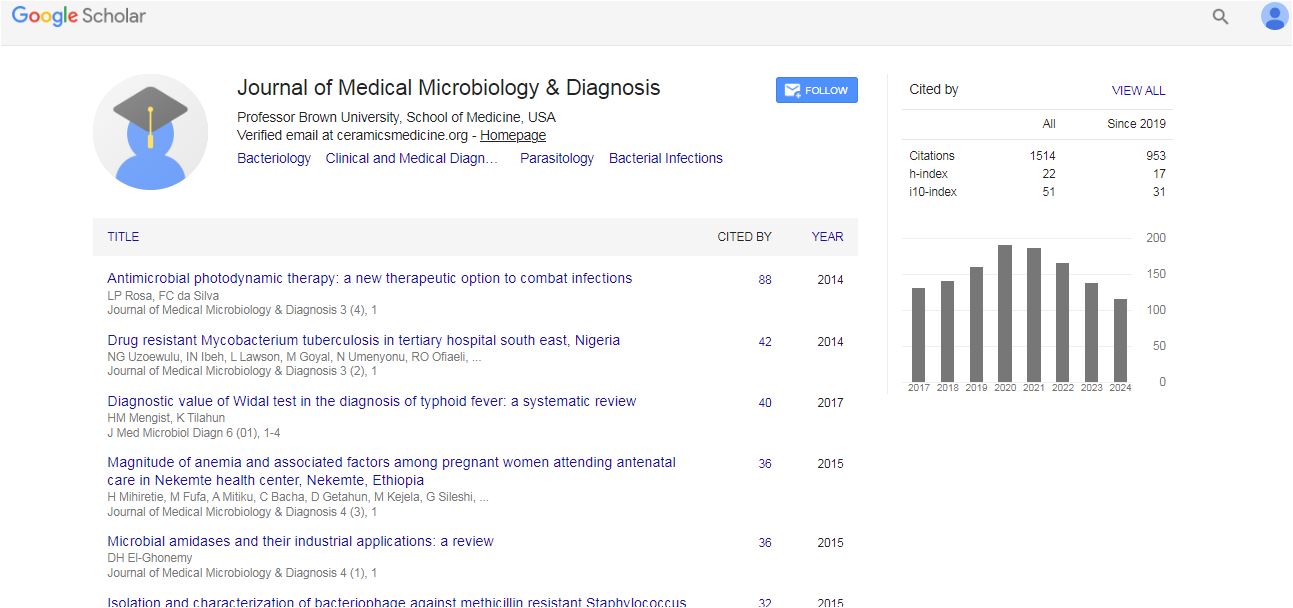
Medical Microbiology & Diagnosis received 14 citations as per Google Scholar report