Perspective - (2025) Volume 14, Issue 4
Received: 01-Jul-2025, Manuscript No. jtsm-26-179581;
Editor assigned: 03-Jul-2025, Pre QC No. P-179581;
Reviewed: 17-Jul-2025, QC No. Q-179581;
Revised: 22-Jul-2025, Manuscript No. R-179581;
Published:
29-Jul-2025
, DOI: 10.37421/2167-0919.2025.14.513
Citation: Petrescu, Victor. ”Automating Telecommunications Networks For Advanced Services.” J Telecommun Syst Manage 14 (2025):513.
Copyright: © 2025 Petrescu V. This is an open-access article distributed under the terms of the Creative Commons Attribution License, which permits unrestricted use, distribution and reproduction in any medium, provided the original author and source are credited.
The telecommunications industry is undergoing a profound transformation driven by the increasing demand for sophisticated services and the exponential growth of network complexity. In this dynamic landscape, automation and orchestration have emerged as indispensable pillars for managing modern networks effectively. These technologies are crucial for optimizing network operations, ensuring seamless service delivery, and providing the agility needed to support emergent services such as 5G and the Internet of Things (IoT). The industry is witnessing a significant paradigm shift from traditional, manual, and siloed operational processes to integrated, intelligent systems capable of dynamic resource management and real-time adaptation to network demands [1].
Furthermore, the integration of Artificial Intelligence (AI) is revolutionizing network management through advanced automation techniques. Machine learning algorithms are being leveraged to predict network failures, optimize resource allocation, and automate fault detection and resolution processes. This AI-driven approach not only reduces operational expenditures but also significantly enhances service reliability, with practical applications being observed in network operations centers worldwide [2].
At the foundational level, Software-Defined Networking (SDN) and Network Functions Virtualization (NFV) play a pivotal role in enabling telecommunications automation and orchestration. By decoupling network control and data planes, these technologies facilitate programmatic management and the dynamic deployment of network services, thereby increasing operational efficiency [3].
Managing complex multi-domain telecommunication networks presents unique challenges. Orchestration platforms are essential for overseeing services across diverse network operators and technologies, ensuring consistent end-to-end service quality. Frameworks promoting interoperability and standardized interfaces are being developed to address these cross-domain orchestration needs [4].
Adopting DevOps principles is another key strategy for enhancing agility and automation within telecommunications. Practices like continuous integration and continuous deployment (CI/CD) accelerate the rollout of new network services and updates, foster collaboration between development and operations teams, and bolster overall system resilience [5].
The advent of 5G has introduced new requirements for automation and orchestration, particularly with the concept of network slicing. Network slicing allows for the creation of virtual, independent logical networks tailored to specific service needs, necessitating sophisticated orchestration for managing the lifecycle of these slices, including their instantiation, configuration, and termination [6].
Intelligent orchestration frameworks are also critical for managing cloud-native network functions (CNFs). These frameworks enable automated resource management, dynamic scaling, and self-healing capabilities for CNFs, ensuring the agility and resilience required by contemporary networks [7].
Beyond software-defined approaches, Robotic Process Automation (RPA) offers a pragmatic solution for automating repetitive tasks in telecommunications operations. RPA streamlines processes such as service provisioning, customer support, and network monitoring, leading to reduced manual effort, fewer errors, and faster service delivery [8].
The integration of edge computing with orchestration platforms is another area of active development. Edge orchestration facilitates low-latency services by processing data closer to the user, and requires robust management of distributed edge resources to enhance service performance and reliability [9].
Collectively, these advancements represent a significant evolution in telecommunications management, moving from traditional methods to sophisticated automated and orchestrated paradigms. This evolution is driven by increasing network complexity, the demand for innovative services, and the imperative for enhanced operational efficiency, paving the way for a more agile and responsive future for the industry [10].
The critical role of automation and orchestration in modern telecommunications management is underscored by their essential function in optimizing network operations, enhancing service delivery, and providing the agility required for evolving services like 5G and IoT. This involves a fundamental shift from manual, fragmented processes to integrated, intelligent systems capable of dynamic resource allocation and real-time response to network demands [1].
Artificial intelligence, particularly machine learning, is at the forefront of automating network management within telecommunications. These algorithms are instrumental in predicting network failures, optimizing resource utilization, and automating fault detection and resolution, thereby contributing to reduced operational costs and improved service dependability, as demonstrated by practical implementations in network operations centers [2].
The integration of Software-Defined Networking (SDN) and Network Functions Virtualization (NFV) serves as a cornerstone for telecommunications automation and orchestration initiatives. By enabling programmatic control and dynamic service deployment through the separation of network control and data planes, SDN and NFV significantly boost operational efficiency [3].
Orchestration platforms are indispensable for managing the complexities inherent in multi-domain telecommunication networks. They facilitate the seamless management of services across disparate network operators and technologies, ensuring the delivery of consistent end-to-end service quality. Frameworks focused on interoperability and standardized interfaces are crucial for enabling effective cross-domain service orchestration [4].
Applying DevOps principles to telecommunications network management offers a pathway to increased agility and automation. Practices such as continuous integration and continuous deployment (CI/CD) are vital for expediting the delivery of new network services and updates, fostering stronger collaboration between development and operations teams, and ultimately improving system resilience [5].
In the context of 5G networks, network slicing presents specific demands for automation and orchestration. Network slicing allows for the creation of customized virtual networks for distinct service requirements, demanding sophisticated orchestration mechanisms to manage the complete lifecycle of these slices, from creation to retirement [6].
Intelligent orchestration frameworks are essential for the effective management of cloud-native network functions (CNFs). These frameworks support automated resource management, dynamic scaling, and self-healing functionalities, which are critical for achieving the high levels of agility and resilience expected in modern telecommunication infrastructures [7].
Robotic Process Automation (RPA) provides a practical means to automate routine and repetitive tasks within telecommunications operations. By streamlining processes like service provisioning, customer support ticket management, and network monitoring, RPA reduces manual intervention, minimizes errors, and accelerates service delivery [8].
The convergence of edge computing and orchestration platforms is enabling new possibilities for telecommunication services. Edge orchestration allows for low-latency services through localized data processing, and robust management of distributed edge resources is paramount for enhancing service performance and reliability [9].
In essence, the evolution of telecommunications management has progressed from traditional, labor-intensive methods to highly automated and orchestrated systems. This transformation is propelled by the increasing intricacy of networks, the escalating demand for advanced services, and the persistent drive for operational efficiency, charting a course towards more responsive and adaptable telecommunication infrastructures [10].
The telecommunications industry is increasingly relying on automation and orchestration to manage complex networks and deliver advanced services. Technologies like AI, SDN, NFV, and DevOps are crucial for optimizing operations, enhancing agility, and improving service reliability. These advancements are essential for supporting new paradigms such as 5G network slicing and cloud-native functions. Robotic Process Automation and edge computing orchestration further contribute to operational efficiency and low-latency service delivery. This evolution marks a significant shift from traditional management methods to intelligent, automated systems, driving the future of telecommunications.
None
None
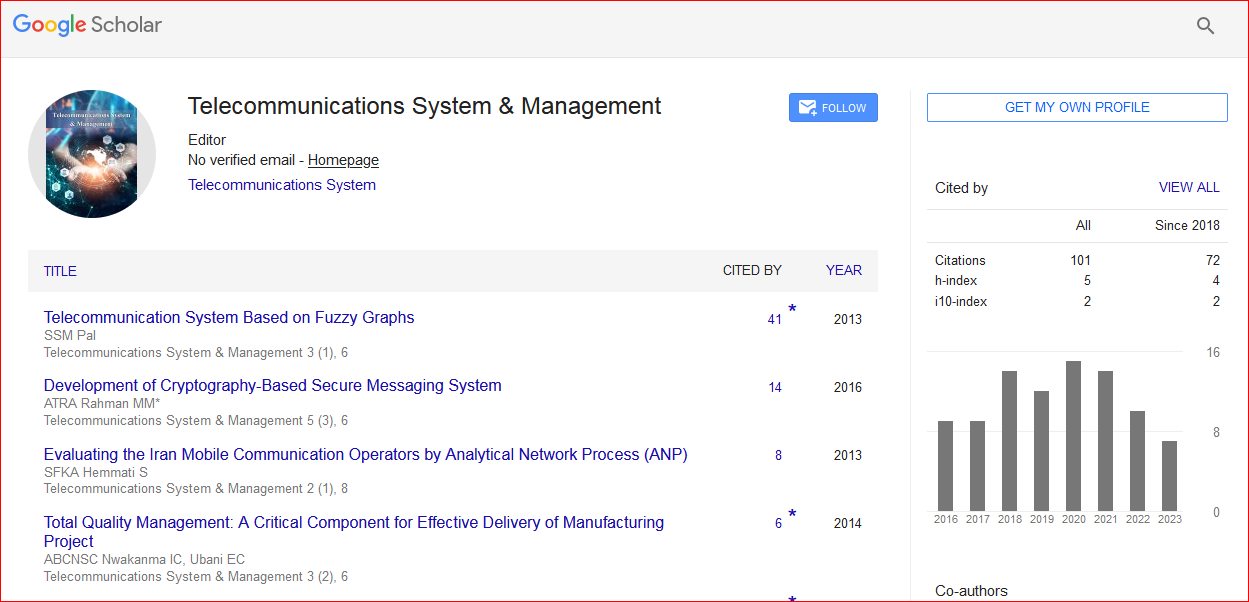
Telecommunications System & Management received 109 citations as per Google Scholar report